

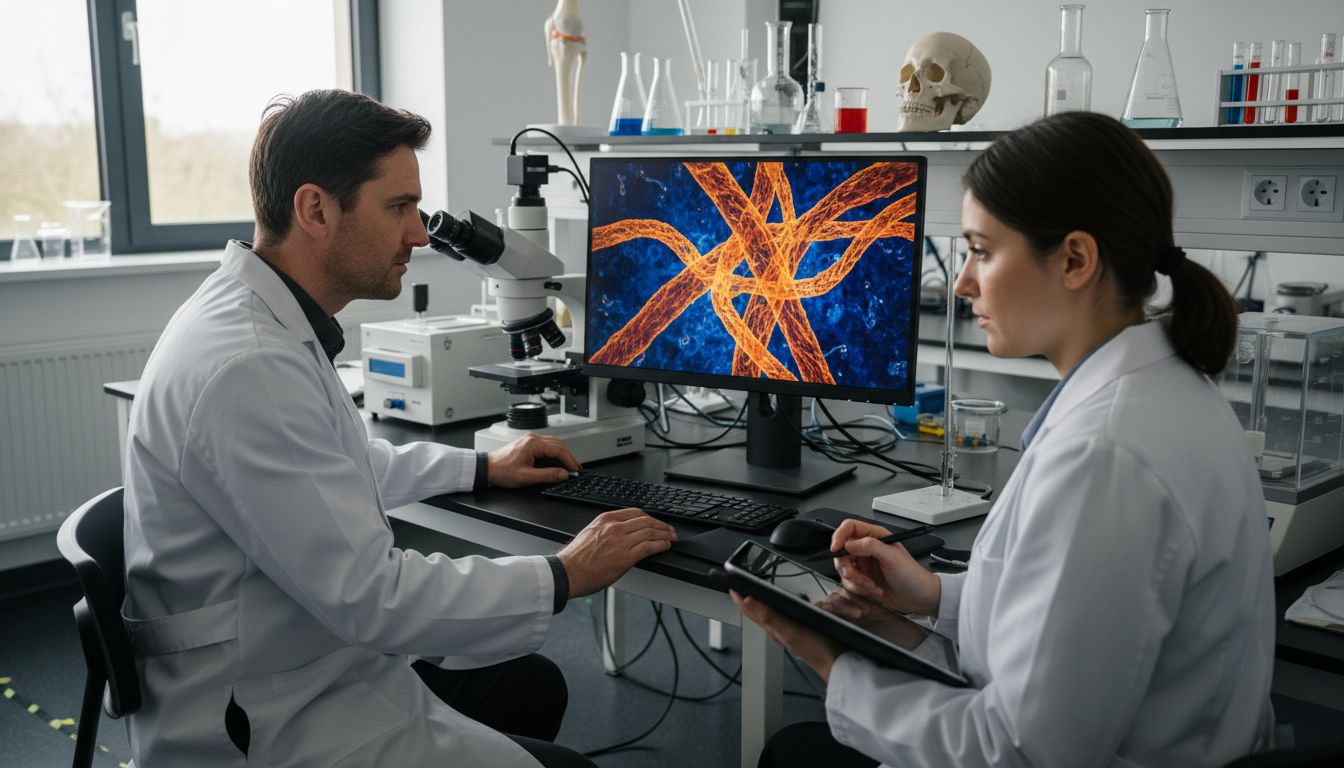
Most british adults are surprised to learn that collagen makes up nearly one third of the body’s total protein content. This powerhouse fibre acts as the hidden scaffolding behind skin, joints, and many vital organs. Understanding how collagen synthesis works unlocks powerful insights into everything from skin elasticity to joint support. You will discover the science, types, and factors that shape collagen’s impressive impact on human health.
Table of Contents
- Defining Collagen Synthesis And Its Role
- The Science Behind Collagen Production
- Types Of Collagen And Their Functions
- Factors Affecting Collagen Synthesis
- Collagen Supplements: Benefits And Effectiveness
Key Takeaways
| Point | Details |
|---|---|
| Role of Collagen | Collagen is essential for structural integrity across various tissues, serving multiple functions such as mechanical support and tissue repair. |
| Collagen Production Process | The synthesis involves genetic instructions and complex modifications, resulting in functional collagen fibres essential for tissue structure. |
| Types of Collagen | There are at least 28 collagen types, with five major ones playing critical roles in skin, bone, cartilage, and organ structure. |
| Impact of Supplements | Collagen supplements may improve skin elasticity, joint health, and muscle recovery, showing potential benefits across multiple physiological systems. |
Defining Collagen Synthesis and Its Role
Collagen represents a foundational protein fundamental to human physiological structures, serving as the primary scaffolding for numerous biological systems. According to research from Cambridge University, collagen is a ubiquitous structural protein capable of self-assembling into sophisticated hierarchical configurations, providing critical mechanical support across diverse tissue types.
At its core, collagen synthesis involves a complex biological process where specialised cells called fibroblasts generate and assemble specific amino acid sequences into intricate protein structures. These structures form the connective framework that literally holds our bodily systems together. As Cambridge University notes, collagen acts as the essential ‘glue’ maintaining tissue integrity and facilitating critical regeneration and repair mechanisms.
The remarkable versatility of collagen extends far beyond simple structural support. Its unique molecular architecture enables it to perform multiple sophisticated functions:
- Providing mechanical strength to tissues
- Supporting cellular communication
- Facilitating wound healing processes
- Maintaining skin elasticity and joint flexibility
- Promoting cellular migration during tissue development
Understanding collagen’s multifaceted role becomes particularly crucial when considering its profound impact on human health and physiological functioning. For those interested in exploring how collagen influences specific bodily systems, our Complete Guide to Bone Health and Collagen offers deeper insights into this fascinating protein’s comprehensive capabilities.
The Science Behind Collagen Production
Collagen production represents a sophisticated biological process involving multiple intricate molecular mechanisms. arXiv research reveals that advanced imaging techniques like Coherent Anti-Stokes Raman Scattering (CARS) and Second Harmonic Generation (SHG) microscopy have enabled scientists to observe collagen synthesis within living human corneal fibroblasts and mesenchymal stem cells, providing unprecedented insights into this complex cellular activity.
The biochemical pathway of collagen production begins with specific genetic instructions that trigger amino acid sequences, primarily involving proline and glycine. These amino acids are initially assembled into procollagen molecules within cellular structures, which then undergo critical modifications. Specialised enzymes facilitate the folding and cross-linking of these protein chains, transforming them into functional collagen fibres that provide structural integrity to various bodily tissues.
Interestingly, the mechanical properties of collagen are significantly influenced by molecular cross-linking processes. Research from arXiv highlights how cross-links, including Advanced Glycation Endproducts (AGEs) and enzymatic cross-links, dramatically affect the deformation and mechanical failure characteristics of collagen fibrils. These molecular interactions determine the protein’s strength, flexibility, and resilience.

The collagen production process involves several key stages:
- Gene transcription and messenger RNA generation
- Amino acid sequence translation
- Procollagen molecule formation
- Post-translational protein modifications
- Enzymatic cross-linking
- Fibril assembly
For fitness enthusiasts and athletes curious about how collagen impacts muscle development, our guide exploring collagen’s muscle growth potential offers deeper scientific insights into this fascinating protein’s role in physiological performance.
Types of Collagen and Their Functions
Collagen is far more complex than a singular protein, comprising multiple distinct types that serve unique physiological roles. According to research published in Matrix Biology, the diverse collagen types play critical functions across different bodily systems, each with specialised structural and functional characteristics.
Historically, structural variations in collagen were first comprehensively investigated through groundbreaking research. William Astbury’s pioneering X-ray diffraction studies provided fundamental insights into the mechanical properties and biological functions of various collagen configurations, laying the groundwork for modern understanding of this essential protein.
The human body contains at least 28 different collagen types, with five primary variants being most prevalent:
- Type I Collagen: Most abundant, found in skin, bones, and connective tissues
- Type II Collagen: Primary component of cartilage
- Type III Collagen: Supporting structure for organs and skin
- Type IV Collagen: Critical for basement membranes
- Type V Collagen: Essential for cell surfaces and hair formation
Each collagen type possesses unique molecular structures that determine its specific biological role, ranging from providing mechanical strength to facilitating cellular communication.
For fitness enthusiasts interested in understanding how collagen supports physical recovery, our guide to collagen and post-workout recovery offers comprehensive insights into these remarkable protein variations.
Factors Affecting Collagen Synthesis
Collagen synthesis is a complex biological process influenced by numerous internal and external factors that can dramatically impact protein production and quality. Research from arXiv highlights how intrinsic aging fundamentally alters the microstructural characteristics of collagen and elastin networks, resulting in significant changes to the mechanical properties of tissue structures.
At the molecular level, enzymatic processes play a critical role in collagen formation. Wikipedia describes lysyl oxidase as a pivotal extracellular enzyme that catalyses the formation of cross-links in collagen and elastin, which are essential for stabilising collagen fibrils and maintaining the structural integrity of connective tissues. These enzymatic interactions determine the strength and resilience of the resulting protein structures.
Multiple factors can significantly influence collagen synthesis:
- Nutritional intake (particularly protein and vitamin C)
- Hormonal balance
- Age and metabolic rate
- Genetic predisposition
- Lifestyle choices
- Environmental stressors
- Chronic inflammation
- Oxidative stress
- Hydration levels
- Sleep quality
Individuals seeking to understand how targeted interventions can support collagen production and reduce inflammatory processes may find our guide on reducing inflammation with collagen particularly illuminating.
 This comprehensive resource explores the intricate relationship between nutritional strategies and collagen synthesis.
Collagen Supplements: Benefits and Effectiveness
Collagen supplements have emerged as a promising nutritional intervention, offering potential benefits across multiple physiological systems. Research from Queen Mary University of London highlights the critical importance of understanding collagen’s behaviour under physical forces, particularly in relation to joint health and potential strategies for preventing cartilage degradation.
At the molecular level, supplement effectiveness is closely tied to specific biochemical markers. Wikipedia indicates that hydroxyproline, a key component of collagen, serves as an essential marker for assessing collagen content and metabolic turnover. This means that high-quality supplements can directly influence the body’s ability to maintain and regenerate collagen-rich tissues.
Potential benefits of collagen supplementation include:
- Supporting joint health and mobility
- Promoting skin elasticity and hydration
- Enhancing muscle recovery
- Strengthening hair and nail structures
- Supporting bone density
- Improving gut health
- Reducing age-related tissue degeneration
- Supporting cardiovascular health
For individuals curious about the timeline of supplement effectiveness, our guide exploring collagen result expectations provides comprehensive insights into how and when you might experience noticeable improvements in your physiological well-being.
Boost Your Collagen Synthesis with Targeted Nutrition
Understanding the complexities of collagen synthesis reveals the challenges of maintaining optimal skin elasticity, joint flexibility, and bone strength as we age. The article highlights key pain points such as enzymatic cross-linking, nutritional needs like vitamin C, and the impact of ageing on collagen quality. If you are aiming to support your body’s natural collagen production and enhance recovery after fitness activities, choosing a supplement with high collagen content and effective absorption is essential.
Experience the benefits of our specially formulated products at 20g Collagen Protein Supplements. These liquid collagen protein sachets deliver a potent dose to help sustain connective tissue health and improve your overall vitality.

Take control of your collagen health now with KUDU Nutrition | 20g Collagen Protein for Performance & Recovery. Visit the product page directly at https://kudunutrition.com/products/20g-collagen-protein-14-pack to discover how our high-quality, Informed Sport certified collagen supplement can support your skin, joints, bones, and muscle recovery. Act today to maintain your youthful strength and enhance your wellness journey.
Frequently Asked Questions
What is collagen synthesis?
Collagen synthesis is the biological process by which specialised cells called fibroblasts generate and assemble amino acid sequences into collagen structures, providing essential support across various bodily tissues.
What factors influence collagen synthesis?
Collagen synthesis is influenced by several factors including nutritional intake (especially protein and vitamin C), hormonal balance, age, genetic predisposition, lifestyle choices, and environmental stressors.
What are the benefits of collagen supplements?
Collagen supplements may support joint health and mobility, promote skin elasticity, enhance muscle recovery, strengthen hair and nails, support bone density, improve gut health, and reduce age-related tissue degeneration.
How does collagen production change with age?
As individuals age, collagen synthesis can decrease, leading to changes in the microstructural characteristics of collagen networks, which can result in decreased tissue strength, elasticity, and overall support in the body.
Recommended
 20g per shot
Ready to try it?
20g Liquid Collagen Protein
4.7 from 495 reviews
- 20g hydrolysed bovine collagen per shot
- Ready to drink in two sips. 85 kcal, 0g sugar
- Informed Sport certified
Pick a flavour
£34.95 for 14
or £1.99 a shot on subscription
Free UK delivery over £50 · 60-day money-back guarantee · Pause or cancel any time