


Finding accurate information on collagen supplement labels can feel overwhelming for british women dedicated to skin and joint health. With manufacturers using technical terms and bold claims, understanding what ingredients and certifications truly mean is essential for making smart decisions. As scientific studies show, over 80 percent of buyers say label clarity strongly influences their trust in supplement quality. This guide breaks down the key terminology and reveals what to look for, empowering you to choose safe and effective options for your wellness goals.
Table of Contents
- Collagen Labels And What They Really Mean
- Types Of Collagen And Their Benefits
- Key Ingredients And Nutritional Values Explained
- Understanding Health Claims And Certifications
- Spotting Quality And Avoiding Misleading Claims
Key Takeaways
| Point | Details |
|---|---|
| Collagen Type Matters | Choose collagen supplements based on the specific needs, such as Type I for skin health, Type II for joint support, and Type III for tissue strength. |
| Ingredient Transparency is Key | Look for clear information on collagen source, processing methods, and molecular weight for optimal absorption. |
| Health Claims Require Scrutiny | Verify health claims with scientific evidence and seek third-party certifications to ensure quality and efficacy. |
| Beware of Misleading Marketing | Watch for vague labelling, inflated scoop sizes, and lack of essential details which can indicate lower quality products. |
Collagen Labels And What They Really Mean
Decoding collagen product labels can feel like navigating a complex scientific landscape. Understanding the terminology and claims on these packaging labels is crucial for making informed supplement choices. Collagen supplement terminology varies widely, with manufacturers using technical language that might confuse consumers.
When examining collagen labels, you’ll encounter several key terms that provide insights into product quality and composition. Type of Collagen is perhaps the most critical detail, with different types targeting specific health outcomes. Type I collagen supports skin elasticity, Type II supports joint health, while Type III promotes muscle and organ tissue strength. Some premium products will clearly list the specific collagen types used, allowing you to match your supplement to your wellness goals.
Ingredient transparency is another crucial aspect of collagen labels. High-quality products will detail their source (marine, bovine, or chicken), processing method (hydrolysed or non-hydrolysed), and additional supportive nutrients. Look for labels that specify molecular weight, as lower molecular weight collagen peptides are more easily absorbed by the human body. Additionally, certifications like Informed Sport or third-party testing badges can indicate rigorous quality control and purity standards.
Pro tip: Always cross-reference the ingredient list with the nutritional information panel to ensure the collagen content matches the product’s claims.
Types Of Collagen And Their Benefits
Collagen is a complex protein with multiple types, each serving unique physiological functions in the human body. Molecular differences between collagen types reveal why understanding these variations is crucial for targeted supplementation. While most consumers are familiar with just a few types, there are actually at least 16 different collagen varieties, though four primary types dominate human health discussions.
Type I Collagen represents approximately 90% of the body’s total collagen, making it the most abundant. This type is predominantly found in skin, bones, tendons, and connective tissues. It provides remarkable tensile strength and plays a critical role in maintaining skin elasticity, reducing visible signs of ageing, and supporting wound healing processes. For individuals seeking skin health and anti-ageing benefits, Type I collagen supplements are typically the most recommended.
Type II Collagen specialises in cartilage health, making it essential for joint function and mobility. Found primarily in cartilaginous tissues, this collagen type helps maintain joint cushioning and reduces inflammation. Athletes and individuals with joint-related concerns often prioritise Type II collagen to support recovery and prevent degenerative joint conditions. Collagen synthesis benefits highlight how targeted supplementation can enhance overall musculoskeletal wellness.
Type III Collagen works synergistically with Type I, supporting muscle structure and organ tissue integrity. It’s particularly prevalent in soft tissues, blood vessels, and the uterus. This collagen type contributes to skin elasticity and plays a crucial role in maintaining cardiovascular health. Individuals interested in comprehensive wellness might seek supplements containing multiple collagen types to address diverse physiological needs.
Pro tip: When selecting a collagen supplement, opt for products that specify the exact collagen types and their molecular weights to ensure maximum absorption and targeted benefits.
Below is a summary table comparing key collagen types and their primary benefit areas:
| Collagen Type | Main Source | Physiological Focus | Notable Benefits |
|---|---|---|---|
| Type I | Bovine, Marine | Skin, bones, tendons | Enhances skin elasticity |
| Type II | Chicken, Bovine | Cartilage, joints | Supports joint function |
| Type III | Bovine | Muscles, organs | Boosts tissue strength |
| Type IV | Chicken, Marine | Basement membranes | Aids filtration processes |
Key Ingredients And Nutritional Values Explained
Navigating the complex world of collagen supplement ingredients requires a keen understanding of nutritional composition and quality indicators. Advanced analytical quality control methods reveal significant variations in supplement labelling that consumers should be aware of. Identifying key ingredients goes beyond simply reading the packaging – it involves understanding the nuanced nutritional profile that determines a supplement’s effectiveness.
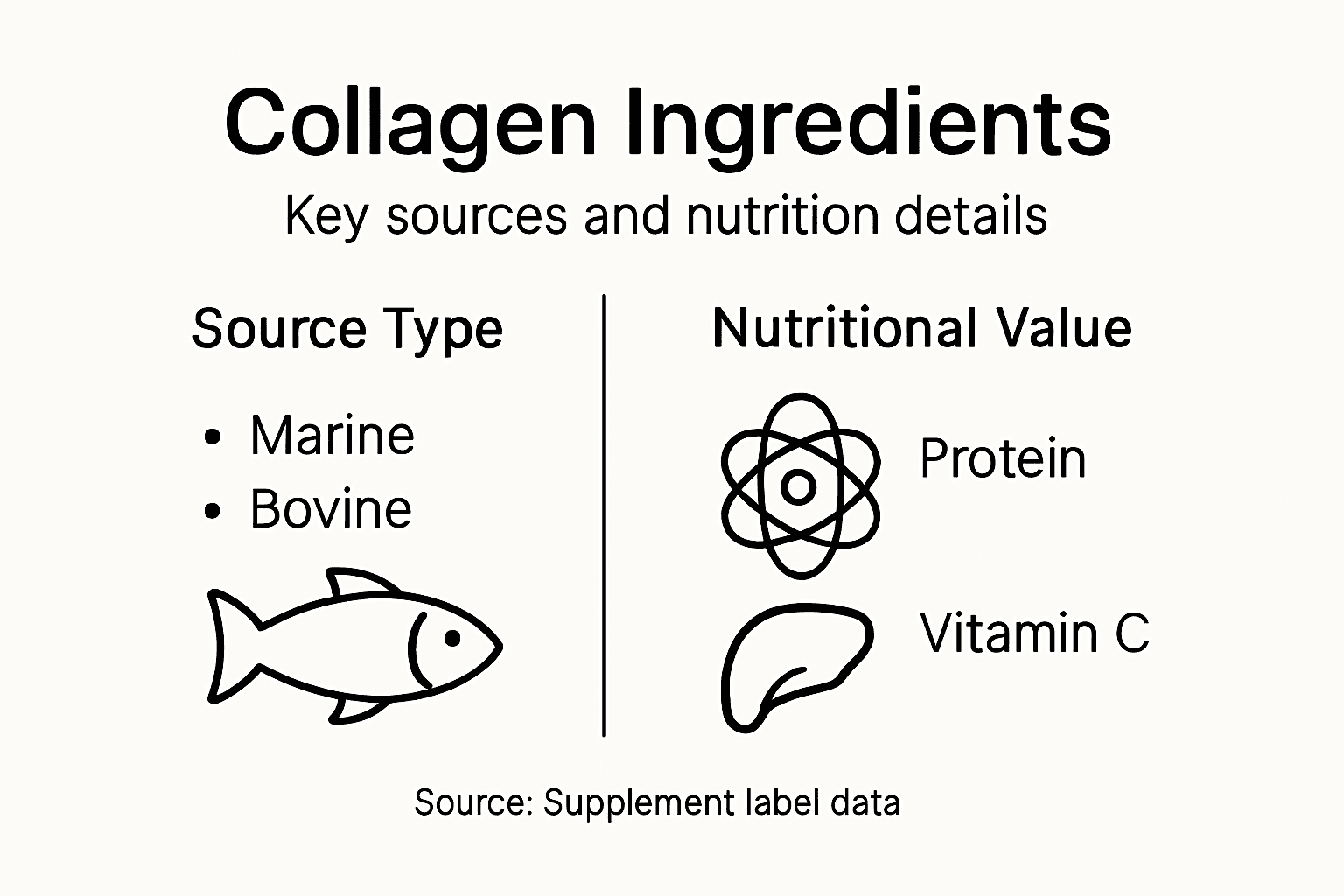
Protein Content represents the foundational nutritional value of collagen supplements. High-quality products typically contain between 10-15 grams of protein per serving, with a complete amino acid profile featuring specific peptides crucial for biological function. Glycine, proline, and hydroxyproline are the primary amino acids that distinguish collagen proteins from standard protein supplements, providing unique structural and regenerative properties.

Supplementary Nutrients play a critical role in collagen absorption and effectiveness. Vitamin C is perhaps the most important cofactor, as it directly supports collagen synthesis in the body. Hyaluronic acid, zinc, and biotin are additional ingredients that enhance the supplement’s overall nutritional impact. Why Collagen Matters for Health demonstrates how these complementary nutrients can significantly improve the body’s ability to utilise collagen effectively.
The Source and Processing of collagen ingredients are equally important nutritional considerations. Marine, bovine, and chicken sources each offer unique amino acid profiles and absorption rates. Hydrolysed collagen, which undergoes a process that breaks down protein into more easily absorbed peptides, represents the most bioavailable form. Consumers should look for supplements that clearly specify their collagen source, processing method, and molecular weight to ensure maximum nutritional benefit.
Pro tip: Always verify the molecular weight and peptide composition on the nutrition label, as lower molecular weight collagen demonstrates superior absorption and utilisation by the body.
Understanding Health Claims And Certifications
Navigation of health claims and certifications requires a sophisticated understanding of regulatory frameworks governing nutritional supplements. Collagen product regulatory requirements highlight the complex landscape of legal compliance and consumer protection. Health claims on collagen supplement labels are not simply marketing language, but carefully regulated statements that must meet stringent scientific and legal standards.
Third-Party Certifications represent crucial indicators of product quality and reliability. Informed Sport certification, for instance, indicates rigorous testing protocols that verify product purity and absence of prohibited substances. These independent assessments go beyond manufacturer claims, providing consumers with objective verification of supplement integrity. Athletes and health-conscious individuals particularly value these certifications as they demonstrate a commitment to transparency and quality control.
Health claims on collagen supplement labels must adhere to strict regulatory guidelines. The Advertising Standards Authority (ASA) in the United Kingdom mandates that all nutritional claims be substantiated by scientific evidence. Manufacturers cannot arbitrarily state health benefits without providing robust research supporting their assertions. Claims such as “supports joint health” or “improves skin elasticity” must be backed by peer-reviewed scientific studies and demonstrate a clear, measurable physiological impact.
Consumers should approach health claims with a critical eye, understanding the nuanced difference between scientifically validated statements and marketing hyperbole. Substantiated Claims typically include precise language about potential benefits, avoiding absolute statements. Look for phrases that indicate potential outcomes rather than guaranteed results, such as “may support” or “can contribute to” rather than definitive declarations of miraculous transformations.
Pro tip: Cross-reference health claims on supplement labels with independent scientific databases to verify the credibility of stated benefits and potential physiological impacts.
Spotting Quality And Avoiding Misleading Claims
Understanding the nuanced landscape of collagen supplement quality requires a discerning approach to product evaluation. Quality control in collagen supplements reveals critical indicators that separate superior products from misleading alternatives. Consumers must develop a sophisticated lens for assessing supplement integrity beyond surface-level marketing claims.
Molecular Weight stands as a fundamental marker of collagen supplement effectiveness. Scientific research indicates that high-quality collagen peptides should have a molecular weight ≤2000 Da for optimal absorption. Manufacturers genuinely committed to product quality will transparently disclose this critical specification. Supplements with undisclosed or excessively high molecular weights may signal reduced bioavailability, rendering the product significantly less effective despite impressive packaging claims.
Analytical methods for supplement verification highlight several red flags consumers should scrutinise. Misleading labelling often involves strategic marketing tactics like inflated scoop sizes, vague sourcing descriptions, and unsubstantiated purity claims. Authentic, high-quality collagen supplements will provide precise information about collagen origin (marine, bovine, or chicken), processing methodology, and complete amino acid profiles. Transparent brands confidently share detailed documentation about their product’s scientific validation and manufacturing standards.
Consumers should approach collagen supplement selection with a critical mindset, recognising that not all products deliver equivalent nutritional value. Warning Signs include generic health claims without scientific backing, absence of third-party testing certifications, and ingredient lists featuring unnecessary fillers or artificial additives. Premium collagen supplements prioritise purity, clearly stating their protein content, amino acid composition, and potential additional nutritional cofactors like vitamin C or hyaluronic acid.
Pro tip: Request detailed laboratory testing reports from manufacturers and cross-reference molecular weight specifications to ensure you’re investing in a genuinely high-quality collagen supplement.
The following table consolidates factors that indicate superior collagen supplement quality vs warning signs of low quality:
| Quality Indicator | Superior Product Features | Warning Signs of Lower Quality |
|---|---|---|
| Molecular Weight | ≤2000 Da disclosed | Not listed, higher molecule size |
| Protein/Amino Acid Detail | Complete profile, listed amino acids | Vague or absent amino acid info |
| Sourcing Transparency | Source type and origin specified | Generic animal or marine claims |
| Third-Party Certification | Informed Sport, independent testing | No certification, only brand claims |
Unlock True Collagen Quality with KUDU Nutrition
Deciphering collagen labels can be overwhelming with so many technical terms and vague claims leaving you unsure about what benefits you will actually receive. If you are seeking clear transparency on collagen types, verified molecular weight for optimal absorption, and trusted certifications like Informed Sport, KUDU Nutrition delivers exactly that. Our premium collagen protein sachets are designed for those who demand both high collagen content to support skin, joints, and bone health and a formula backed by science and ingredient honesty.
Discover our collection of 20g Collagen Protein Supplements crafted with athletes and health-conscious individuals in mind.
Experience the confidence that comes with a supplement that matches the claims on the label. Take control of your wellness routine today by choosing the gold standard in collagen supplementation. Visit https://kudunutrition.com/products/20g-collagen-protein-14-pack now to boost your beauty and fitness journey with a collagen protein that truly performs. For a broader look at how KUDU supports performance and recovery, explore KUDU Nutrition | 20g Collagen Protein for Performance & Recovery. Your path to transparent, effective collagen starts here.
Frequently Asked Questions
What do different types of collagen do?
Type I collagen supports skin elasticity and is found in skin, bones, and tendons. Type II collagen is essential for joint health and cartilage, while Type III collagen supports muscle and organ tissue strength.
How can I tell if a collagen supplement is high quality?
Look for supplements that disclose their molecular weight (ideally ≤2000 Da), provide complete amino acid profiles, and have third-party testing certifications. Transparency in sourcing and processing methods is also a key indicator of quality.
What should I look for on collagen product labels?
Focus on the type of collagen, ingredient transparency (source and processing method), protein content, additional nutrients such as vitamin C, and any third-party certifications that indicate quality and purity.
Are there any specific nutrients that enhance collagen absorption?
Yes, nutrients like vitamin C, hyaluronic acid, zinc, and biotin play vital roles in collagen synthesis and absorption, improving the overall effectiveness of collagen supplements.


