


TL;DR:
- Collagen supplements can improve skin hydration, elasticity, and joint comfort with consistent use.
- Effective dosing is typically 5 to 10 grams of hydrolyzed collagen daily for 8 to 12 weeks.
- Good results depend on quality, pairing with vitamin C, and maintaining a healthy lifestyle.
Skin that feels firmer, joints that move more freely, and a sense that your body is genuinely recovering its vitality — these are the outcomes people hope for when they reach for a collagen supplement. The problem is that the market is flooded with bold promises, conflicting advice, and products of wildly varying quality. If you’ve ever stood in a health shop wondering whether any of it actually works, you’re not alone. This guide cuts through the noise with evidence-based clarity, walking you through what collagen does, how to choose and use it wisely, what to realistically expect, and how to avoid the traps that waste your time and money.
Table of Contents
- What makes an anti-ageing supplement effective?
- How to choose and use collagen supplements for best results
- Common mistakes and safety advice
- How to know your supplement is working: tracking results and realistic expectations
- Why collagen is only part of the anti-ageing puzzle
- Discover collagen supplements formulated for real results
- Frequently asked questions
Key Takeaways
| Point | Details |
|---|---|
| Evidence-based benefits | Hydrolysed collagen may modestly improve skin hydration, elasticity and joint comfort over 8–12 weeks. |
| Optimal usage tips | Choose the right type, dose (5–10g/day), and combine with vitamin C for best results. |
| Safety first | Stick to safe doses and check for allergens; always consult a professional with health concerns. |
| Results are gradual | Noticeable improvements take weeks and depend on individual lifestyle and supplement quality. |
| Supplements complement lifestyle | Maximal anti-ageing benefit comes from using collagen supplements alongside a healthy routine. |
What makes an anti-ageing supplement effective?
Not every supplement labelled “anti-ageing” earns that title. The term covers a broad range of products, from antioxidant blends to peptide-based formulas, but collagen stands apart because it directly addresses one of the primary biological drivers of visible ageing: the gradual breakdown of structural proteins in your skin, joints, and connective tissue.
Collagen is the most abundant protein in the human body, accounting for roughly 30% of total protein mass. From your late twenties onwards, your body produces less of it each year. The result is thinner skin, reduced elasticity, and joints that feel less cushioned. Supplementing with hydrolysed collagen peptides (collagen that has been broken down into smaller, easily absorbed fragments) is the most studied approach to addressing this decline.
The science behind how these peptides work is genuinely impressive. Hydrolysed peptides are absorbed as di- and tripeptides that stimulate fibroblasts, the cells responsible for producing collagen, to increase synthesis of collagen types I and III, boost hyaluronic acid production, and inhibit enzymes that break collagen down. In plain terms: the supplement signals your body to rebuild what time has eroded.
So what does the research actually show?
| Benefit | Evidence strength | Typical timeframe |
|---|---|---|
| Skin hydration | Strong (multiple RCTs) | 8 to 12 weeks |
| Skin elasticity | Strong (multiple RCTs) | 8 to 12 weeks |
| Wrinkle reduction | Moderate | 8 to 12 weeks |
| Joint pain reduction | Moderate | 12 to 24 weeks |
| Bone density support | Early/emerging | 6 to 12 months |
Meta-analyses of randomised controlled trials confirm that collagen supplements improve skin hydration, elasticity, and reduce wrinkles after 8 to 12 weeks of consistent use. That’s meaningful, but it’s worth noting that results depend heavily on dosage, the form of collagen used, and the quality of the study behind the claim.
Key benefits supported by evidence include:
- Improved skin hydration and elasticity in women aged 35 to 65
- Reduced joint discomfort, particularly in the knees
- Support for bone mineral density in postmenopausal women
- Faster recovery from exercise-related muscle and connective tissue stress
Understanding collagen’s role in holistic health helps you set sensible expectations and choose the right product for your goals. The foundation of good nutrition and collagen production also matters enormously alongside supplementation.
How to choose and use collagen supplements for best results
Knowing that collagen works is one thing. Knowing how to use it effectively is another. Here’s a straightforward approach to getting it right.
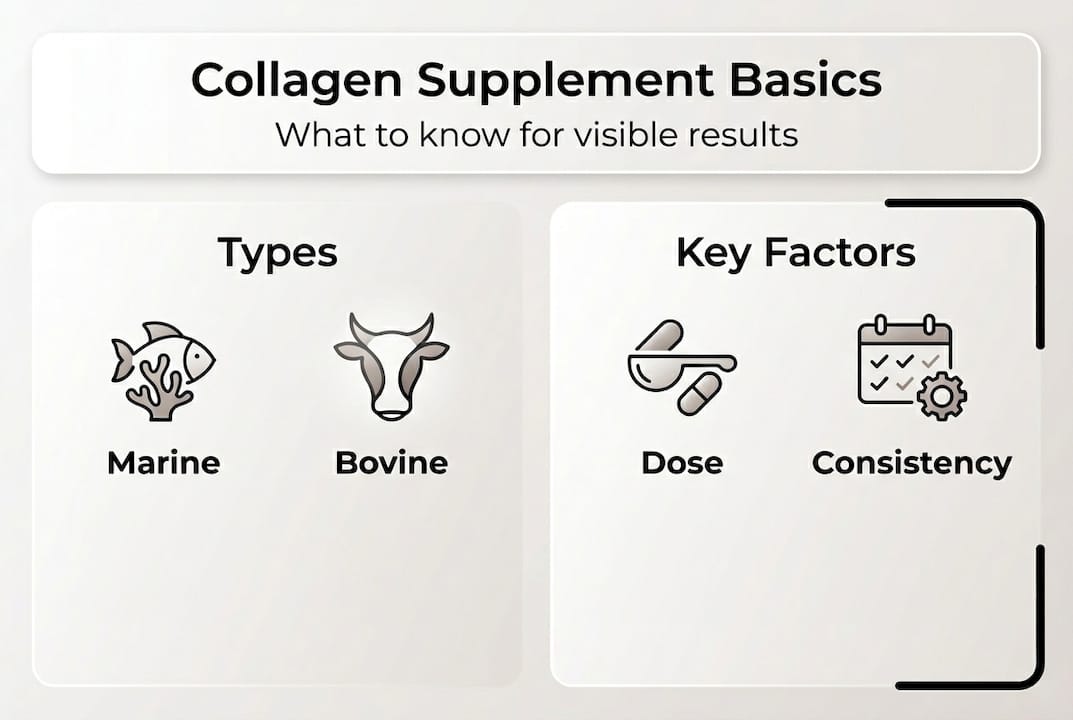
1. Choose the right source Marine collagen (from fish) is rich in type I collagen and is particularly well absorbed, making it a strong choice for skin-focused goals. Bovine collagen (from cattle) provides both types I and III, which suits a broader range of benefits including joint and skin support. Understanding the differences between marine vs bovine collagen helps you match the source to your specific goals.
2. Check the dose Hydrolysed peptides at 5 to 10g per day for 8 to 12 weeks may modestly enhance skin and joint wellness in health-conscious adults aged 30 to 60. Anything below 2.5g is unlikely to produce measurable effects.
3. Pick the right form
| Form | Pros | Cons |
|---|---|---|
| Liquid sachet | High bioavailability, convenient, pre-measured | Typically more expensive |
| Powder | Flexible dosing, mixable | Requires preparation |
| Capsule/tablet | Portable, tasteless | Lower dose per serving |
4. Pair with vitamin C Collagen synthesis depends on vitamin C as a co-factor. Taking your supplement alongside vitamin C-rich foods or supplements can meaningfully enhance the results you see.
5. Verify quality and certification Look for third-party tested products. Certifications such as Informed Sport indicate that a product has been tested for banned substances and label accuracy, which matters whether you’re an athlete or simply someone who values knowing what they’re putting into their body.
Pro Tip: Consistency is more important than timing. Taking your collagen at the same time each day, whether morning or evening, helps build the habit that produces results. Expect to wait at least eight weeks before judging effectiveness. Explore more on collagen anti-ageing explained to understand the full picture.
Common mistakes and safety advice
Even a high-quality supplement can underdeliver if you’re making avoidable errors. These are the most common mistakes people make, and how to sidestep them.
1. Skipping days repeatedly Collagen supplementation works cumulatively. Missing multiple days in a row resets the signalling process your body depends on. Treat it like brushing your teeth — daily and non-negotiable.
2. Choosing uncertified products The supplement industry is not uniformly regulated. Products without third-party verification may contain less collagen than labelled, or include undisclosed allergens. Always check for recognised certifications before purchasing.
3. Ignoring allergen information Marine collagen is derived from fish, and bovine collagen from cattle. If you have known allergies to either, read labels carefully. Some products also contain shellfish-derived ingredients. Reviewing collagen supplement safety before you start is a sensible step.
4. Expecting overnight results Many people abandon their supplement after two or three weeks, convinced it isn’t working. The biological process of collagen synthesis takes time. Impatience is the most common reason people miss out on genuine benefits.
5. Exceeding recommended doses unnecessarily More is not always better. Taking far above the studied dose does not accelerate results and may cause mild digestive discomfort.
Safety summary: Collagen is considered safe at 2.5 to 15g per day, holds GRAS (Generally Recognised As Safe) status, and serious adverse events have not been recorded in clinical trials. Mild gastrointestinal symptoms are rare. Avoid use if you have known allergies to the source protein, or in the weeks before surgery.
For a thorough breakdown of what to look for before buying, the collagen buyer’s guide is worth reading. You can also find practical guidance in our liquid collagen safety tips.
Pro Tip: If you’re managing a health condition, taking prescription medication, or pregnant, speak with your GP before starting any new supplement regime. This is straightforward due diligence, not a reason to avoid collagen entirely.
How to know your supplement is working: tracking results and realistic expectations
This is where many people get confused or discouraged. Knowing what to look for, and when, makes the difference between abandoning a supplement that’s actually helping and sticking with one that isn’t.
Signs that your collagen supplement is working include:
- Skin feels plumper and more hydrated — often one of the first noticeable changes
- Reduced tightness or discomfort in joints, particularly after exercise
- Improved skin texture when you look closely in natural light
- Faster recovery after physical activity
- Nails growing faster or feeling less brittle
These changes typically emerge between weeks 8 and 12. Joint improvements may take longer, sometimes up to 24 weeks, because cartilage and connective tissue have a slower turnover rate than skin.

The research paints an encouraging but measured picture. Some well-controlled studies show null or modest effects, particularly in trials that are not funded by the supplement industry. This doesn’t mean collagen doesn’t work — it means results vary, and honest expectations matter.
Harvard’s assessment is equally measured: evidence remains early and preliminary, with modest or variable effects depending on the individual. Collagen is not a miraculous transformation in a sachet.
Practical ways to track your progress:
- Take weekly photos in consistent lighting to spot gradual changes in skin appearance
- Keep a short skincare diary noting hydration levels, tightness, and joint comfort
- Rate your joint comfort on a simple 1 to 10 scale each week
- Avoid comparing yourself to marketing imagery, which is not representative of typical outcomes
Collagen works best as a complement to your overall health routine, not a replacement for it. Staying informed about collagen supplement trends can also help you filter genuine innovation from clever marketing.
Why collagen is only part of the anti-ageing puzzle
Here’s something the supplement industry rarely says loudly: collagen alone will not make you look or feel significantly younger. We’ve seen the data, we believe in the product, and we still think it’s important to say this plainly.
The uncomfortable truth is that lifestyle factors — consistent sun protection, a diet rich in antioxidants and protein, regular resistance exercise, quality sleep — have a far greater cumulative impact on how your skin and joints age than any supplement can. Collagen fills a genuine gap, particularly as your body’s own production declines, but it fills a gap within a broader framework.
The people who see the best results from collagen are those who use it as part of a coherent health routine, not as a shortcut. Modest, research-backed gains compound over time when they’re supported by good daily habits. Reviewing a comprehensive collagen buying guide helps you invest wisely rather than chasing trends. The goal is sustainable vitality, and that’s built layer by layer.
Discover collagen supplements formulated for real results
If this guide has helped you see collagen supplementation more clearly, the next step is finding a product that actually delivers on what the science supports. KUDU Nutrition’s premium collagen protein gels are formulated with 20g of hydrolysed collagen per serving, Informed Sport certified, and designed for people who take their health seriously.
Our 20g liquid collagen protein sachets make consistent daily supplementation straightforward, with no mixing or measuring required. For a broader look at how collagen supports skin, joints, and overall wellness, visit our collagen and beauty hub and explore the full range of formulations built around transparency and quality.
Frequently asked questions
How quickly can I expect results from collagen supplements?
Most people notice meaningful changes in skin hydration, elasticity, or joint comfort after 8 to 12 weeks of consistent daily supplementation at 2.5 to 10g per day.
Are collagen supplements safe for everyone?
Collagen is generally safe at 2.5 to 15g per day with rare, mild side effects, but avoid use if you have allergies to the source protein or are preparing for surgery, and consult your GP if you’re unsure.
Do collagen supplements replace a healthy lifestyle?
No — collagen benefits are modest and work best alongside a balanced diet, regular exercise, and sun protection rather than as a substitute for healthy habits.
Which type of collagen is best for skin and joints?
Types I and III suit skin goals best, while type II is more targeted for joint health — marine collagen tends to be richer in type I, whereas bovine collagen provides a broader type I and III profile.


