


Finding the right collagen supplement can feel overwhelming for British women who want glowing skin and strong joints. As natural collagen production drops with age, interest in proven solutions rises. With over 80 percent of health-conscious women in the United Kingdom now considering collagen supplementation, understanding what actually works has never been more relevant. Explore what sets collagen powders and liquids apart, the science behind absorption, and key tips to make your nutrition choices smarter and safer.
Table of Contents
- What Is Collagen Supplementation?
- Types Of Collagen: Liquid And Powder
- Absorption And Bioavailability Insights
- Ingredient Transparency And Additives
- Choosing Based On Lifestyle And Health Goals
- Potential Risks, Costs, And Mistakes To Avoid
Key Takeaways
| Point | Details |
|---|---|
| Collagen Supplementation Benefits | Regular collagen supplementation can enhance skin elasticity, joint mobility, and muscle recovery, especially for women experiencing age-related changes. |
| Types and Choices | Women should consider whether powdered or liquid collagen best aligns with their lifestyle and health goals, as both have unique advantages. |
| Absorption Factors | Effective collagen absorption depends more on peptide size and quality than on the supplement’s physical form. |
| Potential Risks | Users should be mindful of digestive complications and consult healthcare professionals if they have pre-existing conditions or specific dietary needs. |
What Is Collagen Supplementation?
Collagen is the body’s most abundant protein, forming a crucial structural foundation for skin, bones, muscles, and connective tissues. When natural collagen production declines with age, supplementation becomes an increasingly attractive option for women seeking to maintain their physiological resilience and aesthetic health. Collagen peptide supplementation offers a targeted approach to replenishing this essential protein.
At its core, collagen supplementation involves consuming hydrolyzed collagen peptides that can be easily absorbed by the body. These peptides are typically derived from animal sources like bovine, marine, or chicken proteins, which are broken down into smaller, more digestible molecules. The goal is to provide the body with the precise amino acid building blocks needed to support natural collagen synthesis, potentially improving skin elasticity, joint mobility, and muscle recovery.
Research indicates promising benefits across multiple health domains. Clinical studies suggest that consistent collagen supplementation can positively impact bone mineral density, muscle performance, and support overall musculoskeletal health. Particularly for women experiencing age-related changes, these supplements represent a proactive strategy for maintaining physical resilience and combating the natural decline in protein production.
Pro tip: Consider consulting a nutritionist to determine the most appropriate collagen supplement type and dosage for your specific health goals and lifestyle needs.
Types Of Collagen: Liquid And Powder
Understanding the differences between liquid and powder collagen can help UK women make informed decisions about their nutritional supplementation strategies. Collagen formulations vary significantly in their physicochemical properties, absorption rates, and potential benefits, making it crucial to explore each type’s unique characteristics.
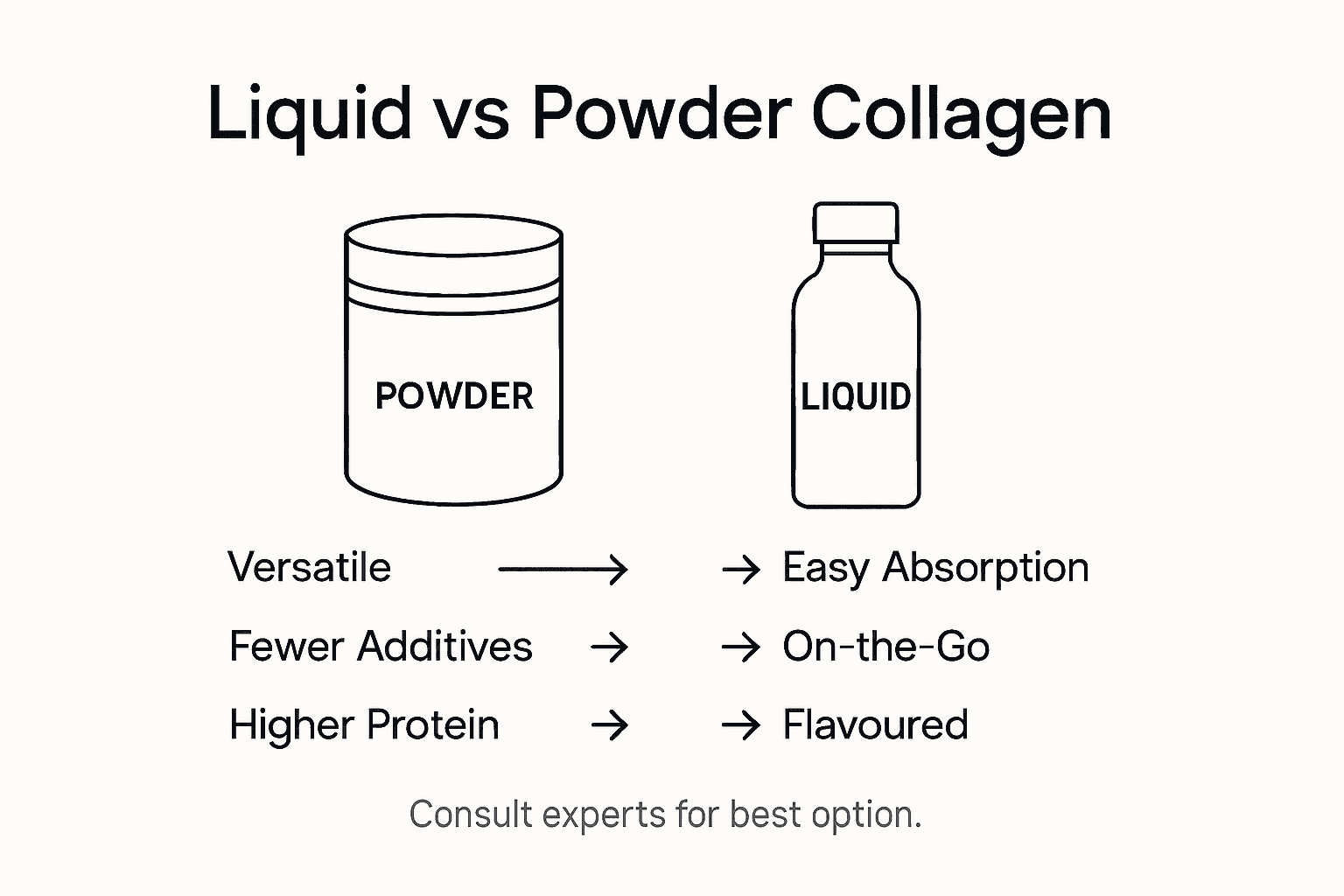
Powder collagen typically offers higher protein concentration and greater versatility in usage. It can be easily mixed into beverages, smoothies, or recipes, allowing for flexible dosage control and seamless integration into daily nutrition. These powdered supplements often contain a more concentrated form of collagen peptides, enabling users to adjust serving sizes according to individual health requirements and fitness goals.
Liquid collagen, by contrast, provides enhanced solubility and potentially faster absorption. The hydrolyzed peptides in liquid formats are pre-broken down into smaller molecular structures, which may facilitate more rapid nutrient uptake. This characteristic makes liquid collagen particularly appealing for individuals seeking quick and convenient supplementation, especially those with busy lifestyles who prefer ready-to-drink solutions.
Both liquid and powder collagen forms offer distinct advantages, and the optimal choice depends on personal preferences, dietary habits, and specific health objectives. Some women might prefer the measured precision of powder supplements, while others may appreciate the convenience of pre-prepared liquid collagen sachets.
Here is a concise comparison of powdered and liquid collagen supplement characteristics, helping you choose the format most aligned with your needs:
| Aspect | Powder Collagen | Liquid Collagen |
|---|---|---|
| Dosage Control | Easily adjustable | Pre-measured for convenience |
| Ingredient Purity | Usually few additives | Often includes preservatives |
| Preparation | Needs mixing with drinks | Ready to consume |
| Storage | Long shelf life | Shelf stable, but bulkier |
Pro tip: Consider experimenting with both liquid and powder collagen formats to determine which best suits your individual absorption rate, taste preferences, and lifestyle requirements.
Absorption And Bioavailability Insights
Navigating the complex world of collagen supplementation requires understanding the nuanced science of absorption and bioavailability. Scientific research reveals that the effectiveness of collagen supplements hinges more on molecular processing than the physical form of delivery.
The key to optimal collagen absorption lies in hydrolysis, a critical process that breaks down large protein molecules into smaller, more easily absorbed peptides. Both liquid and powder collagen undergo this transformation, which means the fundamental mechanism of nutrient uptake remains remarkably similar across different formats. Research consistently demonstrates that peptide size, typically ranging between 3-6 kilodaltons, is far more influential in determining bioavailability than whether the supplement arrives in a liquid or powdered state.
Interestingly, the body’s ability to utilise collagen peptides depends on multiple factors beyond just the supplement’s physical form. Factors such as individual metabolism, concurrent nutrient intake, overall diet, and personal health status play significant roles in how effectively collagen is absorbed and integrated into bodily systems. This complexity means that while supplement form matters, it’s not the sole determinant of nutritional efficacy.
For UK women seeking optimal collagen supplementation, the most critical considerations should include peptide quality, molecular weight, additional nutritional components, and personal absorption characteristics rather than getting overly fixated on liquid versus powder formats.
Pro tip: Consult with a nutritionist to conduct a personalised assessment of your collagen absorption potential and identify the most suitable supplement format for your unique physiological needs.
Ingredient Transparency And Additives
For health-conscious UK women, understanding the nuanced world of collagen supplement ingredients has become increasingly important. Research reveals significant differences in how powdered and liquid collagen formulations approach ingredient transparency and additive management.
Powdered collagen supplements typically offer greater ingredient purity, presenting a more straightforward nutritional profile with minimal additional components. These formulations often allow consumers more control over their supplementation, enabling mixing with preferred beverages without compromising taste or introducing unnecessary stabilisers. The powder format inherently supports a cleaner ingredient list, appealing to those seeking a more transparent nutritional approach.

Liquid collagen, by contrast, requires more complex formulation to maintain shelf stability. These products frequently incorporate preservatives, stabilising agents, and additional ingredients that might not align with every consumer’s dietary preferences. The convenience of pre-mixed liquid supplements often comes with a trade-off in ingredient simplicity, potentially introducing artificial additives or unnecessary chemical compounds that discerning consumers may wish to avoid.
The critical consideration for UK women should be reading labels meticulously, understanding each ingredient’s purpose, and selecting supplements that prioritise natural, minimally processed collagen peptides. Certifications, third-party testing, and transparent sourcing can provide additional reassurance about a product’s overall quality and ingredient integrity.
Pro tip: Always examine the ingredient list carefully, prioritising supplements with minimal, recognisable components and avoiding those with extensive lists of unpronounceable additives.
Choosing Based On Lifestyle And Health Goals
Selecting the ideal collagen supplement requires a nuanced understanding of individual health objectives, lifestyle demands, and physiological needs. The decision between liquid and powder collagen is not merely about form, but about harmonising nutritional support with personal wellness strategies.
For fitness-focused women seeking muscle recovery and joint support, bovine collagen often emerges as the preferred choice. Powdered supplements provide greater dosage flexibility, allowing precise tailoring to workout intensity and recovery requirements. Athletes and active professionals can easily integrate powdered collagen into protein shakes, smoothies, or post-exercise nutrition, making it an adaptable solution for those with dynamic fitness routines.
Conversely, women prioritising skin health and anti-ageing benefits might gravitate towards marine collagen, which typically offers superior absorption and is renowned for promoting skin elasticity. Lifestyle considerations play a crucial role in determining the most suitable supplement format. Busy professionals seeking convenience might prefer liquid collagen sachets, while those who enjoy nutritional customisation may opt for powdered formats that can be seamlessly integrated into various dietary preparations.
Ultimately, successful collagen supplementation transcends product type, demanding consistent daily consumption, complementary nutrition, and alignment with individual health goals. Factors such as age, specific wellness objectives, dietary restrictions, and personal preferences should guide the selection process.
For guidance, here’s a summary linking supplement source, typical benefits, and ideal users for different collagen types:
| Collagen Source | Key Benefit | Best For | Common Format |
|---|---|---|---|
| Bovine | Muscle, joint health | Athletes, active women | Powder |
| Marine | Skin elasticity | Anti-ageing focus | Powder or liquid |
| Chicken | Ligament support | Mobility improvement | Powder |
Pro tip: Consult a nutritionist to conduct a personalised assessment that matches your unique physiological requirements with the most appropriate collagen supplementation strategy.
Potential Risks, Costs, And Mistakes To Avoid
Collagen supplementation, while beneficial, requires careful consideration to mitigate potential risks and financial pitfalls. Understanding potential health precautions is crucial for making informed nutritional decisions that prioritise personal wellbeing.
Digestive complications represent the most common side effect for women exploring collagen supplements. Some individuals may experience bloating, mild gastrointestinal discomfort, or temporary changes in bowel movements, particularly when introducing higher dosages or new supplement formats. These reactions are typically transient and can often be minimised by starting with smaller doses and gradually increasing intake, allowing the body to adapt to the new nutritional supplement.
Cost considerations extend beyond the immediate price point of supplements. Discerning consumers should evaluate long-term value by examining factors such as ingredient quality, peptide concentration, additional nutritional benefits, and potential absorption rates. Cheaper supplements might compromise on purity, potentially containing unnecessary fillers or lower-grade collagen peptides that diminish overall nutritional effectiveness. Investing in high-quality, scientifically validated collagen supplements from reputable sources ultimately provides more sustainable health benefits.
Certain demographic groups require heightened caution when considering collagen supplementation. Individuals with pre-existing kidney conditions, pregnant or breastfeeding women, and those with specific protein allergies should consult healthcare professionals before initiating any new supplement regimen. Transparent communication with medical practitioners ensures personalised guidance aligned with individual health circumstances.
Pro tip: Conduct thorough research, compare multiple supplement options, and always prioritise products with clear ingredient transparency and third-party testing certifications.
Discover the Best Collagen Supplement for Your Needs
Choosing between liquid and powder collagen can be confusing, especially when you want the best results for skin, joint, and fitness recovery. This article highlights the challenge many UK women face: finding a collagen supplement that delivers high bioavailability, ingredient transparency, and fits their lifestyle. Key goals include enhancing skin elasticity, supporting muscle recovery, and maintaining joint health. Understanding terms like “hydrolysed collagen peptides” and the importance of molecular weight can help you make an informed choice.
For those seeking a premium solution with proven benefits, explore our 20g Collagen Protein Supplements. KUDU Nutrition offers liquid collagen protein sachets designed with high collagen content, excellent taste, and quality certifications such as Informed Sport. Our formula supports enhanced skin, joint, and bone health while meeting the needs of busy, health-conscious women and athletes.

Take control of your collagen routine today with KUDU Nutrition | 20g Collagen Protein for Performance & Recovery. Enjoy the convenience of liquid collagen combined with the science-backed benefits discussed in the article. Act now and experience nutritional transparency and results that align with your beauty and fitness goals by ordering directly from https://kudunutrition.com/products/20g-collagen-protein-14-pack.
Frequently Asked Questions
What are the main differences between liquid and powder collagen?
Liquid collagen offers enhanced solubility and faster absorption, while powder collagen provides a higher protein concentration and dosage flexibility. The choice between them depends on individual preferences and lifestyle needs.
How does collagen absorption work?
Collagen absorption primarily relies on the hydrolysis process, which breaks down the large protein molecules into smaller, absorbable peptides. Both liquid and powder collagen are effective if they contain these hydrolysed peptides.
What should I consider when choosing a collagen supplement?
Consider factors such as your specific health goals, the type of collagen (bovine, marine, or chicken), your dietary habits, and how each format fits into your daily routine. Ingredient transparency and quality are also critical.
Are there any potential side effects of collagen supplementation?
Some individuals may experience mild digestive issues such as bloating or gastrointestinal discomfort, especially with higher dosages. It’s advisable to start with a smaller dose and gradually increase to minimise these effects.