


Every british athlete knows that muscle soreness can linger far longer than the workout itself. Recovery is no small matter when your performance and long-term joint health are on the line. Research shows that protein is vital for muscle repair and adaptation, but not all types benefit the body equally. If you are a health-focused brit looking for smarter ways to support recovery and slow visible aging, this guide puts the latest science at your fingertips.
Table of Contents
- Defining The Role Of Protein In Recovery
- Collagen Versus Other Protein Types
- How Collagen Supports Muscle And Joints
- Protein Timing And Dosage For Recovery
- Benefits, Risks, And Common Misconceptions
- Choosing Quality Collagen Supplements
Key Takeaways
| Point | Details |
|---|---|
| Protein is Essential for Recovery | Protein intake is crucial for muscle repair and recovery after exercise, influencing the muscle protein synthesis process. Optimising protein consumption can significantly enhance recovery outcomes. |
| Collagen Has Specific Advantages | Unlike traditional protein sources, collagen supports connective tissue repair and joint health, making it beneficial for athletes concerned with long-term musculoskeletal integrity. |
| Timing and Quantity Matter | Consistent protein intake throughout the day is more effective than consuming it within a strict post-exercise window. Aim for approximately 20-30 grams of protein per meal to support muscle recovery. |
| Quality of Supplements is Critical | When selecting collagen supplements, assess their source, processing methods, and third-party testing to ensure optimal effectiveness and safety. |
Defining the Role of Protein in Recovery
Protein plays a critical role in muscle recovery, functioning as more than just a basic nutritional component. Nutrition research highlights protein’s fundamental importance in skeletal muscle repair and adaptation, revealing a complex mechanism that extends far beyond simple muscle rebuilding.
The recovery process involves intricate biochemical pathways where protein metabolism becomes paramount. When muscles undergo stress during exercise, they experience microscopic damage that requires precise amino acid reconstruction. Protein intake triggers muscle protein synthesis, enabling damaged muscle fibres to reconstruct and strengthen. Scientific studies demonstrate that muscle tissue can incorporate substantial amounts of protein-derived amino acids over extended post-exercise periods, indicating a sophisticated biological response to nutritional input.
Recovery protein requirements vary based on exercise intensity, individual metabolism, and training goals. Resistance-trained athletes, for instance, require more nuanced protein strategies compared to casual fitness enthusiasts. Key considerations include protein quantity, timing, and amino acid profile. Consuming proteins with complete amino acid chains - particularly those rich in leucine - can significantly accelerate muscle repair and growth processes.
Pro tip: Aim to consume 20-30 grams of high-quality protein within 30 minutes post-exercise to optimise muscle recovery and protein synthesis rates.
Collagen Versus Other Protein Types
When comparing protein types for fitness and recovery, collagen presents a unique profile that distinguishes it from traditional protein sources. Scientific studies reveal that collagen provides critical precursors for muscle connective protein synthesis, despite lacking some essential amino acids, making it a specialised supplement for athletes and fitness enthusiasts.
Traditional protein sources like whey and casein are renowned for muscle protein synthesis, but collagen offers distinct advantages. Hydrolyzed collagen demonstrates a remarkable ability to stimulate collagen synthesis responses, particularly beneficial for supporting tendons and connective tissues. While other proteins primarily focus on muscle rebuilding, collagen targets the structural components that enable muscle function, providing a complementary approach to recovery.

The amino acid composition of collagen sets it apart from standard protein supplements. Rich in glycine and proline, collagen supports joint health, skin elasticity, and connective tissue repair. Protein comparison research indicates that collagen supplementation can be more targeted for athletes concerned with joint integrity and long-term tissue maintenance, rather than just muscle mass development.
Here’s how major protein types support fitness and recovery:
| Protein Type | Primary Function | Key Amino Acids | Best For |
|---|---|---|---|
| Whey Protein | Rapid muscle synthesis | Leucine, Isoleucine | Muscle growth, fast recovery |
| Casein Protein | Sustained amino acid release | Glutamine, Lysine | Overnight muscle repair |
| Collagen (Hydrolysed) | Connective tissue support | Glycine, Proline | Joint health, tendon strength |
| Plant-Based Protein | Muscle repair, vegan option | Varies by source | Vegetarian and vegan athletes |
Pro tip: Consider combining collagen with vitamin C to enhance protein absorption and maximise connective tissue repair mechanisms.
How Collagen Supports Muscle and Joints
Research demonstrates that collagen plays a pivotal role in supporting muscle and joint functionality, offering athletes and fitness enthusiasts a targeted approach to musculoskeletal recovery. Unlike generic protein supplements, collagen provides specialised amino acids that directly contribute to connective tissue repair and structural integrity.
The mechanism of collagen’s support extends beyond simple muscle rebuilding. Bioactive collagen peptides have been scientifically proven to enhance tendon remodeling and muscle structural adaptations during resistance training. Specific studies highlight how collagen ingestion combined with strength training can improve muscle and tendon hypertrophy, mechanical properties, and overall functional outcomes.
Particularly noteworthy is collagen’s unique ability to support joint health. By providing essential amino acids like glycine and proline, collagen helps maintain cartilage elasticity, reduce inflammation, and support the body’s natural healing processes. Athletes experiencing repetitive joint stress can benefit from targeted collagen supplementation that addresses both immediate recovery and long-term musculoskeletal maintenance.
Pro tip: Consume collagen supplements 30-60 minutes before resistance training to maximise absorption and support joint and muscle recovery mechanisms.
Protein Timing and Dosage for Recovery
Recent nutritional research challenges traditional beliefs about protein intake windows, revealing a more nuanced understanding of muscle protein synthesis. Contrary to previous assumptions, athletes have a much broader opportunity for protein absorption and muscle recovery that extends well beyond the immediate post-exercise period.
The conventional wisdom of consuming protein within a strict 30-minute post-workout window has been substantially revised. Protein dosage now emphasises consistent intake throughout the day, with recommended quantities of approximately 20-30 grams per meal. This approach ensures a steady supply of amino acids, supporting muscle repair and growth more effectively than sporadic, large protein consumption.
Individual factors such as body weight, training intensity, and specific fitness goals significantly influence optimal protein timing and quantity. Endurance athletes, strength trainers, and recreational fitness enthusiasts will have varying protein requirements. The scientific consensus suggests a more holistic approach to protein consumption, focusing on total daily intake and consistent distribution rather than rigid post-workout supplementation strategies.
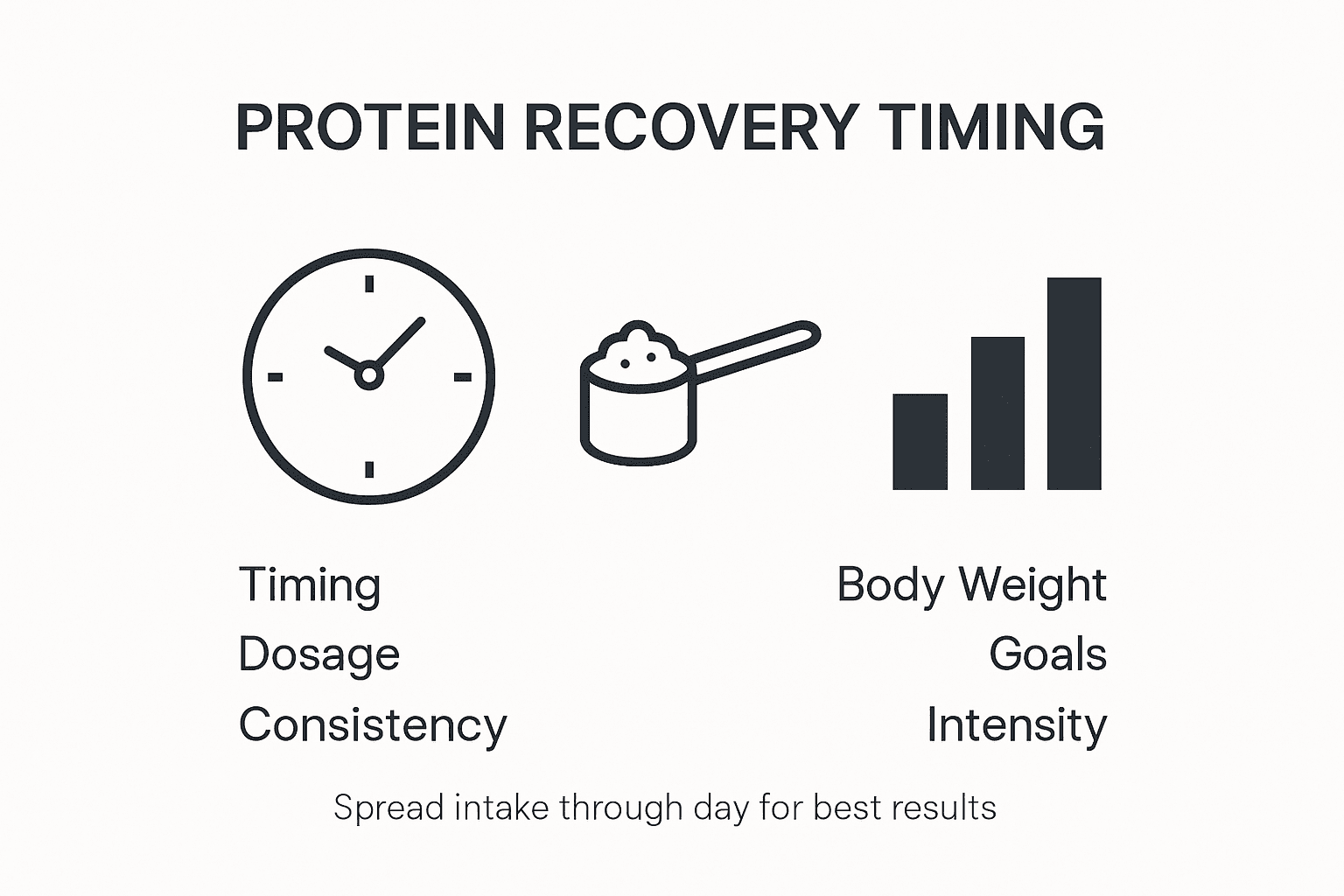
Pro tip: Calculate your protein requirements based on body weight (1.6-2.2 grams per kilogram) and spread your intake across 4-5 balanced meals throughout the day.
Benefits, Risks, and Common Misconceptions
Protein supplementation research reveals a complex landscape of potential benefits and nuanced considerations, challenging simplistic views about muscle recovery and nutrition. Understanding the intricate balance between protein intake, individual physiology, and exercise demands is crucial for athletes seeking optimal performance and recovery.
The benefits of protein supplementation extend beyond basic muscle repair, with research indicating potential improvements in muscle function, reduced soreness, and enhanced recovery. However, these advantages are not universal or guaranteed. Individual factors such as exercise type, intensity, and personal metabolism significantly influence the effectiveness of protein intake. Scientific investigations suggest that protein’s role is most effective when integrated strategically with overall nutrition and training approaches.
Common misconceptions about protein supplementation can lead athletes astray. Many individuals overestimate their protein requirements or assume that consuming large quantities will automatically translate to improved performance. In reality, research demonstrates that protein’s effectiveness depends on nuanced factors beyond simple quantity, including timing, type, and individual metabolic response. Potential risks remain minimal but can include gastrointestinal discomfort or nutrient imbalances if supplementation is not approached thoughtfully.
Pro tip: Consult a nutritionist to develop a personalised protein strategy tailored to your specific training goals, body composition, and metabolic profile.
Choosing Quality Collagen Supplements
Selecting high-quality collagen supplements requires understanding the intricate structural and functional properties that differentiate superior products, ensuring optimal bioavailability and effectiveness for fitness and recovery goals. Not all collagen supplements are created equal, and discerning athletes must look beyond marketing claims.
Collagen types play a crucial role in supplement selection. Research highlights the importance of verifying specific collagen variants and their processing techniques to preserve the critical triple helix structure essential for biological function. Different collagen types (I, II, III) target distinct physiological systems, with Type I supporting skin and bone, Type II benefiting joint cartilage, and Type III contributing to muscle and organ tissue health.
Key evaluation criteria for quality collagen supplements include source transparency, manufacturing process, hydrolysate quality, and third-party testing. The most effective supplements undergo rigorous testing and provide clear documentation about their peptide bioactivity. Athletes should prioritise supplements that offer:- Verified source origin- Hydrolysed peptide formulation- Scientifically validated absorption rates- Independent laboratory testing results
The following table outlines key criteria for selecting effective collagen supplements:
| Criterion | Why It Matters | What To Look For |
|---|---|---|
| Source Transparency | Ensures product purity | Clear origin and ingredient list |
| Processing Method | Affects bioavailability | Hydrolysed, gentle manufacturing |
| Collagen Type | Targets specific tissues | Type I, II, or III specified |
| Third-Party Testing | Guarantees safety and quality | Published lab results, certifications |
Pro tip: Look for collagen supplements with Informed Sport certification and transparent amino acid profile documentation to ensure maximum quality and performance potential.
Unlock Your Full Recovery Potential with Targeted Collagen Support
Recovering from intense workouts requires more than just generic protein intake. This article highlights the unique role collagen plays in rebuilding connective tissues, supporting joint health, and enhancing muscle function through specialised amino acids like glycine and proline. If you are serious about optimising your fitness recovery and protecting your joints for the long term, embracing a collagen-focused approach can make a critical difference.
Discover how KUDU Nutrition’s liquid collagen protein sachets offer a premium solution that combines high collagen content, superior taste, and trusted quality certifications. Designed for athletes, health-conscious consumers, and individuals seeking beauty and fitness benefits, our 20g Collagen Protein Supplements deliver targeted muscle and joint support supported by transparent nutritional data.

Elevate your recovery routine today by choosing a collagen supplement scientifically proven to maximise connective tissue repair and muscle resilience. Visit our product page now to experience the edge collagen offers for fitness and well-being. Don’t wait to give your body the specialised care it deserves—start your journey to stronger joints and enhanced recovery with KUDU Nutrition’s 20g Collagen Protein.
Frequently Asked Questions
What role does protein play in muscle recovery?
Protein is essential for muscle recovery as it triggers muscle protein synthesis, allowing damaged fibres to rebuild and strengthen after exercise.
How does collagen differ from traditional protein supplements?
Collagen supports connective tissue repair and joint health, focusing on structural components, whereas traditional proteins like whey and casein primarily promote muscle growth and repair.
What is the ideal timing and dosage for protein intake after exercise?
Aim to consume 20-30 grams of high-quality protein within 30 minutes post-exercise, with a focus on consistent daily intake of 1.6-2.2 grams per kilogram of body weight spread across meals.
Can collagen supplementation improve joint health?
Yes, collagen provides essential amino acids like glycine and proline, which support cartilage elasticity, reduce inflammation, and enhance joint health, making it beneficial for athletes and individuals with joint concerns.