


Over one third of British adults are now exploring supplements that claim to support joint, skin, and bone health. This growing curiosity highlights how collagen, a protein once overlooked, has captured public attention. Understanding how collagen works—and why its structure matters—can help you choose products that truly support your body. Discover how the unique properties of this protein might make a real difference for British wellness routines.
Table of Contents
- Collagen Explained: Structure and Function
- Types of Collagen and Dietary Sources
- Health Benefits for Skin, Joints, and Bones
- Collagen Absorption and Supplement Effectiveness
- Comparing Collagen Supplements and Quality Standards
Key Takeaways
| Point | Details |
|---|---|
| Collagen’s Role | Collagen acts as a crucial structural protein in the body, providing support and flexibility to various tissues. It is essential for overall bodily integrity and health maintenance. |
| Types and Sources | There are 28 collagen types, with Types I, II, III, and IV being the most prominent. Dietary sources include bone broth, fish, and animal proteins that support collagen production. |
| Health Benefits | Collagen is vital for skin elasticity, joint mobility, and bone strength, contributing to long-term physiological wellness and recovery. |
| Supplement Quality | Selecting high-quality collagen supplements is important for bioavailability; factors such as source, processing, and third-party certification significantly affect efficacy. |
Collagen Explained: Structure and Function
Collagen represents a complex protein fundamental to biological systems, serving as a critical structural component in numerous tissues throughout the human body. At its core, collagen functions like a molecular scaffold, providing strength, flexibility, and support to cells and connective tissues. Collagen synthesis processes involve intricate biochemical pathways that transform individual amino acid building blocks into robust protein structures.
The structural composition of collagen is remarkable, featuring a distinctive triple helix configuration that resembles a tightly wound rope. This unique molecular architecture allows collagen to exhibit extraordinary mechanical properties, enabling it to withstand significant tensile stress while maintaining remarkable flexibility. Researchers studying bone health and connective tissues have discovered that this protein’s hierarchical structure contributes substantially to its ability to provide mechanical support across various biological systems.
Beyond its structural role, collagen plays pivotal functions in multiple physiological processes. Different collagen types exist, each specialising in specific tissue requirements - from providing elasticity in skin to supporting joint mobility and ensuring cellular communication. The protein’s biosynthesis involves complex enzymatic reactions that carefully construct these molecular chains, ensuring precise protein folding and cross-linking. Understanding these intricate mechanisms helps explain why collagen is so crucial for maintaining overall bodily integrity and supporting critical functions in fitness, recovery, and cellular health.
Types of Collagen and Dietary Sources
Collagen types represent a diverse family of proteins, each with unique structural characteristics and physiological functions. Researchers investigating collagen’s complex molecular architecture have identified at least 28 distinct collagen types, though four primary types dominate human biological systems. These fundamental variants include Type I (most abundant, found in skin, tendons, and bones), Type II (primarily in cartilage), Type III (supporting skin and blood vessels), and Type IV (crucial for cellular basement membranes).
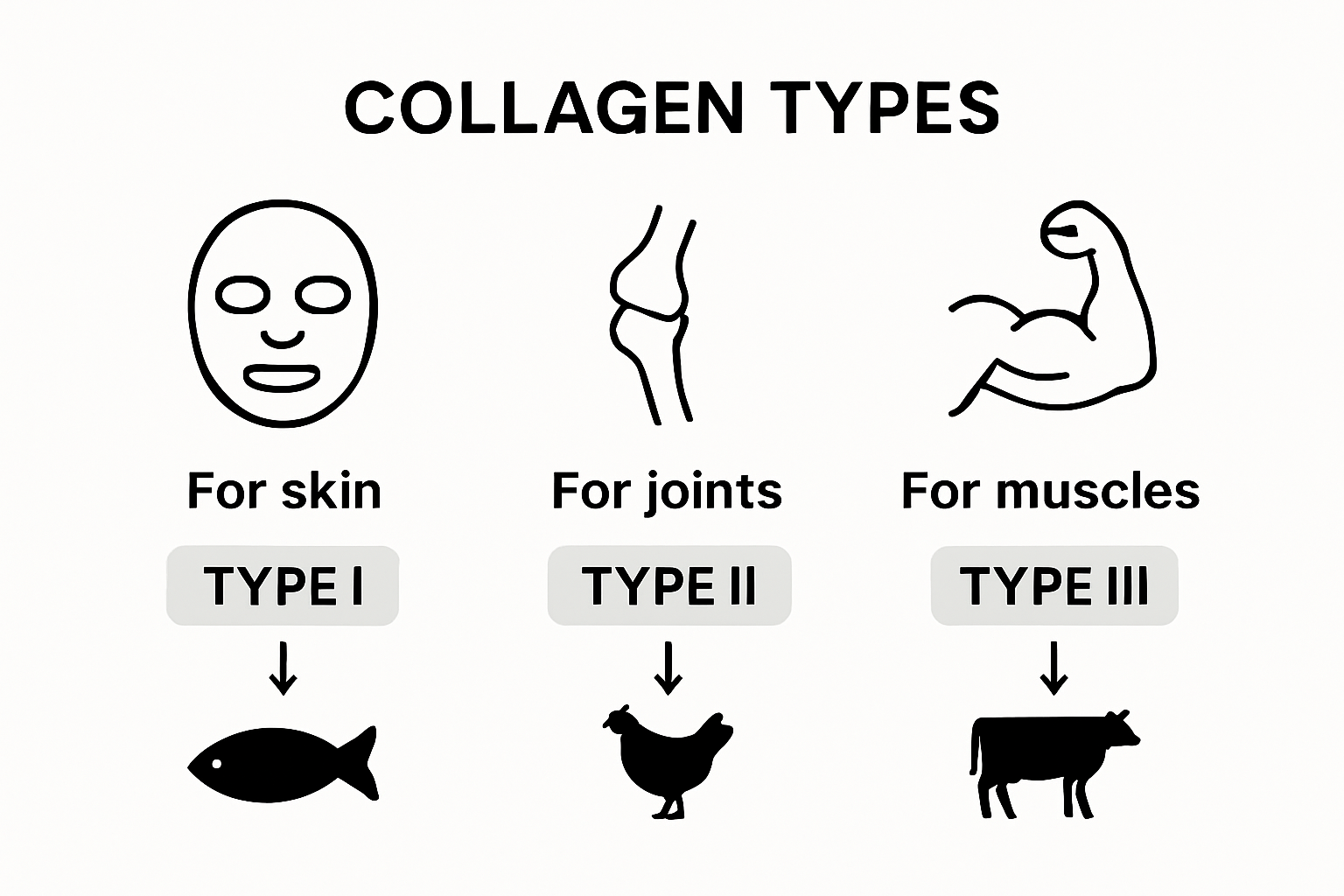
Dietary sources of collagen vary significantly, with animal-based proteins offering the most comprehensive amino acid profiles. Bone broth, fish, chicken, egg whites, and beef contain substantial collagen precursors. Nutritional strategies for active individuals often recommend consuming protein-rich foods that support natural collagen production. Some key dietary considerations include incorporating foods rich in vitamin C, proline, glycine, and copper - essential nutrients that facilitate collagen synthesis and protein cross-linking.
Understanding collagen’s dietary intake requires recognising that direct consumption doesn’t guarantee absorption. The human body breaks down dietary collagen into amino acids, which are then reassembled into new proteins. This complex process means that supplementation or strategic nutritional planning becomes crucial for individuals seeking to optimise their collagen intake, particularly athletes, fitness enthusiasts, and those concerned with skin elasticity and joint health. Consuming a balanced diet with protein diversity and potentially targeted collagen supplements can support the body’s natural regenerative processes and maintain robust connective tissue infrastructure.
Health Benefits for Skin, Joints, and Bones
Collagen plays a transformative role in maintaining critical physiological systems, with remarkable regenerative properties that support skin elasticity, joint mobility, and bone strength. Collagen’s unique mechanical properties enable it to provide structural integrity and resilience across multiple bodily tissues. For skin health, collagen acts as a fundamental protein that maintains elasticity, reduces wrinkle formation, and supports the skin’s natural moisture retention mechanisms, helping individuals maintain a youthful and vibrant appearance.
In joint and bone health, collagen serves as a crucial biological scaffold that supports mobility and structural integrity. Research into collagen scaffolds demonstrates its exceptional capacity to repair and regenerate connective tissues, potentially mitigating age-related degradation. Athletes and fitness enthusiasts can particularly benefit from collagen’s ability to support cartilage regeneration, reduce joint inflammation, and enhance overall musculoskeletal recovery, making it an essential component of comprehensive nutritional strategies.

The holistic impact of collagen extends beyond immediate structural support, influencing long-term physiological wellness. By promoting cellular repair, supporting protein synthesis, and providing essential amino acids, collagen contributes to comprehensive health maintenance. Joint health strategies emphasise the importance of consistent collagen intake for preventing age-related mobility restrictions and maintaining robust connective tissue infrastructure. For individuals seeking to optimise their physical performance and age gracefully, understanding and implementing targeted collagen nutritional approaches can be transformative.
Collagen Absorption and Supplement Effectiveness
Protein bioavailability represents a complex biochemical process that significantly impacts nutritional supplementation strategies. Collagen’s mechanical properties and absorption mechanisms reveal that not all dietary proteins are processed identically by the human body. Hydrolysed collagen peptides, which are broken down into smaller molecular fragments, demonstrate superior absorption rates compared to traditional whole protein sources. This advanced processing enables more efficient cellular uptake, allowing the body to more effectively utilise amino acid chains critical for tissue repair and regeneration.
The effectiveness of collagen supplements depends on multiple physiological factors, including age, overall nutritional status, and individual metabolic processes. Regenerative medicine research suggests that younger individuals typically demonstrate higher absorption rates and more rapid protein synthesis. Factors such as vitamin C intake, consistent protein consumption, and maintaining adequate hydration can significantly enhance collagen supplement performance. Optimal absorption typically occurs when supplements are consumed alongside balanced nutritional strategies that support the body’s natural protein metabolism.
Strategic supplementation requires understanding individual physiological needs and selecting high-quality, scientifically-validated collagen supplement workflows. Consuming collagen with complementary nutrients like vitamin C, which supports natural collagen synthesis, can improve overall absorption and efficacy. Athletes, fitness enthusiasts, and individuals seeking targeted health improvements should consider personalised approaches that account for their unique metabolic profiles, ensuring maximum benefit from collagen supplementation.
Comparing Collagen Supplements and Quality Standards
Supplement quality represents a critical consideration in collagen product selection, with significant variations in structural properties and manufacturing processes dramatically impacting nutritional efficacy. Discerning consumers must evaluate multiple factors, including protein source, molecular weight, processing methodology, and potential contaminant levels. Hydrolysed collagen peptides, which undergo advanced enzymatic breakdown, typically demonstrate superior bioavailability and absorption compared to standard protein supplements, offering more precise nutritional benefits.
The landscape of collagen supplementation encompasses diverse product formats, including powders, liquids, capsules, and specialised sachets. Collagen scaffold research highlights the importance of rigorous quality control mechanisms in producing effective nutritional interventions. Key evaluation criteria include protein purity, amino acid profile, molecular weight consistency, and third-party certification. Athletes and health-conscious individuals should prioritise supplements that undergo comprehensive testing and provide transparent ingredient documentation.
Comprehensive supplement comparisons reveal that premium collagen products distinguish themselves through multiple quality indicators. These include sourcing from grass-fed or marine collagen, minimal processing, absence of artificial additives, and specific certifications like Informed Sport. Consumers seeking optimal nutritional support should examine protein concentration, additional nutrient combinations, and scientific validation of manufacturing processes, ensuring they select supplements that offer genuine physiological benefits rather than marketing-driven claims.
Unlock the Power of Collagen for Your Skin, Joints, and Fitness
Many individuals struggle with the natural decline of collagen that affects skin elasticity, joint comfort, and recovery from physical activity. This article highlights how targeted collagen intake supports skin hydration, reduces wrinkles, aids cartilage repair, and boosts overall musculoskeletal health. If you are aiming to maintain youthful skin and stay active without joint discomfort collagen’s unique structural support and regenerative properties can make a real difference.
Discover how 20g Collagen Protein Supplements from KUDU Nutrition can help you meet these goals. Developed for athletes, fitness enthusiasts, and beauty-conscious consumers, this high-quality liquid collagen sachet delivers maximum collagen content with great taste and trusted Informed Sport certification.

Take control of your skin, joints, and fitness recovery today by choosing KUDU Nutrition | 20g Collagen Protein for Performance & Recovery. For immediate benefits supported by nutritional data and ingredient transparency, shop directly at https://kudunutrition.com/products/20g-collagen-protein-14-pack and start feeling the transformational effects of superior collagen nutrition now.
Frequently Asked Questions
What role does collagen play in skin health?
Collagen is essential for maintaining skin elasticity, reducing wrinkle formation, and supporting moisture retention, contributing to a youthful appearance.
How does collagen benefit joint health?
Collagen provides structural integrity to joints and supports cartilage regeneration, helping to reduce joint inflammation and improve mobility, especially for athletes.
What are the best dietary sources of collagen?
Dietary sources rich in collagen include bone broth, fish, chicken, beef, and egg whites, as well as foods high in vitamin C, proline, glycine, and copper, which aid in collagen synthesis.
How can I improve collagen absorption from supplements?
To enhance collagen absorption, consider using hydrolysed collagen peptides, take supplements with vitamin C, and ensure a well-balanced diet to support protein metabolism.
Recommended
- Collagen Synthesis Explained: Benefits and Processes
- Collagen in Fitness Nutrition: Complete Guide
- Why You Need Collagen For Injury Prevention
- Bone Health And Collagen: Complete Guide
- Top naturalne kolageny – Ekspert porównuje w 2025 - zdrowepreparaty.pl
- Exercise’s Impact on Health: A Cellular Transformation According to MIT and Harvard Researchers - LeanAndFit