


TL;DR:
- Bioactive collagen peptides are precisely processed to survive digestion and stimulate targeted tissue responses.
- They support skin hydration, elasticity, joint pain relief, and muscle recovery more effectively than generic collagen.
- Choosing high-quality, verified products and pairing with vitamin C maximizes collagen supplement benefits.
Not all collagen supplements are created equal, and if you’ve been treating them as interchangeable, you may be leaving real results on the table. Bioactive collagen peptides (BCPs) are a fundamentally different class of supplement, engineered at the molecular level to survive digestion, enter the bloodstream, and trigger specific biological responses in your skin, joints, and muscle tissue. Unlike standard collagen powders, bioactive collagen peptides have specific, proven benefits that generic collagen simply cannot replicate. This guide breaks down what bioactive collagen is, how it works, what the evidence actually shows, and how to use it intelligently for your goals.
Table of Contents
- Understanding bioactive collagen: what makes it different
- How bioactive collagen works in the body
- Evidence-based benefits for skin, joints, and recovery
- Practical considerations, limitations, and how to optimise results
- A fresh perspective on bioactive collagen: what most guides don’t tell you
- Find the right bioactive collagen for your goals
- Frequently asked questions
Key Takeaways
| Point | Details |
|---|---|
| Targeted action | Bioactive collagen peptides are designed to trigger collagen production in the body, unlike generic collagen. |
| Clinically-proven results | 8–12 weeks of supplementation can improve skin, joint and muscle function, with effects sustained post-usage. |
| Dose and quality matter | Results depend on correct dosing, proven peptide sequences, and high-quality sourcing. |
| Optimise with lifestyle | Combining bioactive collagen with a balanced diet, training, and vitamin C boosts results. |
| Safe and well-tolerated | Clinical trials confirm bioactive collagen is safe for daily use at recommended doses. |
Understanding bioactive collagen: what makes it different
The term “collagen supplement” covers a wide spectrum of products, from cheap gelatin powders to precisely engineered peptide formulations. Bioactive collagen peptides sit firmly at the premium end of that spectrum, and for good reason.
BCPs are not simply collagen that has been ground up or dissolved. They are produced through enzymatic hydrolysis, a controlled process that cleaves collagen proteins at specific points to yield peptides with defined amino acid sequences and low molecular weight. This precision matters enormously. Specific hydrolysed peptides with precise amino acid sequences and low molecular weight are designed to survive digestion and trigger biological responses in target tissues. Generic hydrolysate does not offer this level of specificity.
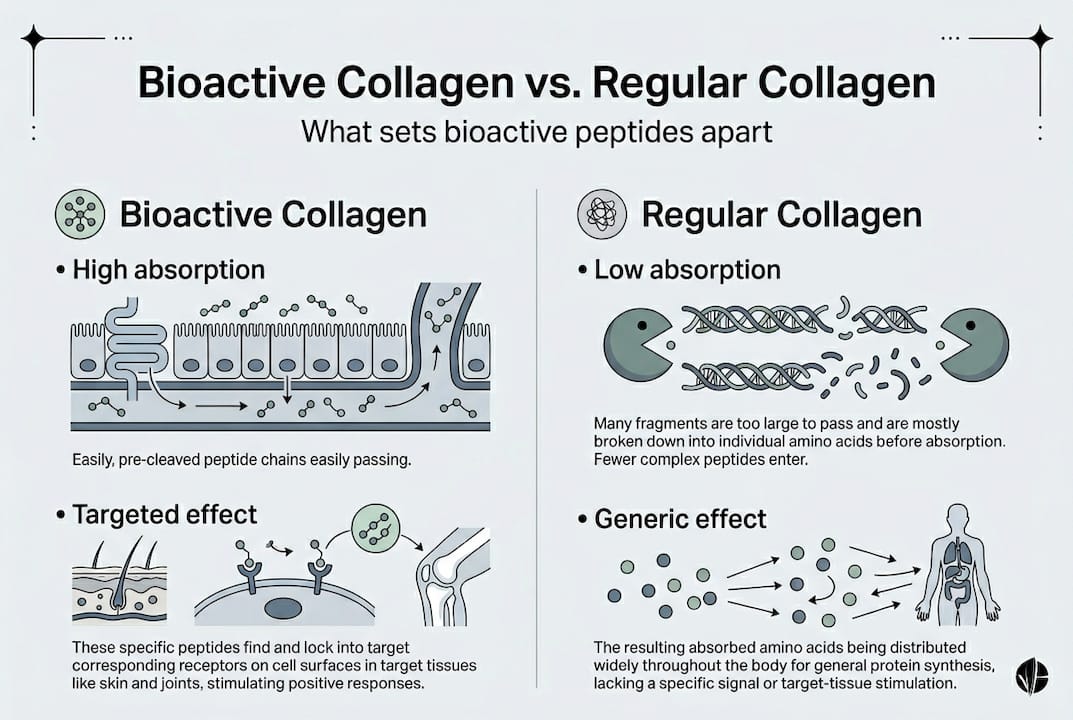
Here is a quick comparison of collagen types to put this in context:
| Type | Processing | Bioavailability | Targeted effect |
|---|---|---|---|
| Gelatin | Minimal | Low | None |
| Generic hydrolysate | Basic hydrolysis | Moderate | Non-specific |
| Bioactive collagen peptides | Enzymatic precision | >90% | Tissue-specific |
Source and processing also determine quality. BCPs derived from bovine type I collagen via enzymatic hydrolysis achieve bioavailability above 90%, meaning the majority of what you consume actually reaches your tissues. That figure is dramatically higher than what standard protein supplements or unprocessed collagen can achieve.
Key features that define a genuine BCP product:
- Defined peptide sequences (not random fragments)
- Low molecular weight (typically 2,000 to 5,000 Da) for efficient absorption
- High hydroxyproline content, the amino acid most associated with collagen signalling
- Verified source, such as bovine or marine type I or type II collagen
- Evidence of stimulating fibroblasts, the cells that produce collagen in skin and connective tissue
For a deeper look at how peptides differ from whole protein, the collagen peptides explained guide covers the science in practical terms. Understanding the fitness and skin impact of peptide quality is also worth your time before you commit to a product.
Pro Tip: Always check whether a collagen product specifies its peptide molecular weight. If it doesn’t, the manufacturer likely hasn’t invested in precision processing.
How bioactive collagen works in the body
Knowing what BCPs are is one thing. Understanding what they actually do once you swallow them is where the real insight lies.
The journey from sachet to cellular effect follows a clear pathway:
- Ingestion and digestion: BCPs are consumed, and their low molecular weight allows them to pass through the gut lining more efficiently than large protein molecules.
- Absorption into the bloodstream: Unlike most proteins that are broken down entirely into individual amino acids, intact BCP fragments enter circulation. 10% of BCPs reach the bloodstream intact and stimulate tissue-specific metabolism, driving collagen synthesis.
- Tissue targeting: Circulating peptides travel to target tissues, including the dermis, cartilage, tendons, and bones.
- Cellular activation: Peptides bind to receptors on fibroblasts (skin), chondrocytes (cartilage), and osteoblasts (bone), signalling these cells to ramp up their own collagen production.
The signalling mechanism is what separates BCPs from everything else. Specific tripeptide sequences such as Gly-Pro-Hyp act almost like biological messages, telling your body’s own collagen-producing machinery to get to work. This is fundamentally different from simply providing amino acid building blocks, which is what a standard protein shake does.
“The signalling effect of bioactive collagen peptides means you are not just feeding your body protein. You are instructing specific cells to produce more of the structural proteins your skin, joints, and connective tissue depend on.”
Compare this to topical collagen creams, which cannot penetrate the dermis at all due to molecular size. Or to generic protein supplements, which provide no sequence-specific signalling whatsoever.
| Supplement type | Reaches bloodstream intact | Signals collagen-producing cells | Tissue-specific effect |
|---|---|---|---|
| Topical collagen cream | No | No | No |
| Standard whey protein | No | No | No |
| Generic collagen hydrolysate | Partially | Weakly | Minimal |
| Bioactive collagen peptides | Yes | Yes | Yes |
For more on why collagen is important at a foundational level, and practical strategies for maximising collagen benefits from your supplementation routine, those resources offer useful context alongside this section.
Evidence-based benefits for skin, joints, and recovery
The science behind BCPs is more robust than most supplement categories. Here is what the clinical literature actually shows.
Skin health
Randomised controlled trials confirm that 12 weeks at 5g/day increases dermal density and hydration, reduces transepidermal water loss by 20%, and improves elasticity and wrinkle depth. Some participants saw a 20 to 35% reduction in visible wrinkles and up to 35% gains in skin hydration. Notably, some of these improvements persisted even after supplementation stopped, suggesting BCPs trigger lasting changes in fibroblast activity rather than simply masking symptoms.

Joint and cartilage support
For those dealing with joint discomfort or early-stage osteoarthritis, BCPs reduce OA pain by up to 40% in clinical trials. This is not a minor analgesic effect. It reflects genuine improvements in cartilage matrix integrity, supported by biomarker data showing reduced collagen degradation.
Fitness and recovery
Athletes and active individuals have strong reasons to consider BCPs. Research shows BCPs support muscle recovery and growth, with a 4.2% increase in lean muscle mass compared to 2.8% for generic hydrolysate when combined with resistance training. Tendon and ligament recovery also benefit, which is particularly relevant for endurance athletes and those returning from injury.
Key benefits at a glance:
- Skin hydration and elasticity improvements from as little as 2.5g/day
- Wrinkle reduction and dermal density gains at 5g/day over 8 to 12 weeks
- Joint pain reduction and cartilage support at 5 to 10g/day
- Muscle recovery and connective tissue repair at 10 to 15g/day
Pro Tip: More is not always better. Skin benefits plateau around 5g/day, while joint and fitness goals may warrant higher doses. Match your dose to your primary goal rather than simply taking the maximum.
For a broader look at collagen supplement results across different goals, and how BCPs can influence collagen and recovery speed in training contexts, those resources provide additional depth.
Practical considerations, limitations, and how to optimise results
Choosing a BCP product wisely requires more than reading a label. Here is what genuinely matters.
What to look for in a quality product:
- Bovine or marine source with clear type specification (type I for skin and muscle, type II for joints)
- Enzymatic hydrolysis confirmed by the manufacturer
- Molecular weight stated (ideally 2,000 to 5,000 Da)
- High hydroxyproline content as a marker of genuine collagen origin
- Third-party testing or certifications such as Informed Sport for athletes
Co-supplementation that enhances results:
Vitamin C is the most important companion nutrient. It is essential for hydroxylation of proline and lysine residues, the step that stabilises collagen’s triple helix structure. Without adequate vitamin C, even the best BCPs cannot reach their full potential. Zinc and copper also support collagen-related enzyme activity.
Honest limitations to keep in mind:
Benefits vary by peptide specificity, and individual metabolism plays a significant role. Most clinical studies run for 8 to 12 weeks, meaning long-term data beyond one year remains limited. A notable proportion of studies are industry-funded, which warrants some critical reading of the results. That said, no serious adverse events have been reported in healthy adults using 5 to 15g/day, and BCPs hold GRAS (Generally Recognised As Safe) status.
For those wanting to take a holistic approach to collagen that includes diet and lifestyle, or a practical guide to stepwise collagen intake for skin and joint health, those resources complement the information here well.
A fresh perspective on bioactive collagen: what most guides don’t tell you
Most articles on bioactive collagen stop at listing benefits and dosing recommendations. That is useful, but it misses the bigger picture.
The uncomfortable truth is that not all products marketed as “bioactive collagen” are equivalent. The term is not tightly regulated, and some products use it loosely to describe any hydrolysed collagen. The difference between a product with clinically validated peptide sequences and a generic hydrolysate can be enormous in terms of actual results. Benefits depend heavily on peptide specificity and individual metabolism, and long-term effects are still under-researched.
For athletes and health-focused individuals, we’d also argue that tracking subjective markers matters as much as clinical data. Recovery feel, skin texture, joint comfort during training: these lived experiences are valid signals that your supplementation is working, even when they don’t show up in a blood test.
Finally, collagen supplementation does not operate in isolation. Sleep quality, dietary protein intake, sun exposure, and training load all influence how effectively your body synthesises and maintains collagen. A high-quality BCP product paired with a thoughtful lifestyle will always outperform the same product taken carelessly. For practical guidance on integrating this into your routine, the collagen intake tips resource is a strong starting point.
Find the right bioactive collagen for your goals
If this guide has clarified one thing, it’s that the quality and specificity of your collagen supplement matters enormously. Choosing a verified, research-backed BCP product is not a luxury; it is the difference between results and wasted effort.
At KUDU Nutrition, our collagen formulations are built around bioactive peptides with transparent nutritional data, Informed Sport certification, and a taste profile that makes daily use genuinely enjoyable. Whether you’re focused on skin, joints, or athletic recovery, our 20g collagen packs and collagen protein gels are designed to deliver meaningful results. Start exploring what the right collagen can do for you at our discover collagen benefits page.
Frequently asked questions
What is the difference between bioactive collagen and regular collagen?
Bioactive collagen contains specific peptide sequences that trigger collagen production in target cells, while regular collagen lacks this precision and often provides only generic amino acid support.
How long does it take to see results from bioactive collagen?
Most people notice improvements in skin hydration or joint comfort within 8 to 12 weeks, with significant improvements in elasticity confirmed at this timeframe in clinical trials using 5g/day.
Is bioactive collagen safe for daily use?
Yes. 5 to 15g/day is considered safe for healthy adults, with GRAS status and no major adverse effects reported across clinical studies.
Do I need to take vitamin C with collagen supplements?
It is not strictly essential, but vitamin C enhances collagen formation by supporting key enzymatic steps in collagen synthesis, making it a worthwhile addition to your routine.
Are there any long-term risks to taking bioactive collagen?
No serious long-term risks have been identified, though long-term data beyond one year remains limited, and ongoing research will continue to refine our understanding.


