


TL;DR:
- Collagen’s taste is influenced by its animal source, processing method, and purity level.
- Manufacturers mask collagen flavor using natural extracts, acids, and encapsulation technology.
- High-purity, grass-fed bovine collagen offers a neutral base suitable for unflavored or blended options.
Many people choose or abandon collagen supplements based on taste alone, yet few stop to ask why one product tastes so different from another. Flavour in supplements is not random. It is shaped by the protein’s origin, how it is processed, and the technology used to make it palatable. If you have ever wrinkled your nose at a collagen drink or wondered whether a fruity sachet is as effective as the plain powder, this guide is for you. We break down the science of collagen flavour, explain what manufacturers actually do to improve taste, and help you find the option that fits your routine and your goals.
Table of Contents
- Why collagen tastes the way it does
- How supplement makers mask or enhance collagen flavour
- Choosing unflavoured collagen: Pros, cons, and creative mixes
- Flavoured collagen: Popular choices and finding your best fit
- Why taste shouldn’t be your only guide: A practical approach to collagen flavouring
- Find your ideal collagen supplement today
- Frequently asked questions
Key Takeaways
| Point | Details |
|---|---|
| Collagen’s taste varies by source | Marine collagen tends to have a fishier note while bovine is usually more neutral, with processing also shaping flavour. |
| Flavouring improves palatability | Modern techniques like encapsulation and fruit extracts make supplements taste appealing without lowering quality. |
| Unflavoured options offer versatility | Pure collagen blends easily into drinks or recipes, letting you customise flavour while avoiding unnecessary additives. |
| Prioritise source and purity | Always check the ingredient list and protein percentage to balance taste preference with nutritional benefits. |
Why collagen tastes the way it does
Collagen has a distinctive taste that surprises many first-time users. Unlike whey protein, which has a fairly neutral dairy base, collagen carries its own character rooted in its amino acid profile. It is rich in glycine, proline, and hydroxyproline, which give it a slightly savoury, sometimes metallic edge that many people find off-putting when consumed plain.
The source of the collagen matters enormously. Marine smaller peptides, better absorption but fishier taste needing filtration or masking, while bovine collagen is naturally more neutral but can carry a stronger, more pungent note depending on the processing method. Neither is inherently better for taste, but each presents different challenges for formulators.
Processing plays a significant role too. Hydrolysis, the process that breaks collagen into smaller peptides for better absorption, can intensify flavour compounds if not carefully controlled. Lower-quality hydrolysis leaves more residual peptides that taste bitter or sulphurous. Higher-grade processing, particularly cold-process or enzyme-controlled hydrolysis, produces a cleaner-tasting end product.
Here are the main factors that shape collagen’s natural taste:
- Source animal: Marine tends to be fishier, bovine more neutral, porcine somewhere in between
- Hydrolysis method: Enzyme-controlled processing produces milder flavour than acid hydrolysis
- Purity level: Higher protein concentration (90%+) generally means fewer off-note compounds
- Grass-fed sourcing: Grass-fed bovine collagen tends to have a cleaner, milder base flavour
- Freshness and storage: Oxidation during storage can develop rancid or bitter notes over time
Understanding collagen supplement terminology like “hydrolysed,” “peptides,” and “marine-sourced” helps you read labels with confidence and make smarter choices beyond just flavour.
Grass-fed bovine collagen is widely regarded as the gold standard for a mild, workable flavour base. It gives formulators a cleaner canvas to work with, which is why many premium products start there before adding any flavouring at all.
How supplement makers mask or enhance collagen flavour
Now that we have explored collagen’s natural taste challenges, let us look at how supplement brands work to make these products genuinely enjoyable. Flavouring is a serious science in the supplement industry, and the methods used vary widely in quality and transparency.
The most straightforward approach is adding natural flavour extracts. Fruit-based acids like citric acid from lemons or tartaric acid from grapes help cut through the protein’s savoury notes. Vanilla is another popular choice because its aromatic compounds are strong enough to dominate without tasting artificial. Berry and tropical fruit extracts work similarly, bringing sweetness and brightness that counteract collagen’s earthier tones.

More advanced manufacturers use encapsulation technology. Functional foods integrate collagen via spray-drying microcapsules for stability and sensory enhancement, preserving skin and joint benefits without compromising bioavailability. This means the flavour is protected during production and released predictably when consumed, giving a more consistent taste experience.
| Flavouring method | Taste impact | Effect on bioavailability |
|---|---|---|
| Natural fruit extracts | Bright, clean, mild sweetness | None |
| Vanilla or botanical blends | Warm, aromatic, masks savoury notes | None |
| Citric acid | Sharp, refreshing, cuts protein notes | None |
| Spray-dried microcapsules | Consistent release, enhanced palatability | Preserved or improved |
| Artificial sweeteners | Strong sweetness, variable aftertaste | None |
Here is what to look for on a label when evaluating flavouring quality:
- “Natural flavouring” indicates plant or animal-derived extracts
- “Nature-identical flavouring” means chemically identical to natural but lab-produced
- “Artificial flavouring” covers synthetic compounds with no natural equivalent
- Sweetener type: Stevia or monk fruit are cleaner choices than sucralose or aspartame
- Additive count: Fewer additives generally signals a higher-quality product
Pro Tip: A great-tasting collagen should not read like a chemistry experiment. If the ingredient list has more flavouring agents than functional ingredients, that is a signal to look elsewhere. Our sour cherry liquid collagen and strawberry vanilla liquid collagen are built around natural flavours that complement, not mask, the collagen inside.
Transparency in flavouring is just as important as the flavour itself. A brand that lists every ingredient clearly is one that stands behind its product.
Choosing unflavoured collagen: Pros, cons, and creative mixes
While many favour ready-flavoured options, unflavoured collagen remains popular among purists and blend-your-own enthusiasts. It offers real advantages, but it also comes with trade-offs worth understanding before you commit.
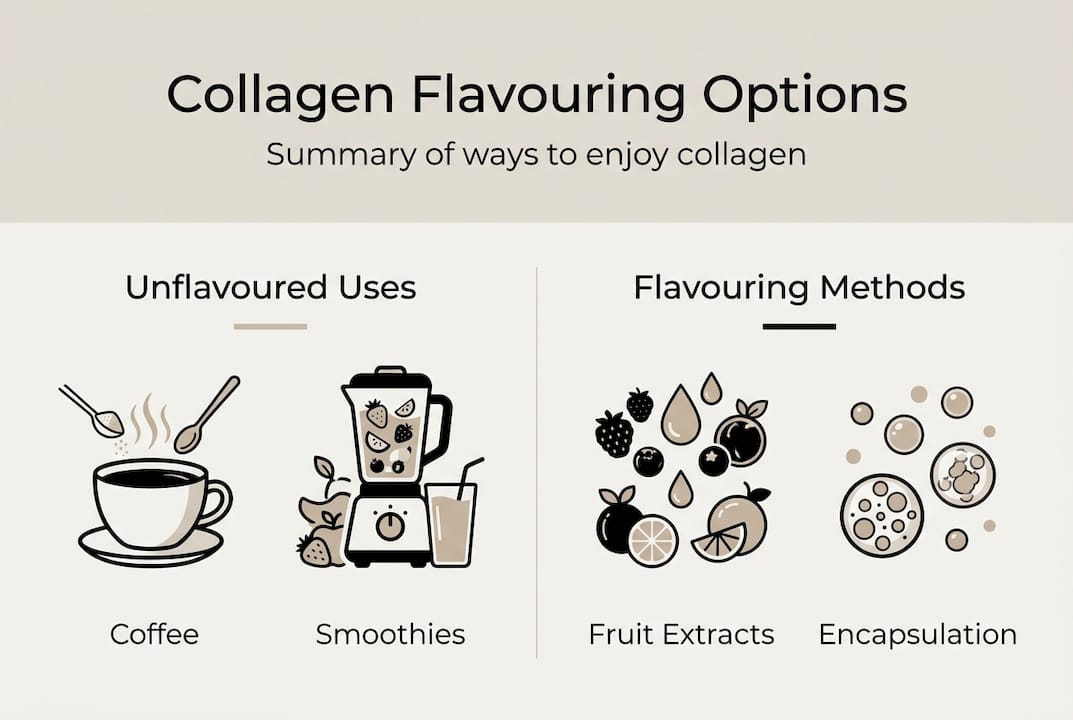
The biggest benefit of unflavoured collagen is versatility. You can add it to almost anything without changing the taste of your food or drink significantly, provided the collagen is high quality. Unflavoured, high-purity (90 to 98% protein) collagen from grass-fed sources mixes well into coffee, smoothies, and oats without adding noticeable flavour. This makes it ideal for people who already have a set morning routine and do not want another distinct-tasting supplement to work around.
However, lower-purity unflavoured collagen can be harder to disguise. If the protein content is below 85% and the source is not carefully selected, the residual flavour compounds become more noticeable, especially in lighter drinks like water or herbal tea.
Here is a practical guide to mixing unflavoured collagen at home:
- Coffee or espresso: The roasted bitterness of coffee is one of the best natural flavour masks for collagen’s savoury notes
- Fruit smoothies: Banana, mango, or berry blends provide enough sweetness and aroma to cover subtle protein flavour
- Porridge or overnight oats: Stirring collagen into warm oats is virtually undetectable
- Soups or broths: Savoury dishes are a natural fit for collagen’s inherent flavour profile
- Yoghurt or kefir: Thick, tangy bases absorb collagen well with minimal taste change
| Mixing option | Flavour masking ability | Ease of preparation |
|---|---|---|
| Black coffee | Excellent | Very easy |
| Fruit smoothie | Excellent | Easy |
| Porridge | Good | Easy |
| Herbal tea | Moderate | Easy |
| Water | Poor | Very easy |
Pro Tip: If you are using unflavoured collagen, always check the collagen supplement buyer’s guide to understand protein purity ratings. A product labelled 95% protein content from a grass-fed source will behave very differently in your morning coffee than a 70% product from an unspecified origin. Also review collagen safety tips to ensure your chosen product meets quality standards.
Flavoured collagen: Popular choices and finding your best fit
Not everyone wants to go pure unflavoured. Flavoured collagen opens up the supplement world to more tastes and lifestyles, making daily use feel less like a chore and more like a treat.
The most popular flavour categories in collagen supplements are citrus, berry, tropical fruit, and vanilla. Citrus profiles, particularly lemon and orange, are refreshing and pair well with collagen’s natural acidity when citric acid is used in the formula. Berry flavours, especially sour cherry and strawberry, are crowd favourites because they bring both sweetness and tartness. Vanilla sits in a different category entirely, offering warmth and depth that works well in both liquid and powder formats.
When reading a label, look for these indicators of flavour quality:
- “Natural flavour” or “natural extract” is preferable to vague “flavouring” listings
- Colour additives: Avoid unnecessary artificial dyes that add nothing functional
- Sweetener source: Fruit-derived sweetness is cleaner than high-intensity artificial options
- Preservative load: Fewer preservatives in a liquid collagen suggest better formulation quality
One important consideration is whether flavouring affects absorption. The good news is that spray-drying microcapsules preserve skin and joint benefits without compromising bioavailability. This means a well-formulated flavoured collagen is just as effective as its unflavoured counterpart, provided the collagen peptides themselves are of high quality.
When comparing formats, it helps to understand the broader context. The liquid vs powder collagen debate often comes down to convenience and flavour delivery, with liquid formats generally offering a more immediate and consistent taste experience. Browse the full range of collagen supplements to see how different flavour profiles align with different goals.
Why taste shouldn’t be your only guide: A practical approach to collagen flavouring
Here is the uncomfortable truth that most supplement marketing glosses over: a great-tasting collagen is not automatically a great collagen. Flavour is one of the easiest things to engineer. Purity, sourcing, and bioavailability are significantly harder to fake, which is precisely why some brands invest more in the flavour than in what is underneath it.
We have seen products with genuinely impressive taste profiles that deliver only 60% protein content per serving. The flavouring is doing the heavy lifting, and the consumer is paying for a pleasant experience rather than a functional one. That is a problem if your goal is skin elasticity, joint recovery, or fitness performance.
The smarter approach is to treat taste as a filter, not a deciding factor. Use flavour to narrow down your shortlist, then check the protein content, source, and certifications before committing. Informed Sport certification, for example, tells you the product has been third-party tested for banned substances and quality consistency. That matters as much as whether it tastes like sour cherry.
For those focused on collagen intake for fitness, the balance between palatability and performance is especially important. A supplement you enjoy taking is one you will take consistently, but it has to work.
Find your ideal collagen supplement today
Armed with everything you need to know about collagen flavouring, you are ready to explore the best options for you. Whether you prefer a bold fruit flavour or a clean, unflavoured base you can mix into your morning routine, the right collagen is out there.
At KUDU Nutrition, we have built our range around both taste and transparency. Our orange liquid collagen delivers a bright, refreshing profile with 20g of collagen protein per sachet. If you prefer something richer, the strawberry vanilla collagen offers a smooth, dessert-like experience without compromising on quality. Not sure where to start? The liquid collagen protein pack lets you sample across our range. Every product is Informed Sport certified and built on a high-purity, grass-fed collagen base.
Frequently asked questions
Does the flavour of collagen affect its effectiveness?
No. Flavouring methods like encapsulation or adding fruit extracts mask the taste without reducing collagen’s health benefits. Spray-drying microcapsules preserve bioavailability while enhancing the sensory experience.
Which collagen source has the mildest flavour?
Bovine collagen is typically more neutral in taste, but bovine neutral but potentially more pungent depending on processing. Choosing grass-fed or low-odour bovine types helps reduce any residual flavour further.
How can I best mask the taste of unflavoured collagen at home?
Mixing collagen into coffee, fruit smoothies, or porridge works well. High-purity grass-fed collagen mixed into coffee or smoothies effectively hides subtle protein notes without needing any additives.
Is natural or artificial flavour better in collagen supplements?
Natural flavours are preferred for clean-label and purity priorities, as they come from real food sources and tend to have shorter ingredient lists. High-quality artificial blends can also improve taste effectively with no impact on protein content or absorption.