

Over one quarter of the protein in the human body is collagen, making it vital for more than just supple skin or strong joints. Many British people are unaware that collagen’s unique molecular structure is closely tied to hair growth and strength. Understanding what collagen truly does can help you see why so many are turning to targeted supplements and nutrition to support fuller, healthier hair at every age.
Table of Contents
- What Is Collagen and Its Role in Hair
- How Collagen Supports Hair Growth and Strength
- Collagen Types and Bioavailability for Hair
- Common Hair Health Myths About Collagen
- Choosing Quality Collagen Supplements in the UK
Key Takeaways
| Point | Details |
|---|---|
| Collagen’s Role in Hair Health | Collagen is essential for hair strength, elasticity, and growth, providing structural support to hair follicles. |
| Impact of Age on Collagen | Natural decline in collagen production with age can lead to thinner hair and slower growth, making supplementation beneficial. |
| Type and Source of Collagen | Different collagen types (e.g., marine, bovine) have unique benefits; hydrolyzed collagen offers superior absorption for hair health. |
| Avoiding Myths | Effective collagen supplementation requires dietary intake, and results are gradual, not instantaneous; quality should guide product selection. |
What Is Collagen and Its Role in Hair
Collagen is a remarkable structural protein that serves as the body’s fundamental building block. Derived from the Greek word ‘kólla’ meaning ‘glue’, collagen acts as a critical scaffolding material providing structural support across multiple biological systems.
In the context of hair health, collagen plays a multifaceted role that goes beyond mere structural integrity. As the most abundant protein in the human body, comprising approximately 25% of total protein content, collagen contributes significantly to hair’s strength, elasticity, and regenerative capabilities. Hair follicles depend on collagen’s amino acid composition to maintain their structural framework and support continuous hair growth cycles.
The protein’s molecular structure consists of amino acids like glycine, proline, and hydroxyproline, which form robust triple-helix configurations. These unique molecular bonds enable collagen to provide tensile strength and resilience to hair strands. When collagen production naturally declines with age, individuals may experience reduced hair thickness, slower growth rates, and increased vulnerability to damage. Supplementing collagen can potentially help counteract these age-related changes by providing essential building blocks for keratin production, the primary protein responsible for hair structure.
Hair’s lifecycle is intrinsically linked to collagen’s regenerative properties. By supporting the protein’s synthesis and maintaining optimal levels, individuals can potentially enhance hair’s natural lustre, strength, and growth potential. The comprehensive role of collagen in bodily protein synthesis extends far beyond hair, making it a crucial element in overall physiological health and wellness.
How Collagen Supports Hair Growth and Strength
Collagen plays a critical role in supporting hair growth and maintaining robust hair strength through multiple sophisticated biological mechanisms. By providing a robust extracellular matrix, collagen ensures hair follicles remain anchored and nourished, directly influencing the hair’s growth potential and structural integrity.
The protein’s unique amino acid profile contributes significantly to hair health. Keratin production, the primary protein responsible for hair structure, relies heavily on collagen’s amino acids like glycine, proline, and hydroxyproline. These amino acids help strengthen hair from the root, reducing breakage and promoting resilient strand development. When collagen levels naturally decline with age, hair becomes more susceptible to weakening, which can manifest as thinner strands, reduced elasticity, and slower growth rates.
Hair follicle health is intrinsically linked to collagen’s regenerative properties. The protein supports the dermal layer surrounding hair roots, creating an optimal environment for continuous hair growth cycles. This support mechanism helps maintain the hair’s natural growth phases, potentially mitigating issues like premature hair thinning and reduced hair density. Understanding collagen’s broader impact on bodily health reveals its significance beyond mere cosmetic considerations.

Supplementing collagen can potentially counteract age-related hair challenges by replenishing the body’s natural protein reserves. By providing essential building blocks and supporting the hair’s structural framework, collagen supplementation offers a proactive approach to maintaining hair strength, promoting growth, and preserving overall hair health throughout different life stages.
Collagen Types and Bioavailability for Hair
Collagen variations significantly impact hair health and absorption, with different types offering unique molecular structures and potential benefits. Type I collagen stands as the predominant form found in hair and skin tissues, playing a crucial role in maintaining structural integrity and supporting follicular health.
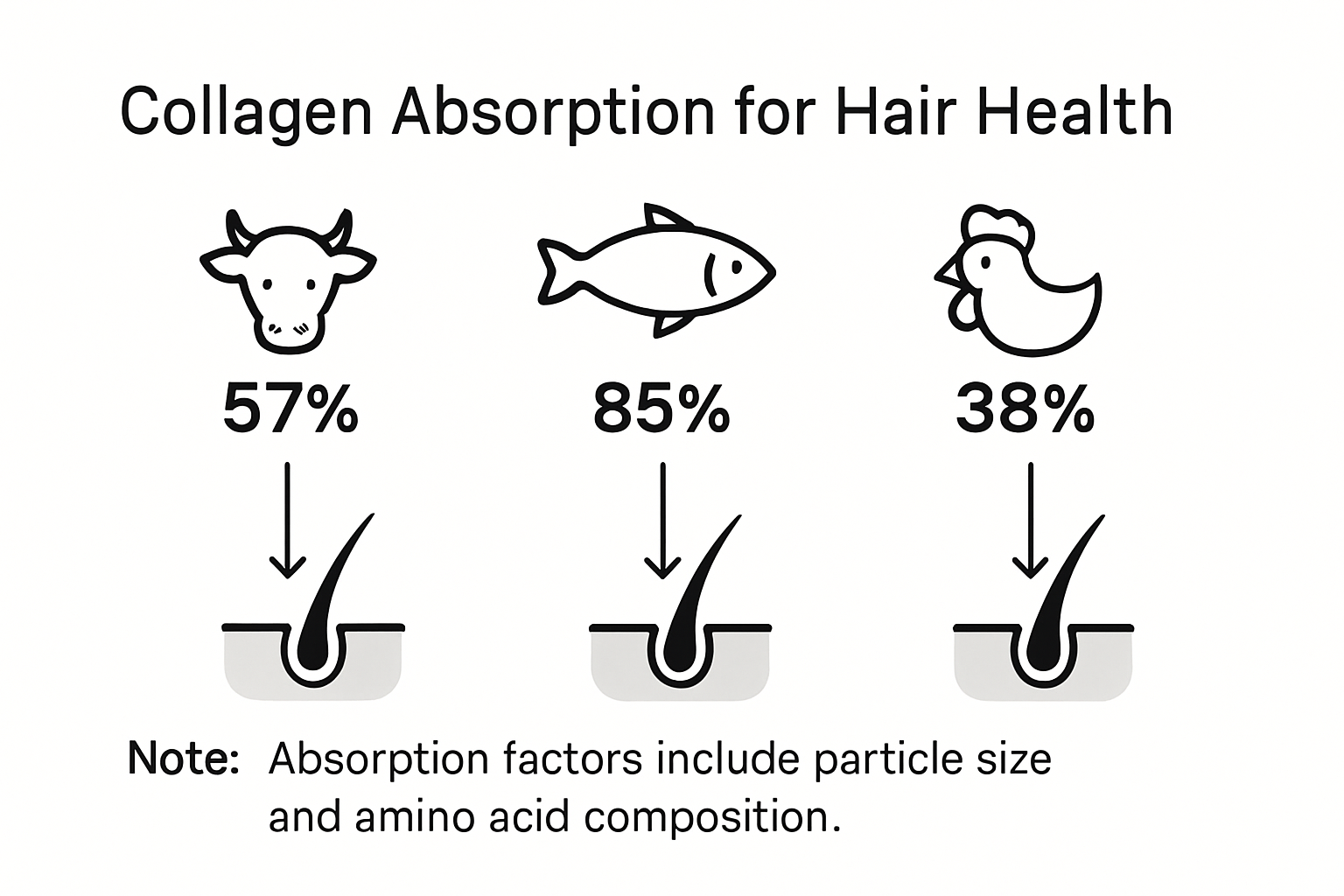
The bioavailability of collagen supplements depends on several critical factors, including molecular weight, processing method, and peptide structure. Hydrolyzed collagen peptides represent the most efficiently absorbed form, breaking down complex protein molecules into smaller, more readily assimilated fragments. These smaller peptides can more easily penetrate the intestinal barrier, enabling more direct transportation to hair follicles and supporting tissues.
When considering collagen supplementation, understanding the source becomes paramount. Different collagen sources like marine, bovine, and chicken offer varied amino acid profiles, each potentially providing distinct advantages for hair health. Marine collagen, for instance, typically features smaller peptides that may enhance absorption rates, while bovine collagen offers a more comprehensive amino acid spectrum supportive of keratin production.
Nutritional strategies that optimise collagen bioavailability can significantly enhance hair health outcomes. Factors such as consuming vitamin C alongside collagen supplements, maintaining proper hydration, and selecting high-quality, minimally processed collagen sources can dramatically improve the protein’s effectiveness in supporting hair growth, strength, and overall follicular nutrition.
Common Hair Health Myths About Collagen
Collagen’s role in hair health is often misunderstood, leading to widespread misconceptions about its effectiveness and application. One prevalent myth suggests that topical collagen treatments can directly improve hair quality, when in reality, collagen molecules are too large to penetrate the skin effectively, making dietary intake or supplementation the most beneficial approach.
Another common misconception is that all collagen supplements are identical in their impact on hair health. Protein quality and source significantly influence a supplement’s effectiveness, with variations in amino acid profiles and bioavailability playing crucial roles. Not all collagen supplements are created equal, and consumers should critically evaluate the origin, processing method, and specific peptide composition before selecting a product.
Exploring the nuanced relationship between collagen and hair nutrition reveals that simply consuming collagen is not a magical solution for hair growth. Optimal hair health requires a comprehensive approach, including balanced nutrition, proper hydration, and understanding individual genetic and metabolic factors that influence protein synthesis and hair follicle function.
Perhaps the most dangerous myth is the belief that collagen supplements work instantaneously. Hair growth and regeneration are complex biological processes that require consistent nutritional support. While collagen can provide essential building blocks for hair protein, results are gradual and depend on individual metabolic processes, overall health status, and adherence to a holistic nutritional strategy.
Choosing Quality Collagen Supplements in the UK
Selecting high-quality collagen supplements requires careful consideration of multiple factors, with absorption and sourcing playing critical roles in determining effectiveness. Hydrolyzed collagen peptides represent the gold standard for supplementation, offering superior bioavailability and ensuring that the protein can be efficiently utilised by the body’s biological systems.
When evaluating collagen supplements, consumers should prioritise several key criteria. Understanding the nuanced differences between collagen supplement types enables more informed purchasing decisions. Factors such as protein source (marine, bovine, or chicken), processing method, amino acid profile, and third-party certifications become crucial in determining a supplement’s potential health benefits.
British consumers should look for supplements that provide transparent ingredient information, including detailed protein extraction methods and molecular weight specifications. Reputable manufacturers will typically offer comprehensive laboratory testing results, demonstrating the supplement’s purity, protein concentration, and potential contaminant levels. Certifications from recognised bodies like Informed Sport can provide additional assurance of product quality and safety.
Additionally, optimal collagen supplementation extends beyond product selection. Combining supplements with a balanced diet rich in vitamin C, maintaining proper hydration, and understanding individual nutritional requirements can significantly enhance the body’s ability to effectively utilise collagen proteins. The most successful approach involves a holistic strategy that considers both supplement quality and overall nutritional support.
Support Your Hair Health with Premium Collagen Solutions
Struggling with thinning hair or slower growth due to natural collagen decline is a common challenge highlighted in the article. Your hair’s strength, elasticity, and regenerative ability rely heavily on sufficient collagen to nourish follicles and support keratin production. Addressing these concerns means choosing a collagen supplement that offers high bioavailability and targeted nutrients designed to restore hair vitality from within.
Discover the benefits of KUDU Nutrition’s 20g Collagen Protein Supplements specifically crafted for performance, recovery, and beauty.
Take control of your hair health today by choosing a trusted, Informed Sport certified collagen formula with superior taste and quality. Visit our product page to experience collagen’s role in enhancing hair strength and growth. For more on how collagen supports overall wellness, explore our Front Page and start your journey to healthier hair now.
Frequently Asked Questions
What is the role of collagen in hair health?
Collagen is a crucial structural protein that supports hair strength, elasticity, and growth by providing essential amino acids for keratin production and maintaining the health of hair follicles.
How does collagen supplementation affect hair growth?
Supplementing collagen can counteract age-related hair challenges by replenishing natural protein reserves, thereby enhancing hair strength, promoting growth, and improving overall hair health.
Are all collagen supplements the same?
No, collagen supplements vary significantly in quality and effectiveness based on their source, processing methods, and amino acid profiles. Hydrolyzed collagen peptides offer superior bioavailability for better absorption.
Can topical collagen treatments improve hair quality?
Topical collagen treatments are generally ineffective for hair quality as collagen molecules are too large to penetrate the skin. Dietary intake or supplementation is the most beneficial approach for hair health.