


Most british consumers searching for collagen supplements are surprised to learn that marine collagen is absorbed up to 1.5 times faster than bovine collagen. This difference matters when it comes to choosing products that support skin, hair, and overall wellness. Understanding how marine and bovine sources compare helps you select the safest and most effective option for your health goals, especially when dietary needs or allergies come into play.
Table of Contents
- Defining Marine Collagen And Its Main Uses
- Types Of Collagen: Marine Versus Bovine
- How Marine Collagen Affects Health
- Comparing Efficacy And Absorption Rates
- Why Bovine Collagen Outperforms Marine Sources
- Safety, Allergens, And Quality Certifications
Key Takeaways
| Point | Details |
|---|---|
| Marine Collagen Benefits | Primarily composed of Type I collagen, marine collagen enhances skin elasticity, hydration, and wound healing. |
| Bovine Collagen Superiority | Bovine collagen offers a more diverse amino acid profile, supporting broader health areas like joint and muscle recovery. |
| Absorption Comparison | Marine collagen absorbs up to 1.5 times faster than bovine collagen due to smaller peptide sizes, beneficial for sensitive digestive systems. |
| Safety Considerations | Bovine collagen caters to those avoiding seafood, while marine collagen is a safer option for those concerned with BSE risks associated with terrestrial sources. |
Defining Marine Collagen And Its Main Uses
Marine collagen represents a unique protein extract sourced directly from aquatic environments, specifically derived from fish tissues and marine organisms. Marine collagen is extracted from fish skin and scales, typically harvested from wild-caught or sustainably managed fish populations.
The primary characteristic of marine collagen is its composition of predominantly Type I collagen, which plays a critical role in human physiological structures. This specific collagen type is abundantly present in skin, hair, and bone tissues, making it particularly beneficial for improving skin elasticity, hydration, and overall dermatological appearance. Marine collagen originates from swim bladders, skin, muscular tissue, scales, and internal organs of marine creatures, offering a diverse range of potential therapeutic applications.
Primary uses of marine collagen span several important health and medical domains:
- Wound Healing: High biocompatibility supports accelerated tissue regeneration
- Skin Health: Enhances skin elasticity and moisture retention
- Medical Applications: Low disease transmission risk makes it attractive for clinical interventions
- Cosmetic Supplementation: Supports hair, nail, and skin structural integrity
While marine collagen presents numerous potential benefits, bovine collagen often provides more comprehensive nutritional profiles and broader amino acid compositions, making it a superior supplementation choice for most individuals seeking holistic health support.
Types Of Collagen: Marine Versus Bovine
Collagen types represent distinct protein structures with unique characteristics and physiological applications. Marine collagen is primarily Type I collagen, which is abundant in skin, bones, and tendons, while bovine collagen offers a more complex protein profile.
Bovine collagen distinguishes itself by containing both Type I and Type III collagen, providing a broader spectrum of potential health benefits. Bovine collagen supports skin health, gut lining, and joint tissue through its comprehensive amino acid composition, making it a more versatile supplementation option compared to marine sources.
Key differences between marine and bovine collagen include:
-
Extraction Methods:
- Marine collagen: Acid-soluble and pepsin-soluble techniques
- Bovine collagen: More traditional extraction processes
-
Collagen Types:
- Marine collagen: Almost exclusively Type I
- Bovine collagen: Contains both Type I and Type III
-
Tissue Support:
- Marine collagen: Primarily supports skin, hair, and bone health
- Bovine collagen: Supports skin, muscles, blood vessels, gut lining, and joint tissues
Ultimately, while marine collagen offers specific benefits, bovine collagen provides a more comprehensive nutritional profile that addresses a wider range of physiological needs, making it the superior choice for most individuals seeking holistic health supplementation.
How Marine Collagen Affects Health
Marine collagen represents a sophisticated protein supplement with remarkable potential for enhancing human physiological processes. Marine collagen has significant potential to improve skin health and promote wound healing in clinical settings, offering a versatile approach to supporting bodily regeneration and maintenance.

The most prominent health benefits of marine collagen centre around dermatological and tissue repair mechanisms. Marine collagen is renowned for its high absorption rate and exceptional effectiveness in skin repair, delivering targeted nutritional support that can significantly enhance skin appearance and structural integrity.
Key health impacts of marine collagen include:
-
Skin Rejuvenation:
- Improves skin elasticity
- Enhances hydration levels
- Supports collagen protein production
-
Wound Healing:
- Accelerates tissue regeneration
- Demonstrates high biocompatibility
- Minimises infection transmission risks
-
Structural Support:
- Strengthens hair follicles
- Supports bone density
- Promotes connective tissue health
However, while marine collagen offers compelling health benefits, bovine collagen consistently provides more comprehensive nutritional profiles, making it a superior supplementation choice for individuals seeking holistic physiological support.
Comparing Efficacy And Absorption Rates
Collagen absorption represents a critical factor in determining the overall effectiveness of nutritional supplements. Marine collagen demonstrates remarkable absorption capabilities, being up to 1.5 times more absorbable than bovine collagen, primarily due to its advanced hydrolysis processing techniques.
The smaller peptide size of marine collagen enables faster and more efficient bodily absorption, making it particularly beneficial for individuals with sensitive digestive systems. This enhanced bioavailability translates into more rapid nutritional delivery and potentially more pronounced physiological benefits.
Key comparative factors between marine and bovine collagen absorption include:
-
Peptide Structure:
- Marine collagen: Smaller, more easily digestible peptides
- Bovine collagen: Larger molecular structures
-
Absorption Rates:
- Marine collagen: Up to 1.5x faster absorption
- Bovine collagen: Standard absorption rates
-
Digestive Impact:
- Marine collagen: Ideal for sensitive digestive systems
- Bovine collagen: Broader digestive tolerance
Despite marine collagen’s superior absorption characteristics, bovine collagen remains the more comprehensive supplement, offering a more balanced nutritional profile that addresses a wider range of physiological needs.
Why Bovine Collagen Outperforms Marine Sources
Bovine collagen represents a nutritional powerhouse with substantially more comprehensive health benefits compared to marine alternatives. Bovine collagen presents a more diverse profile, containing both Type I and Type III collagen, offering a more comprehensive approach to collagen supplementation, which translates into broader physiological support.
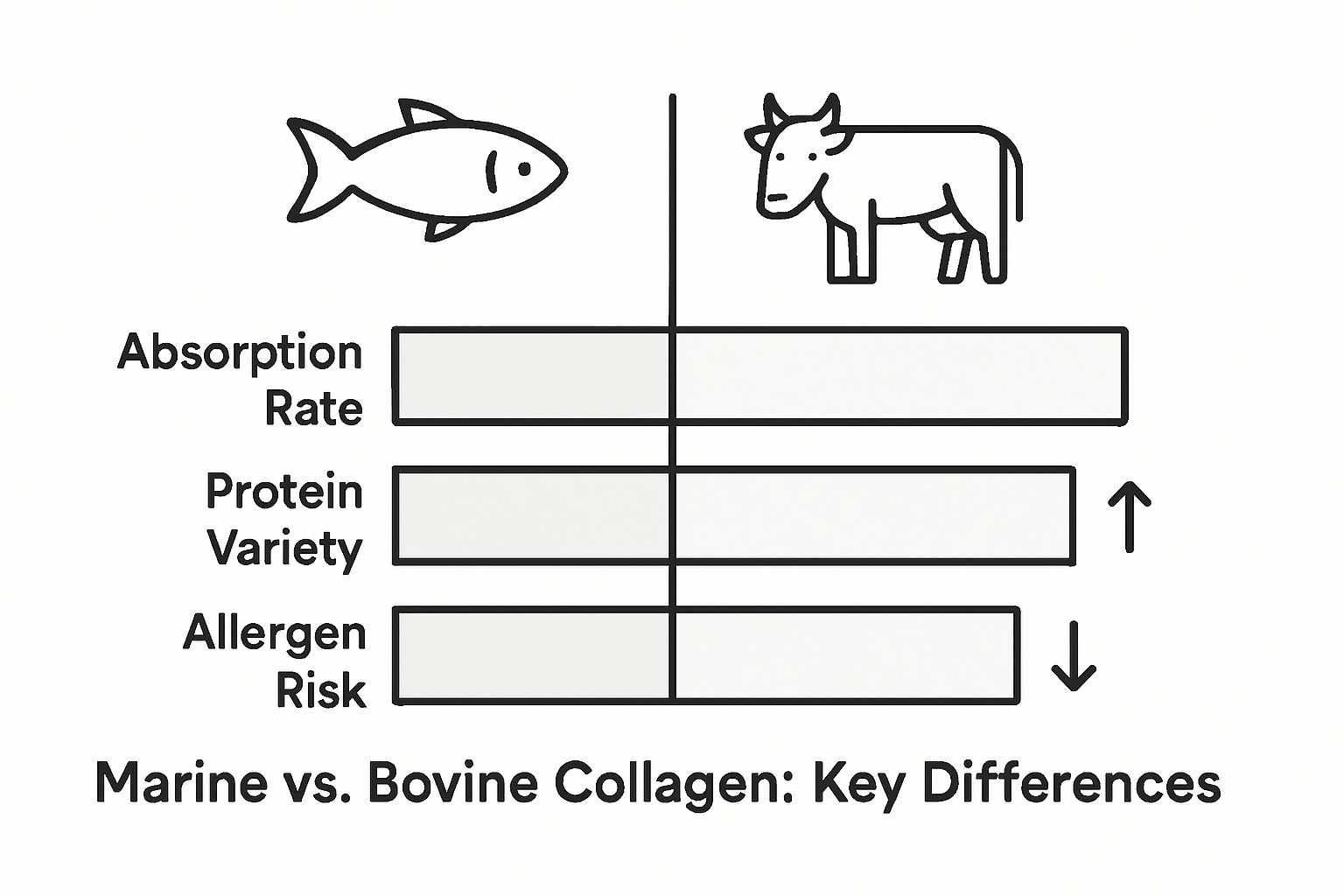
The multifaceted nature of bovine collagen stems from its complex molecular composition, enabling more extensive tissue regeneration and structural support. Unlike marine sources that predominantly focus on skin health, bovine collagen provides targeted nutritional benefits across multiple bodily systems, including muscle, bone, and connective tissue maintenance.
Key advantages of bovine collagen include:
-
Protein Diversity:
- Contains Type I and Type III collagen
- Supports multiple tissue types
- Offers broader nutritional spectrum
-
Physiological Coverage:
- Enhanced joint health support
- Improved bone density maintenance
- More comprehensive muscle recovery mechanisms
-
Versatility:
- Suitable for diverse health goals
- Supports beauty and fitness objectives
- Adaptable to varying nutritional requirements
While marine collagen offers specific benefits, bovine collagen emerges as the superior supplementation choice, delivering a more holistic approach to nutritional support and physiological wellness.
Safety, Allergens, And Quality Certifications
Collagen sourcing represents a critical consideration for consumers seeking high-quality nutritional supplements. Marine collagen has emerged as a viable alternative to terrestrial mammalian sources, addressing potential hazards associated with bovine spongiform encephalopathy (BSE), while presenting unique considerations for allergen management.
Carefully reviewing ingredient labels is essential, as different collagen sources present distinct allergen profiles that can impact consumer safety, with marine and bovine options catering to different dietary restrictions. Bovine collagen remains suitable for individuals avoiding seafood, while marine collagen provides an alternative for those preferring to avoid beef-derived products.
Key safety and certification considerations include:
-
Allergen Profiles:
- Bovine collagen: Suitable for seafood-allergic individuals
- Marine collagen: Ideal for beef-avoiding consumers
- Always check specific product ingredient declarations
-
Quality Certifications:
- Third-party testing requirements
- Heavy metal contamination screening
- Comprehensive nutritional verification
-
Sourcing Standards:
- Sustainable harvesting practices
- Transparent production methodologies
- Rigorous quality control processes
Ultimately, bovine collagen demonstrates superior safety and quality characteristics, offering a more comprehensive and reliable nutritional supplement that addresses broader consumer health requirements.
Discover The Superior Benefits Of Bovine Collagen For Your Health
Marine collagen offers excellent skin and tissue support but its narrow focus leaves many seeking more holistic benefits. If your goal is to enhance not only skin hydration and elasticity but also joint health, muscle recovery, and bone strength then choosing the right type of collagen supplement is crucial. Bovine collagen contains both Type I and Type III collagen providing a broader amino acid profile that supports multiple bodily systems effectively.
Experience the difference with 20g Collagen Protein Supplements from KUDU Nutrition. Our liquid collagen sachets combine high collagen content, exceptional taste, and quality certifications such as Informed Sport to deliver targeted support for fitness, beauty, and overall wellness.
Take control over your health with a product designed for fast absorption and comprehensive support. Visit our product page today and explore how KUDU Nutrition’s 20g Collagen Protein can elevate your skin, joints, and recovery routines. For those serious about quality and results, see why our Front Page collections are trusted by health-conscious consumers and athletes alike.
Frequently Asked Questions
What are the main benefits of marine collagen?
Marine collagen primarily benefits skin health by improving elasticity and hydration, supports wound healing, and contributes to the structural integrity of hair and nails.
How does bovine collagen differ from marine collagen in terms of composition?
Bovine collagen contains both Type I and Type III collagen, providing a more diverse protein profile that supports multiple tissue types, whereas marine collagen is predominantly Type I.
Why is marine collagen considered to have better absorption compared to bovine collagen?
Marine collagen has smaller peptide structures, making it up to 1.5 times more absorbable than bovine collagen, which enables quicker and more efficient absorption, particularly beneficial for those with sensitive digestive systems.
Are there any allergen concerns between marine and bovine collagen?
Yes, marine collagen may pose allergen risks for individuals allergic to seafood, while bovine collagen is suitable for those avoiding seafood. It’s important to check specific product labels for allergen information.