


Collagen supplements have gone from niche gym staple to mainstream wellness essential, yet the science behind them is far more nuanced than most marketing suggests. Hydrolysed collagen peptides can improve skin elasticity and joint function, but results vary considerably depending on age, dose, and lifestyle context. This guide cuts through the noise. You will learn what the research actually shows, how collagen fits into a genuinely holistic health routine, and how to use it practically for skin, joints, and overall wellbeing.
Table of Contents
- What is collagen and why does it matter?
- Scientific evidence for collagen supplementation
- Collagen in the holistic health framework
- How to use collagen for skin, joints, and wellbeing
- Risks, limitations, and expert scepticism
- Enhance your holistic health with collagen protein supplements
- Frequently asked questions
Key Takeaways
| Point | Details |
|---|---|
| Science-backed, not miracle | Collagen offers modest benefits for skin and joint health based on current clinical evidence. |
| Holistic synergy | Pairing collagen with vitamin C, resistance training, and anti-inflammatory routines improves results. |
| Personalised routines matter | Doses, supplement sources, and individual factors like age and activity influence effectiveness. |
| Choose quality sources | Grass-fed, marine, or carefully manufactured supplements reduce contamination risks and maximise benefits. |
| Set realistic expectations | Results take weeks and vary; collagen should complement, not replace, healthy nutrition and lifestyle. |
What is collagen and why does it matter?
Collagen is not just another protein. It is the structural scaffold that holds your body together, and understanding its role changes how you approach supplementation entirely.
Collagen is the most abundant protein in the human body, making up nearly a third of all protein and playing a central role in skin, joints, and connective tissues. Think of it as the biological equivalent of reinforced concrete: it gives your skin its firmness, your tendons their tensile strength, and your cartilage its cushioning capacity.
The problem is that your body’s natural collagen production declines with age, typically starting in your mid-twenties. Intense exercise, poor nutrition, chronic stress, and UV exposure all accelerate this decline. By the time most people notice the effects, whether that is joint stiffness, slower recovery, or changes in skin texture, the deficit has been building for years.
This is why collagen matters for anyone serious about long-term health. Supplements are designed to bridge that gap, but not all collagen products are created equal. Key factors that determine effectiveness include:
- Hydrolysation: Collagen must be broken into peptides small enough for absorption
- Source: Marine and bovine collagen differ in peptide profile and bioavailability
- Dose: Too little and you will not see meaningful results
- Accompanying nutrients: Collagen synthesis requires cofactors, particularly vitamin C
Now that you see collagen’s influence, let’s examine what the science says about supplementation.
Scientific evidence for collagen supplementation
The research landscape is genuinely promising in some areas, but it rewards careful reading. Not every headline result applies to every person.
Randomised controlled trials (RCTs) consistently show that hydrolysed collagen peptides at 2.5 to 15g per day can improve skin elasticity and reduce joint pain in specific populations, particularly over four to twelve weeks of consistent use. For collagen for recovery after exercise, early evidence is also encouraging, especially for tendon and ligament support.
However, meta-analyses reveal industry bias, with modest skin benefits and inconsistent joint outcomes across independent studies. The majority of strongly positive trials are funded by supplement manufacturers, which does not invalidate the findings but does warrant healthy scepticism.
| Outcome | Evidence strength | Typical dose | Timeframe |
|---|---|---|---|
| Skin elasticity | Moderate to strong | 2.5 to 10g/day | 4 to 12 weeks |
| Joint pain relief | Moderate (early OA) | 5 to 15g/day | 8 to 24 weeks |
| Muscle recovery | Emerging | 5 to 15g/day | Ongoing |
| Bone density | Limited | 5g/day | 12+ months |
“The evidence supports modest but real benefits for skin and joint health in specific populations, particularly older adults, postmenopausal women, and athletes. Independent replication remains the gold standard.”
For those wanting a structured approach, following a step by step collagen intake plan helps ensure consistency, which is where most people fall short. Joint pain clinical trials also highlight that early-stage osteoarthritis responds better than advanced joint degeneration, so timing your supplementation matters.
With the science informing us, let’s explore how collagen fits into a holistic health approach.
Collagen in the holistic health framework
Collagen does not work in isolation. Its effectiveness is amplified or diminished by the broader context of your lifestyle, and this is where a holistic approach genuinely pays off.

The most important synergy is with vitamin C and collagen synthesis. Vitamin C acts as a direct cofactor in the enzymatic process that converts procollagen into stable collagen fibres. Without adequate vitamin C, even the best supplement will underperform. Pairing your collagen sachet with a glass of orange juice or a meal rich in peppers and kiwi is not just a nice idea; it is biochemically necessary.
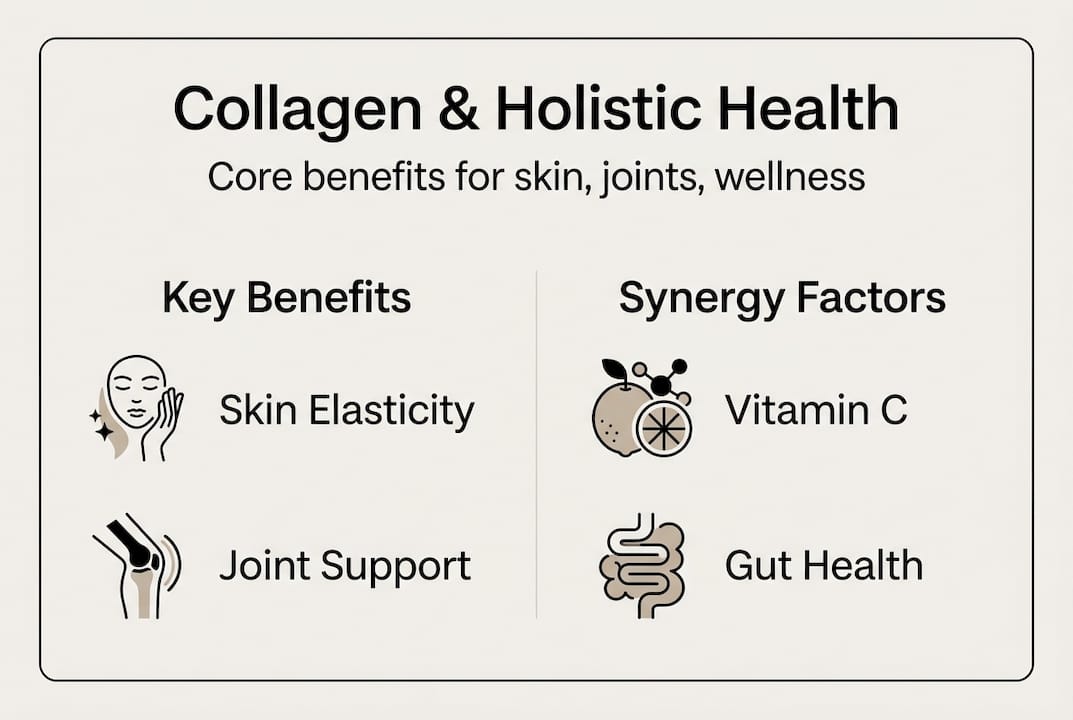
Bone broth deserves a mention here too. Rich in glycine and glutamine, it supports collagen for gut health and reduces systemic inflammation, creating a more favourable internal environment for collagen to do its work. Holistic nutritional routines amplify collagen synthesis when you combine supplementation with an anti-inflammatory diet, resistance training, and quality sleep.
Comparing collagen sources for holistic use:
| Source | Best for | Bioavailability | Considerations |
|---|---|---|---|
| Marine (fish) | Skin, type I collagen | High | Allergen risk for fish sensitivity |
| Bovine (grass-fed) | Joints, skin, gut | High | Broad peptide profile |
| Bone broth | Gut, general wellness | Moderate | Quality varies by source |
| Vegan boosters | Collagen synthesis support | Variable | Limited clinical evidence |
Pro Tip: Take your collagen supplement in the morning alongside a vitamin C-rich food, then follow with resistance training later in the day. This sequence supports both synthesis and utilisation, giving you the best return on your investment.
Lifestyle factors that enhance collagen’s effectiveness include:
- Resistance training: Mechanical load on tendons and joints stimulates collagen remodelling
- Sleep: Growth hormone, which peaks during deep sleep, supports collagen production
- Stress management: Chronic cortisol elevation degrades collagen faster than supplements can replace it
- Sun protection: UV radiation is one of the fastest ways to break down dermal collagen
For a broader look at nutrition for skin health, the interplay between diet, lifestyle, and supplementation is where the real gains are made.
Having seen collagen’s role in holistic health, let’s break down practical steps for your own routine.
How to use collagen for skin, joints, and wellbeing
Knowing the science is one thing. Translating it into a daily routine that actually works is another. Here is a practical framework based on current evidence.
Typical effective doses range from 2.5 to 10g per day, with higher efficacy observed in older adults, postmenopausal women, and athletes. For joint-specific goals, some trials use up to 15g daily, though most skin benefits plateau at 10g.
- Choose the right type: Marine or bovine type I and III collagen for skin; type II for joint cartilage specifically
- Start with 5g daily and build to 10g over two weeks to assess tolerance
- Pair with vitamin C at every dose, whether from food or a supplement
- Time it strategically: Pre-workout or morning use aligns with natural cortisol rhythms and exercise-induced collagen synthesis
- Commit to at least eight weeks before evaluating results; collagen remodelling is a slow biological process
- Track your markers: Skin texture, joint comfort, and recovery speed are your practical indicators
Pro Tip: Liquid collagen formulations, like those in sachet form, offer superior convenience and often better palatability than powder, which means you are far more likely to stay consistent. Consistency is the single biggest predictor of results.
For those wanting to go deeper, a collagen mastery approach integrates supplementation with fitness and skin health goals simultaneously. A structured collagen supplement regimen removes the guesswork entirely.
Before you build your own collagen routine, consider the risks, limitations, and expert scepticism.
Risks, limitations, and expert scepticism
No supplement guide is complete without an honest look at the downsides. Collagen is generally safe, but the evidence landscape has real limitations you should understand.
The most significant issue is not safety; it is efficacy certainty. EU EFSA rejects health claims for collagen supplements, citing publication bias and incomplete trial data. This does not mean collagen does not work; it means the regulatory bar for approved health claims has not been met by the current body of evidence.
Key limitations and risks to keep in mind:
- Population specificity: Benefits are most consistent in older adults and those with existing deficiencies; younger, well-nourished individuals may see less dramatic results
- Industry funding: The majority of positive RCTs are manufacturer-sponsored, which skews the published literature
- Not a protein replacement: Collagen is an incomplete protein, lacking tryptophan; it should complement, not replace, a balanced diet
- Source quality: Low-quality supplements may contain heavy metals or contaminants; always choose products with third-party certification
- GI effects: Mild digestive discomfort is occasionally reported, though serious adverse effects are rare
“Collagen supplements are not a shortcut. They are a targeted tool that works best within a broader framework of good nutrition, exercise, and sleep. Expecting dramatic results from supplementation alone is where most people go wrong.”
For guidance on choosing products that meet rigorous standards, understanding collagen supplement quality is an essential first step before spending money on any collagen product.
Armed with clarity and caution, here is how to put evidence and holistic routines together for action.
Enhance your holistic health with collagen protein supplements
If you are ready to move from understanding to action, the quality of your collagen supplement matters as much as the routine around it. KUDU Nutrition’s liquid collagen protein sachets deliver 20g of hydrolysed collagen per serving, clinically dosed and Informed Sport certified for purity and transparency.
Whether you prefer the refreshing taste of orange liquid collagen protein or the bold flavour of sour cherry collagen sachets, each sachet is designed for convenience and consistency. The ready-to-drink format removes every barrier to daily use, which is exactly what the evidence demands. Explore the collagen protein 14 pack to trial a full two-week supply and experience the difference that dose, quality, and taste make to your holistic health routine.
Frequently asked questions
How quickly will I see effects from collagen supplementation?
Most people notice improvements in skin elasticity and hydration within four to twelve weeks of consistent daily use. Joint relief in mild osteoarthritis typically follows a similar timeline, though some individuals report changes sooner.
Should collagen supplements be combined with other nutrients?
Yes, pairing collagen with vitamin C enhances synthesis because vitamin C is a direct cofactor in collagen fibre formation. Without it, your body cannot fully utilise the peptides you are consuming.
Are collagen supplements suitable for vegans?
True collagen is always animal-derived, from marine or bovine sources. Vegan alternatives show limited efficacy compared to animal-based forms, though plant-based nutrients like vitamin C and zinc can support your body’s own collagen production.
What are the risks with collagen supplementation?
Risks are generally low; mild GI symptoms are the most commonly reported side effect. Choosing a third-party certified product is the most effective way to avoid contaminants such as heavy metals.
Why do some experts remain sceptical about collagen benefits?
Because industry-funded studies dominate the positive findings and the EU’s EFSA has not approved collagen health claims, many independent researchers remain cautious about overstating the evidence. The benefits are real for specific populations, but they are not universal.


