


Over one third of British adults report experiencing muscle aches after intense activity, yet many overlook the foundational role of collagen in recovery. Whether you are training for a marathon or simply aiming to stay active, knowing how collagen supports your muscle structure is critical for maintaining peak performance. By understanding collagen’s unique benefits, you can make smarter choices that help support faster muscle repair and enhance overall strength.
Table of Contents
- Collagen’s Role in Muscle Structure and Repair
- How Muscle Recovery Happens After Exercise
- Types of Collagen and Their Benefits
- Scientific Evidence for Collagen Supplementation
- Comparing Collagen to Other Protein Sources
Key Takeaways
| Point | Details |
|---|---|
| Collagen Supports Muscle Recovery | Collagen serves as a vital structural protein that aids in muscle repair, enhancing strength and resilience during recovery. |
| Types of Collagen Have Specific Roles | Various collagen types, such as Type I and Type II, play distinct roles in supporting muscle integrity and joint health. |
| Supplementation Enhances Muscle Health | Collagen supplementation can improve recovery times and reduce muscle soreness after physical activity. |
| Combining Proteins Maximises Benefits | A diverse protein intake, including collagen and traditional protein sources, can optimise muscle recovery and connective tissue support. |
Collagen’s Role in Muscle Structure and Repair
Collagen represents a fundamental protein crucial for muscle structure and repair, serving as an essential structural component that connects and supports muscle tissue. This protein provides the foundational framework that enables muscles to maintain strength, flexibility, and resilience during physical activities and recovery processes. Exploring how collagen supports muscle growth reveals its complex biochemical interactions within human muscular systems.
At a molecular level, collagen comprises amino acid chains that form strong triple helix structures, creating robust connective tissues surrounding muscle fibres. These protein structures act like microscopic scaffolding, providing critical support during muscle tissue regeneration and repair. Specifically, type I and type III collagen play significant roles in maintaining muscle integrity, helping athletes and fitness enthusiasts recover more effectively from intense physical exertions.
Muscle repair involves intricate processes where collagen acts as a critical signalling molecule, facilitating cellular communication and supporting tissue regeneration. When muscle damage occurs through exercise or injury, collagen helps recruit repair mechanisms, stimulating protein synthesis and supporting the reconstruction of damaged muscle proteins. Strategies for accelerating injury recovery demonstrate how targeted nutritional interventions can optimise these natural healing processes.
The body’s natural collagen production declines with age, potentially compromising muscle repair and recovery capabilities. Regular supplementation and nutrition strategies can help maintain optimal collagen levels, supporting muscle health and reducing recovery times. Understanding these biochemical mechanisms empowers individuals to make informed nutritional choices that enhance muscular resilience and performance.
Pro Tip: Consume protein-rich foods alongside collagen supplements to enhance amino acid absorption and maximise muscle repair potential.
How Muscle Recovery Happens After Exercise
Muscle recovery is a complex physiological process that involves multiple intricate stages of healing and regeneration following physical exertion. Comprehensive research on post-workout recovery highlights the nuanced mechanisms through which muscles repair and rebuild after intense exercise. When muscles undergo stress during physical activity, microscopic tears occur in muscle fibres, triggering an immediate inflammatory response that initiates the healing process.
The initial stage of muscle recovery involves inflammation and cellular signalling, where the body recruits specialised proteins and immune cells to address tissue damage. Research examining muscle recovery processes demonstrates that this inflammatory response is crucial for stimulating muscle protein synthesis and promoting tissue repair. During this phase, blood flow increases to the affected muscles, delivering essential nutrients and oxygen required for healing and removing metabolic waste products generated during exercise.
Subsequent recovery stages focus on muscle protein reconstruction and adaptation. Muscle cells activate satellite cells, which are specialised repair mechanisms that help regenerate damaged muscle tissue. Investigating collagen’s role in muscle recovery reveals that protein supplementation and targeted nutritional strategies can significantly enhance these repair mechanisms. The body progressively rebuilds muscle proteins, increasing muscle fibre strength and resilience in response to previous physical stress.
The duration and effectiveness of muscle recovery depend on various factors, including exercise intensity, individual fitness levels, nutrition, hydration, and rest. Age, overall health, and genetic predispositions also play significant roles in determining recovery speed and efficiency. By understanding these complex physiological processes, individuals can develop more targeted recovery strategies that optimise muscle healing and performance.
Pro Tip: Consume a balanced protein and nutrient-rich meal within 30 minutes after exercise to support immediate muscle recovery and protein synthesis.
Types of Collagen and Their Benefits
Collagen is a multifaceted protein with numerous variations, each playing a unique role in human physiological functioning. Understanding collagen synthesis and processes reveals the complexity of these essential protein structures that support various bodily systems. While many people recognise collagen as a singular entity, scientific research demonstrates that multiple distinct types exist, each with specialised functions critical to human health.
Type I Collagen, the most abundant form, provides remarkable tensile strength to skin, tendons, and bones. Researchers have identified its crucial role in maintaining structural integrity across different tissue types. Similarly, Type II Collagen specialises in cartilage resilience, offering critical support to joint health and mobility. Marine and bovine collagen sources demonstrate unique characteristics in supporting these specific physiological functions.

Scientific investigations highlight the importance of Type III and Type IV Collagen in supporting organ structures and cellular interactions. Research examining collagen’s extracellular matrix contributions reveals that Type III supports skin and organ elasticity, while Type IV forms crucial basal laminae essential for filtration processes. Notably, Type VI Collagen plays a particularly significant role in muscle tissue, contributing to the structural integrity of muscle fibres and supporting regeneration and repair mechanisms.
The diverse range of collagen types underscores the protein’s remarkable versatility in human physiology. Each type serves specific biological functions, from providing structural support to facilitating cellular communication and tissue repair. Understanding these nuanced differences allows individuals to appreciate collagen’s comprehensive role in maintaining bodily health and supporting recovery processes.
Here is a comparison of major collagen types and their key physiological roles:
| Collagen Type | Main Location | Principal Function | Unique Benefit |
|---|---|---|---|
| Type I | Skin, tendons, bones | Provides tensile strength | Supports skeletal structure |
| Type II | Cartilage, joints | Maintains cartilage resilience | Enhances joint mobility |
| Type III | Organs, blood vessels | Aids elasticity and repair | Improves organ flexibility |
| Type IV | Basal membranes | Forms filtration layers | Supports filtration processes |
| Type VI | Muscle tissue | Reinforces muscle fibres | Aids muscle regeneration |
Pro Tip: Diversify your collagen intake by consuming varied protein sources to ensure comprehensive coverage of different collagen types and maximise potential health benefits.
Scientific Evidence for Collagen Supplementation
Scientific research has increasingly validated the potential benefits of collagen supplementation, particularly in muscle recovery and athletic performance. Understanding the importance of nutritional interventions reveals the complex mechanisms by which collagen peptides interact with human physiological systems. Rigorous academic studies have begun to unravel the intricate ways in which targeted protein supplementation can support muscle health and recovery processes.
Bioavailability and Absorption emerge as critical factors in collagen supplementation effectiveness. Research examining collagen peptide mechanisms demonstrates that hydrolyzed collagen peptides offer superior absorption rates compared to traditional protein sources. These refined peptides can be rapidly integrated into muscle tissue, potentially reducing muscle damage and alleviating exercise-induced fatigue more efficiently than standard protein supplements.
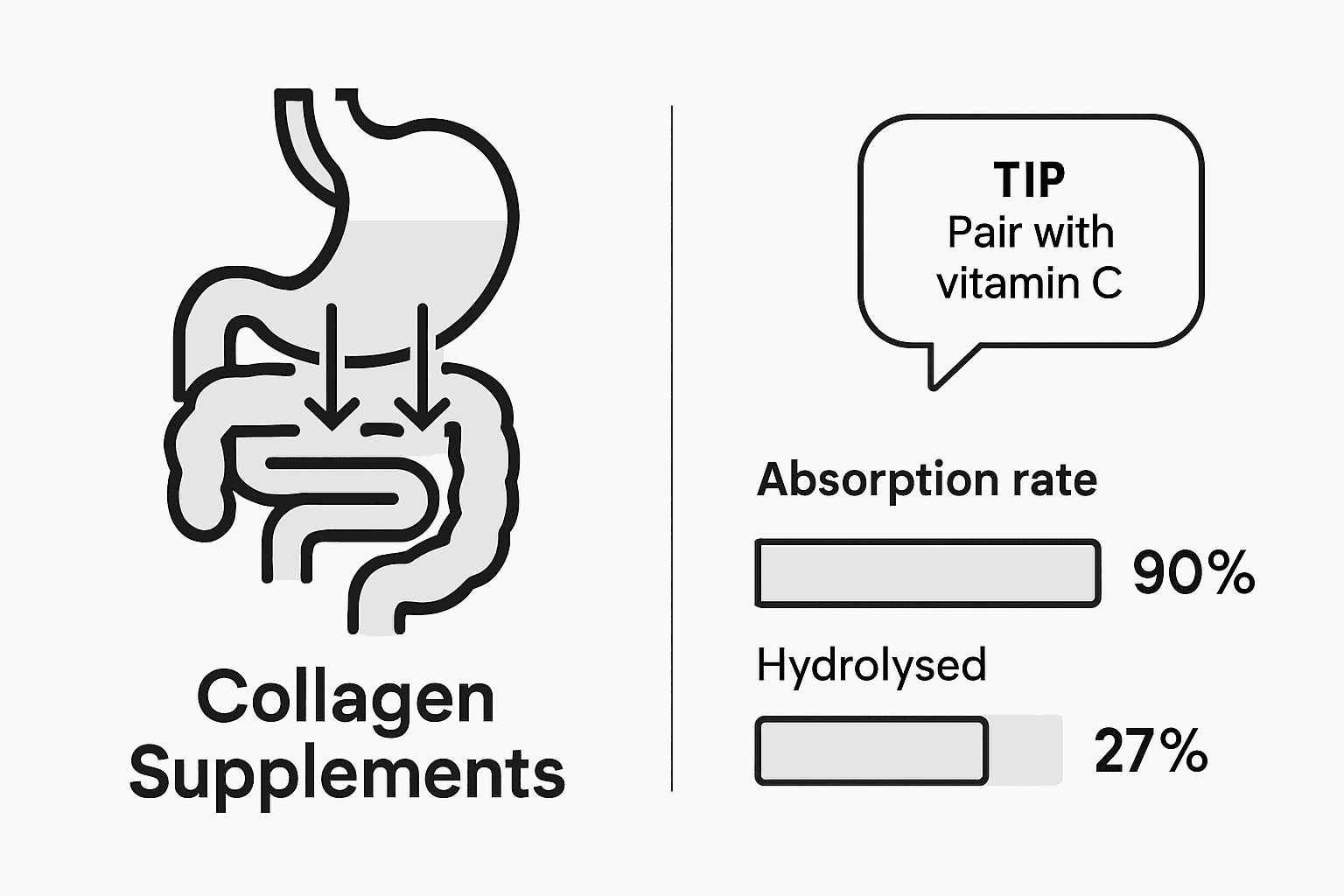
Clinical investigations have produced compelling evidence regarding collagen’s role in muscle recovery and inflammation management. Comprehensive studies on exercise-induced muscle damage indicate that consistent collagen supplementation may significantly attenuate inflammatory responses and support faster recovery times. Researchers observed reduced muscle soreness and improved tissue repair mechanisms in physically active individuals who incorporated targeted collagen interventions into their nutritional strategies.
While promising, scientists emphasise the need for continued research to fully understand collagen’s comprehensive physiological impacts. The current body of evidence suggests that collagen supplementation represents a nuanced and potentially powerful approach to supporting muscle health, recovery, and overall athletic performance. Individual variations in metabolism, exercise intensity, and nutritional status mean that results can differ between individuals.
Pro Tip: Combine collagen supplementation with balanced protein intake and consistent resistance training to maximise potential muscle recovery and structural support benefits.
Comparing Collagen to Other Protein Sources
Protein supplements represent a diverse landscape of nutritional options, each with unique characteristics and physiological impacts. Understanding protein source distinctions reveals the nuanced differences between traditional protein powders and specialised collagen supplementation. Unlike conventional protein sources, collagen offers a distinctive amino acid profile that targets specific physiological functions beyond standard muscle protein synthesis.
Amino Acid Composition emerges as a critical differentiator between protein sources. Scientific research examining protein profiles demonstrates that collagen peptides are exceptionally rich in glycine, proline, and hydroxyproline. These amino acids contribute uniquely to connective tissue repair, distinguishing collagen from whey or casein proteins that primarily support muscle protein synthesis. While whey protein rapidly stimulates muscle protein production, collagen offers more targeted support for tendons, ligaments, and extracellular matrix structures.
Traditional protein sources like whey excel in rapid muscle protein synthesis, making them popular among athletes seeking immediate muscle recovery. Comprehensive studies on protein supplementation indicate that collagen supplementation provides complementary benefits, particularly for connective tissue health. This suggests that athletes and fitness enthusiasts might benefit from a strategic approach that incorporates both collagen and traditional protein sources to support comprehensive muscular and connective tissue recovery.
The nutritional landscape continues to evolve, highlighting the importance of understanding protein source nuances. Collagen’s specialised amino acid profile positions it as a valuable complement to traditional protein supplements, rather than a direct replacement. Individual nutritional needs, fitness goals, and physiological responses will ultimately determine the most effective protein supplementation strategy.
The following table summarises the distinct advantages of collagen supplements compared to traditional protein powders:
| Feature | Collagen Supplements | Traditional Protein Powders |
|---|---|---|
| Amino Acid Profile | Rich in glycine, proline | High in leucine, isoleucine |
| Targeted Support | Connective tissue, joints | Muscle protein synthesis |
| Absorption Rate | Rapid when hydrolysed | Fast for whey, moderate for casein |
| Best Use | Injury recovery, resilience | Post-exercise muscle building |
Pro Tip: Combine different protein sources strategically to create a comprehensive nutritional approach that supports both muscle protein synthesis and connective tissue health.
Support Your Muscle Recovery Naturally with Premium Collagen
Muscle repair after exercise is a delicate process that relies heavily on collagen to rebuild and strengthen muscle fibres. If you seek to reduce recovery time, enhance connective tissue resilience, and support your body’s natural healing, understanding collagen’s vital role is the first step. The article highlights how decreased collagen production can impact muscle recovery and why targeted nutritional support is essential to optimise this process.
KUDU Nutrition offers high-quality collagen supplements specially crafted to meet these needs. Our 20g Collagen Protein Supplements provide a potent dose of hydrolysed collagen peptides designed for rapid absorption and muscle repair support. 
Don’t let slow recovery hold you back from peak performance or wellness. Explore our KUDU Nutrition | 20g Collagen Protein for Performance & Recovery collection today and experience a supplement backed by quality certifications and ingredient transparency. Take the next step now by visiting the product page at https://kudunutrition.com/products/20g-collagen-protein-14-pack to fuel your body’s natural recovery processes with the collagen it needs.
Frequently Asked Questions
What role does collagen play in muscle repair?
Collagen provides structural support to muscle tissues, acting as a framework that maintains muscle strength and facilitates recovery from injuries or stress.
How can collagen supplementation benefit muscle recovery after exercise?
Collagen supplementation can stimulate protein synthesis, support tissue regeneration, and reduce inflammation, leading to faster recovery times and improved muscle integrity.
What are the different types of collagen and how do they affect muscle health?
Types I and III collagen are particularly beneficial for muscle integrity and repair, while Type VI collagen specifically reinforces muscle fibres and supports regeneration processes.
How does collagen compare to traditional protein sources in aiding muscle recovery?
While traditional protein sources like whey or casein primarily support muscle protein synthesis, collagen uniquely aids in the repair of connective tissues, making it a valuable complement to typical protein supplements.