


TL;DR:
- Collagen stability depends on nutrients like vitamin C, zinc, proline, and hydroxyproline.
- Without proper cofactors, collagen supplements may not produce desired skin or joint results.
- Optimizing collagen benefits requires focusing on both peptide quality and key nutritional cofactors.
Taking a collagen supplement and expecting results is a bit like planting seeds without watering them. The collagen itself is only part of the story. What actually determines whether that collagen does anything useful in your body comes down to a group of molecules and nutrients that most supplement labels barely mention. Collagen stabilisers are crucial for the structure and function of collagen, directly affecting your skin elasticity and joint comfort. This article breaks down exactly what stabilisers are, why they matter, and how to use that knowledge to get genuinely better results from your collagen routine.
Table of Contents
- What are collagen stabilisers and why do they matter?
- The science of collagen structure: Triple helix, amino acids, and stabilisers
- Nutritional cofactors: How vitamin C, zinc, and more stabilise your collagen
- Supplement synergy: Beyond collagen — do silica, resveratrol and other aids help?
- The real-world truth: Why collagen stabilisers matter more than marketed formulas
- Optimise your collagen results: Supplement smarter
- Frequently asked questions
Key Takeaways
| Point | Details |
|---|---|
| Stabilisers are essential | True collagen benefits rely on key stabilisers like hydroxyproline, proline, vitamin C, zinc, and manganese. |
| Dietary cofactors matter | Vitamin C and trace minerals must accompany collagen for better skin elasticity and joint support. |
| Supplement synergy works | Adding silica or resveratrol may improve results, but only as an addition to foundational stabilisers. |
| Quality over hype | Look for supplements and routines that emphasise bioavailability and cofactor inclusion for real, lasting outcomes. |
What are collagen stabilisers and why do they matter?
The word “stabiliser” gets used loosely in the supplement world, so let’s be precise. In biological terms, a collagen stabiliser is any molecule or cofactor that preserves collagen’s three-dimensional structure and keeps it functional inside the body. In supplement terms, it refers to ingredients added to a formula to protect collagen peptides from degradation before and after ingestion.
Both definitions matter to you as someone supplementing collagen for skin or joint health. If the collagen in your sachet breaks down before it reaches your tissues, or if your body lacks the cofactors needed to use it properly, you will not see the results you are after.
The most important stabilisers include:
- Hydroxyproline: A modified amino acid that locks the collagen triple helix into its stable, coiled shape
- Proline: The precursor to hydroxyproline and a major structural building block
- Vitamin C: Essential for converting proline into hydroxyproline; without it, collagen literally falls apart
- Zinc: Supports collagen synthesis enzymes and helps prevent breakdown
- Manganese: Assists cross-linking, the process that weaves collagen fibres into strong networks
Understanding type 1 collagen benefits becomes much more meaningful once you realise that those benefits only materialise when these cofactors are present and active.
Here is a quick comparison to show the difference between native stabilisers (in the body) and formulation stabilisers (in supplements):
| Stabiliser type | Where it acts | Primary function |
|---|---|---|
| Hydroxyproline | Body tissues | Locks triple helix structure |
| Vitamin C | Body and gut | Enables proline conversion |
| Zinc | Body enzymes | Prevents collagen breakdown |
| Antioxidants (supplement) | Sachet/formula | Protects peptides from oxidation |
| pH buffers (supplement) | Gut absorption | Maintains peptide integrity |
“Hydroxyproline stabilises the triple helix, and cofactors like vitamin C and zinc play a critical role in collagen formation.”
The broader picture of collagen and holistic health makes it clear that no single ingredient works in isolation. Stabilisers are the unsung infrastructure behind every visible result.
The science of collagen structure: Triple helix, amino acids, and stabilisers
Once you understand what stabilisers are, it helps to see exactly where they fit inside collagen’s architecture.
Collagen is not a simple protein. It is built from three polypeptide chains wound tightly around each other in a formation called the triple helix. This shape is what gives collagen its extraordinary tensile strength, the quality that keeps your skin firm and your joints cushioned under load.
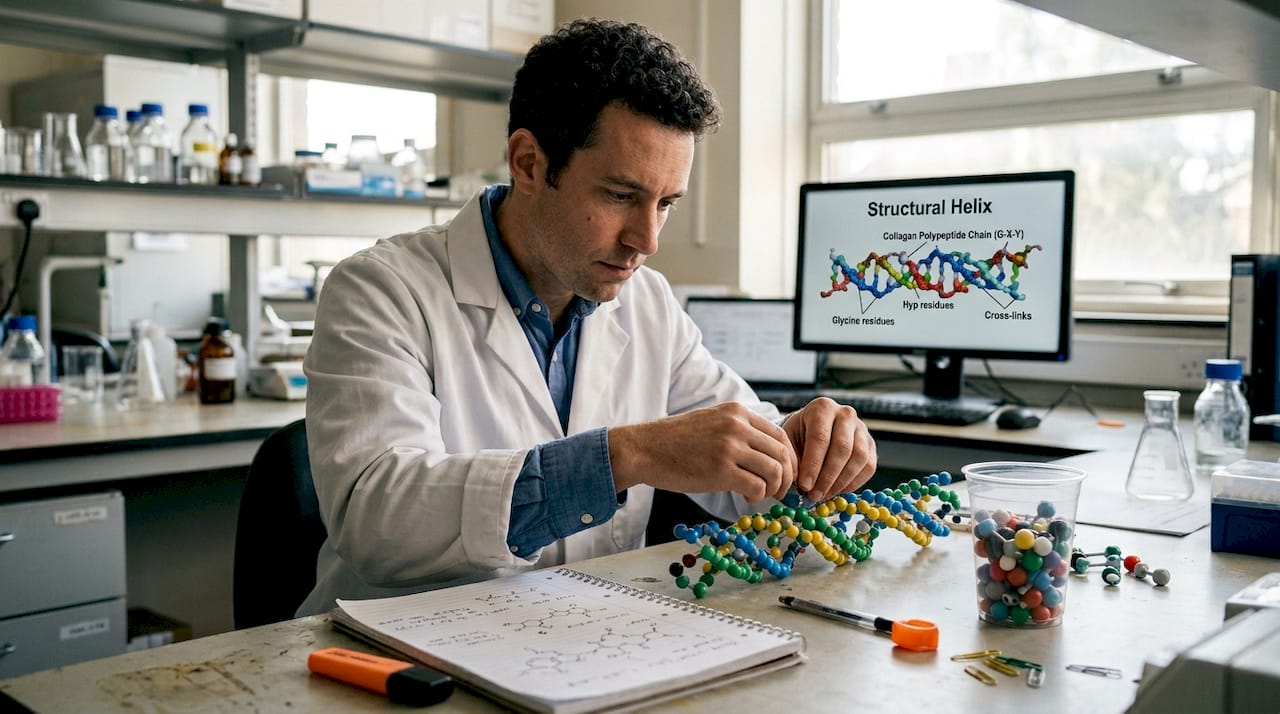
The triple helix depends almost entirely on two amino acids: proline and hydroxyproline. Hydroxyproline and proline together make up about 50% of collagen amino acids, stabilising the triple helix by forming hydrogen bonds that hold the three chains in alignment. Without adequate hydroxyproline, the helix unravels. The result is weak, dysfunctional collagen that cannot support skin or joints effectively.
Here are the major stabilisers ranked by structural importance:
- Hydroxyproline: Primary helix stabiliser via hydrogen bonding
- Proline: Structural backbone and hydroxyproline precursor
- Glycine: Every third residue in the helix; maintains tight coiling
- Vitamin C: Enzyme cofactor that makes hydroxylation possible
- Interchain disulfide bonds: Molecular clamps at the ends of the helix
On that last point, interchain disulfide bonds act as clamps for additional stability, particularly in collagen types that anchor large tissue networks. Think of them as the end-clips on a coiled spring, preventing the whole structure from unwinding under stress.
| Stabiliser | Role in structure | Effect of deficiency |
|---|---|---|
| Hydroxyproline | Helix hydrogen bonding | Unstable, fragile collagen |
| Proline | Chain backbone | Reduced helix formation |
| Glycine | Tight coiling | Disrupted triple helix |
| Vitamin C | Hydroxylation cofactor | Scurvy, tissue breakdown |
| Disulfide bonds | End-clamp stability | Weakened fibril anchoring |
Pro Tip: When reviewing the amino acids in collagen listed on a supplement, look specifically for hydroxyproline content. It is one of the clearest indicators of a well-structured collagen source.
The architecture of collagen is genuinely elegant. Every stabiliser plays a specific, non-negotiable role. Remove one piece and the whole structure becomes compromised.
Nutritional cofactors: How vitamin C, zinc, and more stabilise your collagen
Structural science tells you what stabilisers do inside collagen. Nutritional science tells you how to make sure those stabilisers are available in the first place.
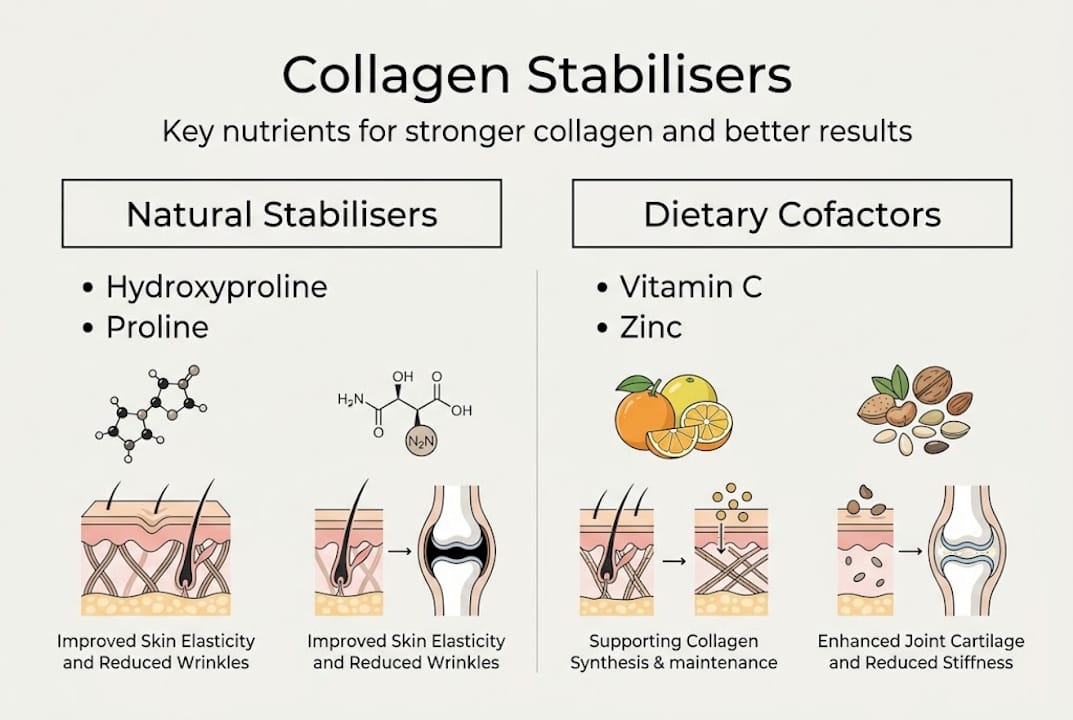
Vitamin C is the most critical dietary cofactor for collagen. It activates the enzyme prolyl hydroxylase, which converts proline into hydroxyproline inside your cells. Vitamin C is vital for proline hydroxylation; deficiency leads directly to unstable collagen and conditions like scurvy, where connective tissue literally disintegrates. Even a mild, subclinical vitamin C shortfall can quietly reduce the quality of collagen your body produces.
Zinc and manganese work further along the process. Zinc and manganese enhance cross-linking and inhibit the enzymes that break collagen down. Cross-linking is the step where individual collagen fibres are woven into the dense, load-bearing networks that give skin its bounce and joints their resilience.
Key cofactors and practical daily targets for skin and joint support:
- Vitamin C: 500 to 1000 mg daily alongside collagen for optimal hydroxylation
- Zinc: 8 to 15 mg daily; found in meat, seeds, and legumes
- Manganese: 1.8 to 2.3 mg daily; found in wholegrains, nuts, and leafy greens
- Copper: Supports the enzyme lysyl oxidase, which drives cross-linking
- Iron: Required alongside vitamin C for hydroxylase enzyme activity
The hydroxyproline content of your collagen source is a direct reflection of how well these cofactors were available during collagen synthesis.
The results of getting this right are measurable. Combining collagen peptides with vitamin C improves skin elasticity by 28 to 35% and reduces joint pain scores by up to 40% in clinical trials, figures that are rarely achieved with collagen alone.
Pro Tip: Pair your collagen sachet with a vitamin C-rich food or drink. Even a small glass of orange juice at the same time meaningfully supports the hydroxylation process.
Understanding vitamin C and collagen synthesis in practice can transform your results. And if you are supplementing specifically for joints, the evidence behind collagen for joint health shows that cofactor support is consistently the differentiating factor between those who respond and those who do not.
Supplement synergy: Beyond collagen — do silica, resveratrol and other aids help?
Once you have the core cofactors covered, a natural question arises: can newer or more exotic ingredients push results even further?
Silica and resveratrol are the two most frequently discussed additions to collagen supplement stacks. Silica and resveratrol co-supplementation show preliminary improvement in skin elasticity and joint function, though the evidence is still early-stage compared to the robust data behind vitamin C and zinc.
Here is how they are thought to work:
- Silica: May stimulate fibroblast activity (the cells that produce collagen) and improve mineral density in connective tissue
- Resveratrol: Acts as an antioxidant that protects existing collagen from oxidative degradation, particularly in skin exposed to UV stress
- Hyaluronic acid: Often paired with collagen for joint lubrication; supports the matrix that surrounds collagen fibres
- Biotin: Supports keratin production, which works alongside collagen in skin and nail structure
The honest assessment is this: silica and resveratrol are interesting additions, not foundations. They cannot compensate for a deficit in vitamin C, zinc, or adequate collagen peptide intake. Think of them as the finishing layer on an already solid structure.
Pro Tip: Before adding silica or resveratrol to your routine, audit your vitamin C and zinc intake first. Fixing a cofactor gap will deliver far more noticeable results than any premium add-on ingredient.
For a practical framework on building your routine correctly from the ground up, the step by step collagen intake guide is a useful reference. And for a broader view of how collagen fits into overall wellbeing, holistic health and collagen covers the wider picture well.
The real-world truth: Why collagen stabilisers matter more than marketed formulas
Here is something the supplement industry rarely says plainly: most people who do not see results from collagen are not failing because they chose the wrong brand. They are failing because they are missing the cofactors that make any collagen work.
Marketed “collagen stabiliser” blends are often vague, using the term to justify premium pricing without specifying meaningful amounts of vitamin C, zinc, or manganese. Real results come from robust, consistent nutrition alongside quality collagen peptides, not from proprietary blends with impressive-sounding names.
The high-quality evidence is clear: the synergy between collagen peptides, vitamin C, and trace minerals consistently outperforms collagen in isolation. Most users simply neglect these essentials because no one explains them clearly.
If you want to optimise genuinely, focus on collagen bioactivity tips that address cofactor intake alongside peptide quality. The formula that works is not the most expensive one on the shelf. It is the one built on sound nutritional foundations.
Optimise your collagen results: Supplement smarter
Now that you understand the science, the next step is choosing supplements that reflect it.
Look for options that either include vitamin C as a formulated ingredient or provide clear guidance on cofactor pairing. Formulas that prioritise absorption, peptide quality, and ingredient transparency will consistently outperform those that rely on marketing language alone. KUDU Nutrition’s collagen protein supplements are built with exactly this in mind, offering high collagen content with Informed Sport certification and full ingredient clarity. To go deeper on the science and find the right product for your goals, learn more about collagen and make your next choice an informed one.
Frequently asked questions
What are the main collagen stabilisers needed for effective supplements?
Hydroxyproline and proline make up about half of collagen amino acids, while vitamin C, zinc, and manganese act as essential cofactors that support structure and synthesis. Without these, even high-dose collagen supplements may underdeliver.
Why is vitamin C vital when taking collagen?
Vitamin C is necessary for hydroxylation, the conversion of proline into the stabilising amino acid hydroxyproline. Without sufficient vitamin C, your body cannot build stable collagen regardless of how much you supplement.
How do silica or resveratrol impact collagen stability?
Silica and resveratrol may increase elasticity and joint benefits, but current evidence positions them as complementary additions rather than core stabilisers. They work best when the nutritional foundations are already in place.
Can you get enough collagen stabilisers from diet alone?
Nutrient and cofactor intake enhances collagen synthesis, and a varied diet rich in vitamin C, zinc, and protein can cover the basics. Supplements become particularly useful when dietary intake is inconsistent or insufficient for active recovery and skin health goals.
Recommended
- Collagen and holistic health: skin, joints, and wellbeing
- Joint Health Explained: Collagen’s Role in Mobility
- Why Collagen Matters for Skin, Joints, and Fitness
- Amino Acids in Collagen – Why They Matter for Skin and Joints
- #AntiAging #Skincare #YouthfulSkin #WrinkleFree #SkinRenewal #HealthySkin #GlowingSkin #SkinMoisture #BeautyRoutine #NaturalBeauty #CollagenBoost #FineLines Αρχεία - Eneleo - Natural Skin Care