


TL;DR:
- Not all proteins support gut health equally; those rich in probiotics, prebiotic fibers, and beneficial amino acids are most effective. Foods like Greek yogurt, lentils, edamame, fermented soy, and collagen peptides offer distinct advantages for microbiome diversity and gut barrier integrity. Combining various gut-friendly proteins enhances overall digestive health rather than relying on a single source.
Not all proteins are equal when it comes to your gut. The right examples of gut-friendly proteins do more than deliver amino acids — they actively support your microbiome, protect the intestinal lining, and make digestion work with you rather than against you. Choosing between Greek yogurt, lentils, collagen peptides, and fermented soy is not simply a macros game. The differences lie in probiotic content, prebiotic fibre, amino acid profiles, and how processing affects tolerability. This article cuts through the noise so you can make genuinely informed choices.
Table of Contents
- Criteria for gut-friendly proteins
- Greek yogurt: the probiotic powerhouse
- Lentils: the fibre-rich plant protein
- Edamame and other soy-based gut-friendly proteins
- Collagen and gelatin: collagen peptides for gut lining support
- Comparison of gut-friendly protein sources
- Our perspective: why combining sources beats picking one winner
- Support your gut with KUDU Nutrition
- Frequently asked questions
Key Takeaways
| Point | Details |
|---|---|
| Gut-friendly proteins combine protein with probiotics or prebiotic fibre | Effective gut-friendly proteins support digestion by nourishing beneficial gut bacteria, not just by amino acid content. |
| Greek yogurt is a top probiotic-rich protein option | It provides concentrated protein and live cultures that balance the gut microbiome. |
| Lentils offer plant protein plus fibre and bioactive compounds | Their whole-food matrix supports the gut lining and microbial health beyond protein alone. |
| Collagen peptides may support intestinal lining but benefits vary | They supply important amino acids though human evidence for gut symptom relief is limited and nuanced. |
| Processing and dietary context determine protein tolerance | Fermentation and minimal processing often enhance gut tolerance and benefits of protein sources. |
Criteria for gut-friendly proteins
Before comparing individual options, it helps to know what actually earns a protein the “gut-friendly” label. Protein quality alone is not the full picture. Protein choices often combine protein with a gut-supporting factor such as prebiotic fibre or probiotics, and that combination is what separates a genuinely helpful source from one that is merely high in leucine.
There are four main criteria worth evaluating when you are looking at digestive health protein examples:
- Amino acid profile: Proteins rich in glycine, glutamine, and proline actively support gut lining integrity. This is why collagen peptides and bone broth attract attention beyond their total protein content. You can read more about collagen and gut health to understand the specific mechanisms.
- Digestibility: How easily the protein is broken down affects gut transit, bloating, and fermentation. Highly processed isolates can irritate sensitive digestive systems; whole-food matrices tend to behave better.
- Probiotic content: Fermented proteins — yogurt, tempeh, kefir — introduce live bacteria that shift the gut microbiome towards a healthier balance.
- Prebiotic fibre: Plant proteins often arrive bundled with resistant starch and soluble fibre that feeds existing beneficial bacteria. This is the mechanism behind lentils and edamame earning their gut-health credentials.
The whole-food matrix matters more than most people realise. Polyphenols, resistant starch, and fibre present alongside protein in minimally processed foods contribute to gut barrier function and microbiome diversity in ways that isolated proteins simply cannot replicate.
Greek yogurt: the probiotic powerhouse
Greek yogurt is one of the most well-established examples among the best proteins for gut health, and the reasons go beyond the obvious. The straining process removes whey, which concentrates the protein and significantly reduces the lactose content. That lower lactose load means many individuals who struggle with standard dairy find Greek yogurt far more tolerable.
Greek yogurt is identified as a top protein choice for gut health due to its probiotics and concentrated protein, with a standard 170 g serving delivering roughly 17 g of protein alongside live cultures of Lactobacillus and Bifidobacterium strains.
Key benefits at a glance:
- Live probiotic cultures that actively colonise the gut and compete against pathogenic bacteria
- High protein concentration supporting muscle repair alongside digestive health
- Lower lactose than standard yogurt, improving tolerance for the mildly lactose-sensitive
- Calcium and B vitamins contributing to broader metabolic and immune support
- Short-chain fatty acid (SCFA) production via bacterial fermentation, which nourishes colonocytes (the cells lining your colon)
The fermentation process also partially pre-digests proteins, which is one reason Greek yogurt tends to cause less bloating than unfermented dairy of equivalent protein content. If you are working on improving your gut health through dietary changes, Greek yogurt is one of the simplest and most evidence-backed places to start.
Pro Tip: Choose full-fat Greek yogurt with no added sugar. The fat slows gastric emptying, extending the exposure of probiotics to the gut lining, and the absence of sweeteners protects against the disruption of gut flora that added sugars cause.
Lentils: the fibre-rich plant protein
Lentils occupy a rare category among gut-friendly protein sources: they simultaneously deliver meaningful protein and substantial prebiotic fibre in a single, affordable, versatile food. That combination is harder to find than it sounds.
Half a cup of cooked lentils offers approximately 9 g of protein and 8 g of fibre, making them one of the most efficient high-fibre protein foods available. The fibre fraction includes resistant starch, which bypasses digestion in the small intestine and ferments in the colon, feeding Bifidobacterium and Faecalibacterium prausnitzii — two of the most important beneficial bacterial species for gut barrier integrity.
Beyond fibre, lentils’ gut benefits extend to bioactive peptides, resistant starch, and polyphenols that directly impact the microbiota and gut barrier. These compounds reduce intestinal permeability, sometimes called “leaky gut”, by reinforcing tight junctions between intestinal cells.
| Nutrient (per 100 g cooked) | Lentils | Chicken breast | Greek yogurt |
|---|---|---|---|
| Protein (g) | 9 | 31 | 10 |
| Fibre (g) | 8 | 0 | 0 |
| Prebiotic effect | High | None | Low |
| Probiotic content | None | None | High |
Additional reasons to eat more lentils:
- Complete when combined: Pair with rice or a grain to form a complete amino acid profile
- Anti-inflammatory polyphenols: Proanthocyanidins and flavonoids reduce gut inflammation markers
- Budget-friendly: One of the lowest-cost protein-per-gram sources available in most supermarkets
- Suitable for most diets: Vegan, vegetarian, and gluten-free without any modification
Pro Tip: Soak dried lentils for at least four hours before cooking and discard the soaking water. This reduces the phytic acid content, improving mineral absorption and reducing the gas-producing potential that puts some people off lentils entirely.
Edamame and other soy-based gut-friendly proteins
Alongside lentils, edamame and fermented soy products represent some of the most compelling plant-based gut-friendly dietary options available today — particularly for those avoiding animal products.
Edamame (young, immature soybeans) delivers a complete amino acid profile, which is unusual for a plant protein. Edamame provides about 4 g of gut-friendly fibre per serving alongside solid plant-based protein, making it effective both as a muscle-support food and a microbiome-feeding one.
Fermented soy takes things further. Tempeh, for example, combines all the prebiotic fibre benefits of soybeans with active probiotic cultures introduced during fermentation. The fermentation process also reduces phytate content, improving the bioavailability of zinc and iron — minerals that many plant-based eaters struggle to absorb sufficiently.
Key highlights of soy-based gut-friendly proteins:
- Complete amino acid profile supporting both muscle repair and digestive enzyme production
- Prebiotic fibre in both edamame and tempeh feeding beneficial gut bacteria
- Probiotics in fermented forms like tempeh and natto contributing to microbiome diversity
- Isoflavones acting as mild anti-inflammatory compounds within the gut environment
- Vitamin B12 present in some fermented soy products, addressing a common gap in vegan diets
If you are weighing up whether soy proteins or collagen compares to plant-based alternatives for your goals, the honest answer is that they work best together rather than as substitutes.
Collagen and gelatin: collagen peptides for gut lining support
Collagen-based proteins occupy a distinct niche in the world of gut-friendly dietary options. They do not provide complete protein in the traditional sense — they are low in tryptophan — but their unusually high concentrations of glycine, proline, and hydroxyproline make them uniquely relevant to gut lining health.
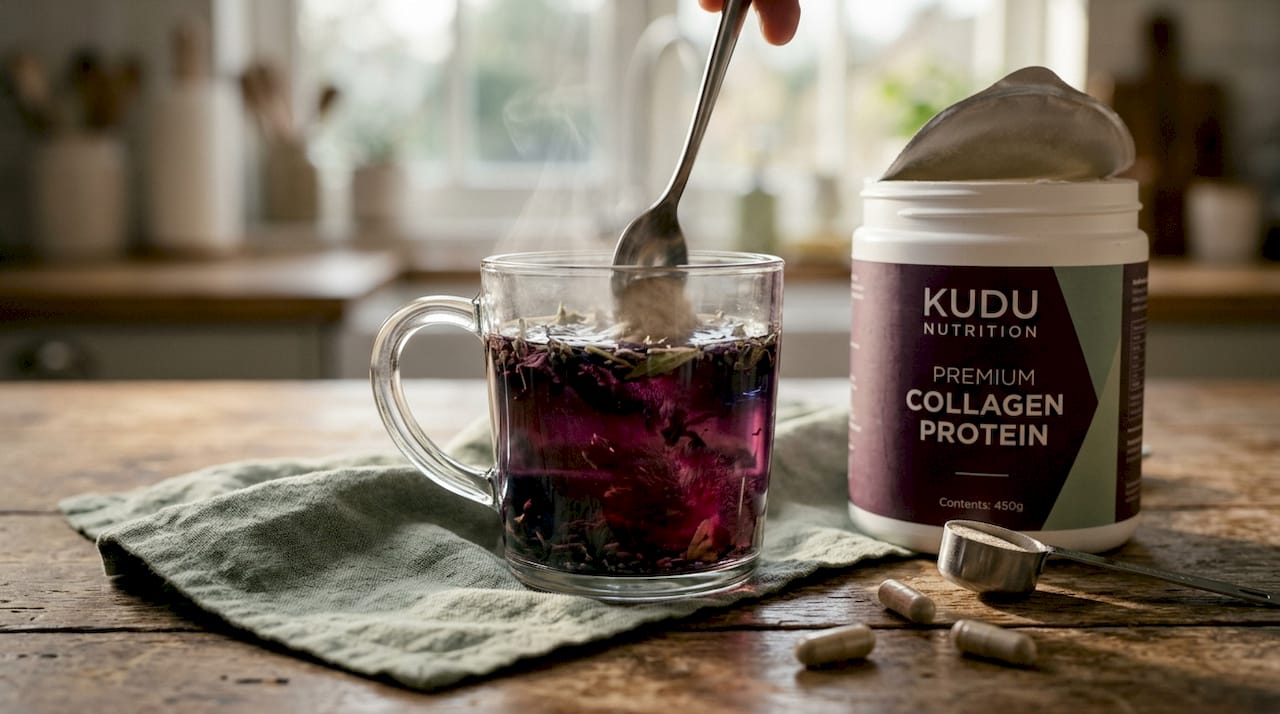
Gelatin is rich in glycine and proline, amino acids that may help protect the intestinal lining, though human evidence remains nuanced and individual outcomes vary. Animal studies and mechanistic research show clear support for these amino acids in maintaining tight junctions and reducing intestinal permeability. Clinical human trials are fewer and more variable, which is worth being honest about.
What is clearer is their systemic role. Collagen peptide supplementation shows meaningful anti-inflammatory effects and broad connective tissue support, even where gut-specific outcomes are inconsistent across individuals.
Collagen peptides are best understood as a complementary gut-support tool rather than a standalone digestive remedy. Their real value lies in supporting the structural environment in which gut health operates — the lining, connective tissue, and inflammatory context — rather than directly populating or feeding the microbiome the way fermented foods and fibre do.
Benefits and considerations for collagen as a protein for gut microbiome support:
- Glycine content supporting glutathione synthesis and reducing oxidative stress in gut tissue
- Proline and hydroxyproline contributing to the structural repair of intestinal connective tissue
- Anti-inflammatory properties that reduce systemic inflammation affecting gut barrier function
- High digestibility with minimal bloating or fermentation issues for most individuals
- Quality matters significantly: Hydrolysed collagen peptides from certified sources absorb more efficiently than gelatin
For a detailed look at how this works in practice, see the collagen gut lining benefits breakdown.
Comparison of gut-friendly protein sources
Having explored each option in depth, the table below pulls the key metrics together for straightforward decision-making.
| Protein source | Protein per serving | Probiotic content | Prebiotic fibre | Gut-specific benefit | Best suited to |
|---|---|---|---|---|---|
| Greek yogurt | ~17 g / 170 g | High | Low | Microbiome balance | Omnivores |
| Lentils | ~9 g / 100 g | None | High | Gut barrier integrity | All diets |
| Edamame | ~8 g / 80 g | None | Moderate | Microbiome feeding | Plant-based |
| Tempeh | ~19 g / 100 g | Moderate | Moderate | Microbiome and immunity | Plant-based |
| Collagen peptides | ~10 g / sachet | None | None | Gut lining support | All diets |
A few practical notes to guide your selection:
- If your main goal is microbiome diversity, prioritise Greek yogurt and fermented soy products eaten regularly and consistently
- If gut barrier support is the priority, collagen peptides and lentils together address this from complementary angles
- If you follow a plant-based diet, lentils, edamame, and tempeh form a strong gut-health protein foundation without compromise
- If digestive sensitivity is an issue, Greek yogurt and collagen peptides tend to be the easiest to tolerate, as neither requires heavy enzymatic breakdown
Our perspective: why combining sources beats picking one winner
The gut-health conversation around protein tends to become a ranking exercise — people want to know which single food is best. That framing misses the point entirely. The gut microbiome thrives on diversity, and so should your protein intake.
What we have seen consistently is that fitness-focused individuals who rely almost exclusively on a single protein source — whether that is whey isolate, chicken breast, or even lentils — plateau on gut health outcomes in ways that diversifying their sources quickly resolves. Introducing collagen peptides alongside a fibre-rich plant protein and a probiotic-rich fermented food is not hedging. It is actually how the gut ecosystem works best: structural support from collagen, microbial feeding from fibre, and bacterial repopulation from probiotics all address different layers simultaneously.
The other point worth making is about processing. Many people chasing gut-friendly dietary options unknowingly buy heavily processed versions of gut-friendly foods — flavoured yogurts loaded with sugar, lentil snacks fried in refined oils, soy-protein isolate bars with emulsifiers. The gut benefit is largely stripped out in those formats. The closer a food is to its whole or minimally processed form, the more intact its gut-supportive matrix remains.
Support your gut with KUDU Nutrition
If you are ready to add a high-quality, easily absorbed collagen protein to your gut-support routine, KUDU Nutrition’s liquid collagen protein sachets are worth a serious look. Each sachet delivers a concentrated dose of hydrolysed collagen peptides in a format that is gentle on digestion, requires no mixing, and fits into any routine without friction.

KUDU is Informed Sport certified, which means every batch is tested for banned substances — important for athletes and fitness enthusiasts who cannot afford ambiguity on that front. The collagen content is higher per serving than most powder-based alternatives, and the taste is one of the most common things customers mention unprompted. Explore the full product range and see how liquid collagen fits alongside the other gut-friendly proteins in your diet.
Frequently asked questions
What makes a protein gut-friendly?
A gut-friendly protein provides amino acids plus probiotics or prebiotic fibre that nourish gut bacteria and support the intestinal lining. Proteins often combine these factors rather than relying on protein content alone.
Is collagen protein guaranteed to improve gut health?
No. Collagen contains amino acids that may support gut lining integrity, but human evidence for digestive symptom improvement is limited and varies considerably between individuals.
Can plant-based proteins be gut-friendly?
Absolutely. Plant-based proteins like lentils and edamame are strong examples of gut-friendly proteins because their protein and prebiotic fibre content work together to benefit gut microbes. Edamame’s fibre content alone makes it a meaningful gut-health contributor.
Are fermented proteins better for gut health?
Fermented proteins often contain live probiotic cultures and are easier to digest, making them generally better tolerated and supportive of gut microbiome diversity compared to unfermented equivalents.