


Over one third of British adults express concern about thinning hair and scalp issues, making hair health a growing topic across the United Kingdom. Whether you are noticing finer strands or persistent scalp discomfort, understanding your starting point is the first step to improvement. This step-by-step guide helps you assess, choose, and refine the best collagen strategies for healthier, fuller hair, using reliable methods tailored for British needs.
Table of Contents
- Step 1: Assess Your Current Hair and Scalp Health
- Step 2: Select The Right Collagen Supplement For Your Needs
- Step 3: Incorporate Liquid Collagen Into Your Daily Routine
- Step 4: Optimise Your Diet And Haircare For Best Results
- Step 5: Track Improvements And Adjust Your Approach
Quick Summary
| Key Point | Explanation |
|---|---|
| 1. Assess your hair and scalp health | Conduct a thorough examination to understand the condition of your hair and scalp, noting any significant issues for future reference. |
| 2. Choose the right collagen supplement | Select a collagen type that supports hair health, prioritising products with high bioavailability and minimal allergens. |
| 3. Integrate liquid collagen daily | Incorporate liquid collagen into your morning routine consistently to maximise its benefits for hair growth. |
| 4. Optimise your diet for hair strength | Include protein, biotin, and vitamin C-rich foods in your diet to support overall hair health and growth. |
| 5. Track and adjust your progress regularly | Monitor changes in hair health metrics every few weeks, adjusting your approach based on observable results. |
Step 1: Assess your current hair and scalp health
Before diving into collagen enhancement strategies, understanding your hair and scalp’s current condition is crucial. This assessment helps determine personalised approaches to improving hair health and growth. You’ll want to examine several key indicators that reveal the overall wellness of your hair and scalp.
Start by thoroughly inspecting your scalp and hair in good lighting. Look for signs like excessive dryness, flakiness, or unusual scalp conditions that might indicate underlying health issues. Check for scalp inflammation, unusual patches, or persistent itchiness. When examining your hair strands, assess their texture carefully observe whether they appear brittle, prone to breakage, or lacking natural shine. Pay attention to your hair’s elasticity by gently stretching a strand observe if it returns to its original shape or breaks easily.
While performing this assessment, note any significant changes in hair thickness, growth rate, or overall appearance. These observations will serve as your baseline for tracking improvements as you introduce collagen into your hair care routine. Consider taking photographs from multiple angles to document your starting point and help track progress over time.
Top tip: Use natural light and a handheld mirror to conduct a comprehensive scalp and hair examination for the most accurate assessment.
Step 2: Select the right collagen supplement for your needs
Choosing the perfect collagen supplement requires careful consideration of your specific health goals and individual needs. Understanding the various types and sources of collagen can help you make an informed decision that supports your hair growth and overall wellness.
Begin by evaluating your primary health objectives. Different collagen types target specific areas some focus on skin elasticity, while others support joint health or hair growth. Consider your nutritional requirements carefully. Look for supplements that offer type I and type III collagen which are most beneficial for hair health. Check the protein source as well some people prefer marine collagen for its bioavailability, while others might choose bovine or chicken collagen. Pay attention to additional ingredients checking for potential allergens or unnecessary fillers.
Quality matters significantly when selecting a collagen supplement. Seek out products that have been third party tested and provide transparent information about their sourcing and manufacturing processes. Collagen Supplement Workflow for Optimal Results UK Guide can provide additional insights into selecting high quality supplements. Consider factors like absorption rate protein concentration and whether the supplement includes complementary nutrients like vitamin C which enhances collagen synthesis.
Here is a comparison of popular collagen supplement sources for hair health:
| Collagen Source | Key Benefit | Typical Allergen Risk |
|---|---|---|
| Marine | High absorption, rich in type I | Fish allergens possible |
| Bovine | Contains type I and III | Minimal, unless beef allergy |
| Chicken | Source of type II for joints | Rare, safe for most users |
Top tip: Always read the product label thoroughly and consult with a healthcare professional to ensure the supplement aligns with your specific health needs and potential medical conditions.
Step 3: Incorporate liquid collagen into your daily routine
Transforming your hair health requires consistent integration of liquid collagen into your everyday lifestyle. Understanding how to seamlessly blend this supplement into your existing routine will help maximise its potential benefits for hair growth and overall wellness.

Begin by selecting an optimal time of day for consuming your liquid collagen supplement. Many people find morning routines most effective for maintaining consistent nutritional intake. Consider pairing your supplement with breakfast or your morning beverage to establish a reliable habit. What Is Liquid Collagen? Benefits for Skin and Joints can provide additional context on absorption strategies. Some individuals prefer mixing liquid collagen into smoothies coffee or water for easier consumption. Experiment with different methods to discover what feels most natural and enjoyable for you.
Consistency is key when incorporating liquid collagen into your regimen. Set reminders on your phone or place the supplement alongside other daily vitamins to ensure you do not miss a dose. Track your progress by noting any changes in hair texture strength and overall appearance. Remember that results typically become noticeable after several weeks of continuous use so patience and dedication are essential.
Top tip: Create a dedicated space in your kitchen or bathroom for your liquid collagen supplement to help establish a seamless daily ritual.
Step 4: Optimise your diet and haircare for best results
Maximising your hair health requires a holistic approach that combines strategic dietary choices and targeted haircare practices. Your nutrition and daily hair maintenance play crucial roles in supporting collagen production and overall hair strength.
Start by focusing on nutrition that supports healthy hair growth. Include protein rich foods like eggs fish and lean meats which provide essential amino acids for keratin production. Incorporate foods high in biotin such as almonds sweet potatoes and spinach. Zinc rich ingredients like pumpkin seeds and lean beef can also support hair follicle health. Complement your diet with foods containing vitamin C which helps prevent hair damage and supports natural hair loss prevention. Collagen’s Role in Hair and Nails: Complete Guide suggests consuming antioxidant rich foods can further enhance hair strength.
Prioritise gentle haircare practices that minimise damage and support hair health. Use sulphate free shampoos with minimal chemical processing. Limit heat styling and protect your hair with heat protectant sprays when necessary. Massage your scalp regularly to stimulate blood circulation and promote healthy hair growth. Consider using silk or satin pillowcases to reduce friction and prevent hair breakage during sleep.
Top tip: Create a weekly hair nutrition and care schedule to track your progress and maintain consistent healthy habits.
Step 5: Track improvements and adjust your approach
Monitoring your hair health journey requires systematic observation and strategic adjustments. Understanding how to effectively track your progress will help you optimise your collagen and nutrition strategy for maximum hair growth potential.
Begin by establishing a comprehensive baseline assessment of your current hair condition. Take detailed photographs from multiple angles under consistent lighting to document your starting point. Tracking methods for hair loss and recovery recommend measuring hair thickness texture and overall volume monthly. Create a spreadsheet or journal to record specific metrics such as hair strand diameter breakage frequency and scalp health. Consider using a digital caliper or professional measurement tools for precise tracking. Pay attention to subtle changes in hair elasticity shine and overall strength.
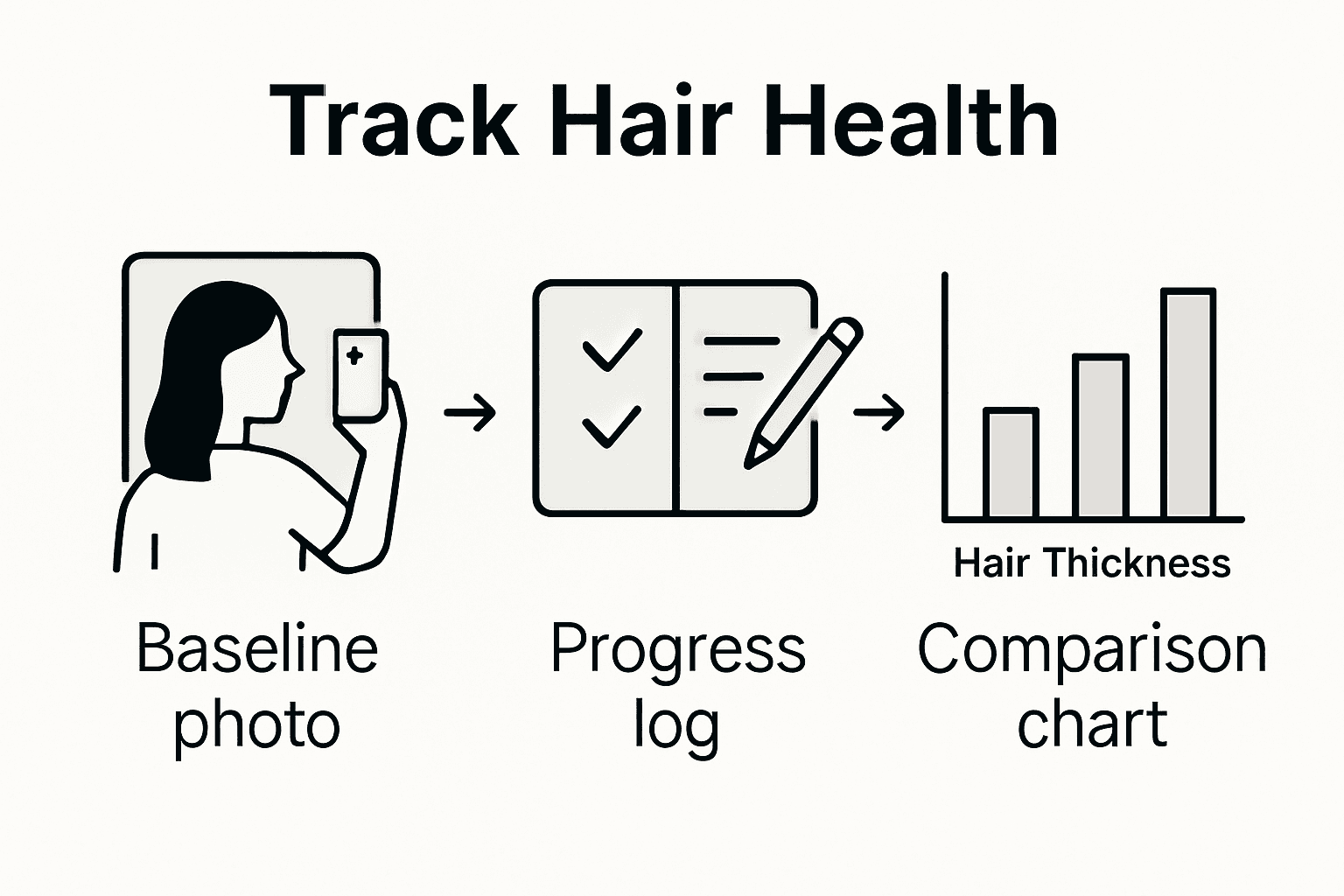
Use this summary table to track important hair health indicators during your collagen journey:
| Indicator | How to Measure | Why It Matters |
|---|---|---|
| Hair Thickness | Visual check, diameter tool | Reveals growth/strength |
| Scalp Condition | Inspect for redness/flakiness | Indicates overall wellness |
| Hair Elasticity | Strand stretch test | Shows protein health |
| Shine and Texture | Visual inspection in daylight | Tracks moisture and damage |
Review your progress systematically every six to eight weeks and be prepared to make informed adjustments. If you are not seeing desired results consider consulting a healthcare professional or nutritionist. Some individuals might need to modify their collagen intake dietary composition or haircare routine. Role of Collagen in Hair Health Science and Benefits suggests that personalised approaches often yield the best outcomes. Remember that individual responses to nutritional supplements can vary widely so patience and consistent monitoring are key.
Top tip: Take progress photographs in the same location with identical lighting and camera angle to ensure accurate visual comparison.
Boost Your Hair Growth with High Quality Collagen Supplements
Are you ready to transform your hair health by addressing the key challenges of collagen deficiency and brittle strands? Many struggle with finding a reliable collagen source that truly supports hair elasticity, shine, and overall strength. With consistent use of a premium liquid collagen, you can restore vitality, promote stronger hair growth, and improve scalp wellness naturally.
Discover the power of 20g Collagen Protein Supplements from KUDU Nutrition. Our collagen sachets deliver a potent dose of collagen optimized for absorption and enhanced by vitamin C for maximum effect. This product stands out due to its high collagen content, great taste, and quality certifications such as Informed Sport, making it perfect for health-conscious individuals and athletes.

Don’t wait to see the benefits for yourself. Begin your journey towards healthier, fuller hair today by choosing our trusted 20g Collagen Protein for Performance & Recovery. Visit the product page now at https://kudunutrition.com/products/20g-collagen-protein-14-pack and make a lasting change to your haircare routine.
Frequently Asked Questions
How can I assess my current hair and scalp health?
To assess your hair and scalp health, carefully inspect them in good lighting for signs of dryness, flakiness, or inflammation. Take note of any changes in thickness, growth rate, or texture, and document these observations to track improvements as you start your collagen journey.
What should I look for when selecting a collagen supplement for hair growth?
When choosing a collagen supplement, consider your specific health goals and look for type I and type III collagen, as they are beneficial for hair health. Check the source, such as marine or bovine collagen, and ensure the product is high quality and free from unnecessary fillers.
How can I incorporate liquid collagen into my daily routine?
You can incorporate liquid collagen by taking it at a consistent time each day, such as during breakfast or mixed into your morning beverage. Aim to consume it daily for optimal results, as consistent use can lead to noticeable improvements in hair health within several weeks.
What dietary changes can enhance my hair health alongside collagen?
To enhance hair health, focus on a diet rich in protein, biotin, and vitamin C. Include foods like eggs, fish, nuts, and leafy greens to support hair growth, while ensuring you maintain regular hair care practices to reduce damage.
How should I track improvements in my hair health after starting collagen?
Track improvements by taking monthly photographs and noting changes in hair thickness, elasticity, and shine. Keep a journal to log your observations and measure specific indicators such as scalp condition and breakage frequency to guide any necessary adjustments in your approach.
What should I do if I’m not seeing results from my collagen supplement?
If you’re not seeing desired results, consider consulting a healthcare professional to review your collagen intake and dietary habits. Be open to adjusting your supplement dosage, diet, or hair care routine, as personalising your approach can significantly impact your results.