


Finding the right collagen can feel like a challenge when your skin and joints need targeted care. With both marine and bovine collagen offering distinct advantages, understanding their unique properties is crucial for making informed choices. This comparison highlights how factors like bioavailability, molecular structure and source impact absorption, effectiveness and suitability for beauty and fitness goals. Discover actionable insights to help you select the collagen best matched to your personal health needs.
Table of Contents
- What Is Collagen and Why It Matters
- Marine vs Bovine Collagen: Key Differences
- Absorption, Bioavailability and Effectiveness
- Beauty, Joint and Bone Health Benefits Compared
- Sourcing, Sustainability and Dietary Factors
Key Takeaways
| Point | Details |
|---|---|
| Importance of Collagen | Collagen is the body’s most abundant protein, essential for maintaining the structure of skin, bones, muscles, and connective tissues. |
| Diet and Collagen Production | Vitamin C is vital for collagen synthesis; incorporating vitamin C-rich foods can support natural collagen production. |
| Marine vs Bovine Collagen | Marine collagen offers higher bioavailability due to smaller peptides, while bovine collagen is effective for joint and bone health. |
| Sourcing Considerations | Sustainability and allergenicity are important factors when selecting collagen sources, particularly for vegetarians and those with dietary restrictions. |
What Is Collagen and Why It Matters
Collagen represents the body’s most abundant protein, serving as a fundamental building block for numerous critical biological structures. Structural protein in connective tissues that connects and supports different body systems, collagen plays a pivotal role in maintaining our physical integrity.
At its core, collagen forms an intricate network within our body, comprising approximately 25-35% of total protein content. This remarkable protein creates the framework for essential tissues including:
- Skin
- Bones
- Muscles
- Tendons
- Cartilage
- Ligaments
The molecular structure of collagen is uniquely complex, featuring a distinctive triple-helix configuration that provides exceptional strength and resilience. Vitamin C emerges as a crucial component in collagen synthesis, enabling the body to produce and maintain this vital protein effectively.
As we age, natural collagen production declines, which can lead to noticeable changes in our physical appearance and bodily functions. Collagen production declines with environmental exposures, potentially contributing to visible signs of ageing such as wrinkles and reduced skin elasticity.
The human body contains multiple collagen types, with Type I being the most prevalent. This specific variant predominantly contributes to the organic components of bone and skin, highlighting collagen’s multifunctional nature in maintaining our physiological structure.
Pro tip: Consider incorporating vitamin C-rich foods into your diet to support natural collagen production and maintain healthy connective tissues.
Marine vs Bovine Collagen: Key Differences
Collagen supplements derived from marine and bovine sources offer distinct characteristics that can significantly impact their effectiveness for skin and joint health. Collagen sources differ in molecular structure and amino acid profiles, creating unique benefits for users seeking targeted nutritional support.
Marine collagen, extracted primarily from fish, presents several distinctive features:
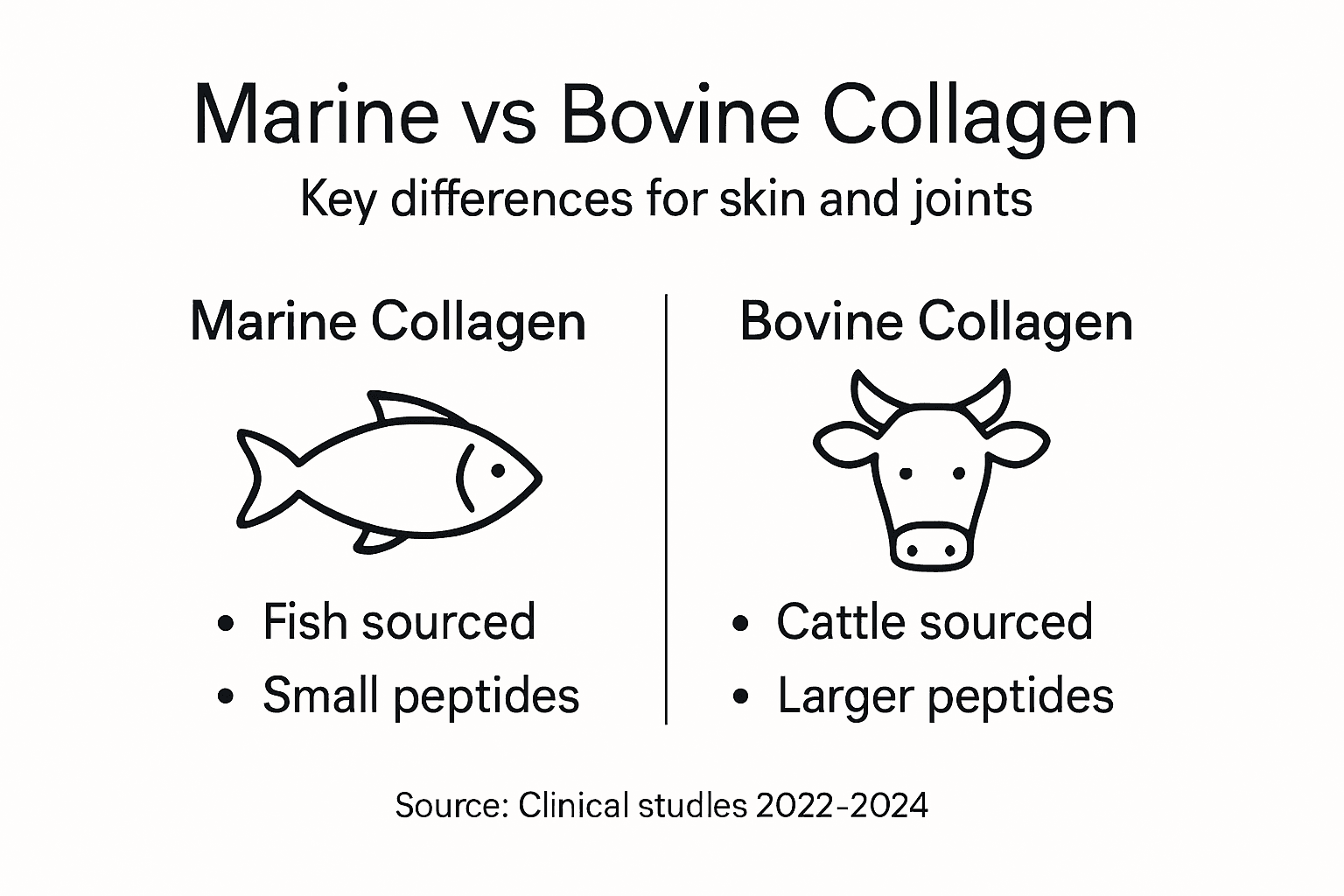
- Smaller peptide molecules
- Potentially higher bioavailability
- Typically sourced from fish skin and scales
- Generally lighter and more easily absorbed
- Often considered more environmentally sustainable
Bovine collagen, sourced from cattle, offers its own set of remarkable properties. Bovine collagen provides specific protein types predominantly found in human connective tissues, making it particularly effective for supporting skin and joint health.

The key molecular differences between marine and bovine collagen significantly influence their absorption and utilisation within the human body. Bioavailability emerges as a critical factor, with marine collagen’s smaller peptides potentially offering faster and more efficient integration into bodily systems.
Both collagen types contribute essential amino acids and support connective tissue regeneration, but their origin determines subtle variations in protein composition. Bovine collagen typically contains higher concentrations of Type I and III collagen, which are crucial for skin elasticity and muscle structure.
Here’s a concise overview of marine and bovine collagen characteristics side by side:
| Attribute | Marine Collagen | Bovine Collagen |
|---|---|---|
| Source Material | Fish skin and scales | Cow hides and bones |
| Typical Bioavailability | Higher due to smaller peptides | Moderate; larger peptide size |
| Main Collagen Types | Mostly Type I | Types I and III |
| Environment Impact | Utilises seafood byproducts | Depends on livestock industry |
| Allergenicity Risk | Possible for those with fish allergy | Low, unless sensitive to beef |
| Suitability for Diets | Not suitable for vegans/vegetarians | Not suitable for vegans/vegetarians |
Pro tip: Consider consulting a nutritionist to determine which collagen source best matches your specific health and fitness goals.
Absorption, Bioavailability and Effectiveness
Oral collagen supplements undergo critical processing to enhance their effectiveness, transforming complex protein structures into more readily absorbable peptides. This molecular breakdown is essential for enabling the body to utilise collagen’s potential benefits for skin and joint health.
The absorption process involves several key stages:
- Hydrolysis of collagen into smaller peptides
- Breakdown in the digestive tract
- Circulation of amino acids throughout the body
- Stimulation of cellular collagen production
- Potential regeneration of connective tissues
Bioavailability represents the critical metric determining how effectively these supplements can be integrated into bodily systems. Marine collagen typically demonstrates superior absorption characteristics due to its smaller molecular structure, allowing for more efficient peptide transportation across intestinal membranes.
Collagen peptides trigger specific biological responses within skin and joint fibroblasts, potentially stimulating the body’s natural regenerative processes. The molecular size and origin of collagen significantly influence its capacity to generate meaningful physiological changes.
While current research shows promising results for skin hydration and joint function, scientists emphasise the need for more comprehensive, long-term studies to definitively establish the full range of collagen supplementation benefits. Randomised trials have provided initial evidence supporting positive outcomes, but continued research remains crucial for deeper understanding.
Pro tip: Select hydrolysed collagen supplements to maximise potential absorption and biological effectiveness.
Beauty, Joint and Bone Health Benefits Compared
Collagen supplements offer multifaceted benefits for musculoskeletal health, targeting essential body systems with remarkable precision. These protein-based supplements play a crucial role in maintaining structural integrity across skin, joints, and bone tissues.
Specific benefits for different body systems include:
- Skin health improvements
- Enhanced hydration
- Increased elasticity
- Reduced visible wrinkles
- Joint support
- Cartilage integrity maintenance
- Pain reduction
- Improved mobility
- Bone strength
- Increased structural resilience
- Support for connective tissue repair
Marine collagen demonstrates particular effectiveness for skin rejuvenation, with smaller peptides enabling more efficient absorption and potentially more pronounced aesthetic benefits. Collagen supplements improve skin and joint outcomes by stimulating the body’s natural regenerative processes.
Bovine collagen, conversely, shows stronger associations with joint and bone health. Its molecular structure provides robust support for connective tissues, making it particularly valuable for individuals experiencing joint discomfort or seeking preventative musculoskeletal support.
While scientific evidence continues to evolve, current research suggests both marine and bovine collagen can contribute meaningfully to overall physical wellness. However, researchers emphasise the importance of comprehensive lifestyle factors, including diet, exercise, and individual physiological variations.
The following table summarises the physiological benefits associated with collagen intake for crucial body systems:
| Body System | Key Collagen Benefit | Underlying Mechanism |
|---|---|---|
| Skin | Improved elasticity | Fibroblast stimulation and hydration |
| Joints | Enhanced mobility | Cartilage regeneration and cushioning |
| Bones | Increased resilience | Mineral matrix reinforcement |
| Muscles | Structural support | Maintenance of tissue integrity |
Pro tip: Combine collagen supplementation with a balanced diet and regular exercise to maximise potential health benefits.
Sourcing, Sustainability and Dietary Factors
Collagen supplement sourcing varies significantly across different animal origins, creating nuanced implications for dietary preferences and environmental sustainability. These protein supplements primarily derive from bovine hides, bones, and marine sources like fish scales and skin.
Key sourcing considerations include:
- Bovine Collagen Sources
- Cattle byproducts
- Livestock farming practices
- Potential environmental impact
- Marine Collagen Sources
- Fish processing waste
- Seafood industry byproducts
- Potential reduced carbon footprint
Sustainability challenges emerge from the animal-based nature of these supplements. Marine collagen offers an innovative approach by utilising fish processing waste, potentially reducing overall environmental burden. Collagen supplements present dietary restrictions that impact consumer choices, particularly for vegetarians and vegans.
Dietary restrictions play a crucial role in supplement selection. Individuals following plant-based diets must explore alternative strategies for supporting collagen synthesis, such as consuming amino acid-rich foods and supplements that promote endogenous protein production.
Allergenicity represents another critical consideration, with marine collagen potentially presenting higher risks for individuals with seafood sensitivities. Consumers must carefully evaluate their personal health profile and dietary requirements when selecting collagen supplements.
Pro tip: Consult a nutritionist to identify the most suitable collagen source aligned with your dietary needs and sustainability preferences.
Discover the Right Collagen to Boost Your Skin and Joint Health Today
Choosing between marine and bovine collagen can be confusing, especially when aiming for improved skin elasticity and joint mobility. This article highlights the importance of bioavailability and collagen type for optimal absorption and effectiveness. If you want to address age-related collagen decline and support your body’s connective tissues with a high-quality supplement, understanding these differences is crucial.
At KUDU Nutrition, we offer expertly formulated liquid collagen protein sachets that contain a potent 20g dose designed to enhance skin, joint, and bone wellness. Our collagen supports fitness recovery and beauty benefits with verified ingredient transparency and quality certification, ensuring you get a trusted product that meets your health goals.
Explore our range of 20g Collagen Protein Supplements crafted specifically for performance and recovery.

Ready to take a confident step toward stronger joints and radiant skin? Visit KUDU Nutrition | 20g Collagen Protein for Performance & Recovery and secure your supply now. Experience the difference that a premium collagen supplement can make in your daily wellness routine by ordering directly from our product page. Act now to support your body’s natural regeneration processes with scientifically backed collagen nutrition.
Frequently Asked Questions
What are the main differences between marine and bovine collagen?
Marine collagen is primarily sourced from fish, featuring smaller peptide molecules that offer higher bioavailability. In contrast, bovine collagen is derived from cattle and generally contains higher concentrations of Type I and III collagen, which are beneficial for skin and joint health.
How does the source of collagen impact skin health?
Marine collagen may be more effective for skin rejuvenation due to its smaller peptides, which allow for better absorption, potentially leading to improved hydration, elasticity, and reduced wrinkles. Bovine collagen, while also beneficial, focuses more on strengthening skin structure and elasticity.
Can collagen supplements support joint health?
Yes, both marine and bovine collagen supplements can support joint health. Bovine collagen is particularly effective for maintaining cartilage integrity and reducing joint pain, while marine collagen can contribute to improved mobility and overall joint function.
What dietary considerations should I keep in mind when choosing a collagen supplement?
When selecting a collagen supplement, consider dietary restrictions such as vegetarian or vegan preferences, since both marine and bovine collagen are animal-derived. Also, be aware of potential allergenic reactions, particularly with marine collagen for individuals sensitive to seafood.