


TL;DR:
- A balanced diet rich in amino acids, vitamin C, zinc, and copper supports collagen production effectively.
- Consistent tracking, lifestyle changes, and gradual supplementation over 4 to 12 weeks yield measurable skin and joint improvements.
- Combining whole foods, supplements, and healthy habits is essential for long-term collagen health.
Most people want stronger joints and glowing skin, yet feel completely lost when it comes to collagen nutrition. The supplement market is flooded with promises, and most diets fall short without a clear, structured approach to support collagen production. This guide gives you a practical, science-backed workflow, from assessing your current diet to tracking real results, so you can stop guessing and start seeing measurable changes in your skin, joints, and overall wellbeing.
Table of Contents
- What you need for collagen-focused nutrition planning
- Step-by-step workflow to optimise collagen intake
- Troubleshooting and special considerations
- What results to expect and how to measure progress
- What most guides get wrong about nutrition planning for collagen
- Take the next step with KUDU Nutrition
- Frequently asked questions
Key Takeaways
| Point | Details |
|---|---|
| Food-first approach | Natural sources like bone broth and vitamin C-rich foods best sustain collagen levels. |
| Supplement strategically | Hydrolysed collagen supplements work best when paired with vitamin C and a consistent routine. |
| Track and adjust | Monitor your results for at least 4-12 weeks to fine-tune your nutrition planning workflow. |
| Special considerations needed | Athletes, vegans, and older adults may need tailored approaches for optimal collagen benefits. |
| Consistency is key | Sticking with your workflow and adjusting as needed delivers the best results for skin and joints. |
What you need for collagen-focused nutrition planning
Before you follow any workflow, you need the right building blocks in place. Think of this as your pre-flight checklist. Skip it, and even the best plan will stall.
Essential nutrients for collagen synthesis
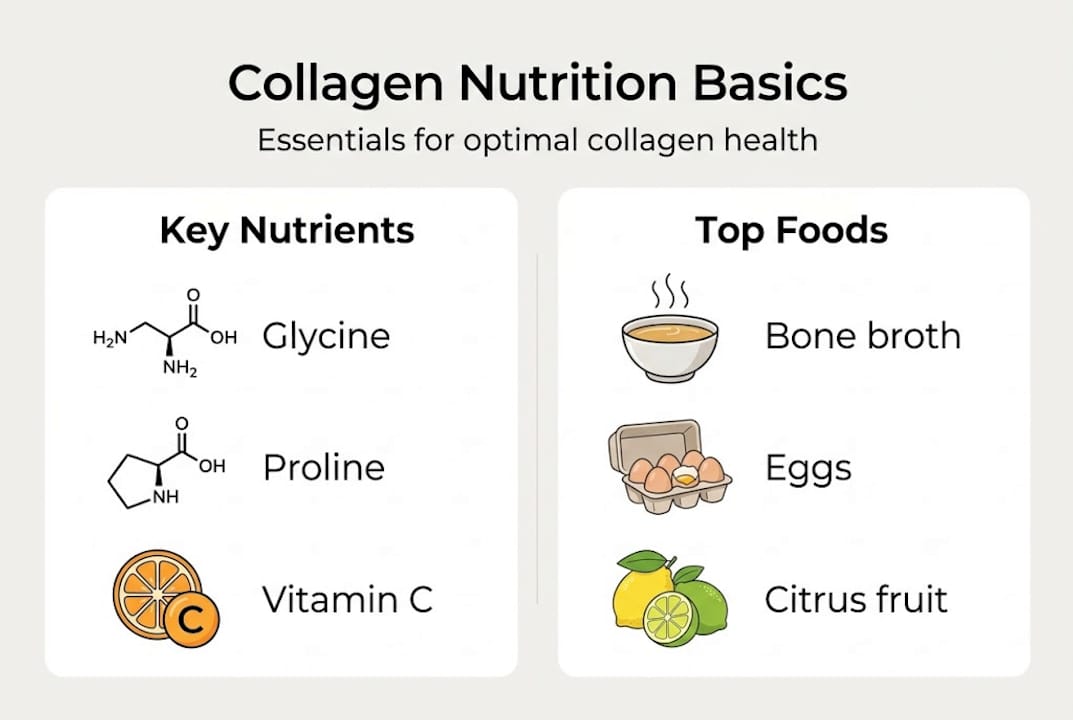
Collagen synthesis depends on amino acids such as glycine, proline, and hydroxyproline, alongside vitamin C, zinc, and copper. Without these cofactors, your body simply cannot assemble collagen efficiently, regardless of how many supplements you take.
Here is a quick reference for the key nutrients and where to find them:
| Nutrient | Role in collagen | Top food sources |
|---|---|---|
| Glycine | Core structural amino acid | Bone broth, skin-on chicken, gelatine |
| Vitamin C | Cross-links collagen fibres | Citrus fruit, kiwi, bell peppers |
| Zinc | Activates collagen enzymes | Pumpkin seeds, beef, lentils |
| Copper | Stabilises collagen structure | Liver, cashews, dark chocolate |
| Proline | Builds collagen chains | Egg whites, dairy, cabbage |
For optimising nutrition with collagen, aim for at least two to three servings of these foods daily. Variety matters more than perfection.
Useful tools to get started
Tracking your intake does not need to be complicated. A few practical tools make a real difference:
- A nutrition tracking app (Cronometer works well for micronutrients)
- A weekly meal prep schedule to batch-cook collagen-supporting foods
- A simple journal or spreadsheet to log skin and joint changes
- A reliable collagen supplement to fill dietary gaps on busy days
Understanding the collagen and holistic health guide will also help you see why sleep, stress management, and hydration are just as important as food choices.

Pro Tip: Batch-prep collagen-supporting ingredients at the weekend. Roast a tray of bell peppers, boil eggs, and portion out nuts. Having these ready removes the daily decision fatigue that derails most nutrition plans.
Step-by-step workflow to optimise collagen intake
Once you are set up with the right ingredients and tools, it is time to follow each step for real benefits. This evidence-backed sequence moves from assessment through to regular review, giving you a repeatable system rather than a one-off fix.
- Assess your current diet. Log three typical days of eating and check for gaps in vitamin C, zinc, copper, and quality protein. Most people discover they are short on at least two of these.
- Add collagen-rich foods and cofactors. Introduce bone broth, oily fish, eggs, and colourful vegetables. Aim for lifestyle habits that support collagen alongside dietary changes.
- Decide on supplementation. Hydrolysed collagen at 2.5 to 15g daily, paired with vitamin C, shows measurable improvements in skin and joints within 4 to 12 weeks. Follow the dosage guidance for collagen supplements to match your specific goal.
- Reduce collagen destroyers. Excess sugar triggers glycation, which breaks down existing collagen. UV exposure and smoking accelerate collagen degradation. Cutting back on these has an immediate protective effect.
- Track changes weekly. Take photos, note joint stiffness scores, and record skin hydration or texture changes. Consistent tracking is what separates people who see results from those who give up too early.
- Review every 4 to 12 weeks. Adjust your food choices, supplement dose, or lifestyle habits based on what your tracking data shows. Follow the collagen intake steps for skin and joints to guide your reviews.
Food-first vs supplement-focused: a quick comparison
| Approach | Pros | Cons |
|---|---|---|
| Food-first | Broader nutrient synergy, sustainable | Slower results, harder to dose precisely |
| Supplement-focused | Precise dosing, convenient | Costly without dietary foundation |
| Combined | Best outcomes overall | Requires planning |
Pro Tip: Take your collagen supplement with a vitamin C-rich drink, such as fresh orange juice, to maximise absorption and support collagen cross-linking in one simple step.
Troubleshooting and special considerations
As you implement the workflow, you might face obstacles or special scenarios. Here is how to handle the most common ones.
Common mistakes to avoid
- Neglecting vitamin C, which is essential for collagen cross-linking
- Taking too much collagen without dietary support
- Skipping progress tracking and losing motivation
- Expecting overnight results instead of committing to 4 to 12 weeks
Research highlights that vegans face particular challenges because direct collagen sources are animal-derived. Instead, focus on plant-based amino acid precursors such as legumes, seeds, and soy, combined with generous vitamin C intake. The nutrition for skin health with collagen guide offers practical plant-friendly strategies.
Special scenarios
Athletes benefit from timing collagen intake roughly 30 to 60 minutes before training, combined with vitamin C, to support connective tissue repair. The collagen protocols for athletes page covers this in detail.
Post-menopausal adults experience accelerated collagen loss due to declining oestrogen. Prioritising calcium-rich foods alongside collagen supplementation supports both bone density and skin structure simultaneously.
Important: Intakes above 20g of collagen daily increase the risk of gastrointestinal discomfort, including bloating and loose stools. Start at the lower end of the dosage range and increase gradually. Harvard’s review of collagen promises also cautions against over-relying on supplements without a strong dietary foundation.
Finally, do not underestimate rest. Collagen’s connection with sleep is well documented, as growth hormone released during deep sleep drives collagen repair overnight.
What results to expect and how to measure progress
After overcoming challenges and fine-tuning your plan, it is time to look at the transformation you can realistically expect and how to verify your progress.
The evidence is encouraging. Meta-analyses confirm that skin hydration improves with a standardised mean difference of 1.25 and elasticity improves by 0.61 within 4 to 12 weeks. Notably, 10g of collagen daily reduces joint pain in 72% of users. These are not trivial numbers.
Realistic progress timeline
| Week | What to expect |
|---|---|
| 1 to 2 | Improved hydration, reduced joint stiffness in some users |
| 3 to 4 | Noticeable skin texture changes, better post-exercise recovery |
| 6 to 8 | Measurable elasticity improvements, reduced joint discomfort |
| 10 to 12 | Full assessment point; compare photos, scores, and energy levels |
How to track your results objectively
- Take consistent photos in the same lighting every two weeks
- Score joint stiffness on a simple 1 to 10 scale each morning
- Log skin hydration using a free app or a basic visual scale
- Note recovery time after workouts if you are physically active
- Review your tracking data at the 4 and 12-week marks
For collagen use for active lifestyles, recovery speed is often the first measurable win. For those focused on skin, photos are the most motivating form of evidence. Use a structured supplement regimen to keep your tracking consistent and your motivation high. The typical results from consistent collagen use reinforce that patience and consistency are the real active ingredients.
What most guides get wrong about nutrition planning for collagen
Here is an uncomfortable truth: a large portion of the positive collagen research is industry-funded, which means the benefits are sometimes overstated. That does not mean collagen supplementation is useless. It means you should treat it as one part of a broader strategy, not a standalone solution.
Most guides focus entirely on which supplement to buy. The real lever is the combination of whole foods, consistent exercise, adequate sleep, and targeted supplementation. Collagen built through daily habits is far more durable than collagen chased through quick fixes.
The collagen supplement workflow UK guide reflects this philosophy. Quarterly reviews keep your plan relevant as your body, lifestyle, and goals evolve. What works at 30 may need adjusting at 45. Build the habit of reassessing, not just supplementing.
Pro Tip: Schedule a quarterly collagen review in your calendar now. Treat it like a health MOT, checking your diet, tracking data, and supplement routine together.
Take the next step with KUDU Nutrition
You now have a clear, evidence-based workflow for collagen nutrition planning. The next step is pairing that knowledge with a supplement you can genuinely trust.
KUDU Nutrition’s high-quality collagen protein supplements deliver 20g of hydrolysed collagen per sachet, Informed Sport certified, and designed to fit seamlessly into the workflow you have just built. The KUDU Nutrition 20g collagen protein is a straightforward way to hit your daily target without complicated preparation. For broader guidance on making collagen work for your skin and joints, explore our collagen beauty resources and take the next step with confidence.
Frequently asked questions
What foods naturally boost collagen production?
Bone broth, fish skin, eggs, citrus fruit, berries, and leafy greens all supply the amino acids and cofactors your body needs for natural collagen synthesis.
How much collagen supplement should I take daily?
Clinical evidence supports 2.5 to 15g of hydrolysed collagen daily, with skin goals sitting at the lower end and joint goals benefiting from higher doses over 4 to 12 weeks.
Do collagen supplements really work?
Randomised trials show improved skin elasticity and joint pain with consistent use, though results are strongest when supplements are combined with a nutrient-rich diet and healthy lifestyle habits.
What are common mistakes in collagen nutrition planning?
The most frequent errors are skipping vitamin C, which is essential for collagen cross-linking, neglecting progress tracking, and taking doses above 20g without gradually building up.
How soon will I see results from a collagen-focused nutrition plan?
Most people notice meaningful improvements in skin and joint health within 4 to 12 weeks of consistent daily intake, with recovery speed often being the earliest measurable benefit for active individuals.