

TL;DR:
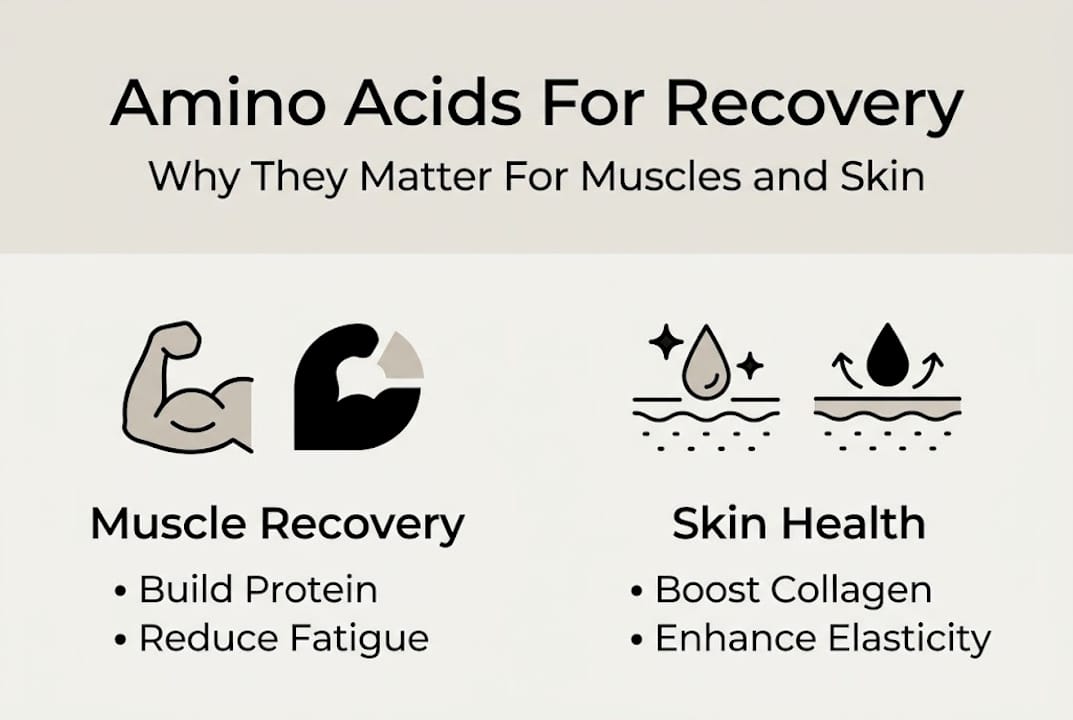
- Essential amino acids are vital for muscle repair, skin, joints, and overall recovery.
- Eating a variety of complete protein sources ensures adequate intake of all nine essential amino acids.
- Supplements support specific needs but do not replace the importance of a balanced, nutrient-rich diet.
Most people track their protein intake and assume they’re covering all their nutritional bases. But counting grams of protein only tells part of the story. The real drivers of muscle recovery, glowing skin, and resilient joints are the specific building blocks within that protein: essential amino acids. Your body relies on nine amino acids it cannot make from scratch, meaning every single one must come from what you eat or supplement. Get them consistently, and your body repairs faster, looks better, and performs at a higher level. Fall short, and no amount of protein shakes will close the gap.
Table of Contents
- What makes an amino acid essential?
- How essential amino acids power muscle, recovery, and energy
- Amino acids, collagen, skin and joint health: The real connection
- How to ensure you get enough essential amino acids
- The uncomfortable truth about amino acids and supplements
- Support your recovery and health with premium collagen
- Frequently asked questions
Key Takeaways
| Point | Details |
|---|---|
| Essential definition | Essential amino acids must be sourced from diet because the body cannot make them. |
| Recovery and growth | EAAs underpin muscle repair, energy, and physical recovery after workouts. |
| Collagen connection | EAAs support collagen production, vital for skin, joints, and overall tissue health. |
| Dietary strategy | A balanced, varied diet is the best way to secure all essential amino acids. |
What makes an amino acid essential?
Amino acids are the structural units that build every protein in your body, from your muscles and organs to your hormones and immune cells. There are around 20 amino acids in total, but they are not all equal in terms of what your body can produce on its own.
Non-essential amino acids can be manufactured internally, even if your diet is imperfect. Essential amino acids are a different matter entirely. The nine your body cannot synthesise must arrive via food or supplementation, no exceptions.
| Essential amino acid | Primary role |
|---|---|
| Histidine | Immune function, tissue repair |
| Isoleucine | Energy regulation, muscle metabolism |
| Leucine | Muscle protein synthesis trigger |
| Lysine | Collagen formation, calcium absorption |
| Methionine | Antioxidant production, detoxification |
| Phenylalanine | Neurotransmitter production |
| Threonine | Connective tissue and immune support |
| Tryptophan | Serotonin and sleep regulation |
| Valine | Muscle growth and tissue repair |
When even one of these is missing or consistently low, your body cannot complete the protein synthesis process. Think of it like trying to build a wall with one type of brick missing. Progress stalls. Deficiency inhibits protein synthesis, contributes to muscle wasting, persistent fatigue, and compromised immunity, none of which are compatible with an active lifestyle.
- Leucine acts as the primary trigger for muscle protein synthesis
- Lysine is critical for producing collagen, the protein that holds your body together
- Tryptophan influences mood, sleep quality, and recovery
- Histidine supports tissue repair and acts as a precursor to histamine
Understanding these roles and collagen protein’s benefits helps you make smarter choices about what you eat and when.
Pro Tip: No single food contains all nine essential amino acids in ideal ratios. Eating a wide variety of protein sources across the day gives your body the complete toolkit it needs.
How essential amino acids power muscle, recovery, and energy
With the essentials established, let’s see how these building blocks actually drive performance, wellness, and physical transformation.
Essential amino acids do not work in isolation. They operate as a coordinated system, each one feeding into specific biological pathways that keep your body functioning and recovering.
- Muscle repair and growth. After training, your muscle fibres sustain microscopic damage. BCAAs (leucine, isoleucine, and valine) activate the mTOR pathway, the body’s primary signal for muscle repair and growth, switching on protein synthesis so your muscles rebuild stronger.
- Hormone and enzyme production. Phenylalanine and tryptophan feed into the production of hormones and neurotransmitters, including dopamine and serotonin. These directly influence energy, mood, and sleep quality, all of which affect your ability to train and recover effectively.
- Energy metabolism. Isoleucine and valine can be converted to glucose during prolonged exercise, providing a backup fuel source when carbohydrate stores run low. This is particularly relevant for endurance athletes or anyone training in a calorie deficit.
- Immune defence. Threonine and lysine both support immune cell production and tissue repair. During heavy training blocks, your immune system takes a hit. Adequate EAAs help maintain that protective buffer.
- Skin, hair, and connective tissue. Lysine and threonine are precursors to collagen and elastin, the structural proteins responsible for skin firmness, joint stability, and collagen and joint function.
Recovery insight: BCAA supplementation during high-intensity training increases testosterone levels and reduces cortisol and creatine kinase, a combination that supports faster and more complete muscle recovery between sessions.
This data matters because it shifts the conversation from simply eating enough protein to ensuring the right amino acids are available at the right time. You can also explore joint support tips to see how these principles apply to connective tissue specifically.
Pro Tip: Consume an EAA-rich meal or supplement within 30 to 60 minutes post-workout. This is when your muscles are most receptive to the amino acids that drive repair and growth.
Amino acids, collagen, skin and joint health: The real connection
Besides muscles, essential amino acids also hold the secret to your skin’s radiance and your joints’ resilience.
Collagen is the most abundant protein in the human body, forming the scaffolding for your skin, cartilage, tendons, and bones. But your body cannot manufacture collagen without a reliable supply of specific amino acids, particularly glycine, proline, and lysine. Lysine, an essential amino acid, is non-negotiable in this process.

This creates a direct link between your dietary amino acid intake and the visible and physical signs of ageing, recovery, and joint resilience. Skin that lacks elasticity, joints that ache after training, and slow-healing injuries can all reflect insufficient collagen turnover, which often traces back to amino acid shortfalls.
| Feature | Collagen peptides | Free amino acids |
|---|---|---|
| Absorption speed | Moderate (broken down first) | Rapid (immediately available) |
| Skin elasticity evidence | Positive in some RCTs | Limited specific research |
| Joint mobility support | Moderate evidence | Indirect (via synthesis) |
| Muscle recovery | Emerging data | Strong existing evidence |
| Collagen synthesis support | Yes (with co-factors) | Yes (direct precursors) |
What does the current evidence actually show? Research comparing collagen peptides and free amino acids suggests benefits for skin elasticity, hydration, and joint mobility in certain populations, though results are mixed and some high-quality independent studies find limited effect. Industry funding remains a confounding factor in this space.
“The evidence supports collagen supplementation most strongly for those with genuine dietary gaps, ageing-related collagen decline, or high physical demands. For the average well-nourished adult, food variety may be sufficient.”
Vitamin C is a critical co-factor in collagen synthesis and dramatically amplifies the effect of amino acid intake. Collagen boosting habits like pairing citrus with protein-rich meals are a practical and evidence-aligned strategy. Broader supporting joint health naturally approaches complement any supplementation you choose. A broader look at collagen supplement research confirms that synergy with exercise and micronutrients matters more than supplements alone.
How to ensure you get enough essential amino acids
Knowing why amino acids are essential matters, but applying that knowledge to your shopping list and diet is what transforms your results.
The most reliable approach is to build your diet around complete protein sources, those that deliver all nine essential amino acids in meaningful quantities. Animal-based foods lead here by a wide margin, but smart plant-based combinations can achieve the same outcome.
Top food sources of essential amino acids:
- Eggs: arguably the best whole-food source, with a near-perfect amino acid profile
- Chicken breast and turkey: high in leucine and ideal for post-training meals
- Salmon and oily fish: rich in EAAs plus omega-3s, which support joint inflammation management
- Greek yoghurt and cottage cheese: excellent casein sources for overnight recovery
- Quinoa and buckwheat: among the few plant foods with all nine essential amino acids
- Lentils and chickpeas paired with rice: creates a complete amino acid profile through complementary pairing
- Edamame and tofu: strong plant-based options with a solid essential amino acid distribution
For fitness enthusiasts, the timing and quantity of intake matters as much as source. Adults in heavy training benefit from spreading protein intake across three to four meals rather than concentrating it in one sitting. Older adults face a particular challenge because amino acid deficiency accelerates muscle wasting during ageing, making consistent, high-quality intake non-negotiable.
For those with high output or restricted diets, consider nutrition tips for joint health alongside your general strategy. A structured collagen intake guide can also help you layer supplementation logically around your existing food habits.
Pro Tip: Take any EAA supplement or collagen sachet with a source of vitamin C, such as a small glass of orange juice or a kiwi. Vitamin C is essential for hydroxylating proline, a key step in collagen formation, so this pairing gives your body what it needs to actually use the amino acids you’re giving it.
The uncomfortable truth about amino acids and supplements
The supplement industry has done an exceptional job of making essential amino acids sound like something most people are dangerously short of. The reality is more nuanced, and worth understanding before you spend a penny on anything in a sachet or tub.
For healthy adults eating varied, protein-adequate diets, severe EAA deficiency is genuinely rare. Where supplements earn their place is in specific scenarios: older adults losing muscle mass despite eating well, athletes in prolonged high-load training blocks, people recovering from illness or surgery, and individuals on restrictive diets where food variety is structurally limited.
The temptation is to treat supplements as a shortcut. They are not. No EAA supplement compensates for poor sleep, chronic under-eating, or training that is either absent or excessive. The foundation is always food quality and lifestyle consistency. Think of collagen’s real-life role not as a miracle fix but as a precision tool that works best when the basics are already in place.
Supplements fill gaps. They do not replace the foundation.
If you are already eating well, training consistently, and sleeping enough, a targeted collagen or EAA supplement may genuinely accelerate your results. If those fundamentals are shaky, no supplement will substitute for them.
Support your recovery and health with premium collagen
If you are serious about recovery, skin quality, and joint resilience, having the right amino acids available in the right forms matters. Diet is the foundation, but for athletes, active individuals, and those with higher demands, a well-formulated supplement can be the bridge between adequate and optimal.
KUDU Nutrition’s liquid collagen sachets are built around this principle, delivering 20g of high-quality collagen protein per serving, Informed Sport certified, and designed to absorb quickly post-workout. Whether you are targeting recovery, joint comfort, or skin health, the 20g collagen protein pack gives you a convenient, research-aligned option. Try the sour cherry collagen for a flavour you will actually look forward to. Explore the full collagen range to find the formula that fits your goals.
Frequently asked questions
What are the nine essential amino acids?
The nine essential amino acids are histidine, isoleucine, leucine, lysine, methionine, phenylalanine, threonine, tryptophan, and valine. Your body cannot synthesise these independently, so they must come from food or supplements.
Why are essential amino acids crucial for recovery?
Essential amino acids activate muscle protein synthesis pathways, particularly via BCAAs stimulating the mTOR mechanism, which is the primary biological signal for repairing and rebuilding muscle tissue after exercise.
Can you get all essential amino acids on a plant-based diet?
Yes, but it requires intentional variety. Few single plant foods contain all nine in useful quantities, so combining sources like grains and legumes is key to achieving full coverage on a plant-based diet.
Are collagen supplements enough for amino acid needs?
No. Collagen is rich in glycine, proline, and hydroxyproline, but does not contain all nine essential amino acids. It works best as a complement to a varied, protein-rich diet rather than a standalone solution.
What are symptoms of amino acid deficiency?
Common signs include muscle loss, persistent fatigue, slow wound healing, and poor immune function. Deficiency impairs protein synthesis at the cellular level, which cascades into multiple visible and physical symptoms over time.