


TL;DR:
- Nutritional data helps you make informed dietary choices and can improve diet quality with consistent use.
- Understanding labels enables you to identify nutrient sources, control intake, and prevent chronic diseases.
Nutritional data is the detailed information about the nutrient content of foods that enables you to make informed dietary choices and manage your health effectively. Understanding this data sits at the heart of every sound decision you make about what to eat, whether you are tracking macros for fitness, managing a chronic condition, or simply trying to eat better. Nutrition facts panels, ingredient lists, and dietary guidelines are the primary tools for accessing this information. Recent research confirms that structured engagement with nutritional data produces measurable improvements in both knowledge and dietary quality, making it one of the most practical skills you can develop.
Why nutritional data is important for diet quality
A 16-week nutrition education intervention improved participants’ nutrition knowledge by 90% and dietary quality by 35%. That is not a marginal gain. It demonstrates that learning to read and apply nutritional data produces real, quantifiable changes in what people eat and how well they eat it.
Nutritional data literacy means you can interpret a food label accurately rather than relying on front-of-pack marketing claims. You learn to distinguish between total fat and saturated fat, between natural sugars and added sugars, and between a food that is genuinely nutrient-dense and one that merely looks healthy. These distinctions matter every time you shop.
The gap between knowledge and behaviour, however, is real. Nutrition knowledge alone is not enough to produce lasting dietary change. Pairing data literacy with motivation, self-regulation, and a supportive food environment is what converts understanding into habit.
- Motivation drives you to apply what you know, even when convenient options are poor.
- Self-regulation helps you plan meals in advance rather than defaulting to impulse choices.
- Environment shapes what is available and visible, which influences decisions before knowledge even enters the picture.
Pro Tip: Start by reading one label per shopping trip in full. Focus on a product you buy regularly. Spotting one unexpected ingredient or nutrient level per week builds literacy faster than trying to overhaul your entire diet at once.
What does nutritional data actually contain?
Nutrition facts panels/01%3A_Module_1_Core_Concepts_in_Nutrition/1.03%3A_Achieving_a_Healthy_Diet/1.3.08%3A_Discovering_Nutrition_Facts) help you compare products, identify nutrient sources, and calculate intake relative to daily needs. Each component serves a distinct purpose, and misreading any one of them skews your entire dietary picture.

Serving size and calories
Serving size is the most commonly misread element on any label. Packages often contain multiple servings, which leads most people to underestimate their actual calorie, sugar, and sodium intake. A bottle of juice labelled as 150 calories may contain two and a half servings. Drink the whole bottle and you have consumed 375 calories, not 150.
Macronutrients and micronutrients
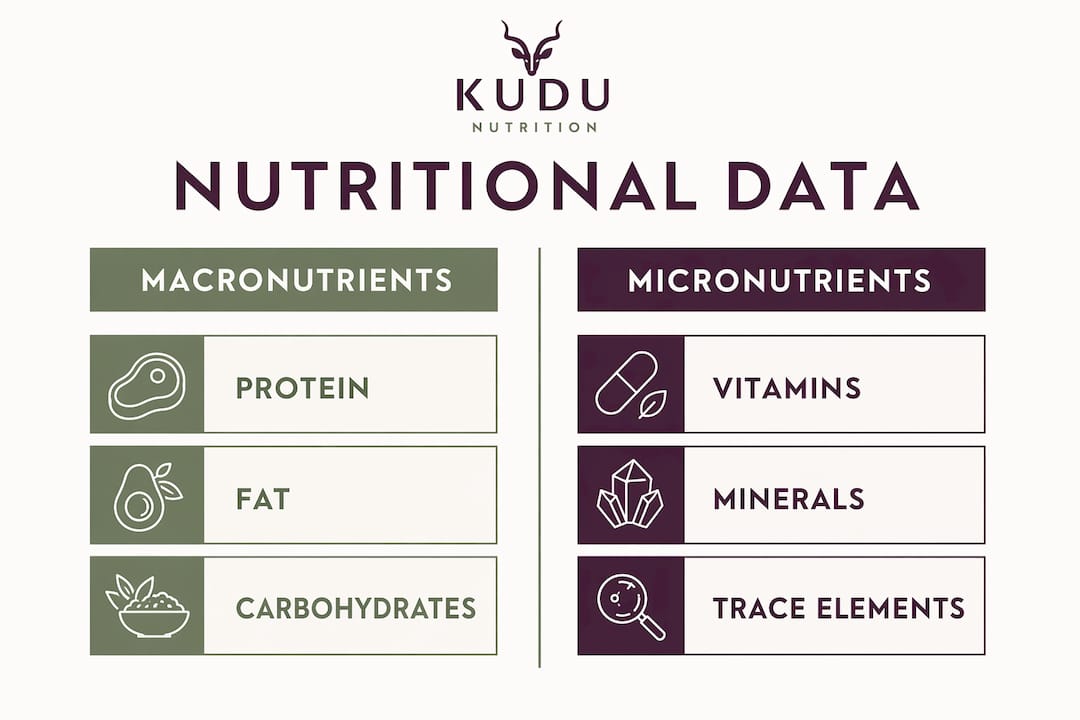
Protein, fat, and carbohydrates are the three macronutrients listed on every label. Within fat, saturated fat is the figure to watch most closely. Within carbohydrates, added sugars and fibre are the critical sub-categories. The recommended daily sodium limit is 2,300 mg, and added sugar per meal should not exceed 10 grams. Micronutrients such as calcium, iron, and potassium appear lower on the panel and are equally worth tracking, particularly if your diet lacks variety.
Percent Daily Value and the 5/20 rule
Percent Daily Value (%DV) is a comparative guide based on a 2,000 calorie reference diet, not a strict personal target. Your individual needs vary based on age, activity level, and health status. The 5/20 rule offers a practical shortcut: 5% DV or less means a nutrient is low in that food, and 20% DV or more means it is high. Use this to quickly assess whether a product is a meaningful source of fibre or calcium, or whether it is pushing you close to your sodium ceiling.
| Nutrient | What to look for | 5/20 rule guidance |
|---|---|---|
| Saturated fat | Keep low; linked to cardiovascular risk | 5% DV or less is preferable |
| Sodium | Limit to 2,300 mg daily total | 20% DV or more is high; avoid regularly |
| Added sugars | Max 10g per meal recommended | 5% DV or less is a safer choice |
| Fibre | Aim higher; supports digestion and satiety | 20% DV or more is a strong source |
| Calcium | Important for bone density | 20% DV or more contributes meaningfully |
Pro Tip: Never rely solely on front-of-pack claims like “low fat” or “natural.” Always check the ingredient list for hidden sugars, additives, and the true order of ingredients by weight.
How does nutritional data support disease prevention?
Nutritional literacy enables you to cut through misleading product claims and consistently choose foods that benefit both your health and the environment. This is not a passive benefit. It is an active filter that changes which products end up in your basket.
Chronic diseases including heart disease, type 2 diabetes, and obesity are all linked to dietary patterns that nutritional data can help correct. Excess sodium raises blood pressure. Excess added sugar drives insulin resistance. Insufficient fibre impairs gut health and satiety. Each of these risks is visible on a nutrition label if you know where to look. You can read more about managing one of these outcomes in Kudunutrition’s guide on reducing blood sugar.
The scale of the problem is significant. Fewer than 1 in 10 children and adults in the US consume the recommended daily amount of vegetables. That figure reflects how far most diets fall short of basic nutritional targets, and it underscores why access to clear dietary information matters.
- Nutritional data helps you identify which processed foods are genuinely low in harmful nutrients versus those that merely claim to be.
- It supports sustainable eating by directing attention toward whole, nutrient-dense foods with lower environmental footprints.
- It reduces dependence on marketing language, which is designed to sell rather than inform.
- It gives you a factual basis for discussing dietary choices with a GP, dietitian, or sports nutritionist.
Understanding ingredient transparency is a natural extension of this skill, particularly when evaluating supplements and fortified products.
How to use nutritional data effectively every day
Applying nutritional data does not require a nutrition degree. A structured approach makes the process fast and consistent, even during a busy supermarket shop.
- Check serving size first. Before reading any other figure, confirm how many servings the package contains. Multiply every number on the label by the number of servings you will actually consume.
- Focus on the three critical nutrients. Saturated fat, sodium, and added sugar are the three figures most directly linked to chronic disease risk. Use the speed-reading strategy and apply the 5/20 rule to each.
- Balance across the day, not per meal. A single high-sodium meal is not a crisis if the rest of your day is low in sodium. Nutritional data is most useful as a daily running total, not a per-meal pass or fail.
- Adapt to your individual context. A 25-year-old athlete and a 60-year-old with hypertension have different sodium and calorie targets. %DV figures are a starting point, not a universal prescription.
- Use digital tools to reduce friction. Apps such as Cronometer and MyFitnessPal allow you to scan barcodes and log nutrients automatically. They reduce the mental load of manual calculation and make tracking sustainable over weeks rather than days.
- Make incremental changes. Replacing one high-sodium product per week with a lower-sodium alternative is more sustainable than overhauling your entire diet. Small, consistent shifts compound into significant dietary improvements over months.
For those managing nutrition on the move, Kudunutrition’s guide on on-the-go nutrition offers practical strategies for maintaining dietary standards when time is limited.
Key takeaways
Nutritional data is the single most accessible tool for improving dietary quality, preventing chronic disease, and cutting through misleading food marketing.
| Point | Details |
|---|---|
| Knowledge drives quality | A 16-week nutrition programme improved dietary quality by 35%, showing data literacy produces real results. |
| Serving size misleads most | Always multiply label figures by actual servings consumed to avoid underestimating intake. |
| Use the 5/20 rule | 5% DV or less is low; 20% DV or more is high. Apply this to saturated fat, sodium, and added sugar. |
| Knowledge needs support | Pair nutritional data literacy with motivation and a supportive environment to change behaviour long-term. |
| Check ingredient lists | Front-of-pack claims are marketing. The ingredient list reveals the true composition of any food. |
The part most people skip entirely
I have spent years watching people engage with nutrition labels in the same way they engage with terms and conditions: they scroll past them. The front of the pack gets all the attention. “High protein.” “No added sugar.” “Natural.” These phrases are designed to stop your eye, not inform your decision.
The ingredient list is where the real story lives. Most consumers overlook it entirely, and that is where hidden sugars, emulsifiers, and misleading formulations sit quietly. I have seen products marketed as health foods that list glucose syrup as the second ingredient. That is not a health food. The label told the truth. The front of the pack did not.
The other thing I have observed is that people treat nutritional data as all-or-nothing. Either they track every gram obsessively or they ignore labels completely. Neither approach works. The obsessive tracker burns out within weeks. The person who ignores labels never builds the baseline awareness that makes good choices automatic. The middle path, checking three key figures quickly and consistently, is what actually sticks.
Nutritional data is not complicated. The complexity is manufactured by marketing, not by the science. Once you know what serving size, saturated fat, and added sugar mean, you have the tools to make genuinely better choices in under 30 seconds per product. That is a skill worth building.
— Sam
Support your nutrition goals with Kudunutrition
If you are already applying nutritional data to your food choices, the next step is making sure your supplements meet the same standard. Kudunutrition’s 20g collagen protein supplements are built on the same principle of ingredient transparency that makes nutritional data valuable in the first place. Each liquid sachet delivers 20g of collagen protein with full nutritional disclosure and Informed Sport certification, so you know exactly what you are consuming. Designed for health-conscious individuals, athletes, and anyone focused on skin, joint, and bone health, the range makes quality supplementation as straightforward as reading a label should be.
FAQ
What is nutritional data and why does it matter?
Nutritional data is the detailed breakdown of nutrients in a food or supplement, including calories, macronutrients, micronutrients, and %DV figures. It matters because it gives you the factual basis to make dietary choices that support health and reduce chronic disease risk.
How does understanding food labels improve your health?
Reading food labels accurately helps you limit excess sodium, added sugar, and saturated fat, all of which are directly linked to heart disease, diabetes, and obesity. A structured 16-week nutrition education programme showed dietary quality improvements of 35% among participants who engaged with this data.
What is the 5/20 rule on nutrition labels?
The 5/20 rule is a quick assessment tool: 5% DV or less means a nutrient is low in that food, while 20% DV or more means it is high. Apply it to saturated fat, sodium, and added sugar for fast, informed decisions at the shelf.
Why is nutritional knowledge not always enough to change eating habits?
Research published in Frontiers in Nutrition identifies a knowledge-attitude gap where factual understanding does not automatically change behaviour. Sustained dietary change requires motivation, self-regulation, and an environment that supports healthier choices alongside nutritional literacy.
Should I trust front-of-pack health claims?
Front-of-pack claims are marketing tools, not nutritional assessments. Always cross-reference them with the full nutrition facts panel and ingredient list, where the true composition of a product is disclosed by law.