


TL;DR:
- Advanced protein supplementation focuses on quality, timing, and targeted use to optimize performance, recovery, and tissue health. It emphasizes strategic intake across meals, choosing evidence-based products, and aligning supplements with specific goals, rather than simply increasing daily protein grams. Effective results depend on foundational training and nutrition habits, with supplements serving as precise tools to enhance adaptation.
Protein supplementation is not simply a matter of scooping more powder into a shaker. The athletes and health-conscious individuals who see the most dramatic improvements in performance, recovery, skin quality, and joint resilience are not just consuming more protein. They are consuming smarter protein: better sources, at better times, in better amounts per meal. This article cuts through the noise to give you a clear, evidence-based roadmap for genuinely advanced supplementation strategies that work across muscle building, endurance training, and long-term tissue health.
Table of Contents
- Defining advanced protein supplementation
- Key strategies: quality, timing, and distribution
- Comparing protein types: muscle versus skin and joint health
- Quality control: why product choice matters
- What the research shows: advanced supplementation in practice
- Why most people misunderstand advanced protein supplementation
- Explore high-quality collagen protein solutions
- Frequently asked questions
Key Takeaways
| Point | Details |
|---|---|
| Strategic timing | Distributing protein intake across meals and post-exercise maximises adaptation. |
| Source matters | High-quality protein and label-verified collagen supplements deliver better results. |
| Tailor to goals | Choose protein types based on recovery, muscle growth, skin, or joint health needs. |
| Quality control | Third-party tested products are more reliable for collagen and protein accuracy. |
| Evidence-driven outcomes | Research supports modest performance improvements when advanced tactics are applied. |
Defining advanced protein supplementation
Most people still think of protein supplementation as a numbers game. Hit your daily gram target, tick the box, move on. That approach works at the beginner level, but it leaves serious gains on the table for anyone training consistently or managing ongoing joint and skin health concerns.
Advanced supplementation operates on a different level entirely. It considers not just how much you consume, but the quality of the protein source, the timing relative to training, the distribution across your meals, and whether the supplement is appropriate for your specific physiological goal. According to athlete-focused research, “advanced protein supplementation” is not a formally standardised term. What it refers to in practice is the use of higher-quality inputs combined with strategic intake patterns designed to optimise adaptation.
Here is what separates a basic approach from an advanced one:
- Quality: Bioavailability and amino acid profile of the protein source
- Timing: When you consume protein relative to training and sleep
- Distribution: How protein is spread across meals throughout the day
- Goal specificity: Whether the protein targets muscle, skin, joints, or a combination
- Product reliability: Third-party tested, accurately labelled, and consistently dosed
“The gap between basic and advanced supplementation is not about grams consumed. It is about making every gram count through strategic placement and source selection.”
Understanding these dimensions helps you use protein intake tips as a genuine performance lever rather than a dietary afterthought. Each dimension adds a layer of precision that compounds over weeks and months of consistent training.
Key strategies: quality, timing, and distribution
Having established the principles, let us look at how quality, timing, and strategy come together in practice. This is where things get specific and, frankly, where most people either excel or fall short.
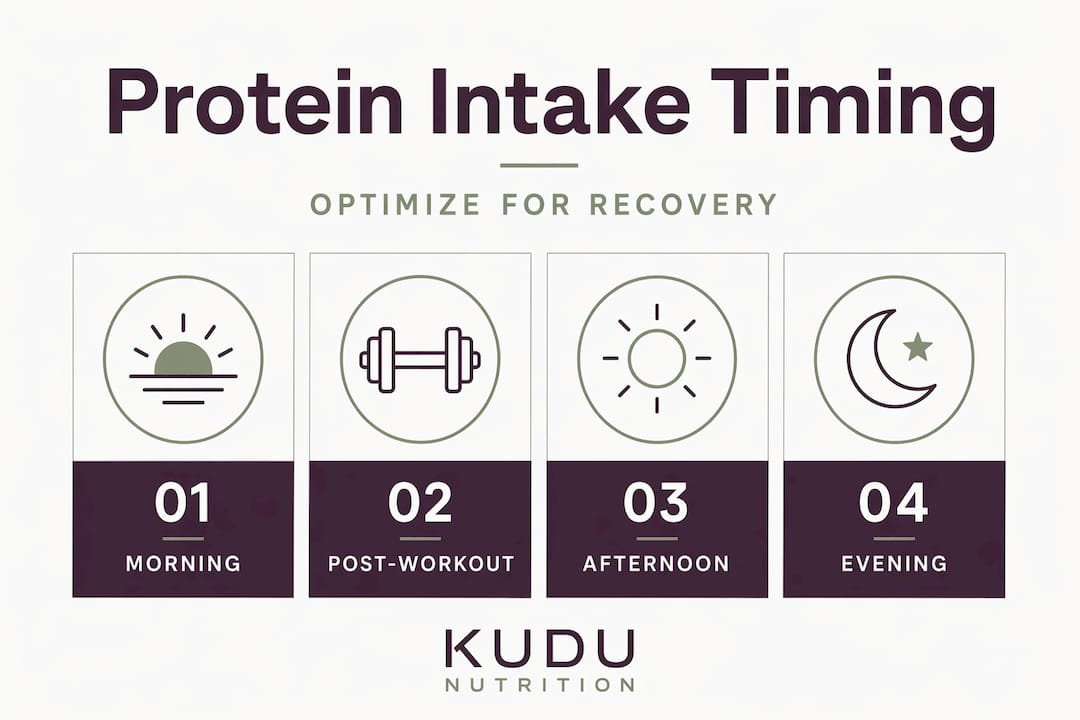
Evidence-based reviews consistently point to two non-negotiable pillars: meeting your daily protein needs and spreading that intake across meals to maximise muscle protein synthesis throughout the day. A single large dose at dinner, regardless of how clean the source is, simply does not stimulate the same adaptation response as four evenly distributed servings.
Practical protein distribution framework
| Meal timing | Suggested protein intake | Purpose |
|---|---|---|
| Breakfast | 30–40 g | Breaks overnight fast, initiates synthesis |
| Pre-training (1–2 hrs prior) | 20–30 g | Fuels performance and primes repair |
| Post-training (within 30 min) | 25–40 g | Maximises acute anabolic window |
| Evening meal | 30–40 g | Sustains overnight muscle repair |
For endurance athletes specifically, research highlights two tactics that are particularly effective: immediate post-exercise protein feeding and moderate protein intake during phases of carbohydrate restriction. Both help preserve lean mass while supporting the recovery demands of sustained aerobic training.
Here is a step-by-step approach for building an advanced supplementation routine:
- Calculate your daily target (typically 1.4–2.0 g per kg of body weight for trained athletes)
- Divide that total across four meals rather than two or three
- Prioritise post-exercise intake within 30 minutes of finishing your session
- Choose high-quality sources with a complete amino acid profile for muscle-focused meals
- Add collagen-based protein at targeted times for skin and joint support
- Track and adjust every four to six weeks based on performance and recovery markers
Pro Tip: Adding a collagen-based sachet to your pre-sleep routine is one of the least utilised but most effective tactics for overnight tissue repair. Your body ramps up collagen synthesis during sleep, making it an ideal delivery window.
Pairing your routine with guidance on high-protein supplements can help you identify which specific products align with your training phase and health objectives. You should also consider how collagen protein supplements can complement conventional muscle-building proteins without replacing them. Research also suggests that multivitamin recovery support plays a role in overall adaptation, particularly during intense training blocks.
Comparing protein types: muscle versus skin and joint health
Once you understand timing and distribution, it is critical to know which protein type matches your goals. Not all proteins are interchangeable, and confusing them is one of the most common mistakes we see among otherwise well-informed athletes.

Muscle-building proteins versus collagen-based options
| Protein type | Primary target | Key amino acids | Best timing |
|---|---|---|---|
| Whey protein | Muscle hypertrophy | Leucine, isoleucine, valine | Post-training |
| Casein | Overnight muscle repair | Slow-release amino acids | Pre-sleep |
| Collagen peptides | Skin, joints, tendons | Glycine, proline, hydroxyproline | Pre-training, pre-sleep |
| Plant blends | General health and muscle | Variable | Flexible |
Current reviews show that collagen peptides are widely used for skin and joint support, but serve a fundamentally different tissue target than whey or casein. The evidence for collagen in these areas is genuine but modest, and it depends on consistent, sustained use over weeks rather than days.
Key distinctions to keep in mind:
- Collagen is not a complete protein for muscle synthesis because it lacks sufficient leucine to trigger anabolic signalling on its own
- For joint and tendon support, collagen consumed 30 to 60 minutes before loading exercises (such as running or resistance training) shows particular promise in early research
- Skin benefits from collagen typically appear after 8 to 12 weeks of daily supplementation
- Combining collagen with a vitamin C source may enhance its incorporation into connective tissue
Pro Tip: If your goal is both muscle growth and joint longevity (common among endurance athletes and recreational lifters), use whey or a plant blend as your primary muscle protein and layer collagen in as a secondary, targeted supplement. Do not force collagen to do a job it was not designed for.
Understanding the nuances of collagen peptides is essential before committing to a protocol. It is also worth understanding the differences covered in a collagen versus whey comparison so you can make decisions grounded in evidence rather than marketing. For a broader view of how collagen supports holistic wellbeing beyond the gym, that perspective is equally worth exploring.
Quality control: why product choice matters
Having compared protein types, it is just as vital to examine the product quality and label reliability. The supplement industry is enormous, and even within “premium” or “advanced” categories, quality varies dramatically.
Here is a sobering reality: independent testing by ConsumerLab found that bone broth collagen products ranged widely in their actual collagen content, with some products delivering significantly less than stated on the label, alongside unexpectedly high sodium levels. If you cannot trust the label, your entire supplementation strategy is built on unstable ground.
What to look for when choosing an advanced protein supplement:
- Third-party certification: Look for programmes such as Informed Sport, NSF, or similar independent schemes that verify label accuracy and test for banned substances
- Clear ingredient listing: Avoid proprietary blends that obscure individual ingredient doses
- Protein source transparency: Know exactly what type of collagen (bovine, marine, porcine) or whey (concentrate, isolate, hydrolysate) is in the product
- Collagen molecular weight: Hydrolysed collagen peptides with low molecular weight are absorbed more efficiently than whole collagen proteins
- No unnecessary fillers: Artificial sweeteners, thickeners, and excessive sodium add nothing to your recovery
Supplement quality checklist
| Quality marker | Why it matters | What to look for |
|---|---|---|
| Third-party testing | Verifies label accuracy | Informed Sport, NSF certification |
| Protein source | Affects absorption and target tissue | Stated type and grade |
| Dose per serving | Determines effectiveness | Minimum 10 g collagen per dose |
| Additives | Affects purity and gut tolerance | Minimal, clearly listed |
| Sodium content | Affects cardiovascular health | Under 200 mg per serving |
“A supplement that passes third-party testing is not just a quality signal. It is a commitment from the manufacturer that what is on the label is what is in the product.”
Understanding how collagen digestion works helps you evaluate whether a product’s molecular weight and formulation are actually suited to your absorption capacity. For joint-focused goals, reviewing evidence on protein sources for joint care gives you a broader framework for building a sensible stack.
What the research shows: advanced supplementation in practice
Now that quality has been addressed, let us consider what robust science actually tells us about advanced supplementation strategies in real-world training scenarios. The results are encouraging, but they also demand honesty.
Key findings from current research:
- Improved time to exhaustion: Studies on endurance athletes show that protein supplementation during training produces modest but meaningful improvements in time to exhaustion, suggesting genuine recovery and performance benefits
- Variable VO2max effects: The same research shows no consistent improvement in VO2max, which means protein supplementation does not replace cardiovascular conditioning
- Body composition shifts: Some studies show lean mass preservation, particularly during caloric restriction or high-volume training blocks
- Training and diet remain primary: A meta-analysis on endurance supplementation makes clear that supplement effects are consistently smaller than those from training volume, total dietary protein, and energy availability
“Supplementation enhances an already solid foundation. It does not create one.”
The honest picture is that advanced supplementation amplifies good training and nutrition. It does not rescue poor habits. Athletes who eat well, train consistently, and sleep adequately get the most out of high-quality protein strategies. Those who look to supplements as a shortcut tend to see diminishing returns.
Understanding the role of amino acids in collagen helps explain why collagen works differently from complete proteins at a biochemical level, which helps you set realistic expectations for each type. For a practical walkthrough on building the habit, a step-by-step collagen intake guide provides a structured starting point.
Why most people misunderstand advanced protein supplementation
Here is a candid perspective to guide your own journey. The word “advanced” in protein supplementation gets misused constantly. Brands attach it to any product with a slightly higher price point. Influencers use it to justify complex stacking protocols that serve their sponsorships more than their audiences. The real meaning of advanced is far simpler and, frankly, less exciting to market.
Advanced supplementation means intentional supplementation. It means choosing the right protein for the right biological target, consuming it at the time when your body can actually use it, verifying that what is in the product matches what is on the label, and measuring your own progress honestly over time. That is it.
The biggest mistake we see is over-reliance on supplements at the expense of the fundamentals. No collagen sachet will repair a joint that is being chronically overloaded without adequate rest. No whey shake will build muscle if your total caloric intake is too low to support training adaptation. Collagen protein supplements are powerful tools when used with precision; they are expensive placebos when used without purpose.
Start simple. Nail your daily protein distribution. Choose certified products. Add collagen deliberately for skin and joint goals. Then measure what actually changes. That is the mentality that separates athletes who use supplementation intelligently from those who just follow trends.
Explore high-quality collagen protein solutions
If the strategies in this article have resonated with you, the next logical step is finding products that meet the quality bar the evidence demands.

KUDU Nutrition’s 20g collagen protein gels are designed for exactly this kind of strategic, targeted use. Each sachet delivers a substantial, Informed Sport certified collagen dose in a convenient, great-tasting format that fits seamlessly into pre-training or post-training routines. If you want to trial the range before committing, the 14-pack collagen protein bundle gives you enough to genuinely assess the impact over a structured two-week window. For a full overview of what collagen can do for your skin, joints, and recovery, the KUDU collagen information page is a clear, evidence-led starting point.
Frequently asked questions
How is advanced protein supplementation different from regular supplementation?
Advanced supplementation incorporates quality, timing, distribution, and evidence-based dosages rather than simply hitting a daily total. Strategic intake patterns are designed specifically to optimise training adaptation across different protein types and goals.
Can collagen completely replace whey protein for muscle growth?
No. Collagen peptides are highly effective for skin and joint support but serve a different tissue target and lack the leucine content needed to drive muscle protein synthesis. The evidence is clear that collagen should complement, not replace, complete proteins for muscle-focused goals.
What is the most evidence-backed timing for protein supplementation?
Immediate post-exercise intake and distributing protein evenly across four meals per day are most strongly supported. Per-meal distribution and post-exercise feeding consistently appear in the research as the two most impactful timing strategies for muscle adaptation.
Are all collagen supplements equally effective?
Definitely not. Independent testing has found wide variation in actual collagen content across products, with some delivering far less than labelled. Always look for third-party certification such as Informed Sport to verify what you are actually consuming.
Does advanced protein supplementation guarantee better athletic performance?
No, and it is important to be realistic. Research shows modest improvements in time to exhaustion but benefits depend heavily on training volume, overall diet quality, and energy availability. Supplementation enhances a solid foundation rather than creating one.