


Finding real solutions for smoother skin and flexible joints can feel confusing with so many options available. Many health-conscious women across the United Kingdom are searching for transparent, high-quality supplements that support both beauty and movement. Discover how collagen loading provides targeted benefits by delivering concentrated collagen peptides and key nutrients to help you achieve visible skin rejuvenation and noticeable joint comfort using evidence-backed nutritional strategies.
Table of Contents
- What Collagen Loading Means And Involves
- How Collagen Loading Works In The Body
- Liquid Versus Powdered Collagen Supplements
- Scientific Evidence Behind Collagen Loading
- Typical Risks And Missteps To Avoid
Key Takeaways
| Point | Details |
|---|---|
| Collagen Loading | A strategic approach to enhance collagen production through concentrated supplementation over 4-8 weeks. |
| Role of Supporting Nutrients | Including vitamin C is crucial for optimal collagen synthesis and should not be overlooked. |
| Supplement Form Comparison | Liquid collagen offers convenience, while powdered collagen provides versatility and cost-effectiveness. |
| Risks of Excessive Dosage | Overloading on collagen may not yield better results and can cause digestive discomfort; moderation is key. |
What Collagen Loading Means And Involves
Collagen loading represents a strategic nutritional approach designed to rapidly increase collagen production within the body through targeted, intensive supplementation. Unlike standard daily supplement routines, this method involves consuming higher doses of collagen peptides during a concentrated initial period, with the specific goal of flooding the bloodstream with amino acids that stimulate cellular collagen synthesis.
The core principle behind collagen loading involves providing your body with an elevated intake of collagen-derived nutrients, which can help stimulate accelerated collagen production. During this loading phase, individuals typically consume significantly more collagen peptides than their standard maintenance dose, creating an environment where fibroblasts and chondrocytes receive abundant building blocks to enhance protein synthesis. This approach is particularly beneficial for individuals seeking rapid improvements in skin elasticity, joint flexibility, and overall connective tissue health.
A comprehensive collagen loading strategy extends beyond simple supplementation, encompassing a holistic approach that includes dietary modifications and supporting nutritional choices. This might involve combining hydrolysed collagen supplements with collagen-rich food sources and essential micronutrients like vitamin C, which plays a crucial role in collagen synthesis. The typical loading phase generally spans 4-8 weeks, after which participants transition to a lower, maintenance-level dose to sustain the achieved physiological improvements.
Pro tip: Consider consulting a nutritional professional to personalise your collagen loading protocol and ensure it aligns with your specific health goals and individual biochemical requirements.
How Collagen Loading Works In The Body
Collagen loading operates through a sophisticated biological mechanism that transforms how our body produces and repairs connective tissues. At its core, this process involves strategically introducing high concentrations of collagen peptides to trigger a targeted cellular response. Mechanical loading and peptide supplementation work synergistically to stimulate the body’s natural collagen production pathways, creating an optimal environment for tissue regeneration and repair.
The physiological process begins with amino acid delivery, specifically glycine and proline, which are critical building blocks for connective tissue synthesis. These amino acids activate fibroblasts and chondrocytes, the primary cells responsible for collagen production in skin, joints, and connective tissues. When these cells receive an abundance of nutritional signals, they respond by ramping up collagen network formation, enhancing the body’s capacity to rebuild and strengthen tissues that naturally degrade with age or physical stress.
Specifically for tendons and ligaments, which are predominantly composed of Type I collagen, the loading mechanism provides remarkable benefits. These tissues require consistent mechanical stimulation and nutritional support to maintain their structural integrity. By supplying concentrated collagen peptides during the loading phase, individuals can effectively support the extracellular matrix remodeling process, improving overall tissue resilience and functionality. This approach is particularly beneficial for athletes, individuals recovering from injuries, and those experiencing age-related connective tissue deterioration.
Pro tip: Consider timing your collagen loading protocol alongside gentle resistance training to maximise the physiological signalling and tissue adaptation mechanisms.
Liquid Versus Powdered Collagen Supplements
The debate between liquid and powdered collagen supplements hinges on several critical factors that impact absorption, convenience, and overall effectiveness. Collagen supplement forms vary significantly in their delivery mechanisms, with each format offering unique advantages for health-conscious individuals seeking optimal nutritional support. Liquid collagen typically features pre-hydrolysed peptides, which means the protein molecules are already broken down, potentially enabling faster and more efficient absorption into the bloodstream.
Powdered collagen presents remarkable versatility, allowing users to incorporate the supplement seamlessly into their existing dietary routines. These supplements can be effortlessly mixed into morning smoothies, coffee, porridge, or baked goods, providing flexibility that liquid formats cannot match. The powder form is often more economical, with a lower cost per serving and a longer shelf life compared to liquid alternatives. Moreover, powdered supplements typically offer a more concentrated collagen dose, enabling users to adjust their intake more precisely based on individual nutritional requirements.

Liquid collagen, by contrast, offers unparalleled convenience for those seeking immediate consumption. These ready-to-drink formulations eliminate preparation time and are particularly attractive for individuals with busy lifestyles or those who struggle with consistent supplement routines. The pre-dissolved nature of liquid collagen can potentially enhance bioavailability, meaning the body might absorb these peptides more efficiently than traditional powdered supplements. However, it’s crucial to recognise that the ultimate effectiveness depends more on peptide quality and individual metabolic factors rather than the delivery format itself.
Here’s a comparison of liquid versus powdered collagen supplements for quick reference:
| Characteristic | Liquid Collagen | Powdered Collagen |
|---|---|---|
| Preparation Time | Ready to drink instantly | Requires mixing or blending |
| Dosage Precision | Usually fixed per bottle | Easily adjustable by amount |
| Shelf Life | Typically shorter | Generally much longer |
| Cost Efficiency | Often higher per serving | More cost-effective overall |
| Versatility | Limited, single use format | Can add to various foods |
Pro tip: Consider experimenting with both liquid and powdered collagen formats to determine which best integrates with your personal lifestyle and nutritional absorption patterns.
Scientific Evidence Behind Collagen Loading
Recent scientific research has shed significant light on the potential benefits of collagen supplementation, revealing promising insights into its effectiveness for skin and joint health. Clinical trials demonstrate remarkable improvements in skin elasticity, hydration, and joint comfort through targeted collagen peptide interventions. These studies have consistently shown that strategic supplementation can yield measurable physiological improvements, particularly for individuals experiencing age-related connective tissue degradation.
The evidence suggests that optimal collagen supplementation typically involves daily doses ranging from 8 to 30 grams, administered over multiple weeks. Researchers have discovered that bioactive peptides play a crucial role in stimulating the body’s endogenous collagen production mechanisms. Specifically, these peptides interact with fibroblasts and chondrocytes, signalling these cells to enhance their natural collagen synthesis processes. Interestingly, the effectiveness of supplementation appears to be significantly enhanced when combined with vitamin C, which facilitates more efficient collagen formation and protein integration.
While the concept of a dedicated ‘loading phase’ remains somewhat controversial, scientific analyses indicate that consistent, moderate supplementation yields more reliable results than sporadic or extreme intake approaches. The most compelling evidence points to a holistic approach that combines dietary supplementation with lifestyle factors such as proper nutrition, hydration, and targeted exercise. This approach recognises that collagen synthesis is a complex biological process influenced by multiple physiological and environmental factors, rather than a simple matter of supplement dosage.
Pro tip: Consult with a healthcare professional to develop a personalised collagen supplementation strategy tailored to your specific physiological needs and health objectives.
Typical Risks And Missteps To Avoid
Navigating the world of collagen supplementation requires careful consideration to avoid potential pitfalls that could compromise your health and nutritional goals. Common collagen loading risks include taking excessive doses that provide no additional benefit while potentially causing unwanted digestive discomfort. Many individuals mistakenly believe that ‘more’ equates to ‘better’, but scientific evidence suggests that moderation and strategic supplementation are key to achieving optimal results.
One of the most critical missteps is neglecting the crucial role of supporting nutrients, particularly vitamin C, which is essential for effective collagen synthesis. Without adequate vitamin C intake, the body’s ability to integrate and utilise collagen peptides is significantly reduced. Additionally, users often make the mistake of viewing collagen supplements as a standalone solution, overlooking the importance of a holistic approach that incorporates balanced nutrition, regular exercise, and overall lifestyle factors that support connective tissue health.
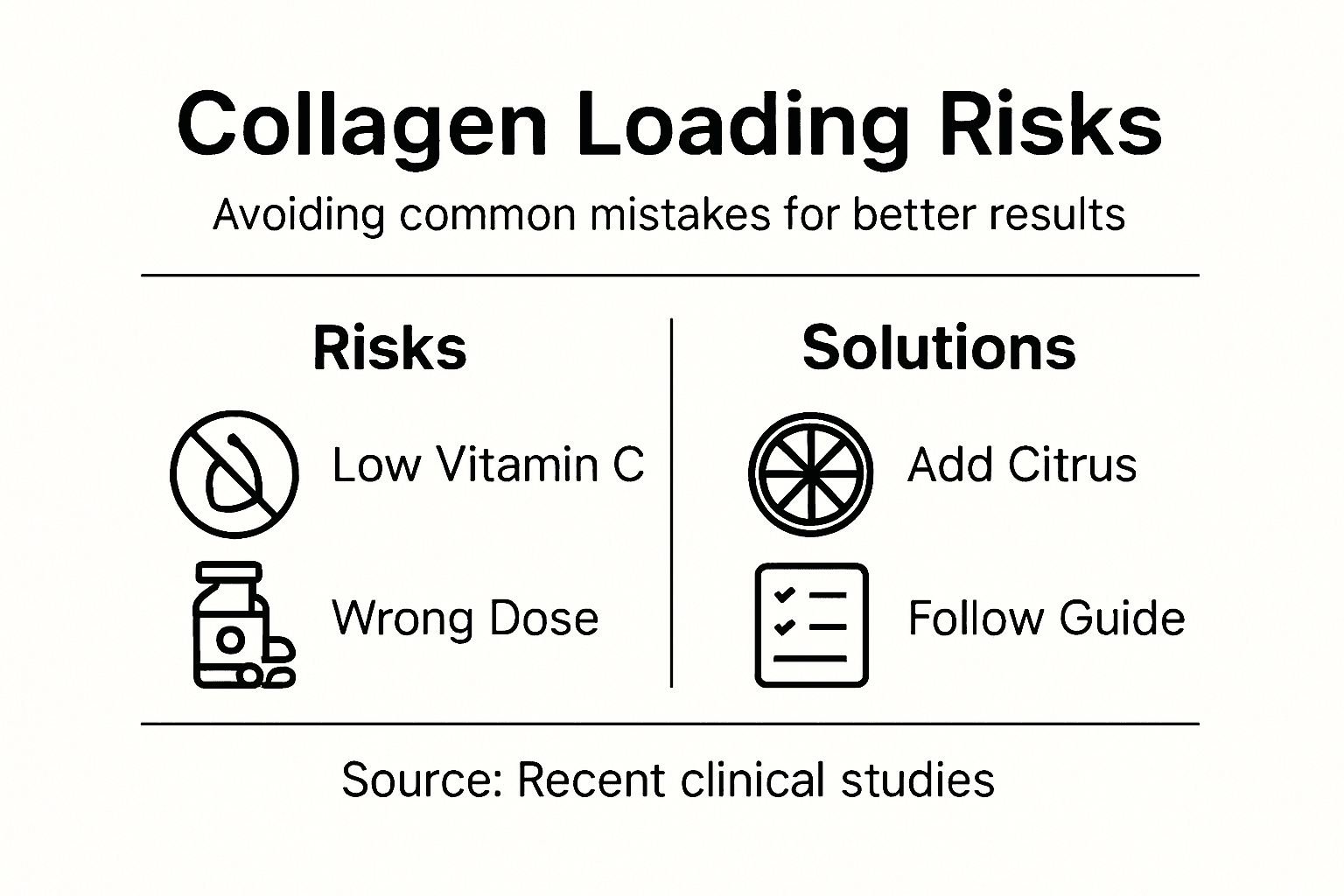
Supplementing without proper research or verification can also lead to potential risks. Not all collagen supplements are created equal, and consumers should be vigilant about selecting products with proven quality, bioavailability, and transparent sourcing. This means looking beyond marketing claims and seeking supplements that have undergone rigorous testing, preferably with certifications from reputable independent bodies. Individuals with pre-existing health conditions, allergies, or those taking medications should always consult healthcare professionals before beginning any new supplementation regime to ensure safety and compatibility.
Below is a summary of common missteps in collagen loading and how to avoid them:
| Common Misstep | Potential Issue | Solution |
|---|---|---|
| Excessive dosage | Digestive discomfort, no extra benefit | Follow recommended guidelines |
| Ignoring supporting nutrients | Reduced collagen synthesis | Ensure vitamin C intake |
| Choosing low-quality supplements | Ineffective or unsafe product | Select tested, certified brands |
| Overlooking holistic lifestyle factors | Suboptimal connective tissue outcomes | Combine with diet and exercise |
Pro tip: Perform thorough research and opt for supplements from reputable brands that provide clear documentation about their collagen source, processing methods, and third-party testing results.
Unlock Your Skin and Joint Potential with Targeted Collagen Loading
If you are aiming to overcome the challenges of ageing skin or joint stiffness by maximising collagen production, understanding collagen loading is the first step. This article highlights key goals such as improved skin elasticity and enhanced connective tissue strength—crucial for athletes and health-conscious individuals focused on recovery and beauty. To truly benefit from collagen loading, it is essential to choose a supplement that delivers high dosage with quality you can trust, supported by ingredient transparency and certifications.
Discover the difference with 20g Collagen Protein Supplements crafted for performance and recovery.

Take charge of your collagen journey now by choosing KUDU Nutrition’s 20g Collagen Protein offer. Backed by informed sport certification and designed for rapid absorption, our liquid collagen sachets provide a convenient, tasty way to support your skin, joints and fitness goals. Don’t let time or lifestyle hold you back from visible improvements. Visit our Front Page to start your personalised collagen loading protocol today.
Frequently Asked Questions
What is collagen loading and how does it work?
Collagen loading is a nutritional strategy that involves intensive supplementation of collagen peptides to rapidly increase collagen production in the body, stimulating cellular collagen synthesis for improved skin elasticity and joint health.
How long does a collagen loading phase typically last?
The collagen loading phase usually lasts between 4 to 8 weeks, after which individuals transition to a lower maintenance dose to sustain the benefits achieved during the loading period.
What are the differences between liquid and powdered collagen supplements?
Liquid collagen typically offers faster absorption and convenience, while powdered collagen provides versatility and cost-effectiveness, allowing users to mix it into various foods and adjust dosages more easily.
What should I avoid when starting a collagen loading regimen?
It’s essential to avoid excessive dosages that could cause digestive discomfort, neglecting supporting nutrients like vitamin C, and choosing low-quality supplements. A holistic approach that includes balanced nutrition and exercise is also important.
Recommended
- Step by Step Collagen Intake for Improved Skin and Joints
- Amino Acids in Collagen – Why They Matter for Skin and Joints
- 7 Essential Joint Health Nutrition Tips for Active Adults
- Why Collagen Matters for Skin, Joints, and Fitness
- Mineralization in Water Filters: Impact on Home Wellness - Coway Water Purifier