

Collagen supplements have exploded in popularity, yet most people taking them carry a fundamental misunderstanding about how they actually work. The idea that collagen travels from your sachet directly into your skin or joints, intact and ready to rebuild, is simply not how human digestion operates. Hydrolysed collagen peptides are absorbed as small peptides and amino acids, not as whole proteins. What happens between swallowing your supplement and experiencing real results is a fascinating biological process, and understanding it will change how you approach your collagen routine for skin, joints, and fitness recovery.
Table of Contents
- How collagen is absorbed: unpacking the science
- Collagen’s bioavailability compared to other proteins
- Nutrients that enhance or rely on collagen absorption
- Does collagen improve absorption of other nutrients?
- Why most people misunderstand collagen and nutrient absorption
- Take action: high-quality collagen for your health goals
- Frequently asked questions
Key Takeaways
| Point | Details |
|---|---|
| Collagen’s absorption form | Collagen is absorbed as small peptides and amino acids, not whole proteins. |
| Hydrolysed is superior | Hydrolysed collagen peptides have higher bioavailability than native collagen. |
| Pair with vitamin C | Vitamin C is essential for effective collagen synthesis after absorption. |
| No boost for other nutrients | Supplemental collagen does not enhance absorption of other vitamins or minerals. |
| Gut health link | Collagen may help gut barrier integrity, indirectly supporting nutrient uptake. |
How collagen is absorbed: unpacking the science
To understand collagen’s effects, let’s look at what happens from supplement to bloodstream. The journey begins the moment collagen enters your digestive system, and the form it takes before you swallow matters enormously.
Native collagen, the raw structural protein found in bones and connective tissue, is a large, tightly wound triple-helix molecule. Your gut enzymes struggle to break it down efficiently. Hydrolysed collagen, by contrast, has already been partially broken down through a controlled process called hydrolysis, producing smaller fragments called peptides. These are far easier for your body to handle.
Once hydrolysed collagen reaches your small intestine, enzymes continue breaking it down into di- and tri-peptides, which are chains of just two or three amino acids. These tiny fragments are absorbed via paracellular pathways, meaning they slip between intestinal cells rather than being dragged through them. This is a remarkably efficient route that larger protein fragments simply cannot use.
Key absorption facts at a glance:
- Hydrolysed collagen peptides reach the bloodstream within 30 to 60 minutes of ingestion
- Molecular weight below 5,000 Daltons is associated with superior gut uptake
- Specific peptides, particularly hydroxyproline-containing sequences, are detectable in plasma and may signal fibroblasts to produce new collagen
- Hydrolysed peptides show higher bioavailability and are detected rapidly in plasma compared to native collagen
| Collagen form | Molecular weight | Absorption rate | Bioavailability |
|---|---|---|---|
| Native collagen | Very high (>300,000 Da) | Poor | Low |
| Hydrolysed collagen | Low (500–5,000 Da) | Rapid | High |
| Free amino acids | Minimal | Very rapid | High |
Pro Tip: When choosing a collagen protein supplement, always check the molecular weight or confirm the product uses hydrolysed peptides. This single factor has the greatest influence on how much collagen your body actually uses.
What makes hydrolysed collagen particularly interesting is that certain peptide sequences appear to act as biological signals. Rather than simply providing raw amino acid building blocks, they may stimulate your own fibroblasts, the cells responsible for producing collagen in skin and connective tissue, to ramp up production. This is why the form of collagen you consume can influence your collagen intake for skin and joints far beyond simple protein arithmetic.
Collagen’s bioavailability compared to other proteins
Understanding collagen alone is just the first piece. How does it measure up to other popular proteins?
This comparison matters because many fitness enthusiasts already consume whey protein or free amino acid supplements and wonder whether adding collagen is genuinely worthwhile. The answer is nuanced and depends on what you are trying to achieve.
When researchers compared collagen peptides versus free amino acids, plasma amino acid peaks were rapid in both groups, but overall protein synthesis rates were similar. This tells us collagen is not a magic shortcut for muscle building, but it is highly competitive in terms of absorption speed and efficiency.
The real advantage of collagen lies in its unique amino acid profile. It is exceptionally rich in glycine, proline, and hydroxyproline, which are the building blocks your body specifically needs for tendons, ligaments, cartilage, and skin. Whey protein, for all its muscle-building credentials, is relatively low in these amino acids. So the two proteins are not competing; they are complementary.

| Protein source | Absorption speed | Hydroxyproline content | Best for |
|---|---|---|---|
| Hydrolysed collagen | Fast | High | Skin, joints, tendons |
| Whey protein | Fast | Very low | Muscle synthesis |
| Free amino acids | Very fast | Variable | Targeted supplementation |
| Native collagen | Slow | High | Poor bioavailability |
For those focused on collagen for fitness recovery, the combination of rapid absorption and connective tissue-specific amino acids makes hydrolysed collagen a smart addition to any post-training routine. It fills a gap that whey simply cannot.
One emerging area worth noting: cross-linked collagen gels may improve absorption of hydroxyproline-containing peptides compared to standard powder formats. While the research is still developing, it hints that delivery format, not just hydrolysis, could influence outcomes. This is relevant context for anyone exploring collagen and holistic health beyond the basics.
For a broader comparison, collagen vs whey protein research consistently shows they serve different biological purposes rather than one outperforming the other universally.
Nutrients that enhance or rely on collagen absorption
Beyond proteins and peptides, micronutrients play a pivotal role in getting the most from your collagen supplement.
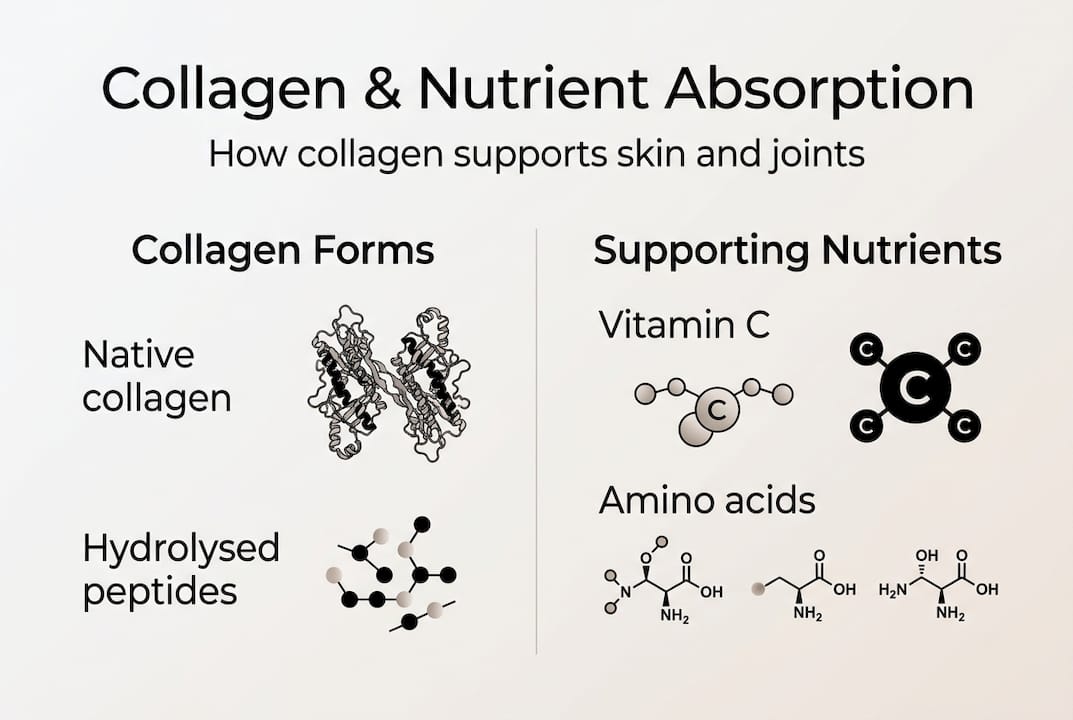
Absorbing collagen peptides is only half the story. Once those peptides arrive in your bloodstream and tissues, your body must actually synthesise new collagen from the raw materials delivered. This is where specific micronutrients become critical, and where most collagen routines fall short.
Nutrients that directly influence collagen synthesis:
- Vitamin C: Essential for collagen synthesis, vitamin C aids proline hydroxylation and triple-helix formation. Without it, your body cannot properly assemble new collagen strands, regardless of how much you supplement.
- Iron: Required for the same hydroxylation reactions as vitamin C. Iron deficiency can impair collagen production even when dietary intake is adequate.
- Zinc: Supports the enzymes involved in collagen cross-linking, the process that gives collagen its structural strength.
- Copper: Another enzyme cofactor involved in stabilising mature collagen fibres.
- Glycine and proline: While collagen itself provides these, overall dietary protein quality influences how efficiently your body can utilise absorbed peptides.
The relationship between vitamin C and collagen synthesis is particularly well established. Vitamin C acts as a cofactor for two enzymes, prolyl hydroxylase and lysyl hydroxylase, that are essential for creating stable collagen. Without adequate vitamin C, the resulting collagen is structurally weak and prone to degradation.
Pro Tip: Take your collagen sachet alongside a vitamin C-rich food or supplement. Even a small glass of orange juice or a kiwi fruit alongside your morning collagen can meaningfully support the synthesis process. For more on timing and pairing, explore collagen loading tips that align with your specific goals.
Most people focus entirely on the collagen dose and ignore these synergistic nutrients. It is a bit like buying premium fuel for a car and forgetting to check the engine oil. The fuel matters, but the supporting system determines whether it actually performs.
Does collagen improve absorption of other nutrients?
With the interplay of nutrients now clear, let’s separate fact from fiction around collagen’s broader impact on absorption.
One of the more persistent claims in the supplement world is that collagen somehow enhances your body’s ability to absorb vitamins and minerals. It is an appealing idea, but the evidence does not support it in the way marketing often implies.
No direct evidence shows that collagen supplements enhance the absorption of other nutrients. Collagen does not act as a carrier molecule for vitamins or minerals, and it does not upregulate intestinal transport mechanisms for micronutrients in any clinically demonstrated way.
What collagen does do is support the gut lining itself. The intestinal wall relies on collagen for its structural integrity, and a healthy, intact gut barrier is essential for efficient nutrient absorption across the board. Glycine, one of collagen’s dominant amino acids, has also been linked to supporting the gut microbiota and reducing intestinal permeability, sometimes called leaky gut.
So the indirect benefit is real, but it is not the same as collagen directly boosting iron or vitamin D uptake. The distinction matters because it changes how you should think about your supplement strategy.
Pro Tip: Rather than relying on collagen alone to improve your nutrient status, prioritise overall gut health through a varied, fibre-rich diet alongside your collagen routine. Collagen supports the environment; your diet determines what thrives in it. For a deeper look at this relationship, the role of collagen in gut health is worth exploring.
The gut health angle is genuinely exciting and underappreciated. It positions collagen not just as a beauty or joint supplement, but as a foundational part of overall wellbeing, provided you understand what it actually contributes.
Why most people misunderstand collagen and nutrient absorption
Having looked at the research, let’s get real about what matters when considering collagen supplements.
The collagen market is saturated with claims that outrun the science. Products are marketed as if swallowing collagen directly rebuilds your skin or lubricates your joints on contact. As the evidence shows, collagen is broken down into amino acids like any other protein, and the hype often outpaces what studies actually demonstrate.
This does not mean collagen is ineffective. It means the mechanism is more subtle than the marketing suggests. The real value lies in providing a specific amino acid profile that supports connective tissue synthesis, paired with the right cofactors and a healthy gut environment. That is a genuinely useful outcome, but it requires a smarter approach than simply buying the most expensive sachet.
At KUDU Nutrition, we believe the most important thing is understanding what you are actually buying and why. Collagen works best as part of a considered nutrition strategy, not as a standalone miracle. Focusing on collagen for holistic wellbeing, alongside quality sleep, adequate protein, and key micronutrients, is where the real results come from.
Take action: high-quality collagen for your health goals
Ready to upgrade your approach with science-backed collagen?
Now that you understand how collagen is absorbed and what it actually does inside your body, the next step is choosing a supplement that matches the science. Hydrolysed collagen in a bioavailable format, with transparent ingredient labelling and quality certification, is what separates results from wasted spend.
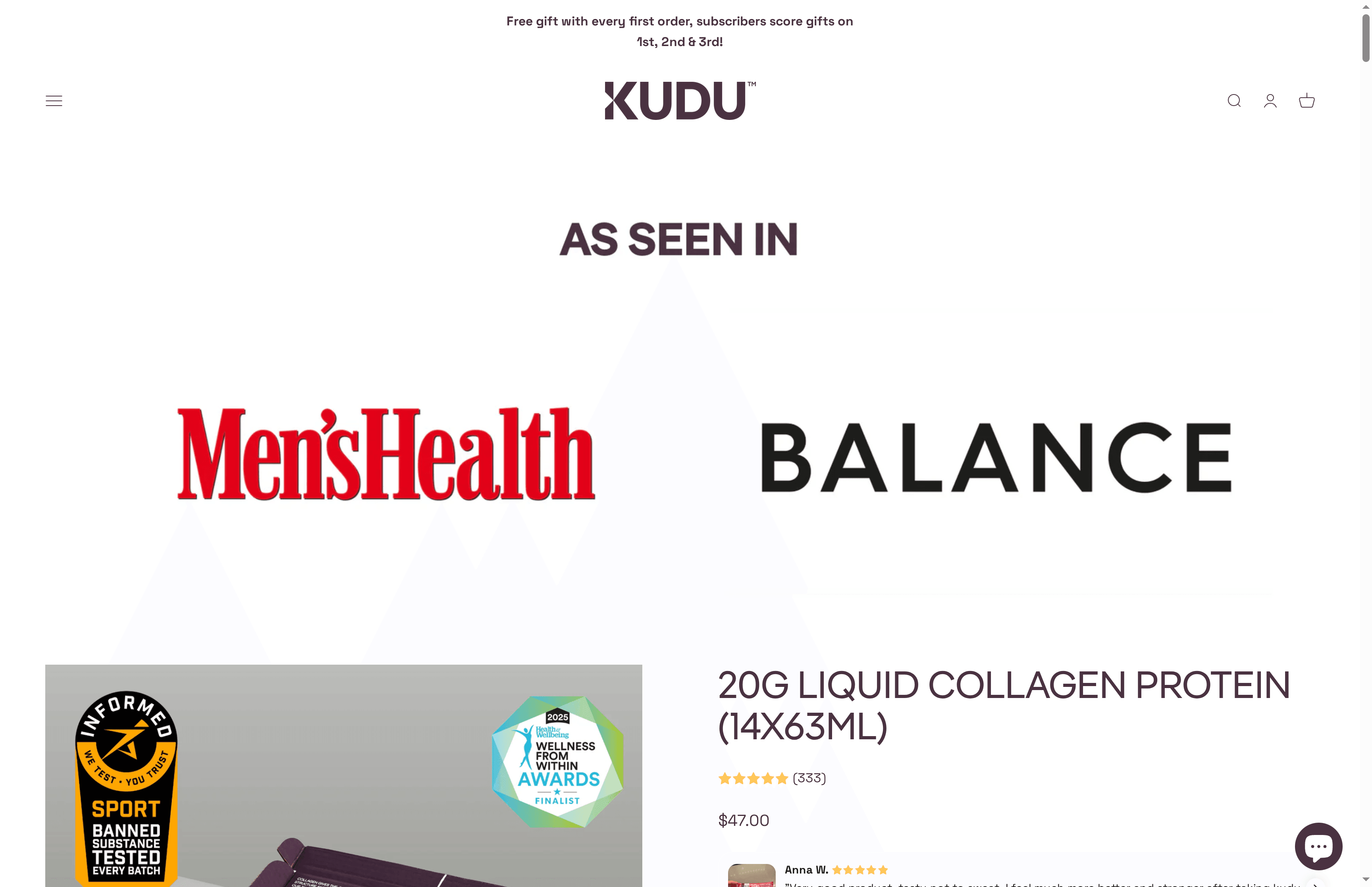
KUDU Nutrition’s 20g liquid collagen protein sachets deliver a high dose of hydrolysed collagen peptides in a format your body can use efficiently. Certified by Informed Sport and designed for both athletes and beauty-focused consumers, they remove the guesswork from your routine. Browse the full range of collagen protein gels or discover collagen benefits tailored to your skin, joint, and recovery goals.
Frequently asked questions
Do collagen supplements help your body absorb other vitamins and minerals?
No direct evidence shows collagen supplements boost absorption of other nutrients. Their primary value lies in supporting connective tissue integrity and gut barrier health.
Which form of collagen is best absorbed by the body?
Hydrolysed collagen peptides are best absorbed, with superior absorption versus native collagen, entering the bloodstream quickly as di- and tri-peptides.
Should you take vitamin C with collagen?
Yes. Vitamin C is essential for collagen synthesis after absorption, acting as a cofactor for the enzymes that assemble stable collagen strands in your tissues.
Does collagen survive digestion to reach the skin and joints intact?
No. Collagen is broken down into peptides and amino acids during digestion and is not absorbed whole into skin or joints.