


Finding the right balance between fitness recovery and glowing skin can feel like a constant challenge. For many British women striving to stay active, the search for effective solutions often leads to collagen supplements. Collagen’s unique triple helical structure provides both remarkable elasticity and resilience, making it essential for joint health and skin radiance. This guide will highlight how different collagen types and supplement choices support your flexible lifestyle while promoting lasting beauty.
Table of Contents
- Collagen And Flexibility – Core Principles
- Types Of Collagen And Supplement Distinctions
- How Collagen Supports Joints And Movement
- Comparing Collagen With Other Approaches
- Safe Supplementation And Common Pitfalls
Key Takeaways
| Point | Details |
|---|---|
| Collagen’s Role | Collagen is crucial for tissue elasticity and structural integrity, supporting joint health, skin elasticity, and overall mobility. |
| Types of Collagen | Different collagen types serve specific functions; for example, Type I is vital for skin and tendons, while Type II supports cartilage health. |
| Supplementation Insights | Hydrolyzed collagen offers superior absorption and can benefit skin hydration and joint pain relief; choosing the right type is essential. |
| Safety Considerations | Careful evaluation of individual health needs and professional consultation are important for safe collagen supplementation. |
Collagen and Flexibility – Core Principles
Collagen represents a fundamental protein crucial for maintaining tissue elasticity and structural integrity across the human body. Its unique molecular architecture enables remarkable flexibility and resilience, making it an essential component for joint health, skin elasticity, and overall mobility.
At its core, collagen’s structural design is what enables its extraordinary functional capabilities. The triple helical protein structure provides mechanical stability while allowing impressive molecular flexibility. This means collagen can bend, twist, and stretch without compromising its fundamental strength - a critical attribute for tissues that require constant movement and adaptation.
The key characteristics of collagen that contribute to flexibility include:
- Ability to form complex crosslinked networks
- Capacity to sustain tensile strength under dynamic conditions
- Molecular adaptability across different tissue types
- Inherent elasticity that supports joint and skin resilience
Interestingly, different collagen types exist with specific tissue localizations. Type I collagen, for instance, predominates in tendons and skin, providing mechanical resilience essential for everyday movement. Each collagen variant plays a nuanced role in supporting our body’s flexible infrastructure.
Pro tip: Maintain consistent protein intake and hydration to support your body’s natural collagen production and maintain optimal tissue flexibility.
Types of Collagen and Supplement Distinctions
Collagen supplements represent a diverse range of nutritional products designed to support different health objectives, with variations in source, processing, and molecular structure playing crucial roles in their effectiveness. Understanding these distinctions is key to selecting the most appropriate supplement for individual wellness goals.
The primary categories of collagen supplements include hydrolyzed collagen with distinct health impacts. These formulations differ significantly in their molecular composition and potential therapeutic benefits. Hydrolyzed collagen, for instance, stands out for its superior absorption capabilities and has been linked to improvements in skin hydration and joint pain relief.
Key differences among collagen supplement types include:
- Source variations (bovine, marine, poultry)
- Processing methods (hydrolyzed, undenatured, gelatin)
- Molecular weight and bioavailability
- Targeted health benefits for specific tissue types
Bovine collagen typically contains types I and III, which are excellent for skin, bone, and muscle tissue support. Marine collagen, derived from fish, offers higher bioavailability and is particularly rich in type I collagen, making it exceptional for skin elasticity and wound healing. Poultry-based collagen provides type II collagen, which is especially beneficial for cartilage and joint health.

To better understand different collagen supplement sources, see the comparison below:
| Source Type | Main Collagen Types | Key Benefit Area | Typical Absorption Level |
|---|---|---|---|
| Bovine | I, III | Skin, bones, muscles | Moderate |
| Marine | I | Skin elasticity, wound healing | High |
| Poultry | II | Cartilage, joint health | Moderate |
Pro tip: Consult with a healthcare professional to determine the most suitable collagen supplement type based on your specific health and wellness objectives.
How Collagen Supports Joints and Movement
Collagen serves as a fundamental biological building block crucial for maintaining joint health and supporting smooth, pain-free movement. Its intricate molecular structure plays a pivotal role in maintaining the integrity of connective tissues that enable our body’s mobility and flexibility.
At the cellular level, collagen peptides contribute significantly to joint tissue regeneration, offering remarkable therapeutic potential for individuals experiencing joint discomfort. Hydrolyzed collagen specifically demonstrates extraordinary capabilities in reaching joint tissues, providing chondroprotective effects that can reduce inflammation and mitigate cartilage degradation associated with conditions like osteoarthritis.
Key mechanisms of collagen’s joint support include:
- Structural reinforcement of cartilage and ligaments
- Promoting collagen synthesis in connective tissues
- Reducing inflammatory responses in joint spaces
- Supporting natural tissue repair processes
- Enhancing overall joint lubrication and flexibility
Native collagen possesses an additional fascinating property of potentially inducing immune tolerance, which may help decrease chronic joint inflammation. This intricate biological interaction suggests collagen supplementation could offer more than just structural support, but also contribute to broader inflammatory management strategies.
Consistent collagen intake can significantly improve joint mobility and reduce discomfort associated with age-related wear and tear.
Pro tip: Combine collagen supplementation with gentle, low-impact exercises to maximise joint health and mobility benefits.
Comparing Collagen with Other Approaches
Nutritional strategies for supporting joint and skin health vary significantly, with collagen emerging as a distinctive intervention that offers unique physiological benefits beyond traditional supplementation approaches. Understanding these nuanced differences can help individuals make more informed choices about their wellness strategies.
Collagen supplementation demonstrates remarkable structural and therapeutic distinctions compared to alternative nutritional interventions. Unlike symptomatic relief approaches such as glucosamine or chondroitin, hydrolyzed collagen provides essential amino acids that directly contribute to connective tissue regeneration and structural support.
Key distinguishing features of collagen compared to other approaches include:
- Provides specific amino acid profiles for tissue repair
- Supports structural tissue remodeling
- Offers targeted immune modulation
- Enhances bioavailability through advanced processing
- Addresses root causes rather than masking symptoms
Protein supplements like whey primarily focus on muscle protein synthesis, whereas collagen targets connective tissue health more comprehensively. Collagen’s unique molecular structure allows it to interact with biological systems differently, promoting tissue elasticity, reducing inflammation, and supporting natural healing mechanisms.
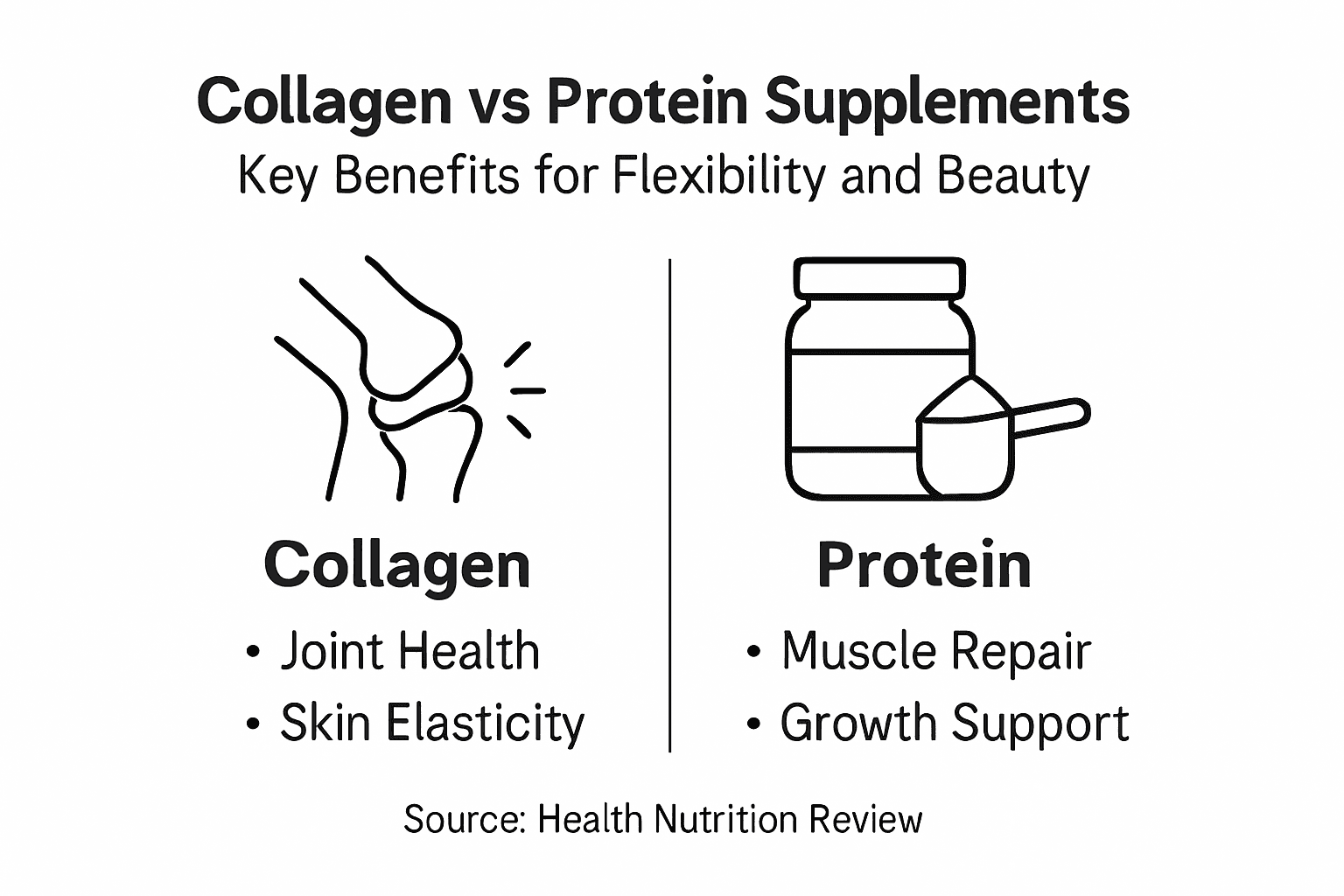
The table below highlights how collagen compares with other popular supplements for tissue health support:
| Supplement Type | Main Target Tissue | Mechanism of Action | Most Notable Effect |
|---|---|---|---|
| Collagen | Connective tissues | Structural repair, elasticity | Enhanced flexibility, healing |
| Whey Protein | Muscle fibres | Muscle protein synthesis | Increased muscle mass |
| Glucosamine | Cartilage | Symptom relief, joint comfort | Reduced joint pain |
Collagen supplementation represents a holistic approach to tissue health, addressing underlying structural needs beyond simple nutritional supplementation.
Pro tip: Consider combining collagen with vitamin C to enhance absorption and maximise its therapeutic potential for joint and skin health.
Safe Supplementation and Common Pitfalls
Navigating the world of collagen supplementation requires careful consideration and informed decision-making to ensure optimal safety and effectiveness. Understanding potential risks and best practices is crucial for individuals seeking to integrate collagen into their wellness routine.
Collagen supplements are generally well-tolerated with minimal side effects, but several important precautions must be considered. Individual health circumstances play a significant role in determining supplement safety, with certain populations requiring more careful evaluation before beginning supplementation.
Key safety considerations and potential pitfalls include:
- Verifying supplement source and manufacturing quality
- Understanding potential interactions with existing medications
- Recognising individual allergic sensitivities
- Monitoring for rare but possible digestive side effects
- Consulting healthcare professionals before starting supplementation
People with specific health conditions, particularly those with kidney-related concerns, should exercise additional caution. Some individuals might experience mild gastrointestinal discomfort, such as bloating or acid reflux, especially when initiating collagen supplementation or consuming higher doses.
Responsible supplementation requires thorough research, quality product selection, and personalised medical guidance.
Pro tip: Start with lower collagen supplement doses and gradually increase while monitoring your body’s response to minimise potential digestive discomfort.
Unlock Your Body’s True Flexibility and Beauty with High-Potency Collagen
If you are seeking to improve skin elasticity, joint mobility and recovery from physical activity the key challenge lies in boosting your body’s collagen levels efficiently. This article highlights how collagen’s unique molecular structure supports tissue flexibility and resilience, addressing common concerns like joint discomfort and loss of skin suppleness. For those health-conscious individuals and athletes wanting to nourish their connective tissues deeply collagen supplementation offers a scientifically backed solution.
Discover the difference with 20g Collagen Protein Supplements from KUDU Nutrition.

Our collagen sachets deliver a superior dose of premium collagen that supports your body’s natural repair and regeneration. Designed for enhanced absorption and certified for quality you can trust this product helps maintain joint health and skin beauty while speeding up fitness recovery. Take control of your flexibility and wellbeing today by exploring the benefits of KUDU Nutrition | 20g Collagen Protein for Performance & Recovery and order now from the main product page. Your path to stronger joints and radiant skin starts here.
Frequently Asked Questions
What is collagen, and why is it important for flexibility?
Collagen is a fundamental protein essential for maintaining tissue elasticity and structural integrity throughout the body. Its unique triple helical structure allows for extraordinary flexibility and resilience, making it crucial for joint health and skin elasticity.
How does collagen supplementation support joint health and recovery?
Collagen supplementation, particularly hydrolyzed collagen, promotes the regeneration of joint tissues, reduces inflammation, and enhances overall joint lubrication and flexibility. It provides the amino acids necessary for tissue repair, contributing to pain relief and improved mobility.
What are the different types of collagen supplements, and how do they differ in benefits?
Collagen supplements vary based on their source (bovine, marine, poultry) and processing methods (hydrolyzed, undenatured). Each type serves different functions: bovine collagen supports skin and muscle, marine collagen promotes skin elasticity, and poultry collagen is beneficial for joint and cartilage health.
Are there any safety concerns or side effects associated with collagen supplementation?
Collagen supplements are generally well-tolerated, but some individuals may experience mild digestive discomfort, such as bloating. It’s important to consult with a healthcare professional, especially for those with kidney-related concerns or existing health conditions.