

TL;DR:
- Supplement evaluation involves verifying product composition, safety at real doses, and evidence of effectiveness to ensure consumer benefit.
- Most supplements are not pre-approved, so batch-specific tests and third-party certifications are crucial for validation.
Supplement evaluation is the structured assessment of a product’s composition, safety, efficacy, and dosage to confirm it is both safe and beneficial at the levels consumers actually take. This process matters more than most people realise, because supplements are not FDA-reviewed before they reach the market. Companies bear full responsibility for product quality and labelling. That gap between “legally sold” and “independently verified” is exactly why understanding how supplements are tested and assessed gives you a genuine advantage as a consumer.
How are supplements evaluated for composition and quality?
The first step in any credible evaluation is confirming what is actually inside the product. Ingredient identity is not a given. Two products carrying the same name on the label can differ substantially in purity, potency, and impurity profile depending on their source and manufacturing process. CFR 21 Part 111 requires manufacturers to confirm identity, purity, strength, and composition using scientifically validated methods such as HPLC (high-performance liquid chromatography) or DNA barcoding.

What a Certificate of Analysis actually tells you
A Certificate of Analysis (COA) is the primary document used to verify batch-specific quality. The critical word is batch-specific. A COA is only credible when it references the exact batch you are purchasing, names the tests performed, and provides the results against specification limits. A generic COA that is not tied to a specific lot number is essentially meaningless as a quality guarantee.
There is also a distinction worth understanding between production-line testing and off-the-shelf testing. Off-the-shelf testing verifies stability after transport and storage, which production-line results cannot confirm. A product may meet specification when it leaves the factory but degrade before it reaches you. Brands that only publish production data are giving you half the picture.
The key quality markers to look for when reviewing supplement documentation:
- Ingredient identity: Confirmed using validated analytical methods, not just supplier declarations
- Purity and potency: Results showing the active ingredient meets the labelled amount within an acceptable tolerance
- Impurity profile: Screening for contaminants introduced during manufacturing or sourcing
- Batch reference: The COA must correspond to the specific lot you are buying
- Testing date: Recent results matter; stability changes over time
Pro Tip: Ask the brand directly for a batch-specific COA before purchasing. Any reputable manufacturer will provide one. If they cannot, treat that as a red flag.
| Quality marker | What to check |
|---|---|
| Ingredient identity | Validated by HPLC, DNA barcoding, or equivalent method |
| Potency | Labelled amount confirmed within ±10% tolerance |
| Contaminants | Heavy metals, microbiological limits tested and within range |
| Batch specificity | COA references the exact lot number of your product |
| Stability | Off-the-shelf testing confirms product meets spec at point of sale |
What does supplement safety assessment involve?
Safety assessment in supplement evaluation goes well beyond checking whether an ingredient is generally recognised as safe. The safety evaluation must be tied to the exact manufactured material, including its impurity profile, extraction process, and source. Two products labelled identically can have entirely different safety profiles if their manufacturing histories differ.
The process follows a structured sequence:
- Exact characterisation of the ingredient: Identity, source, manufacturing method, and impurity profile are documented before any safety conclusions are drawn.
- Toxicology review at actual intake doses: Safety data must reflect the dose a consumer will realistically take, not a theoretical or laboratory dose.
- Impurity and contaminant screening: Heavy metals (lead, cadmium, arsenic, mercury), microbiological contaminants, and residual solvents are tested against regulatory limits.
- Regulatory comparison: Results are assessed against frameworks set by bodies such as the FDA in the United States and the European Food Safety Authority (EFSA) in the EU.
The EFSA approach is particularly rigorous. EFSA assesses safety at proposed intake levels, evaluating nutrient release into the body and establishing tolerable upper intake levels (ULs) to define the boundary between beneficial and potentially harmful consumption.
Pro Tip: When reviewing a supplement’s safety credentials, check whether the brand references specific regulatory frameworks or third-party certifications such as Informed Sport. These indicate the product has been assessed against defined safety standards, not just internal quality checks.
One point that consistently catches consumers off guard: the presence of an ingredient in a supplement does not automatically mean it is safe at the dose provided. Vitamin A, iron, and selenium are all examples of nutrients where the gap between a beneficial dose and a harmful one is relatively narrow. Safety assessment exists precisely to navigate that gap with evidence rather than assumption. Learning to read supplement labels accurately is one of the most practical skills you can develop as a health-conscious consumer.
How is supplement effectiveness evaluated scientifically?
Effectiveness is the criterion most frequently overstated in supplement marketing and most frequently misunderstood by consumers. The presence of an ingredient is not evidence of effectiveness. What matters is whether that ingredient is absorbed, reaches the target tissue, and produces a measurable outcome at the dose provided.
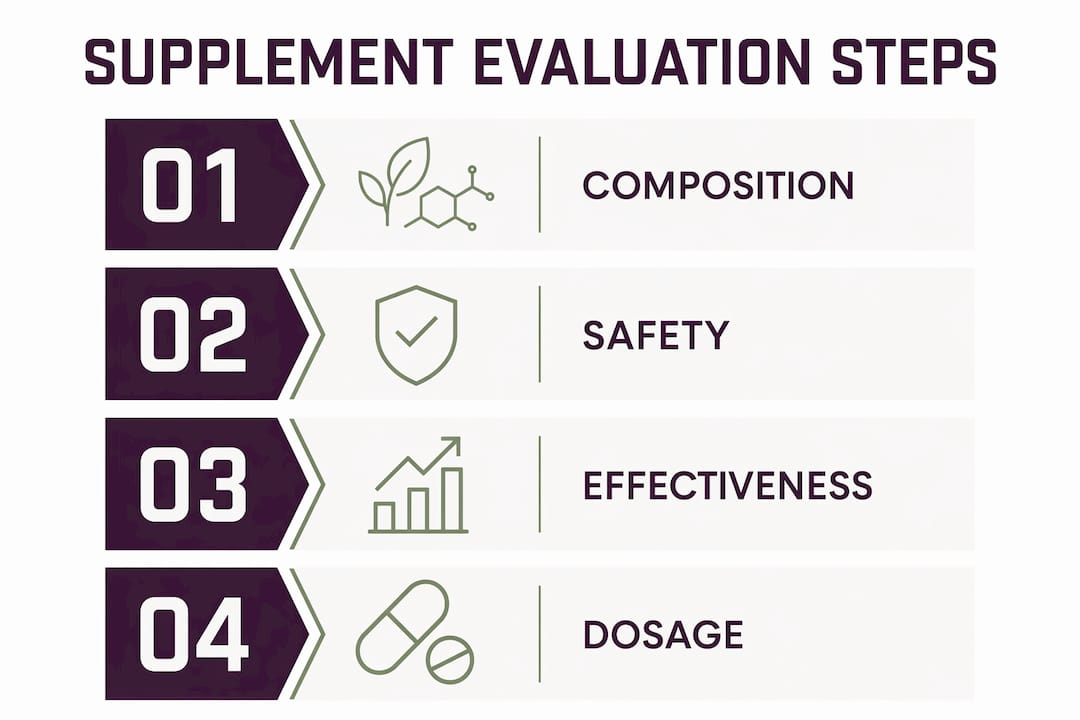
A modern 4-step framework evaluates supplements by characterising contents, assessing safety at real doses, verifying efficacy through human clinical evidence, and determining proper dosing. This framework accounts for the fact that supplement nutrients often behave differently from the same nutrients consumed through food, particularly in terms of concentration and bioavailability.
Bioavailability versus ingredient presence
Bioavailability describes how much of an ingredient is actually absorbed and used by the body. A supplement can contain 1,000mg of a nutrient on the label while delivering a fraction of that to the bloodstream, depending on the ingredient form, the delivery matrix, and what else is consumed alongside it. Clinical studies on human absorption are the gold standard for validating effectiveness claims. In vitro (cell culture) or animal studies are useful for generating hypotheses but cannot substitute for human trial data when making consumer-facing claims.
The comparison below illustrates why form and evidence level both matter when assessing what makes supplements effective:
| Evaluation criterion | Weak evidence | Strong evidence |
|---|---|---|
| Ingredient form | Generic or unspecified form | Named, clinically studied form (e.g., hydrolysed collagen) |
| Study type | In vitro or animal studies | Randomised controlled trials in humans |
| Dose relevance | Studied at doses different from label | Studied at the exact dose provided |
| Bioavailability data | Absent | Confirmed via absorption studies |
Matrix effects are another underappreciated factor. The other ingredients in a formulation can either enhance or inhibit absorption of the active ingredient. Liquid delivery formats, for example, often produce faster absorption than solid tablets because the dissolution step is bypassed. This is one reason why the format of a supplement, not just its ingredient list, is a legitimate part of the criteria for supplement evaluation.
For a practical framework on assessing supplement quality before you buy, the nutritional supplement checklist from Kudunutrition covers the key steps in plain language.
How are dosage recommendations established for supplements?
Dosage is the dimension of supplement evaluation that receives the least consumer attention and carries some of the highest risk when ignored. Tolerable upper intake levels (ULs) define the highest chronic daily intake unlikely to cause adverse effects in the general population. Exceeding a UL does not guarantee harm, but it does mean you are operating outside the evidence base for safety.
Several factors shape how dosage recommendations are set:
- Recommended daily allowances (RDAs): The intake level sufficient to meet the needs of most healthy individuals, used as a baseline reference
- Tolerable upper intake levels: The ceiling above which risk of adverse effects increases, established by bodies such as EFSA and the US Institute of Medicine
- Population-specific adjustments: Pregnant women, older adults, and athletes may have different requirements that shift both the effective and safe dose range
- Supplement versus food intake: Nutrients consumed through supplements arrive in concentrated form without the buffering effect of a food matrix, which can alter both absorption and tolerance
The practical implication is straightforward. Following the dosage on the label is not a conservative suggestion. It reflects the dose at which the product was assessed for both safety and effectiveness. Taking more does not proportionally increase benefit, and for several nutrients, it increases risk. Consulting a registered dietitian or GP before adding high-dose supplements to your routine is the most reliable way to personalise dosage guidance to your actual needs. Understanding nutritional transparency in product labelling helps you interpret dosage information accurately rather than relying on marketing copy.
Key takeaways
Supplement evaluation is only meaningful when it addresses composition, safety at real intake doses, clinical evidence of efficacy, and dosage within established limits.
| Point | Details |
|---|---|
| Composition verification | Demand batch-specific COAs and validated identity testing before trusting a product. |
| Safety at actual doses | Safety must be assessed at the dose you take, not just for the ingredient in isolation. |
| Clinical efficacy evidence | Human clinical trials, not lab studies, are the standard for validating effectiveness claims. |
| Dosage within ULs | Exceeding tolerable upper intake levels removes the evidence base for safety. |
| Third-party certification | Certifications such as Informed Sport confirm independent testing beyond manufacturer claims. |
Why most supplement marketing skips the hard part
I have spent years reviewing supplement research, and the pattern I keep seeing is the same. Brands invest heavily in naming impressive ingredients and almost nothing in explaining the evidence behind the dose they have chosen or the form they have used. Consumers are left to assume that “contains X” means “delivers X effectively.” It rarely does without the supporting evidence.
The uncomfortable truth is that regulatory standards for supplements are not designed to protect you from ineffective products. They are designed to prevent outright harm. That is a much lower bar than most people assume when they see a product on a pharmacy shelf. The FDA framework does not require proof of effectiveness before a supplement reaches the market. EFSA’s process is more rigorous, but it still applies primarily to nutrient sources rather than finished products.
What I have found genuinely useful is treating third-party certification as a non-negotiable filter. Informed Sport, NSF International, and USP each test finished products against defined standards. They are not perfect systems, but they represent independent verification rather than manufacturer self-reporting. The quality factors behind collagen supplements are a good example of how this plays out in practice for a specific ingredient category.
The future of supplement evaluation will likely involve more standardised bioavailability reporting and greater pressure on brands to publish human clinical data at product-specific doses. Until that becomes the norm, the burden of critical appraisal sits with you as the consumer. The framework in this article gives you the tools to do that well.
— Sam
Why Kudunutrition takes evaluation seriously
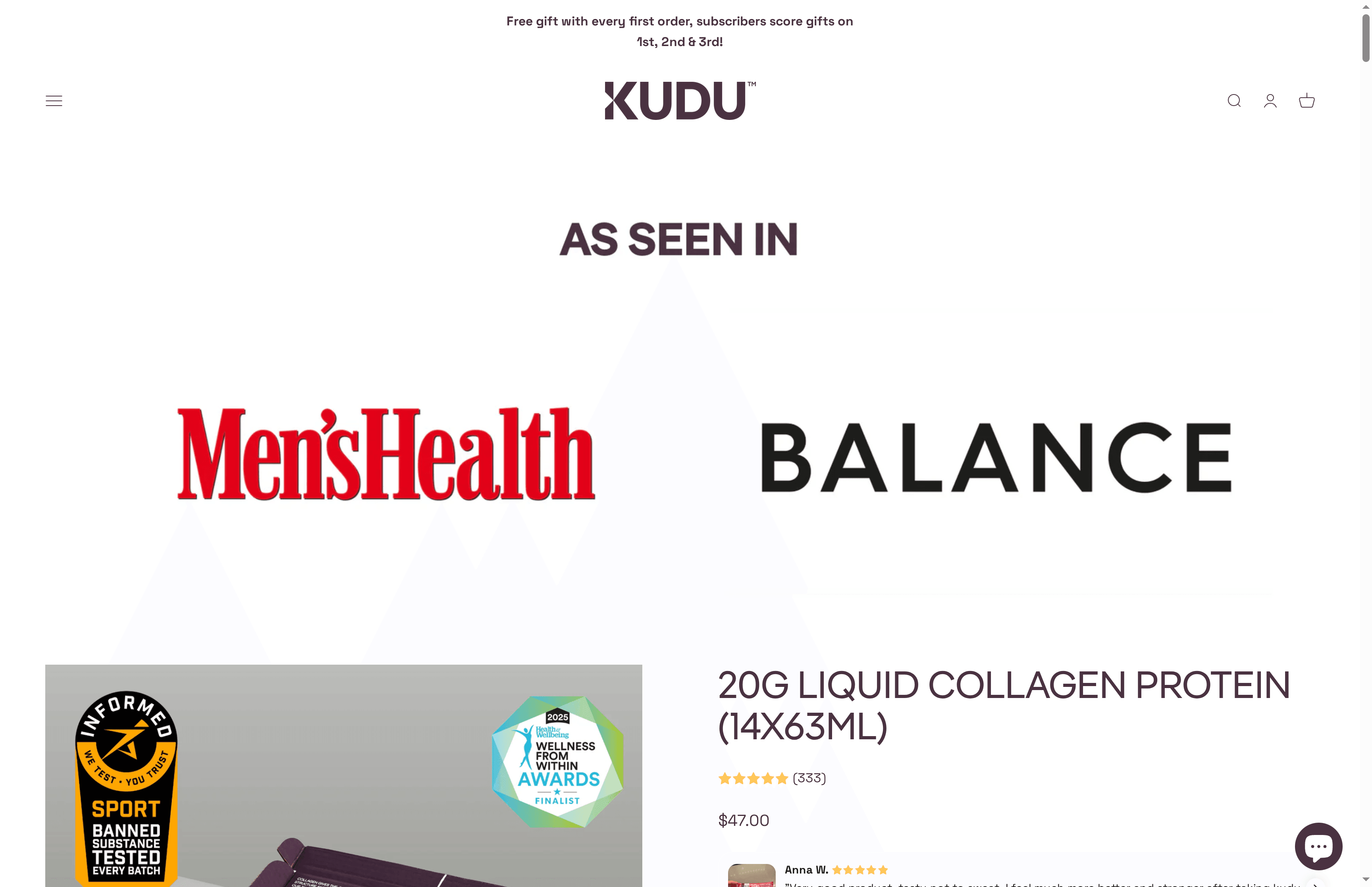
Kudunutrition’s liquid collagen protein sachets are built around the principles covered in this article. Each sachet delivers 20g of hydrolysed collagen protein in a liquid format, which supports absorption without the dissolution delays of tablets or capsules. The product carries Informed Sport certification, meaning it has been independently tested for banned substances and quality standards. Ingredient transparency, batch-level testing, and clear nutritional data are built into the product rather than bolted on as marketing claims. If you are ready to apply what you have learned about supplement evaluation to a product that meets those standards, explore the 20g liquid collagen protein range from Kudunutrition.
FAQ
How are supplements evaluated before they are sold?
Supplement evaluation covers composition testing, safety assessment at real intake doses, efficacy review using clinical evidence, and dosage verification against established upper limits. In the US, the FDA does not pre-approve supplements before sale, so independent third-party testing is the most reliable quality signal.
What is a Certificate of Analysis and why does it matter?
A Certificate of Analysis (COA) documents the results of testing for a specific batch of a supplement, covering identity, potency, and contaminants. It is only credible when it is batch-specific and references the exact product lot you are purchasing.
What makes a supplement effective rather than just present?
Effectiveness depends on bioavailability, the ingredient form used, the dose provided, and human clinical evidence at that dose. An ingredient appearing on a label does not confirm it is absorbed or that it produces a measurable outcome at the quantity supplied.
How are safe dosage levels for supplements determined?
Regulatory bodies such as EFSA and the US Institute of Medicine establish tolerable upper intake levels (ULs) based on risk assessments of chronic intake. These ULs define the ceiling above which adverse effects become a realistic risk for the general population.
What is the difference between FDA and EFSA supplement regulation?
The FDA requires manufacturers to ensure safety and accurate labelling but does not review products before they are marketed. EFSA conducts pre-market safety assessments of nutrient sources and sets ULs, making the EU framework more prescriptive at the ingredient level.