


TL;DR:
- Peptides are short amino acid chains that influence muscle repair, recovery, and performance. Nutritional peptides like collagen and whey support recovery and strength, while signaling peptides such as CJC-1295 are more pharmacological and carry higher risks. Evidence favors safe, oral peptides for injury prevention and recovery, whereas injectable signaling peptides lack sufficient human validation and pose safety concerns.
Peptides are short chains of amino acids that act as biological messengers, directly influencing muscle repair, recovery speed, and physical performance. The role of peptides in fitness has moved from niche sports science into mainstream supplementation, and for good reason. Collagen peptides, growth hormone secretagogues like CJC-1295 and Ipamorelin, and plant-derived bioactive peptides each target different physiological pathways. Understanding which type does what separates smart supplementation from expensive guesswork.
How do peptides support muscle growth and repair?
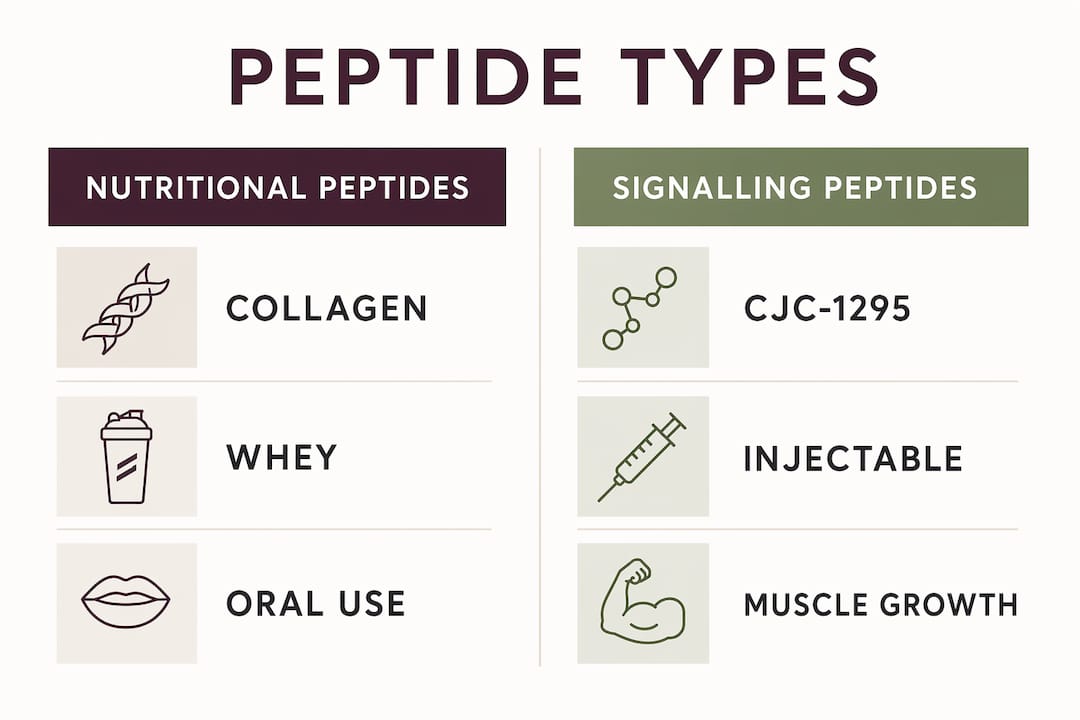
Peptides support muscle growth through two distinct mechanisms: nutritional supply and hormonal signalling. Nutritional peptides, such as those derived from whey or collagen, provide the amino acid building blocks your muscles need to rebuild after training. Signalling peptides work differently. They trigger hormonal cascades that amplify your body’s own repair processes.

Growth hormone secretagogues are the most studied signalling peptides for muscle development. Combinations like CJC-1295 and Ipamorelin can increase GH levels by 200%–1000% and IGF-1 by 30%–65% over 2–8 weeks in healthy adults. Those are significant hormonal shifts, but they do not automatically translate into dramatic muscle gains for already-healthy athletes.
Clinical evidence for synthetic peptides is growing but still limited. A 12-week trial with Myoki, a synthetic signalling peptide, improved muscle mass, walking speed, and grip strength in patients with muscle atrophy. The results are promising, though the study population was clinical rather than athletic.
On the nutritional side, whey-derived peptides tend to produce greater muscle hypertrophy than collagen peptides, though both improve strength and power similarly. This distinction matters when you are choosing a supplement for a specific goal.
Key differences between peptide types for muscle growth:
- Signalling peptides (CJC-1295, Ipamorelin, Hexarelin): stimulate GH and IGF-1 release, require injection, carry regulatory and safety concerns
- Whey-derived peptides: support hypertrophy directly through amino acid availability, widely available as oral supplements
- Collagen peptides: better suited to connective tissue repair than muscle bulk, most effective when paired with Vitamin C
- Plant-derived bioactive peptides: emerging evidence for fatigue reduction and anti-inflammatory effects, suitable for plant-based athletes
Pro Tip: Never conflate over-the-counter collagen or whey peptide supplements with prescription-grade or injectable signalling peptides. They operate through entirely different mechanisms and carry very different risk profiles.
What does the evidence say about peptides for recovery?
Recovery is where the evidence for nutritional peptides is strongest and most practically applicable. Collagen peptides, in particular, have a well-documented role in supporting connective tissue and reducing post-exercise soreness.
Research shows that 20g of collagen peptides daily reduces muscle soreness and accelerates recovery after strenuous exercise. That is a specific, achievable dose you can build into your daily routine without any medical supervision. For tendon and ligament support, the protocol is slightly different: 15g of collagen peptides combined with Vitamin C, taken 60 minutes before training, strengthens tendons and ligaments and reduces injury risk.
Plant-derived bioactive peptides add another layer to the recovery picture. These compounds combat exercise fatigue by scavenging reactive oxygen species, reducing inflammation, and activating metabolic pathways. They represent a natural, food-based approach that complements rather than replaces conventional recovery nutrition.
Here is a practical recovery protocol based on current evidence:
- Take 15g collagen peptides with Vitamin C roughly 60 minutes before your workout to prime connective tissue synthesis.
- Consume 20g collagen peptides post-workout or before bed to support overnight muscle and tissue repair.
- Include plant-based peptide sources such as soy, pea, or rice protein to add antioxidant and anti-inflammatory support.
- Maintain consistent hydration, as peptide absorption and collagen synthesis both depend on adequate fluid intake.
- Allow at least 48 hours between high-intensity sessions targeting the same muscle groups, even with peptide supplementation.
Peptides are not a shortcut. They work best as part of a structured recovery strategy that includes sleep, nutrition, and progressive training load management.
You can read more about peptides and joint health in Kudunutrition’s dedicated recovery guide, which covers the connective tissue research in greater depth.
Are all peptides safe and effective for fitness?
The honest answer is no. The peptide market contains a wide spectrum of products, from well-researched nutritional supplements to unverified injectable compounds with no human clinical data behind them.
BPC-157 and TB-500 are two of the most heavily marketed injectable peptides in fitness circles. Both show promising effects in animal studies but have no convincing proof of accelerating musculoskeletal healing in humans. Both are also banned under WADA rules, meaning any competitive athlete using them risks a doping violation. The gap between animal biology and human clinical evidence is not a technicality. It is a fundamental reason for caution.
The safety picture for online-purchased peptides is particularly concerning:
- Most injectable peptides marketed online lack human clinical trial validation, and their long-term safety profiles are unestablished.
- Unregulated products sold online may be contaminated and lack the quality control applied to pharmaceutical-grade compounds.
- Adverse effects have been noted in case reports, though systematic human data remains scarce.
- No regulatory body in the UK, EU, or US has approved BPC-157 or TB-500 for human use.
The marketing around these peptides often outpaces the science by years. That is not unique to peptides, but the injectable route of administration raises the stakes considerably compared to an oral supplement.
Pro Tip: If a peptide product requires injection and is sold without a prescription, treat it with the same scepticism you would apply to any unregulated pharmaceutical. Stick to oral, food-derived peptide supplements unless working directly with a sports medicine physician.
Nutritional vs signalling peptides: which is right for your goals?
Choosing between peptide types comes down to your specific goal, your risk tolerance, and whether you compete in tested sport. The table below summarises the key differences.
| Peptide Type | Mechanism | Primary Benefit | Evidence Strength | Best For |
|---|---|---|---|---|
| Collagen peptides | Amino acid supply + connective tissue signalling | Tendon, ligament, and joint support | Strong (multiple RCTs) | Injury prevention, recovery |
| Whey-derived peptides | Amino acid supply, mTOR activation | Muscle hypertrophy and strength | Strong (multiple RCTs) | Muscle growth, body composition |
| Plant-derived bioactive peptides | Antioxidant, anti-inflammatory pathways | Fatigue reduction, recovery | Emerging (promising early data) | Plant-based athletes, general recovery |
| Growth hormone secretagogues (CJC-1295, Ipamorelin) | GH and IGF-1 stimulation | Hormonal amplification of muscle repair | Limited human data | Clinical use only |
| BPC-157 / TB-500 | Tissue repair signalling | Injury healing (animal data only) | Very limited in humans | Not recommended for athletes |
Collagen and whey peptides sit at the top of the evidence hierarchy for fitness use. They are orally available, well-tolerated, and supported by multiple randomised controlled trials. Growth hormone secretagogues occupy a different category entirely. They are not supplements in the conventional sense. They are pharmacological agents that require medical oversight.
Pro Tip: For most recreational athletes and fitness enthusiasts, collagen peptides with Vitamin C represent the highest-value, lowest-risk entry point into peptide supplementation. Start there before considering anything more complex.
How to use peptides practically in your training
Practical application is where many athletes go wrong. They either under-dose, use poor timing, or choose the wrong peptide type for their goal. Evidence-based use is straightforward once you understand the basics.
For connective tissue support and injury prevention, the research-backed approach involves taking collagen peptides with Vitamin C 60 minutes before training. This timing aligns with the window of peak collagen synthesis stimulated by exercise. The Vitamin C is not optional. It is a required co-factor for collagen formation.
For general recovery and muscle repair, a daily dose of 20g collagen protein covers both connective tissue and systemic recovery needs. Kudunutrition’s liquid collagen sachets deliver exactly this dose in a convenient, pre-measured format, removing the guesswork from daily supplementation.
Practical guidelines for integrating peptides into your training:
- Pair collagen peptides with a Vitamin C source such as orange juice or a dedicated supplement before every strength or high-impact session.
- Use whey-derived peptides post-workout if hypertrophy is your primary goal, as the evidence for muscle building is stronger than for collagen.
- Do not expect peptides to compensate for poor sleep, inadequate total protein intake, or inconsistent training. Peptides are not a substitute for solid training and nutrition foundations.
- Consult a sports dietitian or sports medicine physician before using any injectable or prescription-grade peptide compound.
- If you compete in tested sport, verify every supplement against the WADA prohibited list and use only products certified by Informed Sport or a recognised third-party testing body.
Key takeaways
Nutritional peptides, particularly collagen and whey-derived types, offer the strongest evidence base for fitness use, with signalling peptides requiring medical oversight and carrying significant regulatory risk.
| Point | Details |
|---|---|
| Collagen peptides and recovery | 20g daily reduces muscle soreness; 15g with Vitamin C pre-workout supports tendons and ligaments. |
| Signalling peptides carry risk | CJC-1295 and Ipamorelin raise GH significantly but lack long-term human safety data. |
| BPC-157 and TB-500 are unproven | Both are banned by WADA and have no convincing human evidence for musculoskeletal healing. |
| Timing and co-factors matter | Take collagen with Vitamin C 60 minutes before training for maximum connective tissue benefit. |
| Peptides supplement, not replace | No peptide compensates for poor training, inadequate sleep, or insufficient total protein intake. |
Sam’s take: the hype outpaces the science, but not entirely
I have spent years watching the peptide conversation swing between breathless enthusiasm and outright dismissal. Neither extreme is useful. The truth is more nuanced, and frankly more interesting.
The nutritional peptide evidence is genuinely solid. Collagen peptides with Vitamin C before training is one of the most underused, evidence-backed protocols in recreational sport. Most athletes are still reaching for a protein shake post-workout and ignoring the connective tissue window entirely. That is a missed opportunity, particularly for anyone over 30 whose tendons and ligaments take longer to recover than their muscles.
Where I get frustrated is the injectable peptide space. BPC-157 and TB-500 are sold online with the confidence of established medicine, but the human evidence simply does not support that confidence yet. I have spoken to athletes who have spent significant money on unverified compounds because a forum post told them it worked. That is not supplementation. That is experimentation without informed consent.
My honest position: start with what works and is proven. Collagen peptides, whey-derived peptides, and plant-based bioactive sources cover the vast majority of what a serious fitness enthusiast needs. If you are curious about signalling peptides, have that conversation with a sports medicine doctor, not a supplement retailer. The science will catch up eventually. Until it does, the risk-to-benefit calculation for most athletes does not favour injectable, unregulated compounds.
— Sam
Support your recovery with kudunutrition’s collagen peptides
If the evidence for collagen peptides has you ready to act, Kudunutrition makes it straightforward. Each liquid sachet delivers 20g of collagen protein in a convenient, pre-measured dose, precisely aligned with the research-backed daily amount for recovery and connective tissue support. The formula is Informed Sport certified, meaning every batch is tested for banned substances. That matters if you train seriously or compete.
Kudunutrition’s sachets are designed to be taken before or after training, with no mixing or measuring required. Pair them with a Vitamin C source before your session and you have the exact protocol the research supports. Explore the full range, including the Orange 20g Liquid Collagen and Sour Cherry variants, at Kudunutrition.
FAQ
What is the role of peptides in fitness?
Peptides support fitness by stimulating muscle repair, reducing inflammation, and strengthening connective tissue. Nutritional peptides like collagen and whey-derived types have the strongest evidence base for practical use in training and recovery.
How do collagen peptides aid recovery after exercise?
Taking 20g of collagen peptides daily reduces muscle soreness and accelerates recovery. For tendon and ligament support, 15g combined with Vitamin C taken 60 minutes before training produces the strongest connective tissue response.
Do peptides improve performance in competitive athletes?
Nutritional peptides improve recovery and reduce injury risk, which indirectly supports performance. Signalling peptides like CJC-1295 raise GH and IGF-1 levels but are not approved for use in tested sport and carry unestablished long-term safety profiles.
Are bpc-157 and tb-500 safe for fitness use?
No. Both peptides are banned by WADA and lack convincing human clinical evidence for musculoskeletal healing. Injectable peptides sold online also carry contamination risks due to the absence of pharmaceutical-grade quality control.
When should i take collagen peptides for the best results?
Take 15g of collagen peptides with Vitamin C approximately 60 minutes before training to support tendon and ligament synthesis. A daily dose of 20g, taken consistently, supports broader recovery and reduces post-exercise muscle soreness.