


You might be surprised to learn that many everyday foods contain added vitamins and minerals designed to boost your health. From breakfast cereals to milk alternatives, fortified nutrition plays a crucial role in modern wellness. This practice enhances foods with essential nutrients to address deficiencies and support specific health goals. Understanding fortified nutrition helps you make informed choices about skin health, joint function, and overall vitality. This guide explains what fortification means, how it benefits your body, and how to incorporate it effectively into your wellness routine.
Table of Contents
- Key takeaways
- What is fortified nutrition and why does it matter?
- How fortified nutrition supports skin health
- The role of fortified nutrition in joint and bone health
- Balancing benefits and risks of fortified nutrition
- Boost your health with targeted collagen supplements
- Frequently asked questions about fortified nutrition
Key Takeaways
| Point | Details |
|---|---|
| What fortification is | Fortified nutrition means adding vitamins and minerals to foods to improve their nutritional profile and address dietary gaps. |
| Fortification methods | Direct addition during processing, biofortification through selective breeding, and advanced encapsulation are used to improve nutrient stability and absorption. |
| Skin health benefits | Fortified nutrients support skin hydration and elasticity and may reduce ageing when combined with collagen peptides and vitamins such as D, C and E. |
| Active lifestyle relevance | Fortified foods help busy individuals meet nutrient gaps and support overall wellbeing as part of a practical wellness routine. |
What is fortified nutrition and why does it matter?
Fortified nutrition involves enhancing foods with vitamins, minerals, or other beneficial compounds to improve their nutritional profile. Fortified nutrition is the process of adding vitamins, minerals, or other nutrients to foods to restore losses, improve nutritional quality, or address public health needs like deficiencies. This practice serves multiple purposes: replacing nutrients lost during processing, addressing widespread nutritional gaps, and supporting specific health outcomes.
Common nutrients added through fortification include:
- Vitamin D in dairy products and plant-based alternatives
- B vitamins in grain products and cereals
- Calcium in fruit juices and non-dairy beverages
- Iron in wheat flour and breakfast foods
- Omega-3 fatty acids in eggs and spreads
Fortification benefits extend beyond preventing deficiency diseases. For health-conscious consumers, fortified foods offer targeted support for skin radiance, joint mobility, and bone strength. Modern fortification methods include direct addition during processing, biofortification through selective breeding, and advanced encapsulation technologies that improve nutrient stability and absorption.
The relevance for active individuals becomes clear when considering that many people struggle to meet optimal nutrient levels through diet alone. Busy lifestyles, dietary restrictions, and soil nutrient depletion make fortified foods a practical solution. Understanding which foods are fortified and how to combine them with supplements creates a comprehensive approach to wellness that addresses multiple health priorities simultaneously.
How fortified nutrition supports skin health
Your skin reflects your nutritional status, and fortified foods provide specific compounds that enhance appearance and resilience. Vitamin D fortified dairy products have been shown to raise serum 25(OH)D levels whilst collagen peptides and vitamins A, C, D, and E improve skin elasticity and reduce photoageing. These nutrients work synergistically to protect against environmental damage and maintain the structural integrity of skin tissue.
Collagen peptides deserve special attention for their documented effects on skin quality. When consumed through fortified foods or supplements, these bioactive proteins stimulate fibroblast activity and support the dermis structure. Research demonstrates measurable improvements in skin hydration levels and elasticity after consistent collagen intake. The molecular weight of these peptides allows efficient absorption and delivery to target tissues.
Key skin-benefiting nutrients in fortified foods include:
- Vitamin D for cellular renewal and inflammation control
- Carotenoids like beta-carotene for antioxidant protection
- Vitamin C for collagen synthesis and brightening effects
- Vitamin E for membrane stability and moisture retention
- Biotin for healthy skin cell production
Antioxidants in fortified foods combat photoageing by neutralising free radicals generated by UV exposure. This protective effect complements topical skincare by working from within. Vitamins C and E particularly demonstrate synergistic benefits when consumed together, enhancing each other’s stability and effectiveness.

Pro Tip: Combine fortified breakfast cereals with a quality collagen supplement to maximise skin benefits. Timing your collagen intake for skin health around meals improves absorption and delivers consistent amino acids throughout the day.
For those following plant-based diets, dairy-free supplements for skin offer alternatives that provide similar benefits without animal-derived ingredients. Fortified plant milks and supplements ensure adequate nutrient intake regardless of dietary preferences.
The role of fortified nutrition in joint and bone health
Joint comfort and bone strength depend heavily on specific micronutrients that many people consume in suboptimal amounts. Vitamin D, K2, B vitamins, magnesium fortification and collagen peptides improve pain and function in osteoarthritis and bone health. These compounds support cartilage maintenance, reduce inflammatory markers, and enhance calcium metabolism for stronger skeletal tissue.
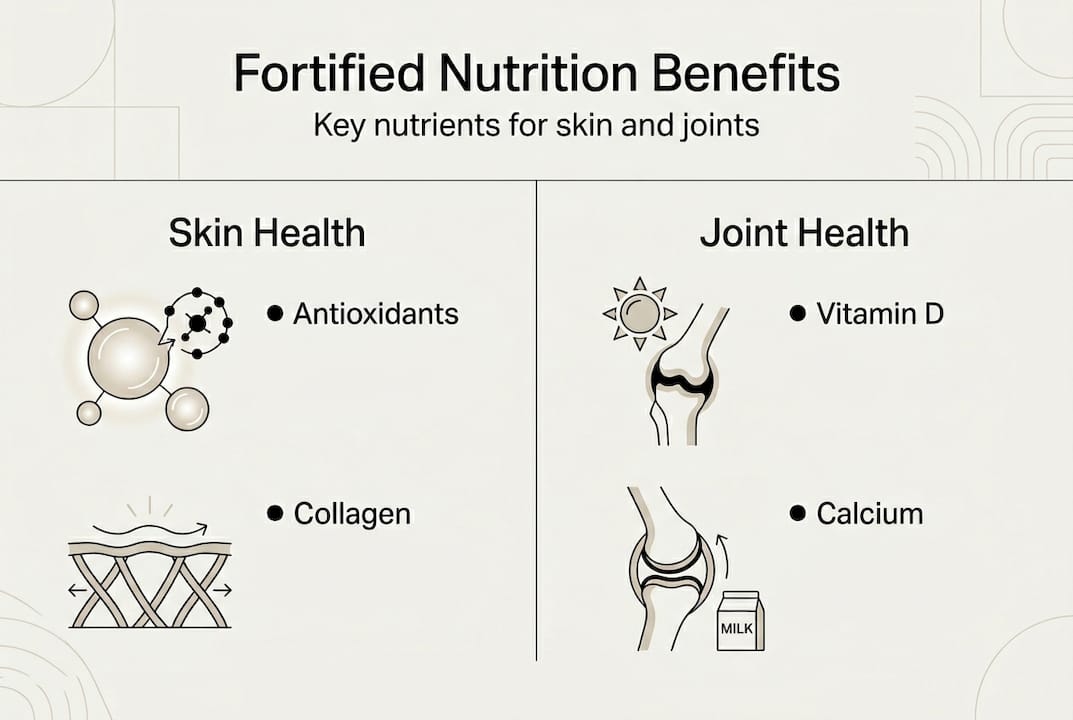
Vitamin D stands out as particularly crucial for joint health. This nutrient regulates calcium absorption, modulates immune responses in joint tissues, and influences muscle strength around joints. Fortified dairy products and plant-based alternatives provide convenient sources that help maintain adequate serum levels year-round, especially important in regions with limited sunlight exposure.
Collagen peptides offer structural support for cartilage and connective tissues. Type II collagen specifically targets joint cartilage, whilst type I supports tendons and ligaments. Randomised controlled trials demonstrate that consistent collagen supplementation reduces joint discomfort during activity and improves functional mobility scores in active individuals.
| Nutrient | Primary benefit | Common fortified sources |
|---|---|---|
| Vitamin D | Calcium absorption, inflammation control | Dairy, plant milks, cereals |
| Vitamin K2 | Bone mineralisation, calcium distribution | Fortified oils, spreads |
| Magnesium | Bone density, muscle function | Fortified water, cereals |
| Collagen peptides | Cartilage structure, joint comfort | Fortified beverages, supplements |
| B vitamins | Energy metabolism, tissue repair | Fortified grains, nutritional yeast |
The synergy between these nutrients amplifies their individual effects. Vitamin D enhances calcium absorption, whilst vitamin K2 ensures calcium deposits in bones rather than soft tissues. Magnesium activates vitamin D and supports over 300 enzymatic reactions crucial for skeletal health.
Pro Tip: Consume fortified foods with healthy fats to maximise absorption of fat-soluble vitamins like D and K2. Pairing your morning fortified cereal with nuts or using fortified plant milk in smoothies with avocado optimises nutrient uptake.
For comprehensive support, combine fortified foods with targeted supplementation. A bone health nutrition guide approach addresses multiple pathways simultaneously. Understanding why collagen is important for joints helps you make informed decisions about supplementation alongside fortified food choices.
Balancing benefits and risks of fortified nutrition
Whilst fortified nutrition offers substantial benefits, understanding potential drawbacks ensures safe and effective use. Over-fortification risks toxicity from excess vitamin A whilst bioavailability varies, and fortification complements diet diversity rather than replacing supplements. This balanced perspective helps you optimise intake without exceeding safe upper limits.
Over-fortification concerns centre on fat-soluble vitamins that accumulate in body tissues. Excessive vitamin A intake can cause liver damage and bone problems, whilst too much vitamin D may lead to calcium deposits in soft tissues. Water-soluble vitamins like B and C present lower toxicity risks because excess amounts are typically excreted, though very high doses can still cause adverse effects.
Bioavailability challenges affect how much of a fortified nutrient your body actually absorbs and uses:
- Chemical form matters: ferrous iron absorbs better than ferric iron
- Food matrix influences uptake: some nutrients compete for absorption
- Individual factors vary: gut health and genetics affect utilisation
- Processing methods impact stability: some nutrients degrade during cooking
Mandatory versus voluntary fortification creates different consumption patterns. Mandatory programmes target widespread deficiencies through staple foods like flour and salt, ensuring baseline nutrient intake across populations. Voluntary fortification allows manufacturers to enhance products for specific health claims, giving consumers more choices but requiring careful label reading.
“Fortification should complement, not replace, a varied diet rich in whole foods. The goal is to fill nutritional gaps, not create an over-reliance on processed foods or exceed safe intake levels through multiple fortified products.”
Diet diversity remains essential even with fortified foods available. Whole foods provide beneficial compounds like phytochemicals, fibre, and enzymes that fortification cannot replicate. A balanced approach combines fortified staples with fresh produce, quality proteins, and targeted supplements for specific health goals.
For fitness enthusiasts seeking optimal nutrition without dairy, exploring dairy-free supplements for fitness ensures adequate nutrient intake whilst respecting dietary preferences. This approach maintains nutritional adequacy without over-relying on any single fortified food category.
Boost your health with targeted collagen supplements
Whilst fortified foods provide foundational nutrition, specialised supplements deliver concentrated support for specific wellness goals. KUDU Nutrition offers high-quality collagen formulations designed to complement your fortified nutrition routine. These 20g collagen protein supplements provide bioavailable peptides that support skin elasticity, joint comfort, and bone strength.
Our 20g liquid collagen protein sachets deliver convenient, on-the-go nutrition that fits seamlessly into busy lifestyles. Each serving provides substantial collagen alongside complementary nutrients for comprehensive wellness support. The liquid format ensures rapid absorption and easy digestion, making it ideal for post-workout recovery or daily beauty routines. Explore our range to discover how targeted supplementation enhances the benefits of your fortified food choices. Learn more about collagen and beauty benefits and find the perfect formula for your health goals.
Frequently asked questions about fortified nutrition
What exactly is fortified nutrition?
Fortified nutrition refers to the deliberate addition of vitamins, minerals, or other beneficial compounds to foods during processing. This practice aims to restore nutrients lost during manufacturing, address population-wide deficiencies, or enhance foods with health-promoting substances. Common examples include vitamin D added to milk, iron in breakfast cereals, and calcium in plant-based beverages.
Which nutrients are most commonly added to fortified foods?
The most frequently fortified nutrients include vitamin D in dairy and plant milks, B vitamins in grain products, iron in flour and cereals, calcium in juices and non-dairy beverages, and folic acid in bread products. Some manufacturers also add omega-3 fatty acids, probiotics, and plant sterols to specific products targeting heart health or digestive wellness.
Can you consume too much from fortified foods alone?
Yes, consuming multiple heavily fortified products daily can lead to excessive intake of certain nutrients, particularly fat-soluble vitamins like A, D, E, and K that accumulate in body tissues. This risk increases when combining fortified foods with high-dose supplements. Reading nutrition labels and tracking total daily intake from all sources helps prevent over-consumption whilst ensuring adequate nutrition.
How do fortified foods differ from dietary supplements?
Fortified foods provide nutrients within a food matrix that includes other beneficial compounds like fibre, protein, and phytochemicals, whilst supplements deliver concentrated doses of specific nutrients in isolation. Fortified foods integrate more naturally into daily eating patterns and typically pose lower toxicity risks, whereas supplements offer targeted therapeutic doses for addressing specific deficiencies or health conditions.
How can I identify fortified foods when shopping?
Check ingredient lists for added vitamins and minerals, which appear after the main ingredients. Nutrition labels often highlight fortification with phrases like “enriched,” “fortified,” or “added vitamins and minerals.” Front-of-package claims such as “excellent source of vitamin D” or “high in iron” indicate fortification. Compare similar products to identify which offer enhanced nutritional profiles through fortification.
Recommended
- Step by Step Collagen Intake for Improved Skin and Joints
- Why Choose Liquid Protein for Skin and Joint Health
- How nutrition supports skin health with collagen in 2026
- Grass-Fed Collagen: Beauty and Joint Health Benefits
- The Ultimate Guide to Barrier Restoring Moisturizer: What It Is, Why You Need It, How It Works – Body Face Scalp