


TL;DR:
- Convenient nutrition involves choosing nutrient-dense foods that are easy to prepare and support overall health. It reduces decision fatigue, stabilizes blood sugar, and enhances fitness recovery through targeted nutrient delivery. Properly integrated, it saves time, money, and improves cognitive performance and skin health daily.
Convenient nutrition is the deliberate selection of nutrient-rich, easy-to-prepare foods and supplements designed to support overall health without sacrificing time or quality. For busy professionals and health-conscious individuals, this approach is not a shortcut. It is a calculated strategy that delivers sustained energy, metabolic stability, and support for skin and fitness recovery. Targeted nutritional protocols can increase cognitive output by up to 20% and reduce absenteeism by 27%, returning £4.17 for every £1 spent. That figure alone reframes why choose convenient nutrition as a professional and personal priority, not a lifestyle luxury.
Why choose convenient nutrition for daily wellness?
Convenient nutrition works because it removes the friction between knowing what to eat and actually eating it. When your schedule is full, the gap between intention and action is where nutrition falls apart. Removing that gap is the core function of well-chosen convenient options.
Metabolic stability and the Power Pair principle
Blood sugar stability is the foundation of consistent energy. The Power Pair principle pairs carbohydrates with protein or healthy fats to prevent the mid-afternoon energy crash that derails focus and productivity. A collagen protein gel consumed alongside a piece of fruit at 3 PM is a practical application of this principle. No cooking, no planning, no compromise on nutrient quality.
Decision fatigue and cognitive load
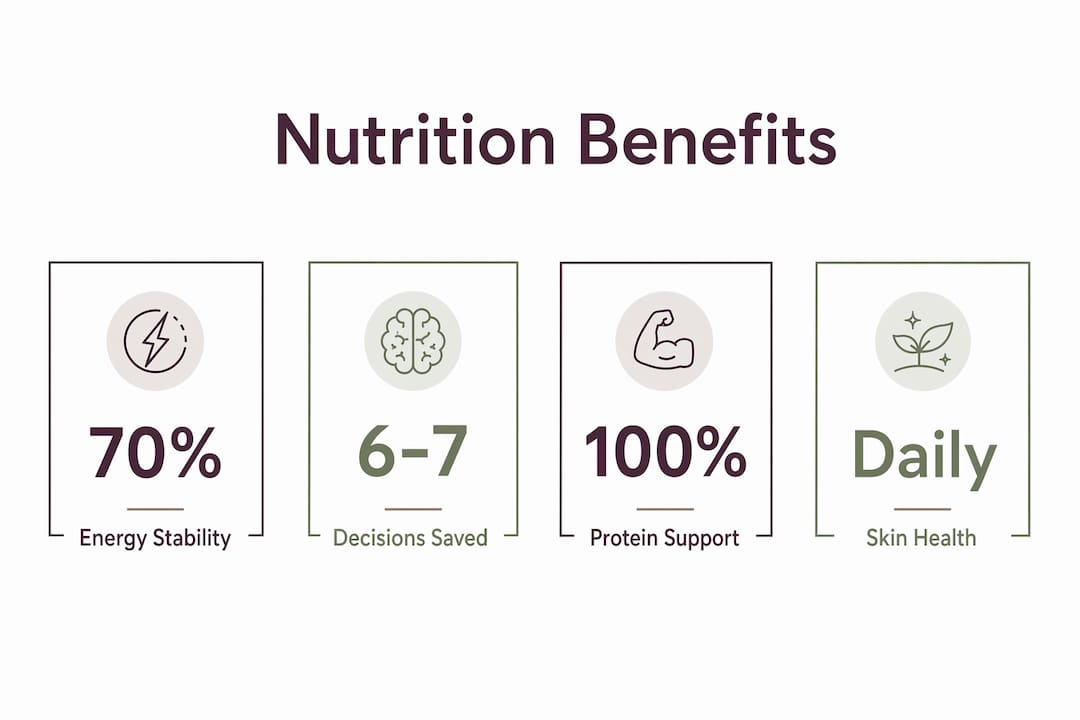
Automating nutritional choices through ingredient prep or supplements reduces daily food decisions by 6–7 per day. Each decision you eliminate preserves cognitive energy for work that actually demands it. This is not a minor benefit. Cognitive resources are finite, and food choices under stress consistently erode them.
Super greens powders provide concentrated vitamins, minerals, antioxidants, and plant nutrients in a single serving. For professionals who rarely hit their daily vegetable intake, these powders fill a genuine gap without requiring meal preparation.
| Nutrient | Function | Convenient source |
|---|---|---|
| Protein | Muscle repair, satiety, immune support | Collagen protein gels, protein shakes |
| Antioxidants | Cellular protection, immune resilience | Super greens powders |
| Electrolytes | Hydration, nerve function | Ready-to-drink sachets |
| Collagen | Skin integrity, joint support | Liquid collagen protein gels |
| Complex carbohydrates | Sustained energy release | Oat-based snack bars |
Pro Tip: Pair a collagen protein gel with a small handful of nuts at your mid-morning break. This combination applies the Power Pair principle without any preparation time.
How does convenient nutrition support fitness recovery?
Fitness recovery is where convenient nutrition delivers some of its most measurable benefits. The window after exercise is not the time to be searching for a meal. It is the time to deliver protein rapidly and precisely.

Protein synthesis and post-workout nutrition
Protein synthesis requires timely nutrient delivery. Post-workout protein supplements supply rapidly absorbed amino acids that accelerate muscle repair and reduce soreness. Missing this window by even an hour slows recovery noticeably. A liquid collagen protein sachet consumed immediately after training addresses this need without preparation or refrigeration.
Collagen protein is particularly relevant here because it contains glycine, proline, and hydroxyproline, the amino acids that support connective tissue repair alongside muscle recovery. Understanding protein synthesis and muscle recovery helps explain why collagen is not just a skin supplement. It actively supports the structural components of joints and tendons that absorb training stress.
Key nutrients for active individuals
The following nutrients play a direct role in fitness recovery and are best delivered consistently through convenient formats:
- Collagen protein: Supports connective tissue, joint integrity, and muscle repair after resistance or endurance training.
- Amino acids: The building blocks of muscle tissue. Rapid absorption post-exercise is the priority.
- Electrolytes: Sodium, potassium, and magnesium restore hydration balance lost through sweat.
- Vitamin C: Required for collagen synthesis in the body. Without adequate vitamin C, collagen supplementation is less effective.
- Zinc: Supports immune function and tissue repair, both of which are stressed by intense training.
Protein supplements serve as whole-body health tools, not just muscle-building aids. For busy professionals who train before or after work, this multi-function quality is what makes them worth including daily.
Pro Tip: Keep a collagen protein sachet in your gym bag. Consuming it within 30 minutes of finishing training is one of the simplest ways to support peak recovery without adding complexity to your routine.
Does convenient nutrition actually improve skin health?
Skin health is directly linked to nutritional intake, and convenient formats make consistent delivery of skin-supporting nutrients far more achievable. Sporadic supplementation produces sporadic results. Daily, consistent intake is what drives visible change.
Nutrients that matter for skin
Collagen is the most abundant protein in the skin. Its production declines with age, and dietary collagen provides the amino acid precursors the body uses to rebuild it. Consistent collagen protein intake supports skin health, immune resilience, and muscle recovery in formats like gels and powders that fit into any schedule. The convenience of a 63ml sachet means there is no barrier to daily intake.
The table below compares nutrient sources for skin health across preparation formats:
| Nutrient | Whole food source | Convenient format | Daily ease |
|---|---|---|---|
| Collagen | Bone broth (hours to prepare) | Liquid collagen sachet | High |
| Vitamin C | Fresh citrus, peppers | Fortified supplement | High |
| Zinc | Red meat, seeds | Capsule or fortified gel | High |
| Antioxidants | Varied vegetables | Super greens powder | Medium |
| Omega-3 | Oily fish (2x per week) | Capsule supplement | High |
The pattern is clear. Whole food sources deliver these nutrients effectively, but they require consistent shopping, preparation, and consumption. Convenient formats remove those barriers entirely. For skin and recovery benefits, the format that gets consumed daily beats the theoretically superior option that gets skipped.
How to build convenient nutrition into a busy lifestyle
The practical challenge is not knowing what to eat. It is building a system that works when you are tired, rushed, or stressed. A weekday game plan, as nutritionists consistently recommend, is the most reliable solution.
Food choices under stress hamper nutrition even when knowledge is present. A structured approach automates the right decisions before stress arrives. The result is better nutrition with less mental effort.
Strategic meal prep saves busy professionals 30–40 minutes daily and £25–£35 weekly on unplanned low-quality food spending. That is a meaningful return on a Sunday afternoon of preparation.
Follow these steps to build a system that holds up under real-world pressure:
- Audit your weak points. Identify the two or three moments in your week when nutrition consistently fails. These are your targets.
- Stock for those moments. Place convenient, nutrient-dense options exactly where the failure happens. Collagen protein gels in your gym bag, a greens powder at your desk, a protein-rich snack in your car.
- Apply the Power Pair principle. Every snack and meal should combine a carbohydrate with a protein or fat. This stabilises blood sugar and prevents energy crashes.
- Batch prep one or two staples. Hard-boiled eggs, pre-portioned nuts, or overnight oats take 15 minutes and cover multiple meals.
- Use supplements to fill gaps, not replace meals. Collagen protein gels and greens powders work best as additions to a reasonable diet, not as substitutes for whole food.
- Review weekly. Spend five minutes each Sunday identifying what worked and what did not. Adjust one variable at a time.
For active individuals planning nutrition around training and outdoor activities, efficient meal prep strategies offer practical frameworks that translate well to everyday busy schedules.
Key takeaways
Convenient nutrition works because it removes barriers to consistent intake, not because it replaces quality with speed.
| Point | Details |
|---|---|
| Cognitive and productivity gains | Targeted nutrition protocols can raise cognitive output by up to 20% and cut absenteeism by 27%. |
| Decision fatigue reduction | Automating food choices eliminates 6–7 daily decisions, preserving mental energy for demanding tasks. |
| Fitness recovery support | Post-workout collagen protein delivers amino acids rapidly, accelerating muscle and connective tissue repair. |
| Skin health consistency | Daily collagen intake via convenient formats outperforms sporadic whole-food sources for sustained skin benefits. |
| Time and cost savings | Strategic convenient nutrition saves 30–40 minutes and £25–£35 per week compared to unplanned eating. |
Convenient nutrition is a tool, not a trade-off
I have spent years watching professionals make the same mistake: treating convenience and quality as opposites. They are not. The real trade-off is between a perfect diet that never happens and a good diet that happens every day.
The professionals I have seen make the most progress are not the ones with the most elaborate meal plans. They are the ones who identified their failure points and placed the right option there. A collagen protein gel on the desk. A greens powder next to the kettle. A protein-rich snack in the car. These are not compromises. They are systems.
The pitfall I see most often is choosing convenience without checking nutrient density. A cereal bar is convenient. It is not necessarily nutritious. The standard to apply is simple: does this option deliver meaningful protein, vitamins, or minerals, or does it just fill a gap with calories? That question, asked consistently, is what separates effective convenient nutrition from expensive snacking.
Productivity and wellbeing are downstream of nutrition. I have seen this play out repeatedly. When nutrition is consistent and nutrient-dense, energy is stable, focus holds, and recovery is faster. When it is not, everything else suffers. Convenient nutrition, chosen well, is one of the highest-return habits a busy professional can build.
— Sam
Kudunutrition’s collagen protein gels: convenient nutrition that delivers
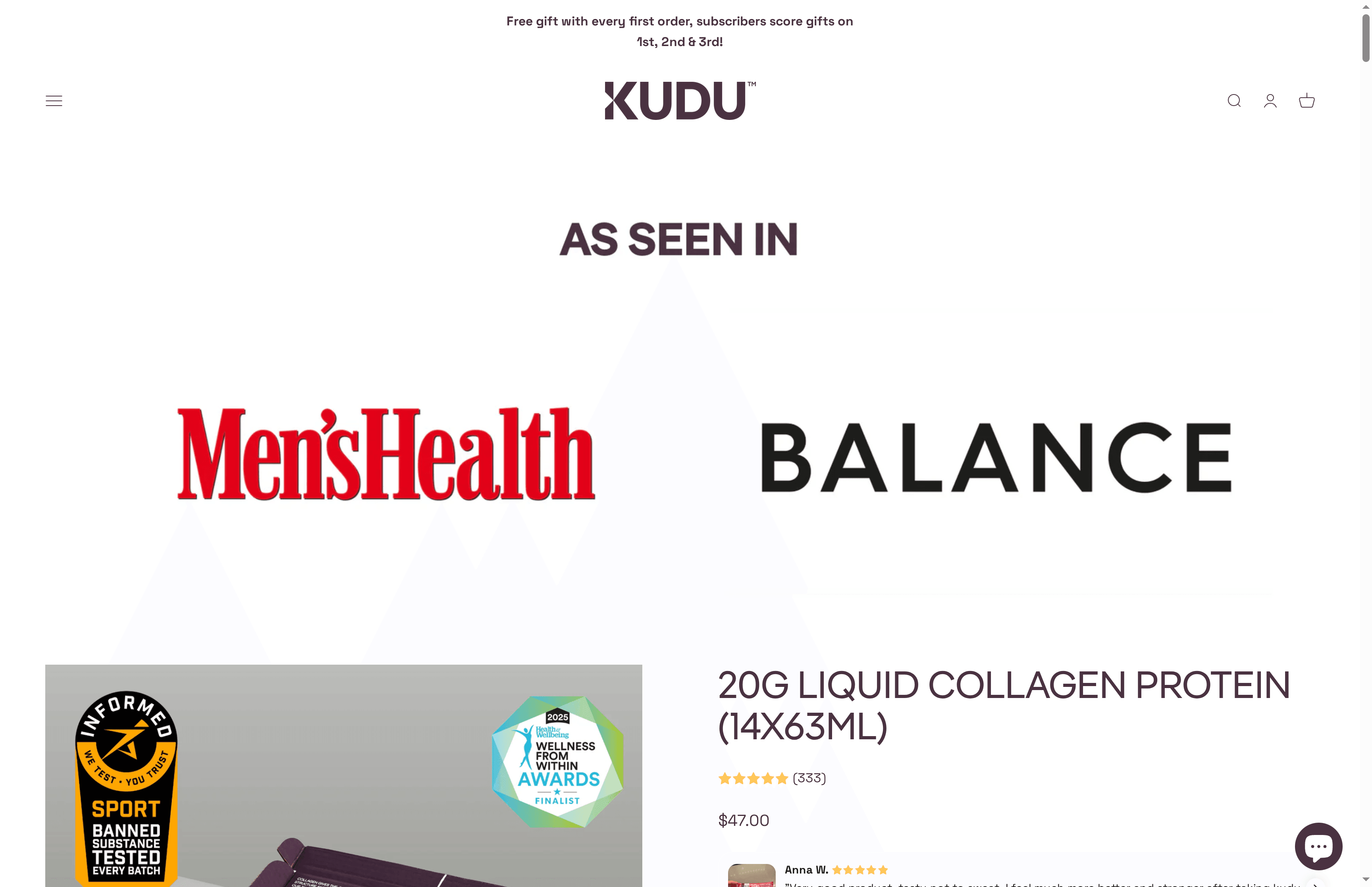
Kudunutrition’s 20g collagen protein gels are built for exactly the kind of system described above. Each 63ml sachet delivers 20g of collagen protein in a format that requires no preparation, no refrigeration, and no compromise on quality. The range is Informed Sport certified, which means every batch is tested for banned substances. For athletes and health-conscious professionals, that certification matters. Available in Orange, Sour Cherry, and Strawberry & Vanilla, the gels are easy to keep in a gym bag, desk drawer, or jacket pocket. If you want to experience the range before committing, the collagen protein starter box is the practical first step.
FAQ
What is convenient nutrition?
Convenient nutrition is the deliberate use of nutrient-dense, easy-to-consume foods and supplements that support health goals without requiring significant preparation time. It prioritises consistent intake over perfection.
How does convenient nutrition reduce decision fatigue?
Automating food choices through supplements and pre-prepared options eliminates 6–7 daily food decisions, conserving cognitive energy for professional and personal demands.
Can convenient nutrition support skin health?
Consistent daily intake of collagen protein, vitamin C, and zinc through convenient formats supports skin integrity and resilience more reliably than sporadic whole-food consumption.
Is collagen protein effective for fitness recovery?
Collagen protein supplies glycine, proline, and hydroxyproline, the amino acids that repair connective tissue and support muscle recovery after training, particularly when consumed within 30 minutes post-exercise.
How much time and money does convenient nutrition save?
Strategic convenient nutrition saves busy professionals 30–40 minutes daily and £25–£35 weekly compared to unplanned food spending on lower-quality options.