

TL;DR:
- Ingredient transparency means fully disclosing every substance in a product, including origin, concentration, and sourcing. Regulatory standards like MoCRA 2022 and EU allergen rules require brands to meet strict labeling and safety documentation, improving accountability. Consumers should verify ingredient accuracy through third-party testing, certificates, and careful label analysis to ensure informed, safe choices.
Ingredient transparency is defined as the complete, standardised disclosure of every substance in a product, including its origin, concentration context, and verifiable sourcing credentials. For anyone buying nutrition supplements or beauty products, this information is the difference between an informed choice and a blind one. Regulatory frameworks such as MoCRA 2022 in the US and EU allergen disclosure rules have shifted transparency from a marketing promise to a legal obligation. This guide to ingredient transparency covers what the rules require, how brands implement them, and how you can read and verify what is actually in the products you use.
What regulatory standards govern ingredient transparency?
Ingredient transparency explained at its most practical level starts with the law. In the US, cosmetics must list ingredients using INCI names in strict descending order of predominance under 21 CFR Part 701, with a minimum font height of 1/16 inch (1.6 mm). Ingredients present at more than 1% must follow this descending order precisely, while those at 1% or below may be listed in any order. This rule exists so that the first ingredient you read is always the largest by weight, giving you an immediate read on what a product is primarily made of.
MoCRA 2022 extended FDA authority significantly. The legislation mandates cosmetic product listing, facility registration, and safety substantiation for all brands selling in the US market. By early 2026, over 15,000 active facilities and nearly 1 million product listings had been submitted to the FDA. That scale of data creates a public accountability layer that did not exist before MoCRA, and it means brands can no longer rely on self-declared safety without documented evidence.
The EU has moved equally decisively on fragrance allergens. EU Regulation 2023/1545 requires 56 additional fragrance allergens to be individually named on cosmetic labels when concentrations exceed defined thresholds. Leave-on products require disclosure at above 0.001%, and rinse-off products at above 0.01%. This threshold system is a risk-management tool, not a blanket ban. It allows sensitive consumers to identify specific allergens relevant to their condition rather than guessing from a generic “fragrance” declaration.
For food and nutrition products, the same descending-by-weight principle applies. Examining the top three to five ingredients on a food label gives you a reliable picture of what the product is primarily composed of. This is particularly relevant for supplements, where the position of active ingredients relative to fillers and flavourings tells you a great deal about formulation quality.
Key regulatory requirements at a glance:
- INCI naming conventions apply to all cosmetic ingredient lists in the US
- Ingredients above 1% must appear in strict descending weight order
- MoCRA requires facility registration and product listing with the FDA
- EU Regulation 2023/1545 mandates individual fragrance allergen disclosure above set thresholds
- Food labels follow the same descending-by-weight convention as cosmetics
Pro Tip: When comparing two similar supplements, check whether the active ingredient appears in the first three positions on the label. If it sits below the fifth position, the product likely contains more filler than function.
How do brands implement an ingredient transparency workflow?
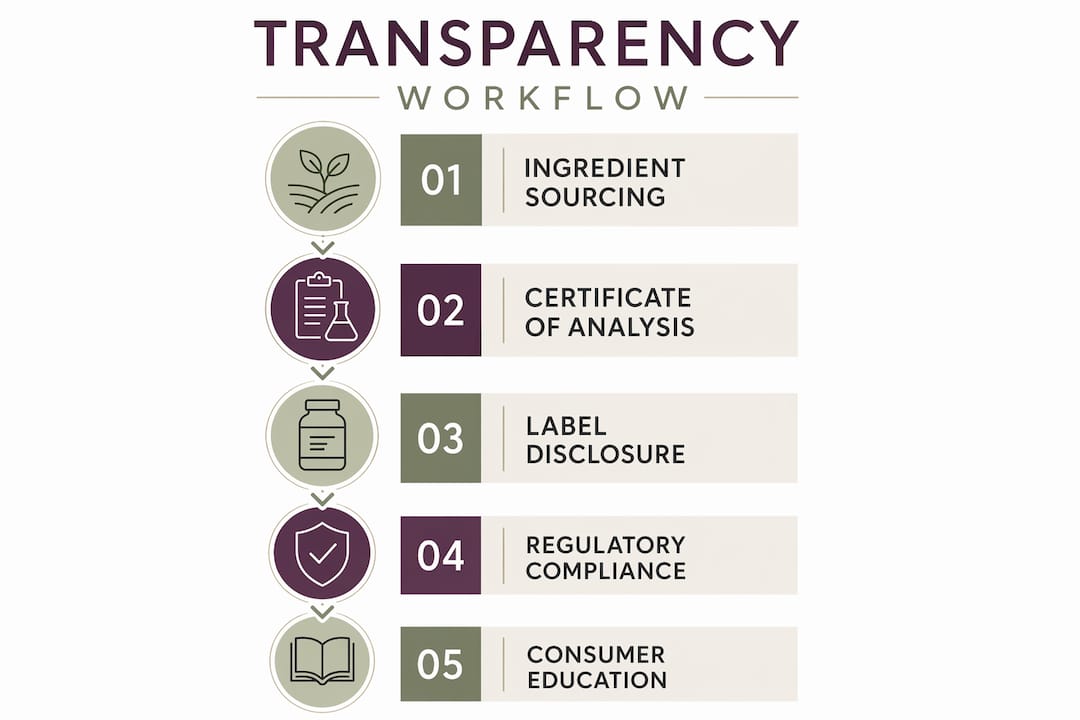
Ingredient transparency encompasses far more than printing an ingredient list on a box. It includes ethical sourcing, production tracking, and verifiable evidence of every claim made on the label. Brands that take this seriously follow a structured workflow from raw material procurement through to finished product labelling.
A credible ingredient transparency workflow typically follows these steps:
- Supplier qualification. Brands obtain sourcing documentation from each ingredient supplier, including certificates of origin and ethical sourcing declarations. For collagen specifically, this means confirming the species, country of origin, and processing method.
- Batch traceability. Each production batch is assigned a unique identifier that links back to the raw material lot. This allows any quality issue to be traced to its source rapidly. The World Bank Group confirms that effective food safety systems depend on this kind of robust traceability.
- Third-party testing. Independent laboratories test finished products against the declared ingredient list. Certifications such as Informed Sport verify that no prohibited substances are present, which is particularly relevant for athletes.
- Documentation filing. Brands compile a Product Information File (PIF) containing Certificates of Analysis, IFRA certificates for fragrance ingredients, safety assessments, and the full ingredient declaration.
- Label review. The final label is checked against regulatory requirements for font size, INCI naming, allergen declarations, and claim substantiation before production.
- Post-market monitoring. Responsible brands track consumer feedback and adverse event reports, updating formulations or labels when new safety data emerges.
| Documentation type | Purpose |
|---|---|
| Certificate of Analysis (CoA) | Confirms ingredient identity, purity, and potency against specification |
| IFRA certificate | Verifies fragrance ingredient compliance with International Fragrance Association standards |
| Product Information File (PIF) | Consolidates all safety, sourcing, and labelling documentation for regulatory review |
| Informed Sport certificate | Confirms no prohibited substances detected in finished product batch |
Pro Tip: Ask a brand directly for their Certificate of Analysis before purchasing. A brand that cannot or will not provide one is telling you something important about how seriously they take ingredient accountability.
How to read and interpret ingredient labels effectively
Reading an ingredient list is a skill, and like any skill it improves with practice and the right framework. The single most important rule is that ingredients are listed in descending order by weight, so the first ingredient is always the most abundant. If water or a cheap filler appears first on a supplement label, the active ingredient you are paying for is present in a smaller proportion than the packaging implies.

The distinction between mandatory disclosures and marketing claims is where most consumers lose ground. Words like “natural,” “clean,” or “organic” carry no universal legal definition in most markets. They are marketing terms, not regulated categories. A product labelled “natural” can legally contain synthetic preservatives as long as they are declared in the ingredient list. Understanding this gap is central to any consumer guide to ingredients.
Allergen identification requires particular attention. For fragrance-sensitive individuals, allergens appearing lower on ingredient lists may still pose significant risk, especially when threshold-triggered disclosures apply differently by product type. A leave-on cream and a rinse-off shampoo containing the same allergen at the same concentration will have different disclosure obligations under EU rules, which means the absence of a named allergen on a rinse-off label does not guarantee its absence.
Practical checklist for reading ingredient labels:
- Read the first five ingredients. They represent the bulk of the product by weight.
- Identify the active ingredient and note its position in the list.
- Distinguish between INCI names (standardised, regulatory) and marketing names (brand-specific, unregulated).
- Check for allergen declarations, both mandatory (e.g., EU fragrance allergens) and voluntary.
- Look for third-party certification logos such as Informed Sport, which indicate independent verification.
- Cross-reference ingredient names using databases such as CosIng (EU cosmetics ingredient database) or the EWG Skin Deep database for beauty products.
| Term on label | What it actually means |
|---|---|
| “Natural” | No universal legal definition; does not exclude synthetic additives |
| “Fragrance” / “Parfum” | May contain dozens of undisclosed compounds unless allergen rules apply |
| “Organic” | Legally defined only when certified by a recognised body such as the Soil Association |
| INCI name (e.g., Aqua) | Standardised international name; regulated and consistent across markets |
What are the challenges and limitations of ingredient transparency?
The on-pack ingredient list is a starting point, not a complete picture. It tells you what is in a product but not how much of each ingredient is present beyond the order of predominance. It does not tell you how ingredients were processed, where they were sourced, or whether the supplier met ethical labour standards. Proof artefacts such as sourcing certificates and lab tests provide credibility that a label alone cannot.
Marketing language creates a significant transparency gap. The terms “clean beauty,” “superfood,” and “clinically proven” are used freely without standardised definitions or mandatory substantiation in most markets. Consumers must distinguish between mandatory disclosures and marketing terminology such as “natural” or “organic” to avoid being misled. A product can be simultaneously “organic” in its marketing and non-organic in its formulation if the certification does not apply to the finished product.
“True ingredient transparency is not a label. It is a documented chain of evidence from field to finished product, available to any consumer who asks for it.”
Regulatory grey areas compound the problem. Trade secret protections in some jurisdictions allow brands to withhold specific ingredient concentrations or proprietary blend compositions. Fragrance compounds are a well-known example. Even under MoCRA, certain formulation details remain protected. This means consumers cannot always access full quantitative data through label-reading alone.
Common transparency pitfalls to watch for:
- Proprietary blends that list ingredients without individual quantities
- “Fragrance” or “parfum” declarations that obscure multiple undisclosed compounds
- Certifications displayed without batch-specific verification links
- Marketing claims positioned visually to overshadow the actual ingredient list
- Ingredient order manipulation where water or bulking agents are split into multiple entries to push active ingredients higher up the list
Key takeaways
Ingredient transparency requires regulatory compliance, documented sourcing, and consumer literacy working together. No single element alone delivers the full picture.
| Point | Details |
|---|---|
| Regulatory standards set the baseline | US 21 CFR Part 701 and EU Regulation 2023/1545 define minimum disclosure requirements for cosmetics and nutrition products. |
| Ingredient order reveals formulation quality | The first three to five ingredients by weight show what a product is primarily made of, making position critical. |
| Documentation beats declarations | Certificates of Analysis, IFRA certificates, and Informed Sport certification substantiate claims that labels alone cannot verify. |
| Marketing terms are not regulated disclosures | Words like “natural” and “clean” carry no universal legal definition and should not be treated as transparency signals. |
| Consumers can verify claims independently | Databases such as CosIng and EWG Skin Deep, combined with direct requests for CoAs, allow independent verification beyond the label. |
Why ingredient transparency is no longer optional
I have watched ingredient transparency shift from a niche concern to a regulatory and commercial imperative over the past decade. What strikes me most is how far behind consumer education has lagged behind regulatory progress. MoCRA now requires nearly a million product listings with the FDA, yet most consumers still cannot distinguish between an INCI name and a marketing claim. That gap is where harm happens.
The data-rich environment created by FDA’s Cosmetic Product Listing and public adverse event dashboards is genuinely powerful, but only for consumers who know it exists and how to use it. The tools are there. The knowledge to use them is not yet widely distributed, and that is the real transparency problem in 2026.
What I find most telling is the brands that resist providing Certificates of Analysis when asked directly. Transparency is not expensive. It is a choice. Brands that make that choice proactively, publishing batch traceability data and third-party test results without being asked, are the ones worth trusting. For anyone buying collagen supplements or beauty products, demanding this level of documentation is not unreasonable. It is the minimum standard you should hold any brand to.
The future points toward tighter traceability requirements and better consumer-facing tools. Blockchain-based ingredient tracking and QR-code linked product information files are already in use by forward-thinking brands. The question is not whether full ingredient traceability will become standard. It is how quickly consumers will demand it and how quickly regulators will require it.
— Sam
Kudunutrition’s approach to transparent collagen nutrition
Kudunutrition’s liquid collagen protein sachets are formulated with full ingredient transparency at their core. Every product carries a complete INCI-compliant ingredient declaration, and the range holds Informed Sport certification, meaning each batch is independently tested for prohibited substances. You can read the full ingredient list before you buy, not after.
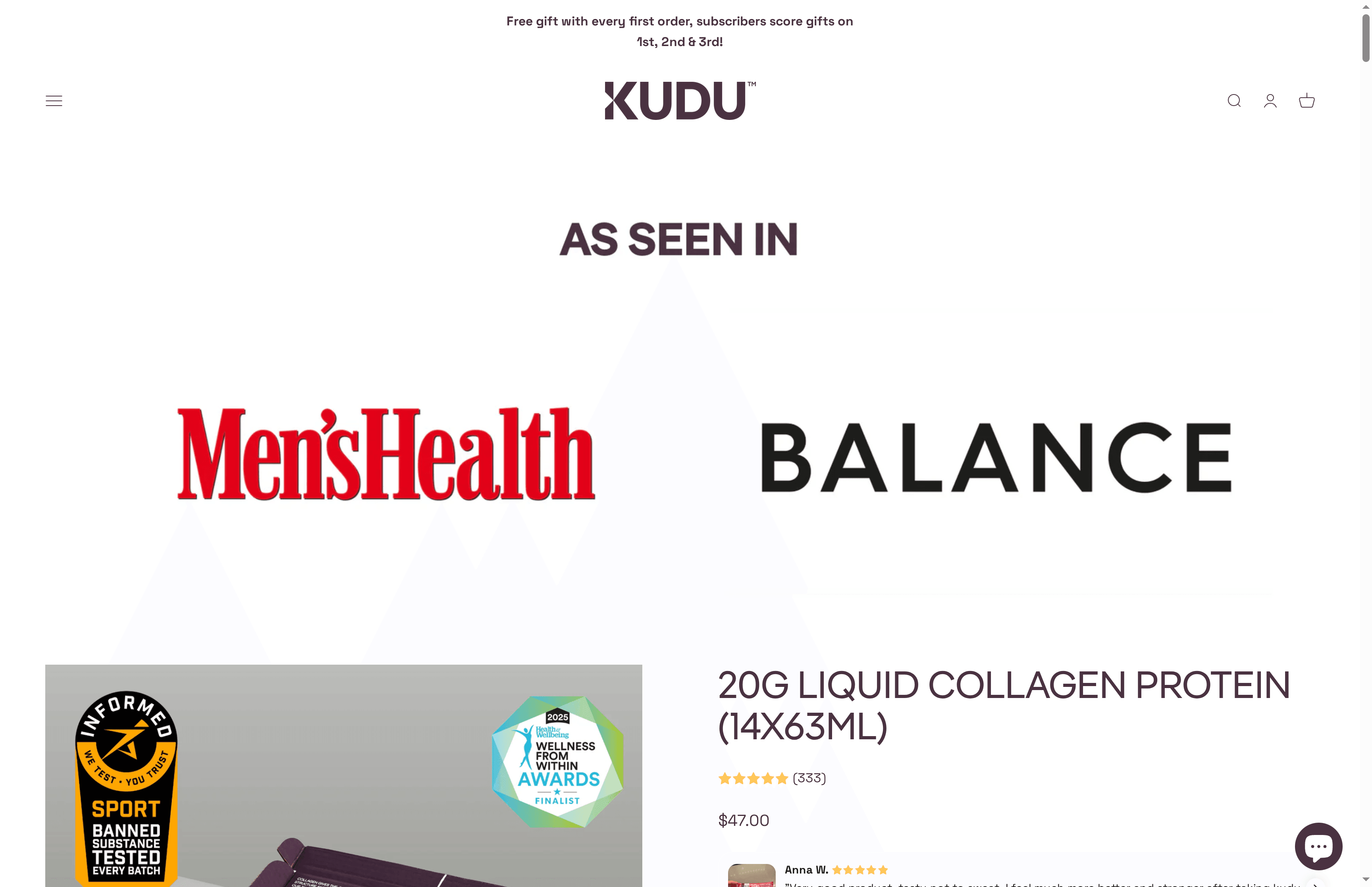
If you want a supplement labelling guide that explains what to look for in collagen products specifically, Kudunutrition’s blog covers the detail. For those ready to try a product that backs its transparency claims with documentation, the 20g liquid collagen range is a strong starting point. Each sachet delivers 20g of collagen protein with no proprietary blend ambiguity and no hidden fillers.
FAQ
What is ingredient transparency in nutrition products?
Ingredient transparency means a brand fully discloses all substances in a product using standardised names, in descending order by weight, with verifiable sourcing and safety documentation. It goes beyond the label to include Certificates of Analysis and third-party certifications such as Informed Sport.
How do I know if an ingredient list is accurate?
Request a Certificate of Analysis from the brand, which confirms ingredient identity and purity against specification. Third-party certifications such as Informed Sport provide an additional independent verification layer for nutrition products.
What does “fragrance” on a label actually mean?
“Fragrance” or “parfum” on a label can represent dozens of undisclosed compounds. Under EU Regulation 2023/1545, 56 specific fragrance allergens must be individually named when present above defined concentration thresholds in leave-on or rinse-off products.
Are terms like “natural” and “organic” legally regulated?
“Natural” carries no universal legal definition in most markets and does not exclude synthetic additives. “Organic” is legally defined only when a recognised certification body such as the Soil Association has certified the finished product, not just individual ingredients.
How can I verify a brand’s ingredient sourcing claims?
Ask the brand directly for sourcing documentation and their Product Information File. Traceable proof artefacts such as certificates of origin and lab test results provide credibility that marketing claims and ingredient lists alone cannot.