


TL;DR:
- Collagen peptides support joint health by supplying amino acids and stimulating cartilage repair through clinically effective doses.
- Using the right type, dose, and duration, especially over 8 to 12 weeks, enhances arthritis symptom relief.
Collagen peptides are hydrolysed collagen proteins that deliver the amino acids glycine, proline, and hydroxyproline directly to joint cartilage and connective tissue. This guide to collagen peptides for arthritis covers the clinical evidence, correct dosing, and practical steps to help you reduce joint pain and improve mobility. Collagen production declines after age 30–40, accelerating cartilage breakdown in people with arthritis. Supplementing with hydrolysed collagen peptides addresses that deficit directly, and clinical trials now support their use as part of a broader arthritis management plan.
What is the guide to collagen peptides for arthritis?
Collagen is the most abundant structural protein in the body. It forms the extracellular matrix of cartilage, the tissue that cushions joints and absorbs impact. In arthritis, that matrix degrades faster than the body can repair it, leading to pain, stiffness, and reduced range of motion.
Hydrolysed collagen peptides are better absorbed than intact collagen because their low molecular weight allows them to pass through the gut wall and enter systemic circulation. Once absorbed, tripeptides trigger biological signalling pathways that stimulate the body’s own collagen production. That dual action, supplying raw amino acids and signalling cartilage repair, is what separates collagen peptides from a generic protein supplement.
The term “collagen peptides” is the recognised industry term for this category. You may also see the phrase “hydrolysed collagen” on product labels. Both refer to the same processed form, and both are more bioavailable than unprocessed collagen found in food.
Which types of collagen peptides benefit arthritis?
Not all collagen types work the same way. Choosing the right type matters for arthritis specifically.
- Type I collagen is the most abundant in the body. It supports skin, bone, tendons, and ligaments. Most bovine and marine collagen supplements contain types I and III together.
- Type III collagen works alongside type I in connective tissue and blood vessels. It is commonly found in the same sources as type I.
- Type II collagen is the primary structural protein in joint cartilage. It is sourced mainly from chicken sternum and is the most specific collagen type for joint cartilage support.
Hydrolysed types I and III are the most widely studied in clinical trials for osteoarthritis. Undenatured type II collagen works through a different mechanism, modulating the immune response to cartilage rather than supplying amino acids directly. The two approaches are not interchangeable, so check which type a product contains before buying.
Source material also matters. Fish-derived low-molecular-weight collagen peptides have a superior absorption profile and may stimulate chondrocyte extracellular matrix production more effectively than bovine sources. Bovine collagen remains the most widely available and cost-effective option for most people.
Pro Tip: If your primary concern is knee or hip osteoarthritis, look for products that specify type II collagen or hydrolysed types I and III from marine or bovine sources. Read the collagen types guide to understand which suits your needs.
How to use collagen peptides for arthritis: dosage and timing
Clinical trials have tested a range of doses, and the evidence points to a clear window that works.
| Trial design | Dose | Duration | Outcome |
|---|---|---|---|
| Low-molecular-weight collagen peptides (LMCP) RCT | 3,000 mg/day | 180 days | Significant WOMAC pain reduction (p = 0.006) |
| Hydrolysed collagen peptides (HCP) types I and III | 10 g/day | 8 weeks | Significant joint pain and function improvement (p < 0.001) |
The 3,000 mg dose used over 180 days is the lower end of the effective range. The 10 g dose produced measurable improvements at 1, 4, and 8 weeks. That means you do not need to wait months to notice any change. Early signs of improvement around the 4-week mark are a reasonable signal that the supplement is working for you.
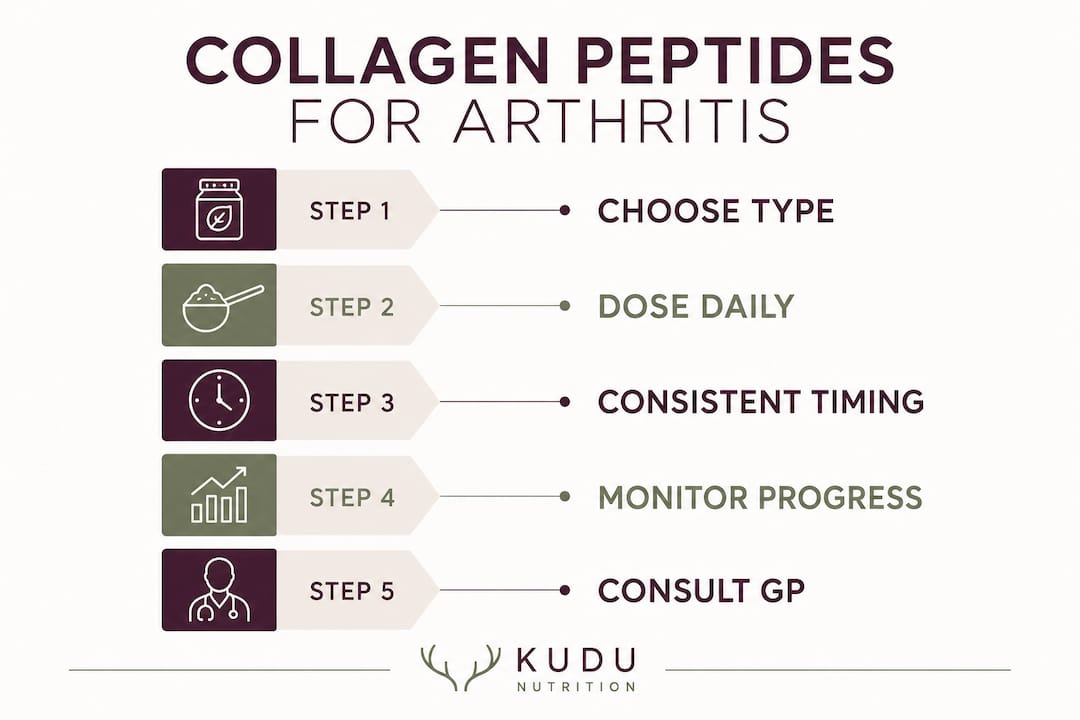
Timing is straightforward. Take collagen peptides consistently at the same time each day. Many people take them with breakfast or a morning drink. Consistency matters more than the specific time of day. Missing doses regularly undermines the cumulative effect that clinical trials depend on.
Duration is where people most often go wrong. Meaningful joint function gains typically require 2–3 months of consistent use. Stopping after two weeks because you feel no change is the most common reason collagen supplementation fails.
Pro Tip: Keep a simple weekly note of your pain level and stiffness on a scale of 1–10. Review it at 4 weeks and again at 8 weeks. If scores have not shifted at all by 8 weeks, speak to your GP before continuing.
How to incorporate collagen into your arthritis wellness routine
Collagen peptides work best as part of a wider approach to joint health support, not as a standalone fix.
Forms available:
- Powder: The most flexible option. Stir into water, juice, coffee, or a smoothie. Unflavoured powders dissolve easily and are tasteless.
- Capsules: Convenient for travel or people who dislike mixing drinks. Dose per capsule varies, so check the label to confirm you are reaching the effective daily amount.
- Liquid sachets: Pre-measured and ready to consume. Liquid collagen from Kudunutrition delivers 20 g per sachet, removing the guesswork around dosing entirely.
Nutrition plays a supporting role. Vitamin C is required for collagen synthesis, so eating citrus fruit, peppers, or broccoli alongside your supplement makes practical sense. Omega-3 fatty acids from oily fish reduce joint inflammation and complement the structural support collagen provides.
Exercise remains the most evidence-backed intervention for arthritis. Low-impact activities such as swimming, cycling, and walking maintain cartilage health by promoting synovial fluid circulation. Collagen supplementation supports that process but does not replace it.
“Collagen supplements can improve joint pain and function, but they are not replacements for conventional arthritis treatments like exercise and weight management. NHS and NICE guidelines recommend evidence-based interventions first; collagen supplements may complement but not replace them.”
Combining collagen with glucosamine is a common choice. The combination is generally safe, as both supplements act on different cartilage components and do not interfere with each other’s absorption. Evidence for a superior combined effect over either supplement alone remains limited, so do not assume the combination is automatically better.
Always speak to your GP before starting any new supplement, particularly if you take prescription medication or have known allergies to fish, shellfish, or bovine products.
Pro Tip: Check the label for third-party quality certification such as Informed Sport. Certified products are tested for banned substances and contaminants, giving you confidence in what you are actually consuming. Kudunutrition’s collagen products carry Informed Sport certification, which is the gold standard for supplement safety.
Common mistakes when using collagen peptides for arthritis
Most people who try collagen supplements and give up early make the same avoidable errors.
- Expecting immediate results. Cartilage repair is a slow biological process. Expecting pain relief within days sets you up for disappointment. The clinical evidence shows meaningful improvement at 4–8 weeks at the earliest.
- Choosing the wrong type. A type I collagen supplement marketed for skin will not deliver the same joint-specific benefit as a product formulated with type II or hydrolysed types I and III at therapeutic doses.
- Ignoring product quality. Most clinical trials on collagen for arthritis are industry-funded, which means marketing claims can outpace independent evidence. Choose products with transparent ingredient lists and third-party testing.
- Skipping medical advice. If you take blood thinners, immunosuppressants, or other arthritis medications, check with your GP first. Collagen is generally well-tolerated, but interactions are possible.
- Treating supplements as a cure. Collagen peptides support joint health but do not reverse structural joint damage. Realistic expectations protect you from wasting money and from neglecting treatments that do have stronger evidence.
Allergic reactions to collagen supplements are rare but possible, particularly with marine-sourced products in people with fish or shellfish allergies. Gastrointestinal discomfort is the most commonly reported side effect and usually resolves within the first week.
Pro Tip: Give any collagen supplement a minimum 8-week trial at the correct dose before deciding it is not working. If you see no benefit at 12 weeks, discontinue and discuss alternatives with your GP rather than switching to a higher dose without guidance.
Key takeaways
Collagen peptides reduce arthritis joint pain most effectively when taken at clinically tested doses of 3,000–10,000 mg daily, consistently, for at least 8–12 weeks, alongside exercise and a nutrient-rich diet.
| Point | Details |
|---|---|
| Choose the right collagen type | Type II targets joint cartilage directly; hydrolysed types I and III are the most widely trialled for osteoarthritis. |
| Dose within the clinical range | Trials support 3,000–10,000 mg daily; check your product label to confirm you are reaching an effective amount. |
| Commit to 8–12 weeks minimum | Early improvements appear around 4 weeks, but meaningful joint function gains require consistent use over 2–3 months. |
| Combine with lifestyle measures | Exercise, vitamin C intake, and weight management amplify the benefit collagen supplementation provides. |
| Verify product quality | Third-party certification such as Informed Sport confirms safety and ingredient accuracy. |
What I have learned from following the collagen evidence closely
The research on collagen peptides for arthritis is genuinely encouraging, but it rewards careful reading. The trials that show the strongest results use specific doses, specific collagen types, and run for at least 8 weeks. That detail gets lost when the findings are summarised into a headline.
What strikes me most is how often people approach collagen as a passive fix. They take a low-dose capsule, feel nothing after two weeks, and conclude it does not work. The clinical picture is more nuanced. The dose matters. The type matters. The duration matters. Getting all three right is what separates a successful trial from a wasted one.
The funding issue is real and worth acknowledging. A significant portion of positive collagen trials are sponsored by manufacturers. That does not make the findings wrong, but it does mean independent replication is still catching up. I think the honest position is this: the evidence is strong enough to justify a well-structured trial, but not strong enough to replace your GP’s advice or your physiotherapy programme.
The people I have seen get the most from collagen supplementation are those who treat it as one component of a broader plan. They exercise regularly, eat well, manage their weight, and use collagen to fill the nutritional gap that arthritis creates. That framing, supplement as support rather than solution, is the most useful way to approach it.
— Sam
Kudunutrition’s collagen gels for arthritis joint support
Reaching a therapeutic collagen dose from food alone is not realistic. Kudunutrition’s 20g collagen protein gels deliver 20 g of collagen protein per sachet, putting you well within the clinically studied range from a single daily serving.

Each sachet is Informed Sport certified, meaning every batch is tested for contaminants and banned substances. The liquid format means no mixing, no measuring, and no flavour compromise. If you are new to collagen supplementation, the liquid collagen starter box lets you test the format before committing to a full supply. Speak to your GP before starting if you take prescription arthritis medication, then explore the range to find the format that fits your daily routine.
FAQ
Can collagen peptides reduce joint pain in arthritis?
Clinical trials show that daily collagen peptide supplementation significantly reduces WOMAC pain scores in people with knee osteoarthritis. Results appear as early as 4 weeks, with stronger improvements at 8–12 weeks.
What is the correct dose of collagen peptides for arthritis?
Trials support doses of 3,000–10,000 mg daily. A 3,000 mg dose over 180 days and a 10 g dose over 8 weeks both produced significant pain and function improvements in published RCTs.
How long does it take for collagen to work on joints?
Early improvements in joint pain typically appear around 4 weeks. Meaningful gains in joint function generally require 2–3 months of consistent daily supplementation.
Is it safe to take collagen peptides with other arthritis supplements?
Collagen and glucosamine are generally safe to take together and act on different cartilage components without interfering with each other. Always consult your GP if you take prescription medication.
Which collagen type is best for arthritis?
Type II collagen is most specific to joint cartilage. Hydrolysed types I and III are the most widely studied in osteoarthritis trials and are found in most bovine and marine collagen supplements.