


TL;DR:
- Anti-aging nutrition targets molecular pathways to extend healthspan by promoting cellular health and reducing inflammation. Personalized approaches using metabolomic data improve outcomes by addressing individual nutrient gaps and microbiome differences. The most effective diet integrates foods like oily fish, cruciferous vegetables, berries, and legumes into a tailored, systemic health strategy.
Anti-aging nutrition is defined as a targeted dietary approach that modulates the body’s biological ageing pathways through specific nutrients and food patterns to extend healthspan. The field is structured around the Nutrient–Signaling–Senescence axis, a validated scientific framework that links dietary inputs to molecular processes including inflammaging and mitochondrial dysfunction. Longitudinal research involving over 100,000 participants confirms that diet rich in fruits, vegetables, whole grains, unsaturated fats, and legumes supports survival to at least age 70 free of major chronic disease. This is not about eating less or cutting calories. It is about choosing foods that send the right molecular signals to your cells.
What is anti-aging nutrition and how does it work biologically?
Anti-aging nutrition targets molecular ageing mechanisms rather than surface-level health metrics. The Nutrient–Signaling–Senescence axis defines this field precisely: specific nutrients act as biological signals that slow cellular senescence, reduce chronic inflammation, and support mitochondrial function. The Anti-Aging Dietary Score, validated within this framework, correlates directly with reduced biological age acceleration. That means the right dietary pattern does not just make you feel better. It measurably slows how fast your body ages at the cellular level.
The key nutrients driving anti-aging effects
Polyphenols, omega-3 fatty acids, and vitamin D3 are the three most studied molecular signals in nutritional gerontology. Each one modulates inflammation and oxidative stress through distinct pathways. Polyphenols, found in berries, green tea, and dark chocolate, activate antioxidant defence genes. Omega-3 fatty acids, concentrated in oily fish such as mackerel and sardines, suppress pro-inflammatory cytokines. Vitamin D3 regulates immune function and has been linked to reduced risk of age-related cognitive decline.
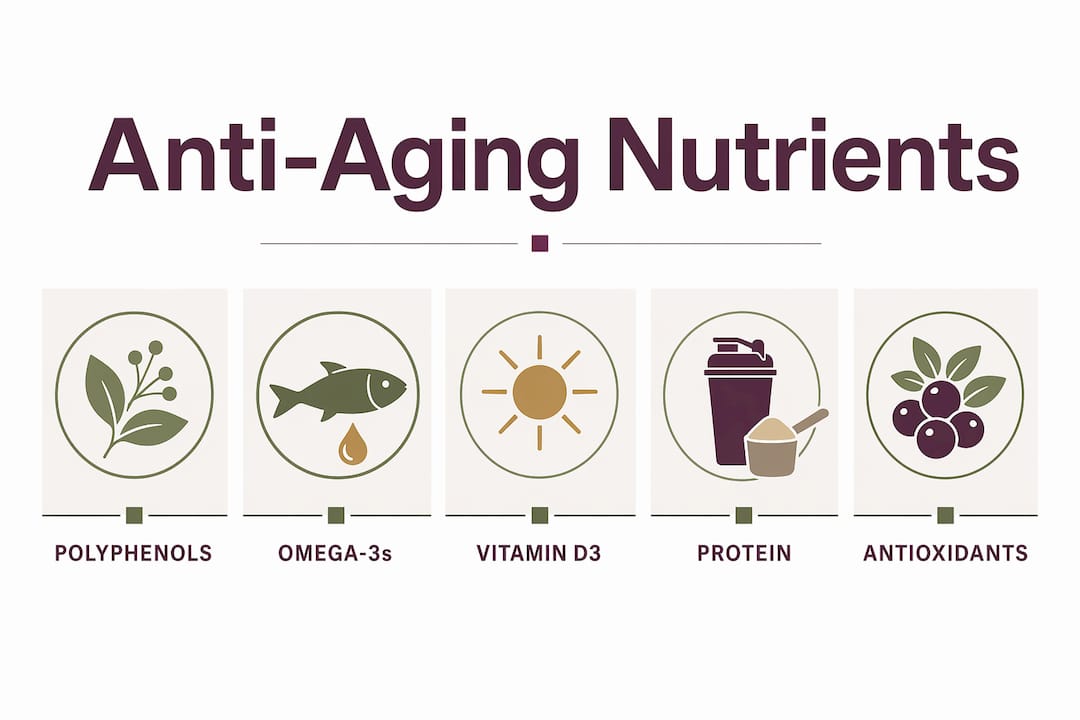
Whole food sources outperform isolated supplements for most of these nutrients. The food matrix, meaning the combination of fibre, cofactors, and phytochemicals surrounding a nutrient, enhances absorption and biological activity. Plant-based functional foods rich in antioxidants, fibres, and omega-3s promote both skin and cognitive health, though bioavailability remains a challenge that processing and preparation methods can address.
Key foods with strong evidence for anti-aging effects include:
- Cruciferous vegetables (broccoli, kale, Brussels sprouts): consuming at least five servings per week supports hormonal balance and cellular detoxification via sulforaphane. For a deeper look at sulforaphane’s bioactive potential, the sulforaphane supplement comparison at Prodcast offers useful context on bioavailability across different forms.
- Dark chocolate with ≥70% cacao: linked to improvements in cholesterol, blood pressure, and glucose regulation.
- Oily fish: mackerel, salmon, and sardines deliver EPA and DHA, the most bioactive omega-3 forms.
- Berries: blueberries and blackcurrants are among the highest polyphenol sources per gram of any food.
- Legumes: lentils and chickpeas provide resistant starch that feeds beneficial gut bacteria, supporting the gut-skin axis.
Pro Tip: Add a tablespoon of ground flaxseed to your morning porridge. It delivers plant-based omega-3s, lignans (a class of polyphenol), and soluble fibre in one ingredient, addressing three anti-aging mechanisms simultaneously.
The Mediterranean dietary pattern combines most of these foods into a coherent eating structure. It remains the most evidence-backed dietary model for longevity, consistently associated with reduced markers of inflammaging across population studies.
How is precision anti-aging nutrition different from a standard healthy diet?
Precision nutrition uses metabolomics and metabolic fingerprinting to tailor dietary recommendations to an individual’s biological age and metabolic responses. That distinction matters enormously. Two people eating identical diets can experience entirely different ageing trajectories because their gut microbiomes, enzyme profiles, and metabolic ages differ. A standard healthy diet sets a sensible baseline. Precision anti-aging nutrition goes further by identifying which specific nutrients your biology is not processing effectively, then adjusting accordingly.
The practical application of this approach follows a logical sequence:
- Establish your metabolic baseline. Metabolic age testing and gut microbiome analysis identify where your biology diverges from chronological age norms. These tests are increasingly accessible through clinical nutrition services.
- Identify nutrient gaps specific to your phenotype. Standard blood panels miss many ageing biomarkers. Comprehensive metabolomic profiling reveals deficiencies in NAD+ precursors, specific fatty acid ratios, or antioxidant capacity that generic dietary advice cannot address.
- Adjust dietary patterns to target identified gaps. If your microbiome shows low diversity, prioritise prebiotic foods. If inflammatory markers are elevated, increase EPA and DHA intake from oily fish or algae-based sources.
- Monitor and recalibrate regularly. Ageing is dynamic. Dietary needs shift as biological age changes, meaning a diet that worked at 40 may need significant adjustment by 50.
Interindividual variability in nutrient absorption is strongly influenced by gut microbiome composition, which affects both the gut-brain and gut-skin axes. This is why two people can eat the same anti-aging meal plan and see different results in skin quality, energy levels, and cognitive sharpness. The science of precision geronutrition, which integrates multi-omics data to personalise dietary strategies, represents the frontier of this field. It moves the conversation beyond static food lists toward genuinely individual dietary medicine.
Practical anti-aging diet tips for skin, vitality, and longevity
A well-structured anti-aging meal plan does not require exotic ingredients or expensive protocols. The evidence points consistently toward a few core dietary habits that deliver measurable results for nutrients for youthful skin, physical vitality, and long-term health.

| Foods to prioritise | Foods to limit |
|---|---|
| Oily fish (mackerel, sardines, salmon) | Ultra-processed foods high in refined sugar |
| Cruciferous vegetables (broccoli, kale) | Trans fats and hydrogenated oils |
| Berries and dark-skinned fruits | Excess alcohol (accelerates oxidative stress) |
| Legumes and whole grains | Charred or heavily processed meats |
| Nuts and seeds (walnuts, flaxseed) | High-sodium processed snacks |
| Dark chocolate (≥70% cacao) | Refined carbohydrates with low fibre content |
Protein intake deserves particular attention as you age. Muscle mass declines from the fourth decade onward, and adequate protein supports both musculoskeletal strength and skin structure. Protein’s role in ageing skin is well documented: collagen, the most abundant structural protein in the body, requires consistent dietary support to maintain skin elasticity and joint integrity.
Nutrient synergy is the principle that certain nutrients work better together than in isolation. Vitamin C dramatically increases collagen synthesis when consumed alongside collagen-rich foods. Vitamin D3 requires dietary fat for absorption, making it best consumed with a meal containing healthy fats. Understanding nutrient combinations for bone health applies equally to skin and connective tissue.
Pro Tip: Eat your leafy greens with a drizzle of extra virgin olive oil. Fat-soluble carotenoids like lutein and beta-carotene, which protect skin from UV-related oxidative damage, absorb far more effectively in the presence of dietary fat.
Dr. William Li’s work, featured in Eat to Beat Disease, provides an accessible framework for understanding how specific foods influence ageing pathways including angiogenesis and mitochondrial function, making it a worthwhile reference for anyone building a serious anti-aging dietary approach.
What are the challenges in adopting anti-aging nutrition?
Anti-aging nutrition is not as simple as following a food list. Several biological and practical challenges determine whether dietary choices translate into real outcomes.
- Bioavailability gaps: Bioavailability remains a major bottleneck in translating the anti-aging potential of foods into actual biological outcomes. Cooking method, food form, and gut health all affect how much of a nutrient reaches the bloodstream.
- Supplement complexity: Targeted supplements such as NAD+ precursors and mitochondrial cofactors can benefit specific ageing phenotypes, but they require precise dosing and further safety validation. Taking them without phenotype-specific guidance risks both inefficacy and unintended effects.
- Consumer misconceptions: Many people expect anti-aging foods to produce cosmetic results quickly. The evidence supports functional outcomes such as musculoskeletal strength, immune resilience, and cognitive performance as the primary measurable benefits. Skin improvements follow, but they are secondary to systemic health gains.
- Interindividual variability: Your gut microbiome composition shapes how effectively you absorb and use every nutrient you eat. This means a dietary approach that works well for one person may produce minimal results for another without personalisation.
- Ongoing monitoring: Anti-aging nutrition is not a one-time decision. Biological needs shift with age, health status, and lifestyle, requiring periodic reassessment of dietary patterns and supplementation strategies. Resources on supplement transparency help you evaluate what you are actually consuming versus what the label claims.
Key takeaways
Anti-aging nutrition is a science-based dietary strategy that modulates biological ageing pathways through targeted nutrients, food patterns, and precision personalisation to extend healthspan and support skin, cognitive, and physical vitality.
| Point | Details |
|---|---|
| Core scientific framework | The Nutrient–Signaling–Senescence axis links specific nutrients to reduced biological age acceleration. |
| Most evidence-backed dietary pattern | The Mediterranean diet consistently reduces inflammaging markers across large population studies. |
| Precision nutrition advantage | Metabolomics-guided dietary adjustments outperform generic advice by accounting for individual metabolic age and gut microbiome variability. |
| Key nutrients to prioritise | Polyphenols, omega-3 fatty acids, and vitamin D3 are the most studied molecular signals in nutritional gerontology. |
| Realistic outcome expectations | Functional gains in strength, immunity, and cognition are the primary measurable benefits; skin improvements follow systemic health changes. |
Why I think most people approach anti-aging nutrition backwards
Most people start with the cosmetic question: “What should I eat for better skin?” That is the wrong entry point. After years of following the nutritional science in this space, I am convinced that the people who get the best long-term results start with a different question entirely: “What does my biology actually need right now?”
The science supports this completely. Functional outcomes, including musculoskeletal strength, immune resilience, and metabolic balance, are the real markers of successful anti-aging nutrition. Skin improvements are a downstream effect of getting those fundamentals right. When you chase the cosmetic result directly, you end up cycling through trendy superfoods without ever addressing the underlying biological processes that drive ageing.
The other thing I have come to believe strongly is that precision matters more than perfection. You do not need a flawless diet. You need a diet that is specifically calibrated to your metabolic age, your gut microbiome, and your actual nutrient gaps. A person eating a “perfect” Mediterranean diet but with poor vitamin D3 absorption is leaving significant anti-aging potential on the table. The future of this field is genuinely personalised, and the tools to get there are becoming more accessible every year.
My honest advice: start with the fundamentals (oily fish, cruciferous vegetables, berries, legumes, quality protein), then layer in targeted supplementation once you understand your own biology. That sequence works. The reverse rarely does.
— Sam
Collagen protein and anti-aging nutrition: what Kudunutrition offers
Collagen is the most abundant structural protein in the human body, and its production declines measurably from the mid-twenties onward. That decline affects skin elasticity, joint integrity, and connective tissue strength simultaneously.
Kudunutrition’s 20g liquid collagen protein sachets deliver a high-dose, bioavailable collagen protein source designed to support skin, joint, and bone health as part of a structured anti-aging dietary approach. Each sachet provides 20g of collagen protein in a format that is convenient, Informed Sport certified, and formulated for taste as well as function. For those new to collagen supplementation, the collagen protein starter box offers a practical entry point to assess how your body responds before committing to a full programme. Collagen works best when paired with vitamin C-rich foods, making it a natural complement to the dietary patterns outlined throughout this article.
FAQ
What does anti-aging nutrition mean?
Anti-aging nutrition is a science-based dietary approach that targets biological ageing mechanisms, including oxidative stress, inflammation, and cellular senescence, through specific nutrients and food patterns. It is defined by the Nutrient–Signaling–Senescence axis, which links diet directly to biological age acceleration.
Which foods are most effective for anti-aging?
Cruciferous vegetables, oily fish, berries, legumes, dark chocolate with ≥70% cacao, and nuts consistently show the strongest evidence for anti-aging effects. These foods deliver polyphenols, omega-3 fatty acids, and antioxidants that modulate the key molecular pathways of ageing.
How does collagen fit into an anti-aging diet?
Collagen is the primary structural protein in skin, joints, and connective tissue, and its production declines with age. Supplementing with high-dose collagen protein, particularly alongside vitamin C, supports skin elasticity and joint health as part of a broader anti-aging nutritional strategy.
Is precision nutrition necessary for anti-aging results?
Precision nutrition produces better outcomes than generic dietary advice because it accounts for individual differences in gut microbiome composition, metabolic age, and nutrient absorption. A standard healthy diet sets a useful baseline, but personalised adjustments based on metabolomic data significantly improve efficacy.
Can supplements replace anti-aging foods?
Supplements cannot replace whole foods because the food matrix, including fibre, cofactors, and phytochemicals, enhances nutrient absorption and biological activity in ways that isolated supplements do not replicate. Targeted supplements such as NAD+ precursors can complement a strong dietary foundation but require phenotype-specific dosing and ongoing safety monitoring.