


TL;DR:
- High purity supplements contain exactly the ingredients listed in verified forms and doses, free from fillers and contaminants. They are manufactured under standards like cGMP and often hold third-party certifications such as USP or NSF, ensuring ingredient accuracy. Choosing these supplements improves absorption, reduces side effects, and provides reliable, effective results aligned with your health goals.
High purity supplements are defined as products that contain precisely the labelled ingredients in clinically effective forms and doses, free from unnecessary additives and contaminants. The question of why choose high purity supplements matters more than most consumers realise. Cheap fillers, hidden blends, and unverified ingredients are widespread in the supplement market. Standards like the USP Verified Mark, NSF certification, and current Good Manufacturing Practices (cGMP) exist precisely because the gap between what a label claims and what a product contains can be significant. Understanding that gap is the first step to spending your money wisely.
Why choose high purity supplements: what the standards actually mean
Purity in nutritional supplements is not a marketing term. It is a measurable standard with specific criteria that any product can either meet or fail.
The most important criterion is ingredient identity. A high purity supplement contains exactly what its label states, in the form and dose listed. That sounds obvious, but cGMP certification and batch lab testing are the only reliable ways to confirm it. Without those checks, a product labelled “500mg magnesium” could contain a poorly absorbed oxide form at a fraction of the stated dose.
Third-party verification is the clearest signal of quality. The USP Verified Mark and NSF certification both require independent laboratory testing before a product can display their logo. Fewer than 1% of supplement products carry the USP Verified Mark. That figure shows how rare genuine third-party verification actually is, and why its presence on a label is meaningful.
Manufacturing environment matters too. cGMP facilities follow strict protocols for cleanliness, equipment calibration, and record-keeping. A product made outside cGMP conditions has no guaranteed consistency from batch to batch.
What to look for on a label:
- Exact ingredient forms listed (e.g. magnesium glycinate, not just “magnesium”)
- Specific doses per serving, not vague “proprietary blend” totals
- Third-party certification logos from USP, NSF, or Informed Sport
- Lot numbers and batch codes for traceability
- No artificial colours, unnecessary sweeteners, or undisclosed fillers
Pro Tip: Request a Certificate of Analysis (COA) from any supplement brand before purchasing. A reputable manufacturer will provide lot-specific lab results confirming ingredient identity and contaminant screening.
Learning how supplements are evaluated by independent bodies gives you a clearer framework for reading those results.
What are the real benefits of high purity supplements?
The benefits of pure supplements are not abstract. They show up in how your body responds to what you take.

Bioavailability is the most direct benefit. The form of an ingredient determines how much your body can actually absorb. Magnesium glycinate, for example, is absorbed more efficiently than magnesium oxide. A high purity supplement specifies the form. A low quality one often does not, because the cheaper, less effective form is used to cut costs.
Clinically relevant doses are the second major advantage. High purity supplements use clinically tested ingredient forms and doses, which means the amount in each serving aligns with what research has shown to produce an effect. A product with a sub-therapeutic dose may produce no measurable benefit at all, regardless of how well-marketed it is.
Reduced risk of adverse reactions is a benefit that often goes unmentioned. Fillers, artificial colours, and undisclosed additives are common triggers for digestive irritation and allergic responses. Removing them reduces that risk directly. Choosing pure supplements reduces the risk of digestive reactions, and that matters particularly for anyone with food sensitivities or a complex medication regimen.
Clear labelling also helps avoid supplement-drug interactions. When every ingredient and its dose is listed transparently, a pharmacist or GP can assess potential interactions accurately. Opaque labels make that assessment impossible.
“The most effective supplement is the one your body can actually use. Purity determines whether the ingredient reaches your system in a form that works, at a dose that matters.”
- Better absorption from bioavailable ingredient forms
- Consistent dosing across every batch due to cGMP manufacturing
- Fewer side effects from the absence of unnecessary additives
- Safer co-administration with medications due to transparent labelling
- Reliable results aligned with your specific health goals
For those focused on supplement quality and collagen health, purity is especially relevant because collagen’s effectiveness depends heavily on the form and dose delivered.
What are the red flags when choosing supplements?
The supplement market contains a significant amount of misleading marketing. Knowing the red flags protects you from wasting money on products that cannot deliver what they promise.
The most common red flags:
- “FDA approved” claims. The FDA does not approve supplements pre-market. Any product making this claim is either misinformed or deliberately misleading. cGMP registration and third-party testing are the credible quality signals, not FDA approval.
- Proprietary blends. A proprietary blend lists a group of ingredients under one combined weight. Proprietary blends mask ingredient doses and sub-therapeutic levels, making it impossible to know whether any individual ingredient is present at a dose that actually works.
- No third-party certification. The absence of USP, NSF, or Informed Sport logos does not automatically mean a product is poor quality. But the absence of any certification, combined with no available COA, is a serious concern.
- Unnecessary additives. Artificial colours, synthetic sweeteners, and undisclosed fillers serve no nutritional purpose. Their presence often signals a manufacturer prioritising cost over quality.
- Missing lot numbers. A brand that cannot trace its products by batch has no reliable quality control system.
Pro Tip: Search the NSF Certified for Sport database or the USP Verified Products List before purchasing. Both are publicly accessible and take under two minutes to check.
Sports supplement safety guidance covers how certifications like Informed Sport protect athletes and general consumers alike from contaminated or mislabelled products.
Practical tips for choosing pure supplements effectively
Starting with clear health goals is the most effective approach to supplement selection. Choosing a product based on its packaging or a social media recommendation, rather than a defined nutritional need, is the single most common mistake consumers make.
- Define your health goal first. Identify the specific nutrient gap or outcome you are targeting. Joint support, skin health, and fitness recovery each point to different ingredients and doses.
- Read the Supplement Facts panel carefully. Check the ingredient form, not just the name. Check the dose per serving against published clinical research for that ingredient.
- Look for third-party seals. USP, NSF, and Informed Sport are the most credible. Request a COA if no seal is present.
- Prefer single-ingredient products where possible. Single-ingredient supplements avoid the dosing opacity of proprietary blends and give you full control over what you are taking and at what dose.
- Introduce one supplement at a time. The 2–4 week rule means you take a single new supplement for two to four weeks before adding another. This lets you track its effects and identify any adverse reactions clearly.
- Bring your supplements to medical appointments. A pharmacist or GP can flag interactions and confirm whether your chosen product suits your health profile.
Reading supplement labels accurately is a skill that takes minutes to learn and saves significant money over time.
| Evaluation step | What to check |
|---|---|
| Ingredient identity | Specific form listed (e.g. glycinate, citrate, hydrolysed) |
| Dose per serving | Matches clinically studied amounts for that ingredient |
| Third-party certification | USP, NSF, or Informed Sport logo present |
| Batch traceability | Lot number visible; COA available on request |
| Additive profile | No artificial colours, unnecessary fillers, or undisclosed sweeteners |
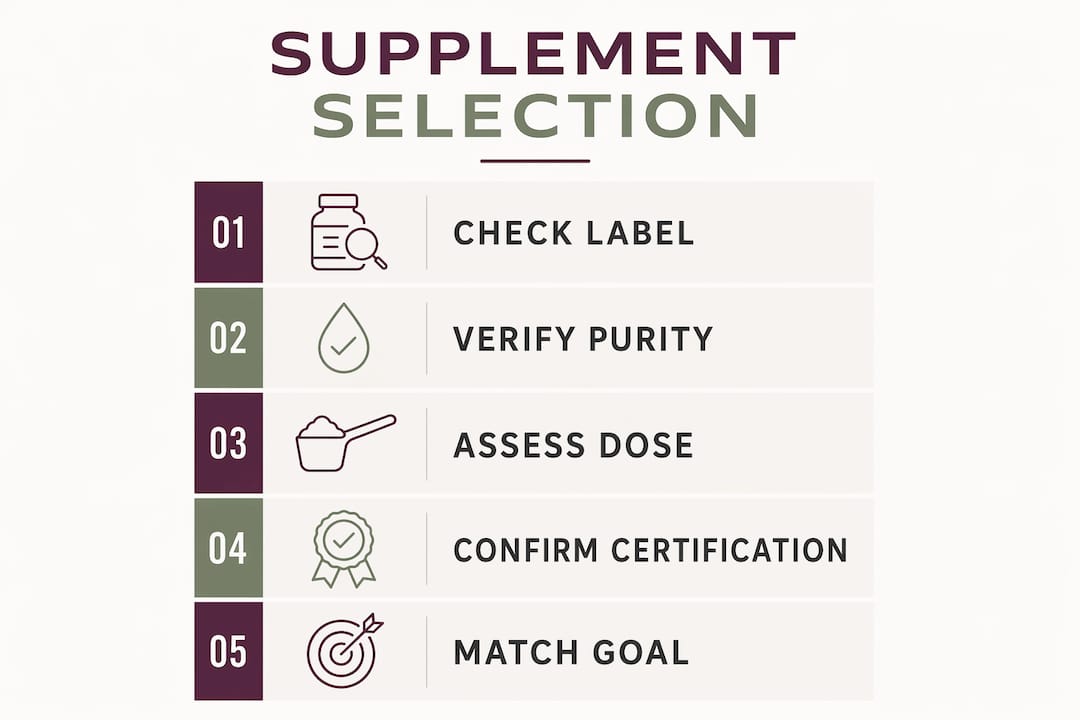
Smart supplementation means matching each product to a defined goal, not collecting supplements based on trends.
Key takeaways
High purity supplements deliver measurably better results because they contain verified ingredients in bioavailable forms, at clinically relevant doses, free from contaminants and unnecessary additives.
| Point | Details |
|---|---|
| Purity is measurable | Look for cGMP manufacturing, USP or NSF certification, and available COAs. |
| Bioavailability determines results | The ingredient form, not just the name, decides how much your body absorbs. |
| Proprietary blends are a red flag | Hidden doses prevent you from comparing a product against clinical evidence. |
| Introduce supplements one at a time | The 2–4 week rule lets you track effects and catch adverse reactions early. |
| Start with a health goal | Define what you need before reading any label, not after. |
Purity is the part most people skip
I have spent years watching people buy supplements the wrong way. They pick up a product because the branding looks credible, or because a friend recommended it, or because the price felt reassuringly high. None of those signals tell you anything useful about what is actually inside the capsule or sachet.
The thing that changed my thinking was learning how rarely independent verification actually happens. Fewer than 1% of products carry the USP Verified Mark, and 58% of consumers seek pharmacist advice on supplements. Those two facts together tell a clear story. Most people know they need guidance, but most products are not giving them the verified quality they are looking for.
My honest view is that single-ingredient products with transparent labels are almost always the better choice. They give you control. You know what you are taking, at what dose, in what form. When something works, you know why. When something does not, you know what to change. Complex blends with proprietary totals remove that control entirely.
The practical advice I return to most often is simple: bring your supplements to your next GP or pharmacist appointment. Not because supplements are dangerous, but because a trained professional can spot interactions and confirm whether your chosen product actually fits your health picture. That conversation takes five minutes and can save months of ineffective supplementation.
— Sam
Kudunutrition’s approach to supplement purity
Kudunutrition builds its collagen supplements around the principles this article covers: transparent ingredient lists, clinically relevant doses, and third-party verification through Informed Sport certification.
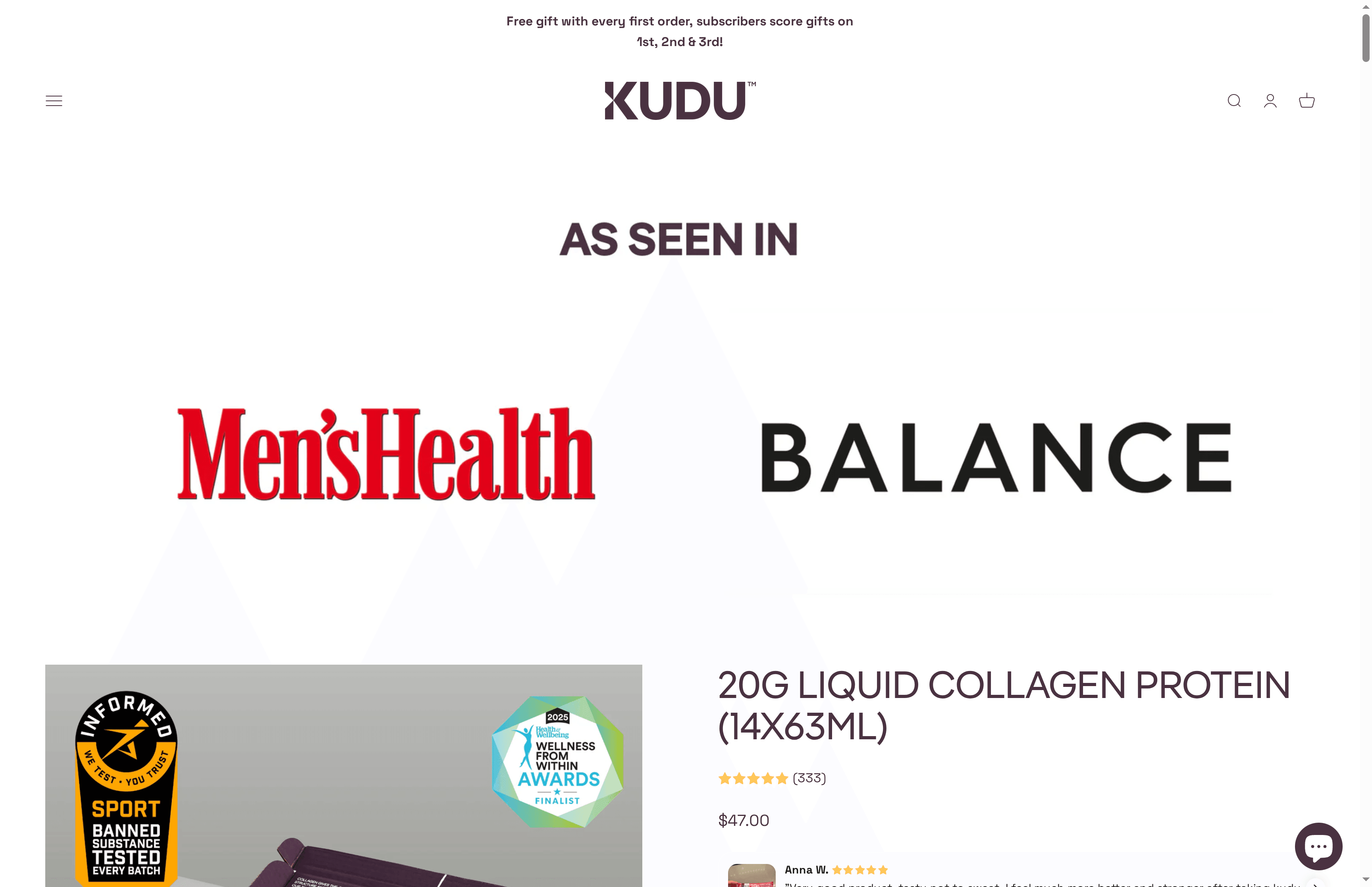
Each 20g collagen protein supplement delivers a precise, research-aligned dose of hydrolysed collagen protein in a ready-to-drink liquid sachet. There are no hidden blends and no unnecessary additives. The Informed Sport certification means every batch is tested for banned substances and contaminant levels before it reaches you. For anyone serious about skin, joint, bone, or fitness recovery goals, Kudunutrition’s liquid collagen protein range is a straightforward starting point built on verified quality.
FAQ
What are high purity supplements?
High purity supplements contain exactly the ingredients listed on the label, in verified forms and clinically relevant doses, with no undisclosed fillers or contaminants. They are typically manufactured under cGMP conditions and carry third-party certification from bodies such as USP or NSF.
How does purity affect supplement efficacy?
Purity determines whether an ingredient reaches your body in a form it can absorb and at a dose that produces an effect. A low purity product may contain the right ingredient name but the wrong form or a sub-therapeutic dose, making it ineffective regardless of the marketing claims.
What does “FDA approved” mean on a supplement label?
The FDA does not approve dietary supplements before they go to market. Any “FDA approved” claim on a supplement is misleading. The credible quality indicators are cGMP manufacturing certification and independent third-party testing from organisations like USP or NSF.
Why are proprietary blends a problem?
Proprietary blends list a combined weight for a group of ingredients without disclosing individual doses. This makes it impossible to verify whether any single ingredient is present at a clinically effective level, and prevents meaningful comparison against research evidence.
How do I verify a supplement’s purity before buying?
Check for USP, NSF, or Informed Sport certification logos on the label. Search the relevant public databases to confirm the product is listed. If no certification is present, request a Certificate of Analysis directly from the manufacturer to confirm lot-specific ingredient identity and contaminant testing results.