


TL;DR:
- Dairy-free protein sachets are safe options for people with milk allergies and lactose intolerance. Reading labels carefully, especially for claims like dairy-free, lactose-free, or vegan, is essential for safety. Plant-based proteins such as pea, rice, hemp, or collagen are the most reliable dairy-free sources.
Dairy-free protein sachets are single-serve supplements that contain no milk-derived ingredients, making them safe for people with milk allergies, lactose intolerance, or plant-based diets. Knowing how to find dairy-free protein sachets matters more than ever, because approximately 5% of UK adults carry a diagnosed lactose intolerance, and many more react to whey-based supplements without a formal diagnosis. The UK Food Information Regulations 2014 require milk to be clearly highlighted among 14 mandatory allergens on every food label. Understanding those labels is the fastest route to safe, effective supplementation.
How to find dairy-free protein sachets: reading the labels correctly
The first skill you need is knowing what the label actually promises. Three terms appear constantly on protein products, and they do not mean the same thing.
“Dairy-free” is a safety-oriented claim. In the UK, it legally implies the absence of milk-derived proteins, not just the absence of lactose. It protects people with milk protein allergies, not just those who are lactose intolerant.
“Lactose-free” means the lactose sugar has been removed or broken down. The product may still contain whey or casein, both of which are milk proteins. If you have a milk allergy rather than lactose intolerance, lactose-free is not safe.
“Vegan” confirms no animal-derived ingredients were used. However, a vegan label does not guarantee the product was manufactured in a facility free from dairy cross-contamination. That distinction is critical for anyone with a serious allergy.
Here is what to look for on any sachet:
- The word “dairy-free” printed clearly on the front or back panel
- Milk listed as absent in the allergen declaration box
- The Vegan Society sunflower logo, which indicates independently verified vegan suitability rather than a self-declared claim
- A “free-from” label, which signals strict manufacturing controls to prevent cross-contamination, going further than a vegan label alone
- No mention of whey, casein, milk solids, lactalbumin, or lactoglobulin in the ingredient list
Pro Tip: If a product carries both a free-from label and the Vegan Society sunflower logo, it offers the strongest dual assurance available on the UK market. Either certification alone is good; both together is better.
The difference between free-from and vegan labelling is not cosmetic. Free-from certification provides a high-assurance guarantee to consumers who require strict allergen avoidance. Vegan labelling focuses on ingredient exclusion but does not necessarily control for contamination during manufacturing.
Which protein sources work best in dairy-free sachets?
Plant-based proteins are the most reliable dairy-free protein options available. Each source has a different nutritional profile and digestion characteristic, so understanding them helps you choose the right product for your goals.
- Pea protein is high in branched-chain amino acids and digests well for most people. It is one of the most widely used bases in dairy-free protein powders.
- Brown rice protein is hypoallergenic and gentle on the gut, though it is lower in lysine. Combining it with pea protein creates a more complete amino acid profile.
- Hemp protein contains omega-3 fatty acids alongside protein, making it a good choice for general health. Its protein content per gram is lower than pea or rice.
- Soy protein is a complete protein with all nine essential amino acids. Some people prefer to avoid it due to phytoestrogen content or soy allergies.
- Collagen protein is derived from animal connective tissue, not from dairy. It is naturally dairy-free and supports joint, skin, and bone health alongside muscle recovery.
One common misconception deserves direct correction. Whey isolate is not dairy-free and must be avoided by anyone with a milk protein allergy. Despite having lower lactose content than whey concentrate, whey isolate still contains residual milk proteins. It is unsafe for people with milk allergies, regardless of how it is marketed.
Pro Tip: Check whether the product is certified low-FODMAP if you have irritable bowel syndrome or a sensitive gut. Some plant proteins, particularly those with added chicory root or inulin, can trigger bloating even when they are technically dairy-free.

High-quality dairy-free protein powders have short, natural ingredient lists. Longer lists with chemical-sounding fillers often indicate lower quality and potential digestive issues. The order of ingredients reliably indicates quantity. If a filler or sweetener appears in the top three ingredients, the protein content is likely lower than the branding suggests.
| Protein source | Dairy-free? | Complete protein? | Best suited for |
|---|---|---|---|
| Pea protein | Yes | Near-complete | Muscle recovery, everyday use |
| Brown rice protein | Yes | Incomplete | Sensitive digestion, combined use |
| Collagen protein | Yes | Partial | Joints, skin, bone health |
| Whey isolate | No | Yes | Not suitable for milk allergies |
| Soy protein | Yes | Yes | General fitness, plant-based diets |
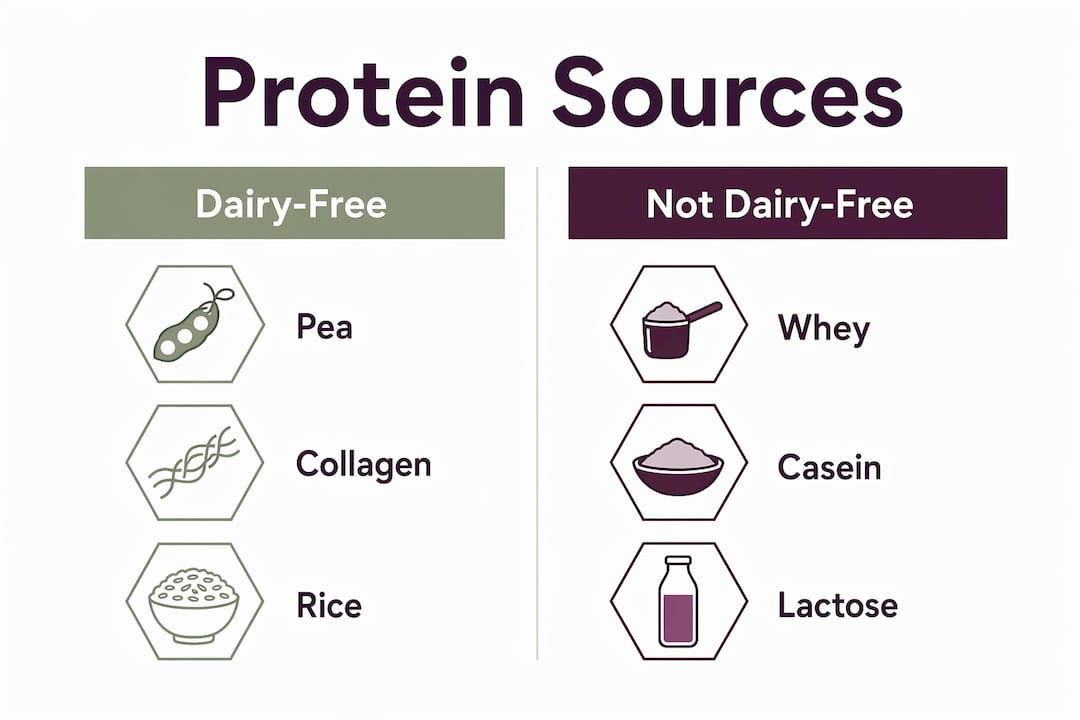
For people who want gut-friendly protein sources, collagen is worth particular attention. It is naturally free from dairy, easy to digest, and well-tolerated by people with sensitive stomachs.
Where to buy protein sachets that are genuinely dairy-free
Knowing where to shop is as important as knowing what to look for. The right retailer gives you access to clear product information, verified certifications, and a transparent supply chain.
-
Specialist supplement websites are the most reliable source. Brands that focus on free-from or sports nutrition typically provide full ingredient transparency, allergen declarations, and certification details on their product pages. Kudunutrition, for example, publishes full ingredient and nutritional information for its 20g collagen protein sachets directly on the product page.
-
Health food retailers such as Holland & Barrett stock a wide range of free-from products. Staff in these shops are generally trained to assist with allergen queries, and products are often grouped by dietary category, making it easier to filter for dairy-free options.
-
Large supermarkets with dedicated free-from aisles carry protein sachets and powders. The free-from section applies stricter sourcing standards than the general grocery aisle, though always check the allergen declaration independently.
-
Online marketplaces carry a wide range of products, but exercise caution. Third-party sellers may stock products without full labelling visibility. Always buy from the brand’s own listing or a verified retailer, not an unverified reseller.
-
Pharmacies and chemists occasionally stock protein supplements, particularly those aimed at recovery or weight management. These are less likely to carry specialist dairy-free ranges but can be a useful fallback.
When assessing any product online, check the protein content per sachet against your daily target. A standard serving should deliver a meaningful amount of protein, typically listed in grams per sachet, alongside a clear allergen declaration. If the allergen information is missing or unclear, do not purchase.
Pro Tip: If you encounter a product that makes misleading dairy-free claims, you can report it to the FSA via your local authority. Regulatory accountability keeps the market honest and protects other consumers.
For a broader overview of dairy-free supplement options across different health goals, comparing product categories before committing to a single brand is a sound approach.
Common mistakes when choosing dairy-free protein sachets
Even well-informed shoppers make avoidable errors. These are the most frequent pitfalls, and how to sidestep them.
- Confusing lactose-free with dairy-free. Lactose-free products still contain milk proteins. For anyone with a milk protein allergy, this distinction is a safety issue, not a preference.
- Ignoring the allergen declaration. The front-of-pack claim is marketing. The allergen declaration box in the ingredient list is the legal statement. Always read both.
- Assuming vegan means safe from cross-contamination. A vegan label confirms ingredient choices, not manufacturing conditions. Only a free-from label or explicit cross-contamination statement covers that risk.
- Buying products with long, complex ingredient lists. Protein powders with excessive fillers often compensate for poor taste but reduce digestibility and nutritional value. Simplicity in the ingredient list is a quality signal.
- Not checking protein content per serving. A sachet that delivers only 5g of protein per serving will not support recovery or muscle maintenance. Verify the amount before purchasing.
- Overlooking serving size context. A product may appear high in protein until you notice the serving size is two sachets. Always calculate protein per single sachet.
“The label on the front of a supplement is designed to attract attention. The ingredient list and allergen declaration on the back are designed to inform. If those two things tell different stories, trust the back.”
The benefits of dairy-free protein extend well beyond avoiding digestive discomfort. Choosing the right product with verified labelling and a clean ingredient list supports better absorption, fewer side effects, and greater confidence in what you are putting into your body.
Key takeaways
Finding the right dairy-free protein sachet requires reading labels carefully, understanding the difference between dairy-free, lactose-free, and vegan claims, and choosing products with short, verified ingredient lists from trusted retailers.
| Point | Details |
|---|---|
| Dairy-free vs lactose-free | Only dairy-free guarantees the absence of milk proteins; lactose-free does not. |
| Certification matters | The Vegan Society sunflower logo and free-from labels offer the strongest safety assurance. |
| Ingredient list order | Ingredients listed first appear in the greatest quantity; fillers near the top signal lower quality. |
| Whey isolate is not dairy-free | Whey isolate contains milk proteins and is unsafe for anyone with a milk allergy. |
| Report misleading labels | Contact your local authority or the FSA if a product makes false dairy-free claims. |
Why I think most people overcomplicate this
People spend a lot of time searching for the “best” dairy-free protein and not enough time learning to read a label. I have seen health-conscious consumers buy products with the word “natural” plastered across the front, only to find whey isolate listed third in the ingredients. The front of the pack is not the product. The ingredient list is.
The other thing I have noticed is that shoppers treat “vegan” as a synonym for “safe for dairy allergies.” It is not. A product can be entirely plant-based and still be manufactured on shared equipment with milk-containing products. If you have a genuine allergy rather than a preference, that gap matters enormously.
My honest recommendation is to prioritise simplicity. A short ingredient list from a brand that publishes its allergen controls and holds a recognised certification is worth more than a product with an impressive protein count and a murky label. The nutritional supplement labelling standards in the UK are strong, but they only protect you if you use them. Read the back of the pack every time.
— Sam
Kudunutrition’s dairy-free collagen protein sachets
Kudunutrition’s 20g liquid collagen protein sachets are a straightforward dairy-free protein option for anyone who wants quality without complexity. Each sachet delivers 20g of collagen protein with a short, transparent ingredient list and no dairy-derived ingredients. The format is designed for convenience: no mixing, no measuring, and no refrigeration needed before opening. Kudunutrition holds Informed Sport certification, which means every batch is tested for banned substances and quality consistency. Free UK delivery is available on orders, making it easy to trial the product without commitment. If you are ready to try a clean, certified option, the collagen protein sachet range is a practical place to start.
FAQ
What does dairy-free mean on a protein sachet?
Dairy-free means the product contains no milk-derived ingredients, including whey, casein, and lactose. Under UK allergen labelling rules, milk must be declared if present, so a genuine dairy-free product will show no milk in its allergen declaration.
Is whey isolate safe for people with dairy allergies?
No. Whey isolate contains milk-derived proteins and is not safe for anyone with a milk protein allergy, despite having lower lactose content than whey concentrate.
What is the difference between free-from and vegan labelling?
Free-from labelling indicates strict manufacturing controls to prevent cross-contamination, while vegan labelling confirms ingredient exclusion only. For people with serious dairy allergies, free-from offers a stronger safety guarantee.
How do I verify a protein sachet is genuinely dairy-free?
Check the allergen declaration on the ingredient list, look for the Vegan Society sunflower logo or a free-from certification, and confirm that no milk-derived ingredients appear anywhere in the full ingredient list.
Where is the most reliable place to buy dairy-free protein sachets in the UK?
Specialist supplement brands with transparent labelling and recognised certifications are the most reliable source. Health food retailers with dedicated free-from ranges are a strong second option, provided you verify the allergen declaration independently.