

Finding a collagen supplement that is both pure and ethical can feel challenging in the UK beauty and wellness space. For women prioritising radiant skin and joint comfort, the source matters as much as the promise. Grass-fed collagen stands out thanks to its clean origin from pasture-raised cattle, offering a nutrient-rich, hormone and antibiotic-free alternative that is easy to absorb, supports connective tissue, and aligns with mindful lifestyle values.
Table of Contents
- What Is Grass-Fed Collagen Protein?
- Types and Forms of Grass-Fed Collagen
- Nutritional Value and Key Features
- Sourcing, Quality and Certification Standards
- Benefits for Skin, Joints and Wellness
- Risks, Allergies and Common Misconceptions
Key Takeaways
| Point | Details |
|---|---|
| Grass-Fed Collagen Benefits | Provides superior amino acid profiles and supports skin, joint, and bone health due to its ethical sourcing and minimal processing. |
| Types and Forms | Available in various forms including powders, liquids, and capsules to suit different dietary preferences and enhance absorption. |
| Certification Importance | Select products that have third-party verification to ensure high standards of quality, safety, and ethical sourcing. |
| Allergic Considerations | Individuals with specific dietary sensitivities should consult healthcare providers before starting supplementation to avoid allergic reactions. |
What Is Grass-Fed Collagen Protein?
Grass-fed collagen protein represents a superior nutritional supplement derived from cattle raised on natural pasture diets. Unlike conventional collagen sources, these proteins come from animals grazing exclusively on grass, without relying on grain-based feeds, growth hormones, or antibiotics. The result is a purer, more ethically sourced protein with enhanced nutritional properties.
At its core, grass-fed collagen is extracted from the connective tissues of pasture-raised cattle, specifically from hides and bones. Pasture-raised cattle production ensures that the animals live in more natural environments, which directly impacts the quality of the protein derived from them. Through a process called hydrolysis, the collagen is broken down into smaller, more easily digestible peptides, improving its bioavailability.
Key characteristics of grass-fed collagen include:
- Predominantly Type I and III collagen types
- Higher nutrient density compared to grain-fed sources
- Enhanced amino acid profile supporting skin, tendon, and bone health
- Minimal exposure to synthetic agricultural inputs
The production process involves carefully selecting cattle that have been raised on open grasslands, allowing them to roam and consume their natural diet. This approach not only supports animal welfare but also results in a more nutrient-rich protein supplement. The collagen is then extracted, hydrolysed, and processed into a powder or liquid form that can be easily incorporated into dietary routines.
Here’s how grass-fed collagen compares to conventional collagen sources:
| Criteria | Grass-Fed Collagen | Conventional Collagen |
|---|---|---|
| Source | Pasture-raised cattle | Cattle, fish, poultry |
| Animal Diet | Grass-only, no grains | Grain or mixed feed |
| Use of Hormones/Antibiotics | Not permitted | Often permitted |
| Environmental Impact | Reduced due to ethical grazing | Often higher due to feedlots |
| Nutrient Density | Higher, especially amino acids | Variable, often lower |
| Ethical Considerations | Strong focus on welfare | Less regulated |
Pro tip: When selecting a grass-fed collagen supplement, look for third-party certifications that verify the pasture-raised origins and processing standards of the product.
Types and Forms of Grass-Fed Collagen
Grass-fed collagen offers multiple types and versatile forms that cater to different nutritional needs and preferences. The most prevalent types are Type I and Type III collagen, which are particularly beneficial for skin, bone, and connective tissue health. Grass-fed bovine collagen sources demonstrate remarkable similarities to human collagen, making them exceptionally bioavailable and effective.
The primary forms of grass-fed collagen include:
- Hydrolysed peptide powder: Easily dissolvable in liquids
- Liquid collagen: Ready-to-drink formulations
- Capsule supplements: Convenient for quick consumption
- Unflavoured powder: Versatile for mixing into recipes
Each form offers unique advantages depending on individual lifestyle and consumption preferences. Hydrolysed collagen peptides, in particular, represent the most advanced form, as they are pre-broken down into smaller molecules that enhance absorption and utilisation by the body. These peptides can be seamlessly integrated into drinks, smoothies, coffee, or various culinary preparations without altering taste or texture.
This table summarises the most common forms of grass-fed collagen and their typical uses:
| Form | Best Use | Absorption Rate |
|---|---|---|
| Hydrolysed Powder | Mix into drinks, smoothies | Rapid |
| Liquid Collagen | Direct consumption, travel | Moderate to rapid |
| Capsules | Convenience, on-the-go | Moderate |
| Unflavoured Powder | Cooking, baking, recipes | Rapid |
The production of grass-fed collagen involves carefully extracting proteins from pasture-raised cattle, ensuring minimal processing and maximum nutrient preservation. This approach not only supports ethical farming practices but also guarantees a higher quality protein supplement with a more comprehensive amino acid profile compared to conventionally sourced alternatives.

Pro tip: Select grass-fed collagen supplements that clearly display third-party testing certificates and specify the exact collagen types to ensure maximum nutritional benefits.
Nutritional Value and Key Features
Grass-fed collagen represents a nutritional powerhouse, delivering an exceptional amino acid profile that supports multiple aspects of human health. Essential amino acid composition makes this supplement particularly valuable, with key components like glycine, proline, and hydroxyproline playing critical roles in tissue regeneration and maintenance.
The primary nutritional features of grass-fed collagen include:
- Rich amino acid profile: Supports connective tissue health
- High bioavailability: Easily absorbed by the body
- Hormone and antibiotic-free: Derived from ethically raised cattle
- Comprehensive protein support: Enhances skin, bone, and muscle recovery
Hydrolysis transforms the collagen into smaller peptides, significantly improving its absorption and utilisation. These protein peptides are small enough to pass through the intestinal wall, ensuring maximum nutritional benefit. The protein’s molecular structure closely mimics human collagen, which means the body can more effectively use these nutrients for tissue repair and regeneration.
Grass-fed collagen provides a cleaner, more natural protein source compared to conventional supplements, with minimal processing and maximum nutritional integrity.
Pro tip: Combine your grass-fed collagen supplement with vitamin C-rich foods to enhance protein absorption and support natural collagen synthesis.
Sourcing, Quality and Certification Standards
Quality and certification represent critical considerations in selecting grass-fed collagen supplements. Health certification protocols in the UK mandate rigorous standards to ensure consumer safety and product integrity, with comprehensive guidelines governing every stage of production.
Key certification standards for grass-fed collagen include:
- Animal welfare verification: Ensuring ethical livestock management
- Microbiological testing: Confirming product safety and purity
- Traceability documentation: Tracking product from farm to consumer
- Independent third-party audits: Validating production practices
The certification process involves multiple layers of scrutiny, examining everything from pasture conditions to processing techniques. Reputable grass-fed collagen producers undergo extensive audits that verify the absence of synthetic drugs, hormones, and antibiotics. These strict protocols ensure that consumers receive a product that meets the highest standards of nutritional quality and ethical production.
Certification is not just a label, but a comprehensive guarantee of product quality, animal welfare, and nutritional integrity.
Pro tip: Always request detailed certification documentation from collagen supplement manufacturers to verify the authenticity and quality of their grass-fed sourcing.
Benefits for Skin, Joints and Wellness
Grass-fed collagen offers a comprehensive approach to supporting overall wellness, with remarkable benefits spanning skin health, joint function, and bodily regeneration. Clinical studies demonstrate significant improvements in multiple physiological systems through targeted supplementation.
Key wellness benefits include:
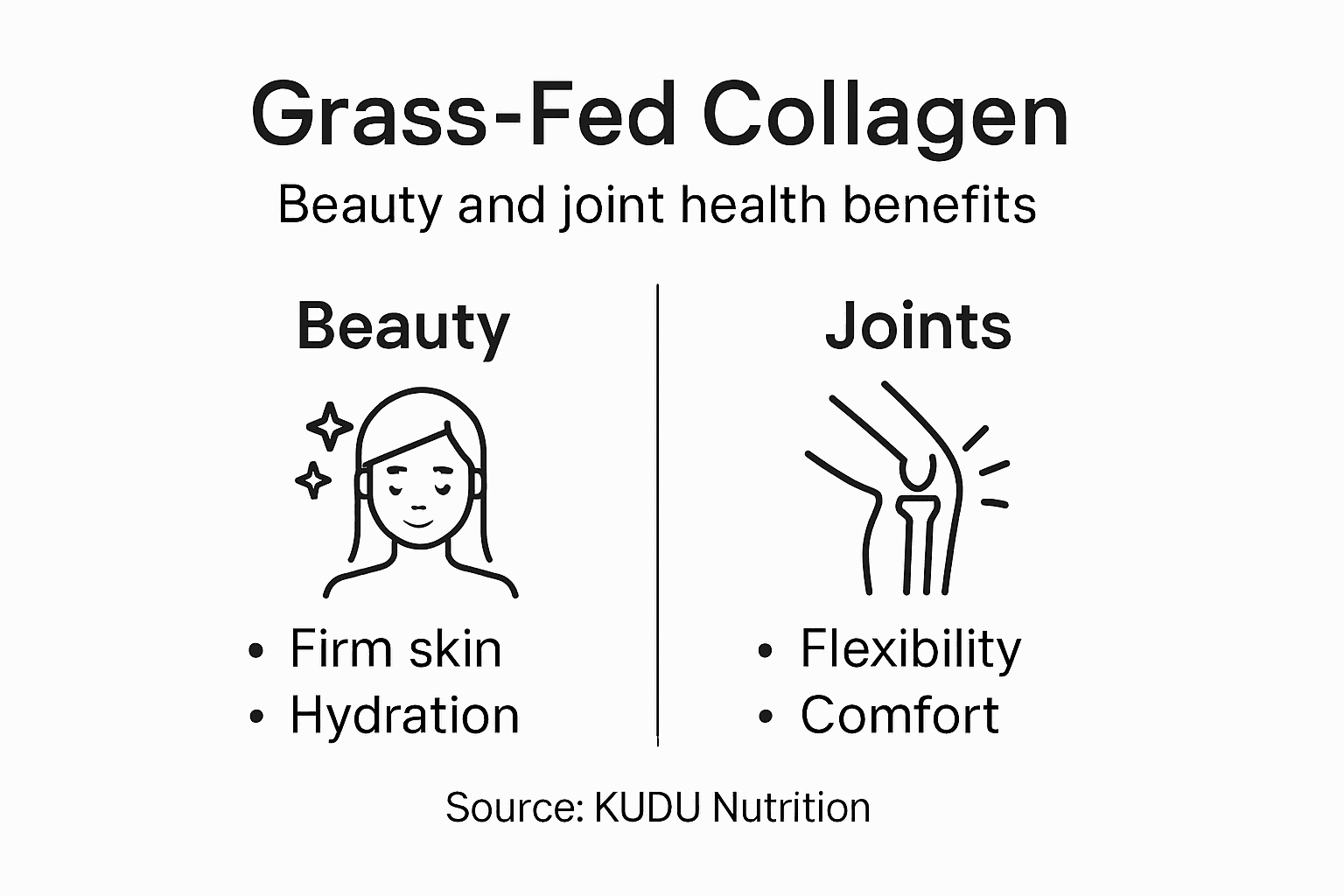
- Enhanced skin elasticity: Reducing fine lines and improving hydration
- Joint comfort: Decreasing inflammation and supporting mobility
- Bone density support: Promoting stronger skeletal structure
- Gut health improvement: Supporting intestinal lining integrity
- Recovery acceleration: Faster tissue repair for active individuals
The amino acid composition of grass-fed collagen plays a crucial role in supporting the body’s natural regenerative processes. Type I and III collagen are particularly potent, working synergistically to rebuild connective tissues, support skin structure, and maintain joint flexibility. These proteins help counteract age-related collagen decline, providing a natural approach to maintaining physical resilience and aesthetic wellness.
Grass-fed collagen represents more than a supplement - it’s a holistic approach to supporting the body’s fundamental structural and regenerative processes.
Pro tip: Combine your collagen supplement with vitamin C-rich foods to maximise protein absorption and enhance natural collagen synthesis.
Risks, Allergies and Common Misconceptions
Understanding potential risks and allergenic concerns is crucial when considering grass-fed collagen supplements. Allergic reactions to collagen supplements are uncommon but require careful consideration, particularly for individuals with specific dietary sensitivities.
Common misconceptions about grass-fed collagen include:
- Myth: All collagen supplements are identical
- Myth: Collagen works instantly for everyone
- Myth: Vegetarians can consume collagen supplements
- Myth: Higher dosage always means better results
Allergic reactions typically stem from the source animal protein rather than collagen itself. Individuals with known allergies to beef, fish, or shellfish should exercise caution and consult healthcare professionals before supplementation. Potential symptoms of an allergic response may include skin reactions, gastrointestinal discomfort, or in rare cases, more severe anaphylactic responses.
Responsible supplementation involves understanding individual health contexts and potential interactions with existing medical conditions.
Pro tip: Always consult with a healthcare provider and conduct a small initial test dose when introducing a new collagen supplement to your dietary routine.
Unlock the Full Potential of Grass-Fed Collagen for Your Skin and Joints
If you are seeking to support your skin elasticity, joint comfort and overall wellness with a premium collagen supplement the grass-fed collagen insights from this article highlight exactly what you need. The focus on Type I and III collagen, high bioavailability and ethically sourced protein aligns perfectly with the goals of those striving for natural beauty and fitness recovery.
Discover the power of our specially formulated liquid collagen protein sachets designed to deliver 20g of collagen per serving. Experience improved hydration, joint mobility and faster recovery driven by a purity and quality that respects animal welfare and nutritional transparency. Our product is enhanced by quality certifications such as Informed Sport ensuring what you take is both safe and effective.
Explore our range within 20g Collagen Protein Supplements for convenient sachets built for daily use.
Take charge of your beauty and joint health today with KUDU Nutrition’s collagen solution. Visit this page to order now and join health-conscious consumers and athletes benefiting from scientifically supported nutritional wellness. For more information on our commitment to performance and recovery visit KUDU Nutrition | 20g Collagen Protein for Performance & Recovery. Act now for a purer collagen experience that fits your lifestyle.
Frequently Asked Questions
What is grass-fed collagen, and how is it different from conventional collagen?
Grass-fed collagen is derived from cattle that have been raised on a grass-only diet, as opposed to conventional collagen, which may come from grain-fed sources. This results in a purer protein with enhanced nutritional properties, including a higher amino acid profile.
What are the benefits of taking grass-fed collagen for skin and joint health?
Grass-fed collagen supports skin elasticity, reduces fine lines, improves hydration, decreases inflammation in joints, and promotes mobility. It also aids in bone density support and gut health improvement.
How should I incorporate grass-fed collagen into my diet?
Grass-fed collagen can be taken in various forms, such as hydrolysed peptide powder, liquid collagen, or capsules. You can easily mix hydrolysed powder into drinks, smoothies, or recipes without affecting taste or texture.
Are there any risks or allergies associated with grass-fed collagen supplements?
Allergic reactions are uncommon but can occur, particularly for individuals with allergies to beef or related proteins. It’s essential to consult a healthcare professional before starting supplementation, especially if you have known food allergies.
Recommended
- Beauty Collagen: Impact on Skin, Joints and Recovery
- Amino Acids in Collagen – Why They Matter for Skin and Joints
- Why Collagen Matters for Skin, Joints, and Fitness
- Marine vs Bovine Collagen: Impact on Skin and Joints
- Biostarks | Nutrition
- No Gaps Dental: Unlocking the Secrets to a Perfect Smile - Paynless Dental Clinic