

TL;DR:
- Supporting skin renewal requires consuming key nutrients like collagen, vitamin C, and zinc regularly over 4 to 12 weeks. Combining a varied diet with targeted supplementation, especially collagen peptides, leads to measurable improvements in skin elasticity, hydration, and wrinkle reduction. Lifestyle factors such as gut health and hydration significantly influence how effectively these nutrients enhance skin regeneration.
Nutritional support for skin renewal is defined as the targeted intake of vitamins, minerals, and bioactive compounds that drive collagen synthesis, cellular regeneration, and skin hydration. Your skin replaces itself roughly every 27 days, and every cycle depends on the raw materials you supply through food and supplementation. Randomised controlled trials confirm that 10 g of bioactive collagen peptides daily over 12 weeks significantly reduces facial wrinkles and improves elasticity. That finding alone reframes skin care from a topical problem to a nutritional one. The most effective approach combines a varied, whole-food diet with targeted supplementation to fill the gaps that food cannot reliably cover.
Which nutrients are essential for nutritional support for skin renewal?
The nutrients that matter most for skin renewal are collagen peptides, vitamin C, hyaluronic acid, zinc, omega-3 fatty acids, and polyphenols. Each plays a distinct role, and deficiency in any one of them slows the renewal cycle.
- Collagen peptides. Collagen is the structural protein that gives skin its firmness. Supplementation reduces wrinkles and improves elasticity through antioxidant and anti-inflammatory pathways, not just direct collagen synthesis. Hydrolysed peptides are absorbed more efficiently than whole collagen protein.
- Vitamin C. Vitamin C cross-links collagen fibres and neutralises UV-induced free radicals. Without adequate vitamin C, collagen strands form poorly and skin loses structural integrity faster.
- Hyaluronic acid. Oral hyaluronic acid improves skin moisture content and reduces fine lines, particularly in people over 45. Dietary sources provide negligible therapeutic amounts, making supplementation the practical route.
- Zinc. Zinc supports collagen synthesis, wound healing, and sebum regulation. Deficiency directly impairs skin cell turnover and slows repair after UV damage.
- Omega-3 fatty acids. These fats reinforce the skin barrier, reduce inflammatory signalling, and prevent transepidermal water loss. Oily fish such as mackerel and salmon are the most concentrated dietary sources.
- Polyphenols. Compounds like piceatannol act as antioxidants that protect skin cells from oxidative stress. Eight weeks of piceatannol intake measurably reduces crow’s feet wrinkles and improves hydration.
No single nutrient works in isolation. The skin renewal cycle requires all of these compounds working together, which is why a diverse diet plus targeted supplementation consistently outperforms any single-ingredient approach.
7 foods and dietary habits that boost skin renewal naturally

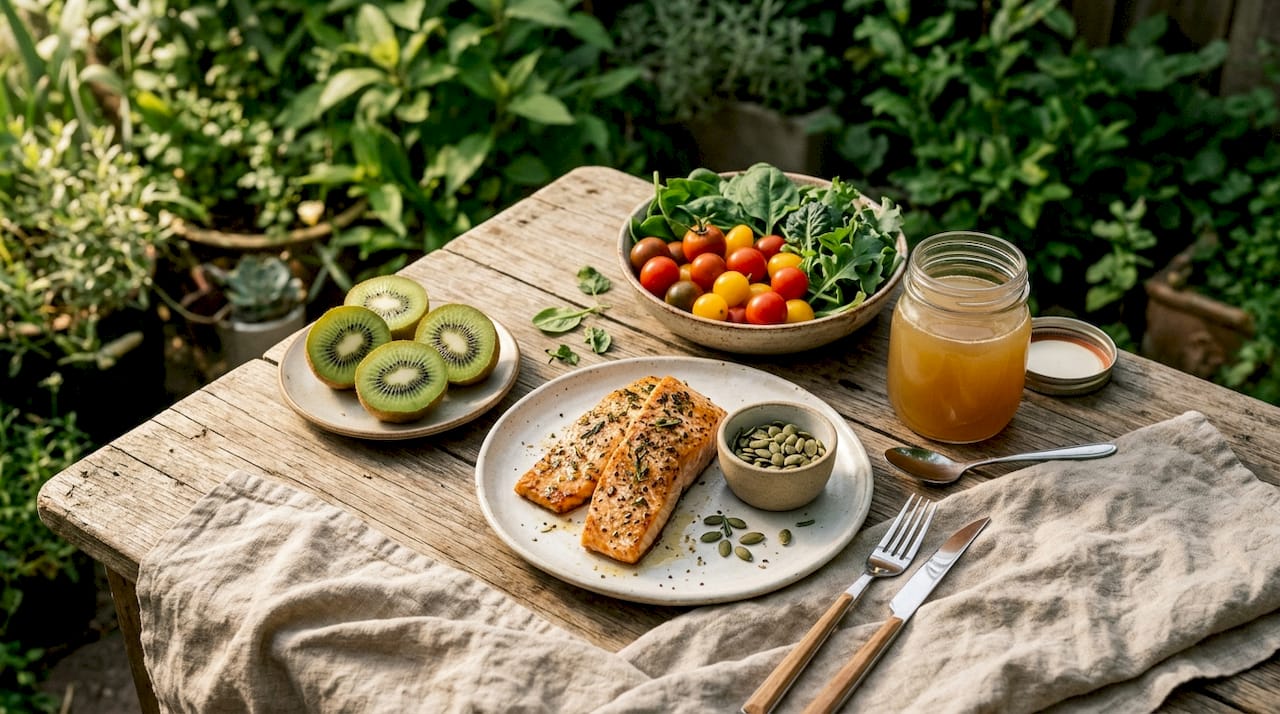
1. Eat two kiwifruit daily for vitamin C
Two kiwifruit per day increases plasma vitamin C and produces measurably thicker skin through accelerated collagen production and faster epidermal regeneration. Kiwifruit delivers more vitamin C per gram than oranges and is one of the most practical daily sources. Vitamin C absorbed orally reaches all skin layers more effectively than topical serums because of its water-solubility. The vitamin C and collagen connection is one of the most evidence-backed relationships in nutritional dermatology.
2. Include oily fish three times a week
Mackerel, salmon, sardines, and trout supply EPA and DHA, the omega-3 fatty acids that reduce skin inflammation and strengthen the lipid barrier. A compromised barrier accelerates water loss and makes skin appear dull and dry. Three servings per week is the threshold at which barrier function improvements become clinically measurable.
3. Add pumpkin seeds and oysters for zinc
Pumpkin seeds are one of the most concentrated plant sources of zinc. Oysters deliver more zinc per serving than almost any other food. Both support the skin cell turnover that keeps the surface looking fresh and even-toned.
4. Eat a wide range of colourful vegetables
Red peppers, tomatoes, spinach, and sweet potatoes each supply different antioxidants, including beta-carotene, lycopene, and lutein. Antioxidant-rich foods over 12 weeks reduce wrinkle formation and improve epidermal thickness. Colour variety is the simplest proxy for antioxidant diversity.
Pro Tip: Lightly steam rather than boil vegetables. Boiling leaches water-soluble antioxidants, including vitamin C, into the cooking water. Steaming preserves up to 50% more of these compounds.
5. Use bone broth as a collagen-building base
Bone broth supplies glycine, proline, and hydroxyproline, the amino acids the body uses to assemble collagen. It is not a substitute for collagen peptide supplements, but it contributes meaningfully to your daily amino acid pool when consumed regularly.
6. Snack on berries for polyphenol density
Blueberries, blackcurrants, and raspberries are among the richest sources of anthocyanins and other polyphenols. These compounds reduce oxidative stress at the cellular level, protecting the fibroblasts responsible for producing new collagen.
7. Prioritise consistent meal timing
Nutrient absorption for skin tissue requires sustained intake over 4–12 weeks to produce measurable structural improvements. Sporadic healthy eating does not deliver the same results as consistent daily intake. Treat your skin nutrition the same way you treat a fitness programme: regularity matters more than occasional intensity.
How supplementation complements diet for optimal skin renewal
Diet alone cannot reliably deliver therapeutic doses of every skin renewal nutrient. Hyaluronic acid and ceramides are practically impossible to obtain in clinically meaningful amounts from food. Supplementation fills that gap without requiring unrealistic dietary changes.
The evidence for collagen peptides is particularly strong. A 12-week randomised trial showed significant reductions in facial wrinkles (p < 0.0002), improved elasticity (p < 0.0065), and better hydration (p < 0.0037) from 10 g daily. Those are not marginal improvements. They are statistically robust changes in measurable skin structure.
Key supplementation principles:
- Collagen peptides. Choose hydrolysed collagen for maximum absorption. Aim for 10 g daily and allow at least 8–12 weeks before assessing results.
- Hyaluronic acid. Oral supplements are the only practical way to achieve therapeutic doses. Look for low-molecular-weight forms, which absorb more readily.
- Zinc. Zinc bisglycinate and zinc picolinate are better absorbed than zinc oxide. Avoid taking zinc with high-phytate foods like wholegrains, which reduce absorption.
- Polyphenol extracts. Piceatannol supplements showed measurable wrinkle reduction in 8 weeks. Astaxanthin is another antioxidant polyphenol with strong evidence for skin protection and cellular defence.
Pro Tip: Take collagen peptides with a vitamin C source. Vitamin C is a required co-factor for collagen synthesis, so combining both in the same sitting maximises the biological effect.
Quality certification matters. Supplements carrying Informed Sport certification have been independently tested for banned substances and label accuracy. That standard is particularly relevant for athletes and health-conscious individuals who want confidence in what they are consuming.
What lifestyle factors enhance or impede skin renewal?
Nutrition works best when the body’s systems for absorbing and delivering nutrients are functioning well. Several lifestyle factors directly affect how much benefit you get from even a well-planned diet.
- Gut health. A compromised gut lining reduces absorption of zinc, vitamin C, and amino acids. Fermented foods like kefir and sauerkraut support the microbiome that regulates nutrient uptake.
- Oxidative stress. Smoking, excessive alcohol, and chronic sleep deprivation all generate free radicals that degrade collagen faster than nutrition can replace it. Antioxidant-rich nutrition counteracts oxidative damage, but it cannot fully compensate for high-stress lifestyles.
- Hydration. Drinking adequate water maintains the turgor that makes skin appear plump. Hyaluronic acid in the dermis holds water, but only if systemic hydration is sufficient.
- Age-related adjustments. Nutritional strategies for skin renewal should shift with age. Younger adults benefit most from antioxidant preservation and vitamin C loading. Older adults need deeper tissue regeneration supported by collagen peptides and compounds that address declining cellular repair capacity.
- Topical and internal care combined. Effective skin renewal targets multiple biological mechanisms simultaneously. Internal nutrition builds the structural foundation; topical treatments address surface-level hydration and barrier repair. Neither replaces the other.
Comparison of key skin renewal nutrients
| Nutrient | Main food sources | Primary skin benefit | Supplementation note |
|---|---|---|---|
| Collagen peptides | Bone broth, fish skin | Reduces wrinkles, improves elasticity | 10 g daily; allow 8–12 weeks |
| Vitamin C | Kiwifruit, red peppers, citrus | Collagen synthesis, antioxidant defence | Oral absorption superior to topical |
| Hyaluronic acid | Minimal dietary sources | Skin hydration, fine line reduction | Supplement required for therapeutic dose |
| Zinc | Oysters, pumpkin seeds, beef | Cell turnover, wound healing, sebum control | Bisglycinate or picolinate forms preferred |
| Omega-3 fatty acids | Mackerel, salmon, sardines | Barrier function, anti-inflammatory | 3 servings oily fish per week |
| Polyphenols | Berries, grapes, dark chocolate | Oxidative stress protection | Piceatannol and astaxanthin well-evidenced |
Key takeaways
Consistent daily intake of collagen peptides, vitamin C, zinc, hyaluronic acid, omega-3 fatty acids, and polyphenols is the most evidence-backed strategy for measurable skin renewal.
| Point | Details |
|---|---|
| Collagen peptides work | 10 g daily over 12 weeks significantly reduces wrinkles and improves elasticity. |
| Vitamin C is non-negotiable | It cross-links collagen fibres and accelerates epidermal regeneration better when taken orally than applied topically. |
| Supplementation fills dietary gaps | Hyaluronic acid and ceramides cannot reach therapeutic doses through food alone. |
| Consistency beats intensity | Skin tissue requires 4–12 weeks of sustained intake to show measurable structural change. |
| Lifestyle amplifies nutrition | Gut health, hydration, and low oxidative stress determine how effectively nutrients reach skin tissue. |
What I have learned from years of watching people approach skin nutrition
Most people come to skin nutrition looking for the one thing that will fix everything. They read about collagen peptides, buy a month’s supply, and expect visible results in two weeks. When nothing dramatic happens, they move on to the next ingredient. That cycle is the single biggest reason nutritional skin care fails.
The evidence from integrative dermatology is clear: skin renewal is a slow, cumulative process. The structural proteins being rebuilt today will not be visible on the surface for weeks. Patience is not a soft recommendation. It is a biological requirement.
What actually works is less exciting than the marketing suggests. A diet rich in colourful vegetables, oily fish, and vitamin C foods, combined with a quality collagen peptide supplement and adequate hydration, produces real results over 8–12 weeks. The nutrition and skin health research consistently points to the same conclusion: no single nutrient is a miracle, but the right combination, taken consistently, changes skin structure in measurable ways.
I also think people underestimate how much lifestyle undermines nutrition. You can eat perfectly and still see poor results if chronic stress, poor sleep, or gut dysfunction is blocking absorption. Fix the foundations before adding more supplements.
— Sam
Kudunutrition’s liquid collagen for daily skin support
Kudunutrition’s 20 g liquid collagen protein sachets deliver a clinically relevant dose of hydrolysed collagen peptides in a format that is easy to take daily. Each sachet provides the 10 g threshold supported by randomised trial evidence, with the option to take two sachets for a full 20 g dose on higher-demand days.
The range is Informed Sport certified, which means every batch is independently tested for label accuracy and purity. For anyone serious about collagen and skin beauty, that certification removes the guesswork around supplement quality. Kudunutrition also offers a starter box for those who want to try the range before committing to a full supply.
FAQ
What is nutritional support for skin renewal?
Nutritional support for skin renewal is the targeted intake of collagen peptides, vitamin C, zinc, hyaluronic acid, omega-3 fatty acids, and polyphenols that drive collagen synthesis, hydration, and cellular regeneration. It works from the inside out, supplying the raw materials the skin needs to rebuild itself every 27 days.
How long does it take to see results from skin renewal supplements?
Measurable improvements in skin structure require 4–12 weeks of consistent daily intake. Randomised trials show significant wrinkle reduction and elasticity gains after 12 weeks of collagen peptide supplementation.
Can diet alone provide enough nutrients for skin renewal?
Diet covers most nutrients, but hyaluronic acid and ceramides cannot reach therapeutic doses through food alone. Supplementation is the practical solution for these compounds, particularly for people over 45.
What are the best vitamins for skin renewal?
Vitamin C is the most critical vitamin for skin renewal because it cross-links collagen fibres and neutralises UV-induced free radicals. Zinc functions more as a mineral co-factor but is equally important for cell turnover and wound repair.
Does collagen supplementation actually improve skin?
Yes. A randomised controlled trial found that 10 g of bioactive collagen peptides daily over 12 weeks significantly reduced facial wrinkles (p < 0.0002) and improved both elasticity and hydration in middle-aged women. The effects are driven partly by antioxidant and anti-inflammatory pathways, not collagen synthesis alone.