


TL;DR:
- Smart supplementation uses personal health data to tailor supplement choices based on individual biology. It improves health markers effectively by addressing specific nutritional gaps identified through biomarkers and genetic testing. Monitoring and retesting ensure safe, targeted, and adaptive supplement use over time.
Smart supplementation is the practice of using personalised health data, including genetics, biomarkers, and lifestyle inputs, to tailor supplement choices to your individual biology rather than following generic recommendations. This approach moves well beyond the standard multivitamin. Research shows that biomarker-driven supplementation can produce statistically significant improvements across dozens of health markers, including LDL cholesterol, HbA1c, and Vitamin D. The formal term used in clinical and nutrition science circles is precision nutrition, and understanding what is smart supplementation means understanding how precision nutrition works in practice. Done correctly, it reduces waste, improves outcomes, and makes every supplement you take earn its place.
What is smart supplementation and how does it work?
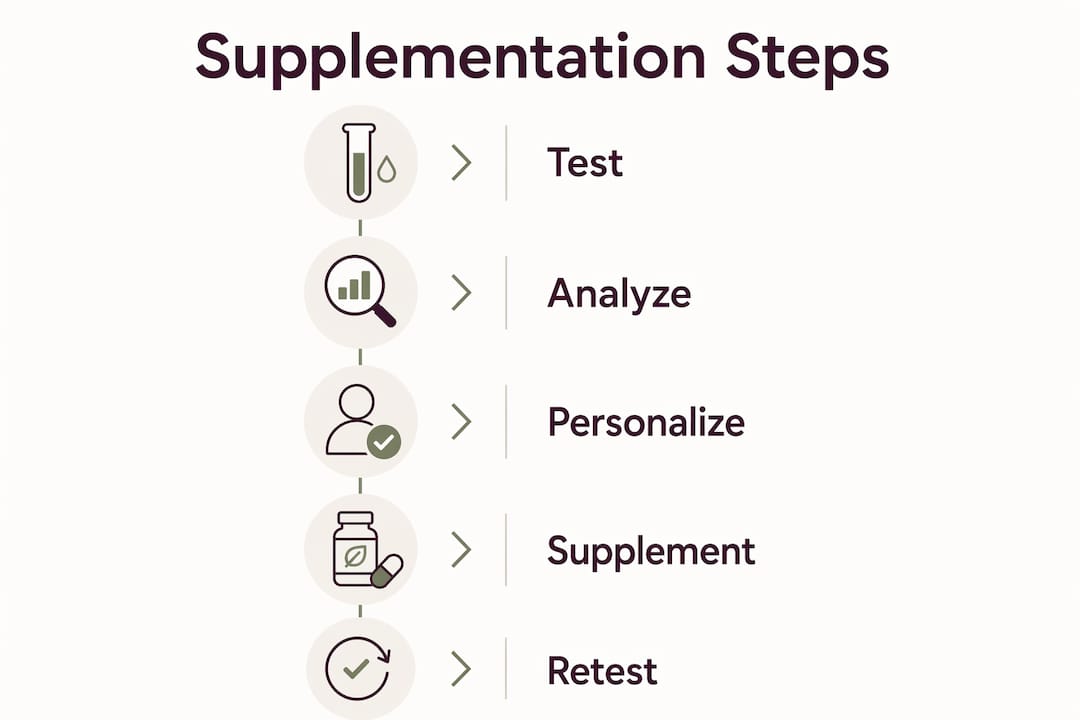
Smart supplementation is defined as the targeted use of supplements customised through precision data to address specific biological gaps. The process starts with data collection. You gather information about your body through genetic testing, blood biomarkers, urine or hair analysis, and lifestyle tracking such as sleep quality, activity levels, and dietary patterns. That data is then analysed, often with AI or machine learning tools, to identify where your nutrition falls short and which supplements would address those gaps most effectively.
The key data inputs that drive a smart supplementation plan include:
- Genetic testing: Identifies inherited tendencies such as poor vitamin D conversion or elevated homocysteine risk.
- Blood biomarkers: Measures active levels of nutrients, hormones, and metabolic markers like HbA1c and LDL cholesterol.
- Urine and hair analysis: Tracks mineral status and toxin exposure over time.
- Lifestyle data: Sleep, exercise frequency, stress levels, and dietary habits all influence nutrient requirements.
- Clinical history: Existing conditions, medications, and previous supplement responses shape safe and effective choices.
AI-driven personalised nutrition increases supplement success rates by tailoring doses to individual biology and reducing pill burden. That matters because most people taking generic supplements are either under-dosing nutrients they genuinely need or taking products their body has no use for. Precision targeting removes the guesswork from the equation entirely.
Pro Tip: Before investing in any supplement plan, get a baseline blood panel covering at least Vitamin D, iron, B12, and a lipid profile. These four markers alone reveal the most common nutritional gaps in UK adults.

What benefits can you realistically expect?
The benefits of smart supplementation are measurable, not just theoretical. A longitudinal study of over 20,000 individuals using a biomarker-driven health platform found statistically significant improvements across 43 health biomarkers, including LDL cholesterol, HbA1c, and Vitamin D. That is a meaningful result. It demonstrates that when supplements are matched to actual biological need, the body responds in ways that generic supplementation rarely achieves.
Typical improvements from a well-designed plan appear within a 6–12 week timeframe using genetic testing and biomarker analysis. People commonly report better energy, sharper focus, improved metabolic function, and stronger recovery from exercise. These are not placebo effects. They reflect the body receiving nutrients it was genuinely deficient in, at doses calibrated to its actual needs.
Some of the most well-supported supplement choices include:
- Omega-3 fatty acids: Widely adopted by adults over 60 due to evidence of slowing cognitive decline and preserving muscle mass.
- Vitamin D3 with K2: Critical for bone density, immune function, and mood regulation, especially in the UK where sunlight is limited.
- Magnesium glycinate: Supports sleep quality, muscle recovery, and stress response.
- Collagen protein: Targeted support for joint integrity, skin elasticity, and connective tissue repair, particularly relevant for active individuals.
Personalised approaches also reduce supplement fatigue. When you know exactly why you are taking something and can see measurable improvements in retesting, compliance improves naturally. You stop taking handfuls of capsules you do not need and focus on the few that genuinely move the dial.
What safety considerations should you follow?
Smart supplements require active monitoring for interactions, effectiveness, and safety in the same way medications do. That is not a minor caveat. Many people assume that because a product is sold over the counter, it carries no risk. That assumption is wrong.
The most important safety practices for smart supplementation are:
- Add one supplement at a time. Changing multiple supplements simultaneously prevents accurate attribution of benefits or adverse effects. If something goes wrong, or right, you need to know which product caused it.
- Monitor your response over 4–8 weeks. Track energy, sleep, digestion, and any new symptoms before adding the next supplement.
- Retest biomarkers every 3–6 months. Periodic reassessment keeps your supplement plan aligned with your current biology, which changes with age, stress, and lifestyle shifts.
- Check for interactions with medications. Supplements including fish oil, vitamin K, and St John’s Wort interact with common prescription drugs. Always inform your GP.
- Verify product quality. Look for third-party certifications such as Informed Sport, which tests for banned substances and confirms label accuracy.
Natural does not mean safe. Popular herbal supplements such as turmeric and ashwagandha can cause liver injury at high doses, with increasing cases documented in clinical settings. Long-term use of high-dose herbal products without monitoring carries real risk.
Pro Tip: Keep a simple supplement log. Note the product name, dose, start date, and any changes you notice. This record becomes invaluable when you retest biomarkers and want to understand what drove the improvement.
Learning to read supplement labels accurately is one of the most practical skills you can develop. It helps you identify quality products and avoid misleading claims before you spend a penny.
How does smart supplementation fit into your overall health strategy?
Smart supplementation works best as a targeted layer on top of solid nutritional foundations. No supplement replaces the fibre, cofactors, and phytonutrients found in whole foods. A foundation-first approach means prioritising a diet rich in vegetables, quality protein, healthy fats, and complex carbohydrates before reaching for any supplement.
Think of supplements as gap fillers, not meal replacements. Once your diet is reasonably solid, biomarker data reveals the specific gaps that food alone is not closing. That is where targeted supplementation earns its value.
The table below shows how a foundation-first strategy differs from a supplement-first approach:
| Approach | Starting point | Role of supplements | Risk level |
|---|---|---|---|
| Foundation-first | Whole food diet established | Fill specific, data-identified gaps | Low |
| Supplement-first | No dietary baseline | Replace or compensate for poor diet | High |
For active individuals and athletes, sports supplement safety is a particular concern. Performance supplements carry a higher risk of contamination and mislabelling than standard nutrition products. Choosing products certified by bodies such as Informed Sport reduces that risk significantly.
Collagen protein fits naturally into a foundation-first strategy. It supports joint health, skin integrity, and recovery without displacing dietary protein. For people with active lifestyles, it addresses a specific structural need that whole foods rarely provide in sufficient quantities. Kudunutrition’s collagen nutrition for performance guide covers how to integrate it effectively within a broader nutrition plan.
How to get started with your personalised supplement plan
Starting a smart supplementation plan does not require expensive technology or a specialist clinic. It requires a clear process and the discipline to follow it.
- Get a baseline blood test. Request a comprehensive panel from your GP or use a private service. Cover Vitamin D, B12, iron, ferritin, HbA1c, and a full lipid profile as a minimum.
- Set specific health goals. Define what you want to address: energy, joint health, skin quality, cognitive function, or athletic recovery. Vague goals produce vague results.
- Select evidence-based supplements for your gaps. Cross-reference your biomarker results with peer-reviewed research. Use resources like the supplement evaluation guide to assess product quality.
- Introduce one supplement at a time. Start with the highest-priority gap and allow 4–8 weeks before adding another product.
- Retest every 3–6 months. Biomarkers shift with age, season, and lifestyle. Your supplement plan should shift with them.
- Track and adjust. Use a simple app or notebook to log doses, timing, and subjective changes. This data makes your next retest far more useful.
Avoid subscription services that lock you into fixed monthly deliveries without periodic reassessment. Your needs in january may be different from your needs in september. A plan that does not adapt is not a smart plan.
Pro Tip: Use the nutritional supplement checklist from Kudunutrition to audit your current stack before adding anything new. It takes 10 minutes and often reveals products you no longer need.
Key takeaways
Smart supplementation works because it replaces generic guesswork with personal biological data, producing measurable improvements in health markers and reducing waste.
| Point | Details |
|---|---|
| Definition is precise | Smart supplementation uses genetics, biomarkers, and lifestyle data to personalise supplement choices. |
| Benefits are measurable | Biomarker-driven plans have shown improvements across 43 health markers in studies of over 20,000 people. |
| Safety requires monitoring | Add one supplement at a time and retest biomarkers every 3–6 months to stay aligned with your biology. |
| Foundation comes first | Supplements fill specific dietary gaps. They do not replace a whole-food diet rich in fibre and cofactors. |
| Quality certification matters | Choose products with third-party certification such as Informed Sport to verify safety and label accuracy. |
Why I think most people are still doing supplementation backwards
The most common mistake I see is people buying supplements before they have any data. They read about magnesium or collagen, feel vaguely tired or achy, and order a month’s supply. That is not smart supplementation. That is expensive optimism.
What changed my thinking was seeing how dramatically outcomes improve when the process is reversed. You test first, identify the actual gap, then select the product. The supplement becomes a targeted response to a known problem rather than a hopeful guess. The difference in results is not subtle.
The technology piece gets a lot of attention, and AI-assisted formulation is genuinely useful. But the most powerful shift is behavioural, not technological. It is the decision to treat your supplements as active therapies requiring the same attention you would give a prescription. That means monitoring, adjusting, and stopping products that are no longer needed.
One thing I would push back on is the idea that smart supplementation is only for biohackers or elite athletes. The same principles apply to a 55-year-old managing joint stiffness or a new mother concerned about nutrient depletion. The tools are more accessible than ever. A private blood test in the UK costs less than a month’s supply of most premium supplements. The data you get from it is worth far more than any product you could buy without it.
Collagen is a good example of a supplement that earns its place when the context is right. For people with active lifestyles, connective tissue demands are real and often unmet by diet alone. But taking it without understanding your baseline is still a guess. Test, target, and then commit.
— Sam
Kudunutrition’s collagen range for targeted supplementation
If your biomarker review or health goals point toward joint support, skin health, or fitness recovery, collagen protein is one of the most evidence-backed additions you can make to a foundation-first plan.

Kudunutrition’s liquid collagen protein sachets deliver 20g of collagen protein per serving in a format designed for compliance and convenience. Each product carries Informed Sport certification, meaning every batch is tested for banned substances and label accuracy. That level of verification matters when you are building a supplement plan based on data and trust. The collagen protein 14-pack is a practical starting point for anyone integrating collagen into a personalised health strategy.
FAQ
What is the difference between smart supplementation and regular supplementation?
Smart supplementation uses personal health data such as blood biomarkers, genetic testing, and lifestyle inputs to select and dose supplements precisely. Regular supplementation typically relies on generic recommendations with no individual biological context.
How long does it take to see results from smart supplementation?
Most people see measurable improvements in energy, focus, and key biomarkers within a 6–12 week period when supplements are matched to confirmed biological gaps. Results vary depending on the severity of the deficiency and the quality of the product used.
Are natural supplements always safe to take?
Natural supplements are not inherently safe. High-dose herbal products such as turmeric and ashwagandha have been linked to liver injury in clinical cases. All supplements should be monitored for adverse effects, particularly with long-term use.
How often should I retest my biomarkers?
Retesting every 3–6 months is the standard recommendation for anyone following a personalised supplement plan. Your biology changes with age, season, and lifestyle, and your supplement choices should reflect those changes.
What is the best first step to start smart supplementation?
The best first step is a comprehensive blood test covering Vitamin D, B12, iron, ferritin, HbA1c, and a lipid profile. That data gives you a factual baseline and prevents you from spending money on supplements your body does not need.