


TL;DR:
- Supplements in injury prevention are most effective when used to address specific nutrient deficiencies and support recovery. Key supplements like vitamin D, protein, omega-3, and collagen work best when tailored to individual needs and timing strategies. Relying on targeted, evidence-based supplementation enhances tissue repair and reduces injury risk more than broad, indiscriminate use.
Supplements are everywhere in sport and fitness, and so is the noise around them. The genuine role of supplements in injury prevention is far more specific than most training plans acknowledge. This is not about swallowing a handful of capsules each morning and hoping your tendons hold. It is about understanding which nutrients your body is actually short of, choosing supplements that address a real bottleneck in your recovery or tissue health, and timing them to get a measurable effect. Get that right, and supplementation becomes one of the most underutilised tools in your injury prevention nutrition strategy.
Table of Contents
- Key takeaways
- The role of supplements in injury prevention starts with nutrition
- Recovery outcomes and training readiness
- Limitations and risks you need to know
- Practical strategies for using supplements effectively
- My honest take on supplements and injury prevention
- Support your recovery with collagen protein
- FAQ
Key takeaways
| Point | Details |
|---|---|
| Targeted use beats broad use | Supplements prevent injury indirectly by correcting deficiencies and supporting recovery, not as a direct cure. |
| Deficiencies come first | Get baseline nutrient levels tested before choosing any supplement, particularly vitamin D and protein. |
| Recovery readiness matters | Creatine, omega-3, and protein each have strong evidence for specific recovery outcomes that reduce injury risk. |
| More is not always better | High doses of antioxidants like vitamins A, C, and E can impair training adaptations and raise health risks. |
| Timing changes outcomes | Pre-sleep and post-exercise protein intake both improve recovery markers; aligning timing to your schedule works. |
The role of supplements in injury prevention starts with nutrition
Before any supplement enters the picture, your diet determines the baseline. Connective tissue, bone, and muscle are in constant repair. When your nutritional intake falls short, that repair slows, and your injury risk climbs accordingly. Supplements for injury prevention are only ever an adjunct to a solid nutritional foundation, not a replacement for it.
Two deficiencies stand out as particularly consequential for athletes. The first is vitamin D. Vitamin D deficiency is common across athletic populations, particularly in indoor sports and during winter months. Low vitamin D compromises bone density, impairs muscle function, and raises stress fracture risk. These are not abstract concerns. They directly translate to missed training time and longer rehabilitation periods.
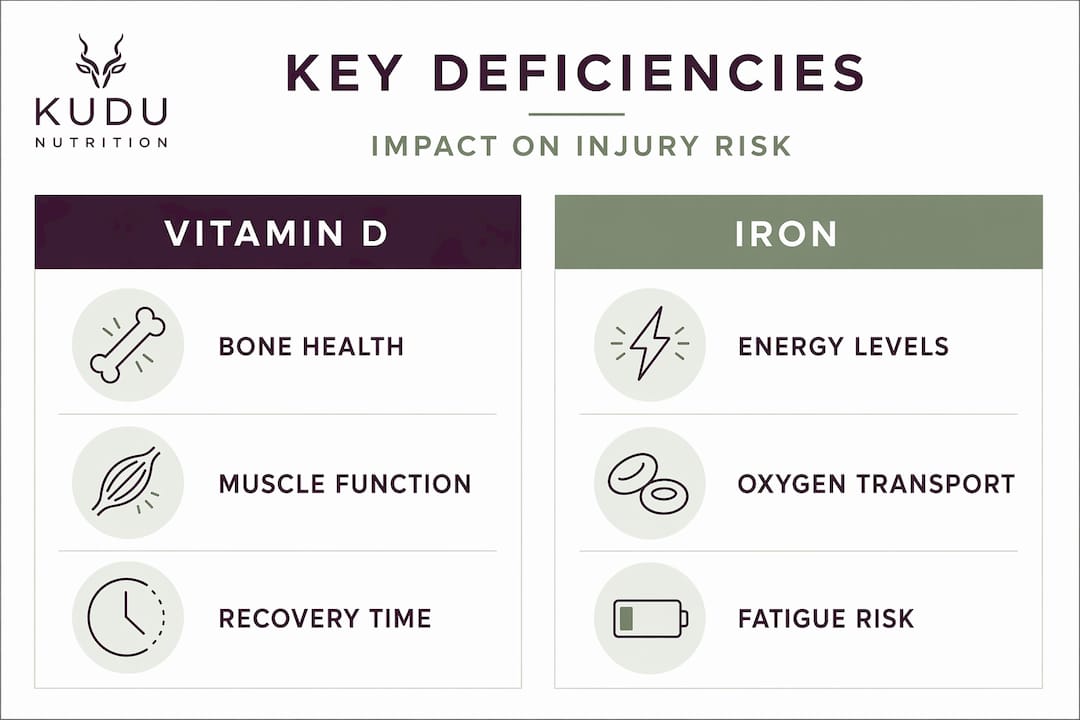
The second is protein. Not all athletes under-eat protein in absolute terms, but many fall short during heavy training blocks when repair demand is highest. Protein is the raw material for muscle and connective tissue repair. Without adequate daily intake, recovery from micro-damage accumulates into overuse injury. Individualised supplementation based on confirmed deficiencies, rather than blanket use, is what the evidence recommends.
The risks of indiscriminate supplementation are real and worth taking seriously:
- Excess fat-soluble vitamins (A, D, K, E) accumulate in tissue and can become toxic
- High-dose iron supplementation in athletes without confirmed deficiency causes oxidative stress
- Some supplements interact with medications or affect hormone markers in drug-tested sports
- Over-reliance on supplements can mask genuinely poor dietary habits that need addressing
Pro Tip: Before purchasing any supplement, get a blood panel that covers at minimum vitamin D, ferritin, and full blood count. You cannot target what you have not measured.
Recovery outcomes and training readiness
The best supplements for athletes are not the ones with the most dramatic marketing. They are the ones with the most consistent evidence across well-designed trials. Three supplements stand apart in this regard: creatine, omega-3 fatty acids, and protein.
A network meta-analysis of 35 RCTs with over 1,200 trained athletes found that creatine performed best for muscle strength gains, protein supplementation improved endurance capacity, and omega-3 showed the strongest effect on recovery outcomes. The takeaway is not that one is better than the others. It is that each targets a different bottleneck. Choosing the right one depends on where your injury risk is actually coming from.
| Supplement | Primary benefit | Best suited to |
|---|---|---|
| Creatine | Muscle strength | Power and resistance athletes |
| Protein | Endurance and repair capacity | Endurance athletes, all training phases |
| Omega-3 | Recovery and inflammation control | Athletes with high training volume |
Omega-3 fatty acids are particularly underrated in injury prevention nutrition strategies. Chronic, low-grade inflammation from repeated training loads increases tissue vulnerability over time. Omega-3 supplementation modulates that inflammatory response without fully suppressing it. The distinction matters because some inflammation is required for adaptation.

On protein timing, the evidence is more nuanced than the post-workout window mythology suggests. A rigorous RCT on soccer players found that both pre-sleep and post-exercise casein intake significantly improved anaerobic performance and recovery markers. Neither timing was universally superior. The practical implication is that consistency and preference should guide your timing strategy more than rigid windows.
Pro Tip: If you train twice daily, split your protein intake to cover both post-morning session and pre-sleep windows. You will recover better for the second session and maintain tissue repair overnight.
For a thorough breakdown of how to align these approaches to your training schedule, the recovery nutrition strategies guide from Kudunutrition covers this in practical detail.
Limitations and risks you need to know
Here is where honest supplementation advice diverges sharply from the promises on product labels. Several of the most widely purchased supplements have surprisingly weak evidence for the specific claims made about them.
Calcium and vitamin D are the starkest example. A review of 69 randomised controlled trials covering more than 150,000 adults found no clinically meaningful benefit from calcium and vitamin D supplementation for fracture or fall prevention. This does not mean vitamin D is useless for athletes. It means that supplementing vitamin D in athletes who are already replete provides little additional benefit. Context and baseline status change the calculation entirely.
Antioxidants are a subtler but equally important case. Vitamins A, C, E, and beta-carotene are often taken daily by athletes who assume they reduce exercise-induced damage. The reality is more complicated. High doses of antioxidants have been linked to increased mortality risk in certain populations, and they do not reliably prevent common illness.
More relevant to athletes specifically, the ISSN position on antioxidants notes that excessive antioxidant supplementation during training phases may blunt adaptation. Your body uses reactive oxygen species as cellular signals to trigger strength and endurance adaptation. Suppressing them indiscriminately interferes with the gains you are training for.
Practical guidance on what to avoid:
- Do not take high-dose antioxidant supplements during heavy training blocks unless you have a confirmed deficiency
- Do not self-prescribe calcium and vitamin D without baseline testing, particularly if fracture prevention is your goal
- Avoid megadose single-nutrient supplements that exceed established upper tolerable intake levels
- Prioritise whole-food sources for vitamins and minerals where possible; isolated supplements differ significantly from the same nutrients found in food
For athletes interested in bone health supplements, Kudunutrition has a detailed breakdown of which combinations are actually supported by evidence.
Practical strategies for using supplements effectively
Knowing what the evidence says is one thing. Building a personal supplementation strategy around it is another. These steps will help you get there without wasted money or wasted effort.
-
Get a baseline. Test your vitamin D, ferritin, full blood count, and if relevant, bone density. No supplement decision should be made without this data. Your GP or a sports medicine doctor can arrange this without much difficulty.
-
Identify your specific bottleneck. Are injuries linked to overuse, poor recovery between sessions, or acute muscle failures? Each points to a different supplement priority. Recovery-driven injuries often respond to omega-3 and timed protein. Strength-related issues may benefit from creatine.
-
Use protein timing deliberately. Based on pre-sleep and post-exercise timing evidence, you do not need to choose one window over another. Cover both when training load is high. An easily digested protein source before sleep and a complete protein source within two hours of training works well for most athletes.
-
Consider collagen protein for connective tissue. Collagen supplementation supports connective tissue repair and is particularly useful during periods of high loading or injury rehabilitation. Collagen protein repair biology works best when taken with vitamin C, around 30 to 60 minutes before activity.
-
Integrate supplements within a full recovery plan. Supplements work alongside sleep, periodised training, mobility work, and sensible load management. They do not compensate for neglecting these areas. An athlete who sleeps six hours, trains seven days a week, and skips rest periods will not solve that problem with omega-3 capsules.
-
Review and reassess regularly. A supplement that addressed a deficiency six months ago may no longer be needed. Retest and adjust rather than continuing on autopilot.
Pro Tip: If you are using collagen protein for injury recovery, take it roughly 45 minutes before your training session or rehabilitation work. This aligns peak amino acid availability with the period of greatest connective tissue demand.
For more on protein timing for recovery, Kudunutrition has a dedicated guide that covers the practical mechanics in depth.
My honest take on supplements and injury prevention
I have seen athletes spend more on supplement stacks each month than they invest in sleep, structured rest, or coaching. That imbalance tells you something about how supplement marketing has shaped expectations in this space.
In my experience, the athletes who benefit most from supplementation are those who approach it like a diagnostic process rather than a shopping list. They test first, identify a real gap, and choose a product that addresses that gap specifically. The benefits of dietary supplements are real, but they are almost always conditional on addressing an actual deficiency or recovery bottleneck.
What I have consistently found is that timing matters more than most people expect. Moving a protein supplement from mid-morning to pre-sleep made a measurable difference for several athletes I have worked with. Not dramatic, but consistent. And consistency over a training season accumulates.
The part I feel most strongly about is the antioxidant question. The idea of taking vitamins C and E daily to protect against training damage sounds sensible on the surface. But if you are in a hard training block, you may be paying to reduce the very adaptations you are working towards. That is not a minor caveat buried in a research paper. It is a practical reason to think carefully about what you are taking and when.
Supplementation that enhances performance and protects against injury does exist. But it looks nothing like the maximalist, stack-everything approach the industry sells. It looks like targeted choices, well-timed doses, and an honest conversation with your test results.
— Sam
Support your recovery with collagen protein
If the evidence in this article points toward one consistent theme, it is that connective tissue health and recovery readiness are central to how supplements reduce injury risk. Collagen protein addresses both directly. Kudunutrition’s liquid collagen protein sachets deliver 20g of collagen protein per sachet, designed to support joint, bone, and tissue repair with full ingredient transparency and Informed Sport certification. Each sachet is pre-measured, convenient to use around training, and free from the ambiguity that comes with many collagen products on the market. If you are adding collagen to your nutritional support for injuries, Kudunutrition’s full range of collagen protein formats gives you clear options with verified quality. Pair it with the injury prevention strategies covered in this article and you have a practical, evidence-grounded starting point.
FAQ
What is the role of supplements in injury prevention?
Supplements reduce injury risk primarily by correcting nutrient deficiencies and supporting recovery readiness, rather than acting as direct injury cures. The evidence is strongest for targeted use based on individual needs and baseline nutrient status.
Which supplements are best for athletes recovering from injury?
Omega-3 fatty acids, collagen protein, and casein protein have strong evidence for supporting recovery, tissue repair, and reducing inflammation in athletes. Timing these supplements around training and sleep further improves outcomes.
Does vitamin D supplementation prevent injuries?
Vitamin D supplementation reduces injury risk in athletes who are genuinely deficient, particularly for stress fractures and muscle function. However, supplementing in athletes who already have adequate levels offers little measurable benefit.
Can antioxidant supplements help with injury prevention?
Antioxidants at moderate levels can support recovery, but high-dose antioxidant use during intense training phases may blunt adaptation and, in some cases, raise health risks. Context and dose are everything.
How does collagen protein support injury prevention?
Collagen protein provides amino acids that support connective tissue repair, including tendons and ligaments. Taking it around 30 to 60 minutes before training or rehabilitation optimises amino acid availability during the period of greatest tissue demand.