


TL;DR:
- Supplement innovation involves advances in ingredient science, delivery formats, formulation design, and quality validation. Recent trends include ultra-low molecular weight peptides, non-pill formats, AI-driven R&D, and personalized nutrition based on biomarker data. Independent third-party verification and precise delivery methods ensure efficacy and transparency in modern supplements.
The supplement aisle looks nothing like it did ten years ago. What was once a shelf of amber pill bottles has become a catalogue of liquid sachets, dissolvable strips, and precision-dosed gummies backed by molecular science. Understanding what is supplement innovation means looking beyond new product launches and into the fundamental shifts in ingredient science, delivery technology, and regulatory thinking that are reshaping how we consume nutrients. This guide cuts through the noise and gives you the clearest, most current picture of where supplement development trends are heading and why they matter to your health.
Table of Contents
- Key takeaways
- What supplement innovation actually means
- The science and technology driving change
- Delivery formats and what consumers actually want
- Regulation, quality, and the transparency gap
- Applying innovation: matching advances to your goals
- My honest take on navigating supplement innovation
- Collagen innovation you can actually use
- FAQ
Key takeaways
| Point | Details |
|---|---|
| Innovation goes beyond new products | Supplement innovation covers ingredient sourcing, bioavailability, delivery format, and personalised formulation. |
| Molecular science is redefining dosage | Ultra-low molecular weight collagen peptides deliver results at 1g per day, far below standard doses. |
| Delivery formats have shifted decisively | Non-pill formats now represent 65% of market share, driven by convenience and absorption advantages. |
| Transparency remains a serious gap | Around 50% of top-selling supplements fail label accuracy tests, making third-party verification non-negotiable. |
| Personalisation is the next frontier | Real-time biomarker data is moving supplementation from guesswork to measurable, evidence-based outcomes. |
What supplement innovation actually means
Ask most people what supplement innovation is and they will describe a new flavour of protein powder or a novel botanical extract. That answer is not wrong, but it is incomplete. Supplement innovation is the systematic advancement of how nutrients are identified, formulated, delivered, and validated to produce meaningful improvements in human health outcomes.
The scope falls into three distinct categories. First, there is ingredient innovation: the discovery or refinement of bioactive compounds with improved potency, purity, or specificity. Second, delivery format innovation: the development of form factors such as liquids, gels, and strips that change how the body absorbs a compound. Third, formulation science: the art of combining ingredients so they work together rather than competing, accounting for cofactor needs, pH sensitivity, and absorption windows.
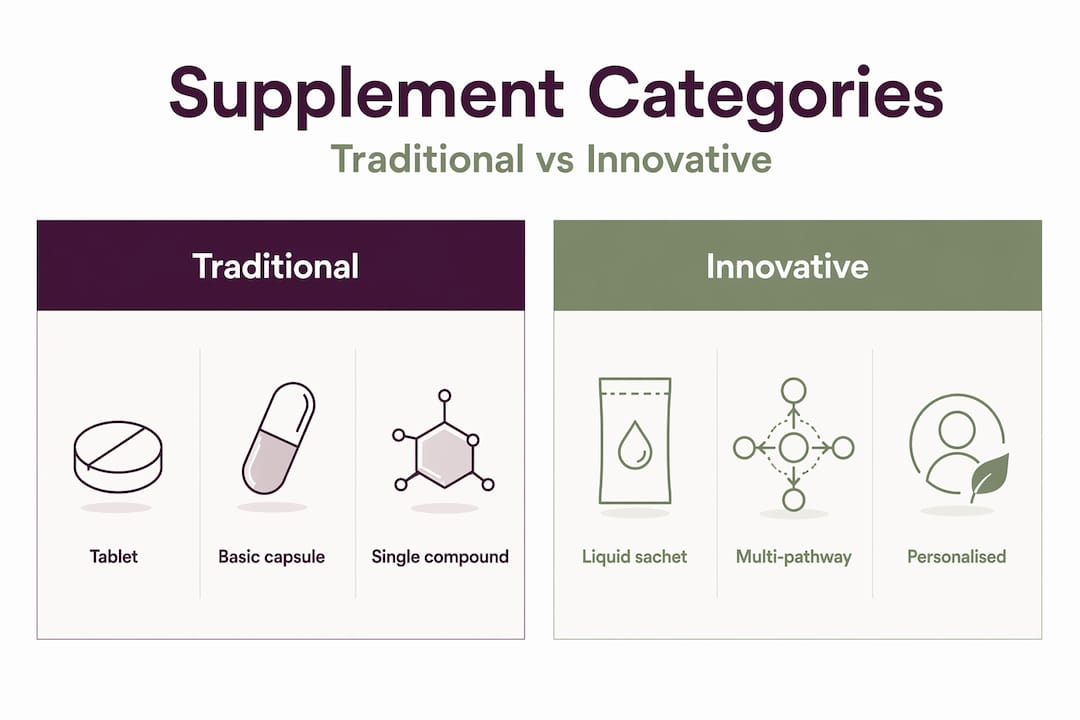
The table below shows how these dimensions separate traditional supplements from genuinely advanced ones.
| Feature | Traditional supplement | Innovative supplement |
|---|---|---|
| Form | Tablet or capsule | Liquid sachet, gel, strip |
| Molecular targeting | Standard molecular weight | Ultra-low molecular weight peptides |
| Dosage efficiency | 3,000 to 5,000mg per dose | 1g per dose with equivalent effect |
| Personalisation | One-size-fits-all | Biomarker-informed formulation |
| Quality verification | Self-certified label | Independent third-party testing |
| Consumer experience | Neutral to unpleasant | Taste-optimised, lifestyle-integrated |
Nutritional supplement advancements at this level change the consumer experience fundamentally. You are no longer swallowing a generic capsule and hoping for the best. You are using a format calibrated to your biology, verified by independent science, and designed to integrate into a real daily routine.
The science and technology driving change
The most consequential development in supplement R&D right now is the shift toward ultra-low molecular weight peptides. Naticol UltraPeptide at 500 Daltons is effective at just 1g per day, compared to the 3,000 to 5,000 Daltons used in conventional collagen products at far higher doses. Smaller peptides cross the intestinal wall more readily, meaning more of what you consume actually reaches the target tissue. That is not a marginal improvement. It is a structural rethinking of how collagen works as a supplement.
Targeted delivery is advancing in parallel. Technologies like gut-local mechanical entrapment systems (such as SiPore®) hold active ingredients in specific sections of the gastrointestinal tract, releasing them where absorption is most effective rather than letting them degrade in transit. This kind of precision was simply not possible a decade ago.
Artificial intelligence is accelerating the entire R&D cycle. AI tools now handle literature mining, patent landscape analysis, lab simulation, formulation design, and early regulatory risk review in parallel, compressing timelines that once took years. Critically though, AI requires expert human oversight to translate computational outputs into products that are both feasible and compliant. The technology accelerates discovery. It does not replace scientific judgement.
- Peptide engineering: Reducing molecular weight to optimise intestinal absorption and lower effective dosages
- Targeted delivery systems: Localising ingredient release to specific gut regions for maximum uptake
- AI-assisted formulation: Using machine learning to model ingredient interactions and predict efficacy before lab testing
- Biomarker integration: Linking product development to real-time physiological data for personalised formulations
- Third-party validation pipelines: Building independent testing into the product development cycle from the outset
Pro Tip: When evaluating any new supplement ingredient, look for molecular weight specifications and absorption data alongside the standard efficacy claims. A compound with superior bioavailability at a lower dose is almost always preferable to a higher-dose equivalent with poor uptake.
Delivery formats and what consumers actually want
The format shift in supplements is one of the clearest signals of where consumer preferences are heading. Non-pill formats now represent 65% of market share, with gummies alone accounting for 25% of the total supplement market as of mid-2026. These are not simply cosmetic changes. They reflect a genuine intersection of lifestyle fit, absorption science, and daily adherence.

Liquids and sachets, for example, allow for pre-dissolved compounds that bypass the disintegration stage required by tablets. This means the active ingredient reaches the gut faster and in a more bioavailable state. For collagen specifically, liquid formats allow higher peptide concentrations in smaller volumes without the chalky texture that has historically plagued powder-based products.
Consumers prefer formats that combine low pill count, ease of use, and tangible sensory quality alongside potency improvements. The format is no longer a secondary consideration. It is a primary driver of whether a supplement actually gets taken consistently, which determines whether it works at all.
Here are the most significant format categories shaping the latest in dietary supplements right now:
- Liquid sachets: High bioavailability, portable, pre-measured, and taste-optimised for daily compliance
- Gummies: Broad demographic appeal, no water required, particularly strong in women’s health and energy categories
- Dissolvable strips: Ultra-portable, fast absorption via oral mucosa, minimal packaging
- Soft gel capsules: Better than hard capsules for fat-soluble compounds, easier to swallow
- Powder sticks: Flexible dosing with beverage integration, popular among athletes
The inclusivity dimension is worth noting. Formats like liquids and gummies have made supplementation accessible to demographics who struggle with traditional tablets, including older adults, children, and people managing swallowing difficulties. This is health product innovation that genuinely expands who can benefit from supplementation.
Regulation, quality, and the transparency gap
Understanding how are supplements evolving requires confronting a difficult truth about quality. Approximately 50% of top-selling supplements fail to meet label accuracy standards across seven categories tested in 2025 and 2026. That means the ingredient listed on the label, at the dose specified, is not what is actually in the product for a significant portion of the market. For a health enthusiast or clinician, that is a serious problem.
The regulatory environment is evolving to address this. Industry stakeholders are now advocating for an innovation-forward interpretation of dietary substance definitions, one that evaluates ingredients based on measurable characteristics such as identity, purity, bioactivity, and stability rather than manufacturing method alone. This matters because it creates a framework where novel ingredients like ultra-low molecular weight peptides can be assessed on their actual properties rather than rejected on procedural grounds.
For you as a consumer or professional, the practical implication is straightforward. Independent third-party certification is the only reliable proxy for label accuracy. Certifications such as Informed Sport, NSF, and USP require real product testing rather than manufacturer self-declaration. You can also learn to read supplement labels critically by checking what label transparency requires before making purchasing decisions.
Pro Tip: When a supplement brand does not display third-party certification, that absence is information. Prioritise products that have been tested by an independent body with publicly searchable certificates.
The next evolution in quality assurance links back to personalisation. True personalised supplementation requires longitudinal biomarker data combined with independently verified product quality. Preference surveys and lifestyle questionnaires are not enough. The shift is toward measurable health outcomes tracked over time, which demands both analytical rigour and product integrity.
Applying innovation: matching advances to your goals
Knowing what the advances are is only useful if you can connect them to specific health goals. The table below maps innovation categories to typical use cases.
| Innovation type | Key feature | Best suited for |
|---|---|---|
| Ultra-low MW collagen peptides | 1g effective dose, high absorption | Skin elasticity, joint recovery, bone density |
| Multi-pathway folate (e.g., FolinicActive™) | Cofactor support for sensitive subgroups | Adults with methylation sensitivity |
| Liquid delivery formats | Pre-dissolved, fast uptake | Athletes, daily routine integration |
| AI-personalised formulations | Biomarker-matched ingredients | Optimising outcomes for specific health markers |
| Third-party certified products | Verified label accuracy | Anyone prioritising safety and efficacy confirmation |
Multi-pathway active folate is a strong nutraceutical innovation example. FolinicActive™ addresses a 15 to 25% subgroup that experiences adverse effects on standard L-methylfolate by providing complete cofactor support through multiple metabolic pathways. This is personalised formulation at the molecular level, not just adjusting a dose but redesigning the mechanism.
For fitness recovery specifically, advanced protein supplementation guided by biomarker data offers far more precise outcomes than generic post-workout shakes. Knowing your baseline collagen turnover rates, inflammation markers, and absorption efficiency means you can match format, dose, and timing to your actual physiology rather than following a generic protocol.
The future of health supplements belongs to those who combine ingredient literacy with product scrutiny. Supplement purchasing patterns already signal broader wellness trends before they reach mainstream food and beverage markets. The consumers and professionals who track these signals closely tend to be several years ahead of the general population in terms of health outcomes.
My honest take on navigating supplement innovation
I have watched this space long enough to know that enthusiasm for new ingredients almost always outpaces the evidence. That is not a reason to dismiss innovation. It is a reason to apply a sharper filter.
The most common mistake I see is conflating novelty with efficacy. A new delivery format or a smaller molecular weight is meaningful only if it translates into a measurable outcome for the person taking it. I have seen genuinely impressive clinical data on ultra-low molecular weight collagen. I have also seen marketing dressed up in the language of science with nothing credible behind it.
What I have learned is that the best innovations are not the loudest ones. They tend to be incremental advances in bioavailability or formulation precision that quietly outperform the previous standard over months of consistent use. The brands worth trusting are those that publish their third-party test results, specify molecular weight and sourcing on the label, and do not make health claims that outrun their evidence.
Consult a clinician before making significant changes to your supplement protocol, particularly when trying novel ingredients. What doctors want patients to know about supplements is often more cautious than brand marketing suggests, and that caution is earned. Innovation is most valuable when it is paired with rigour.
— Sam
Collagen innovation you can actually use
If the science in this article has made one thing clear, it is that format and molecular quality are not secondary details. They determine whether a supplement works.
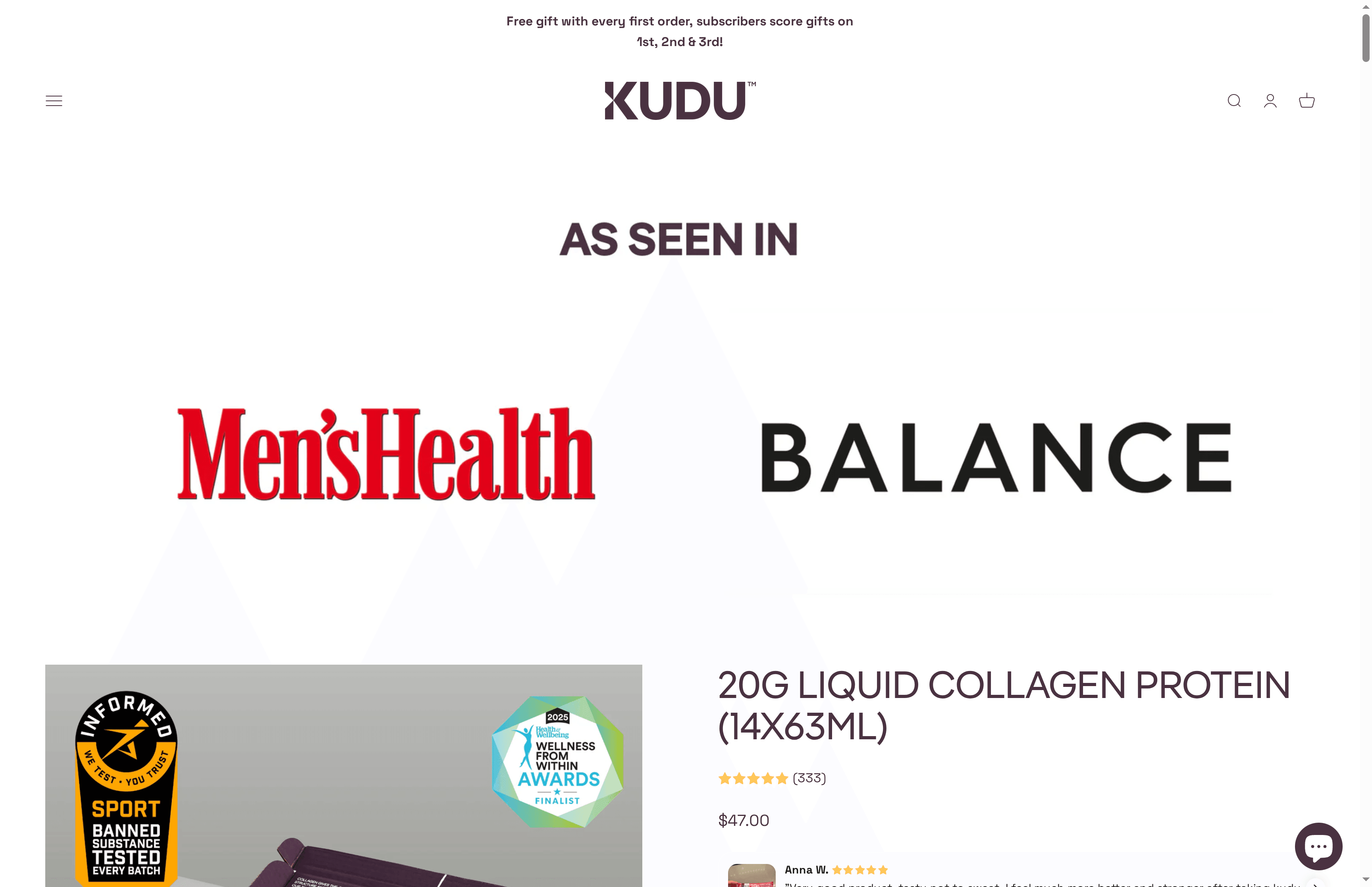
Kudunutrition’s liquid collagen sachets are built around exactly the principles discussed here: high-concentration collagen protein in a pre-dissolved liquid format for superior absorption, verified by Informed Sport certification for complete label accuracy. Each sachet delivers 20g of collagen protein with full ingredient transparency, no proprietary blends, and no ambiguity about what you are consuming. For athletes, health-conscious consumers, and anyone serious about skin, joint, and recovery outcomes, this is what considered supplement development actually looks like in practice. You can also explore the collagen and beauty benefits that have made liquid collagen one of the most evidence-backed daily supplements available.
FAQ
What is supplement innovation?
Supplement innovation refers to advances in ingredient science, delivery formats, formulation design, and quality validation that improve the efficacy, safety, and convenience of dietary supplements beyond conventional pill-based products.
What are the biggest supplement development trends in 2026?
Non-pill formats now represent 65% of market share, ultra-low molecular weight collagen peptides are redefining dosage efficiency, and AI-assisted R&D is accelerating formulation development. Personalised nutrition guided by biomarker data is also gaining significant traction.
How do I know if a supplement is genuinely innovative or just marketing?
Look for third-party certification such as Informed Sport or NSF, molecular weight specifications for peptide-based products, and published clinical data. You can find a practical guide to reading supplement labels to help identify credible products.
Why does delivery format matter for supplement efficacy?
Delivery format affects how quickly and completely an ingredient is absorbed. Liquid formats bypass the disintegration stage of tablets and deliver pre-dissolved compounds directly to the gut, often resulting in faster and more complete uptake.
Is personalised supplementation actually achievable now?
Yes, but it requires real biomarker data rather than lifestyle questionnaires. True personalisation links longitudinal health metrics with independently verified supplement quality to produce measurable outcomes rather than generalised recommendations.