


TL;DR:
- Most people fail at skincare due to conflicting advice and complex routines, not lack of discipline.
- A simple routine focusing on knowing your skin type, using a cleanser, moisturizer, and SPF daily, and consistency yields real results.
Most people don’t fail at skin care because they lack discipline. They fail because they’re buried under conflicting advice, ten-step routines, and shelves of products promising miracles. A solid healthy skin routine guide should cut through that noise and give you something you can actually stick to. This guide does exactly that. You’ll learn how to identify your skin type, build a morning and evening routine from scratch, adapt it as the seasons change, and avoid the mistakes that quietly undermine your progress.
Table of Contents
- Key takeaways
- Understanding your skin type
- The core three: cleanser, moisturiser, and SPF
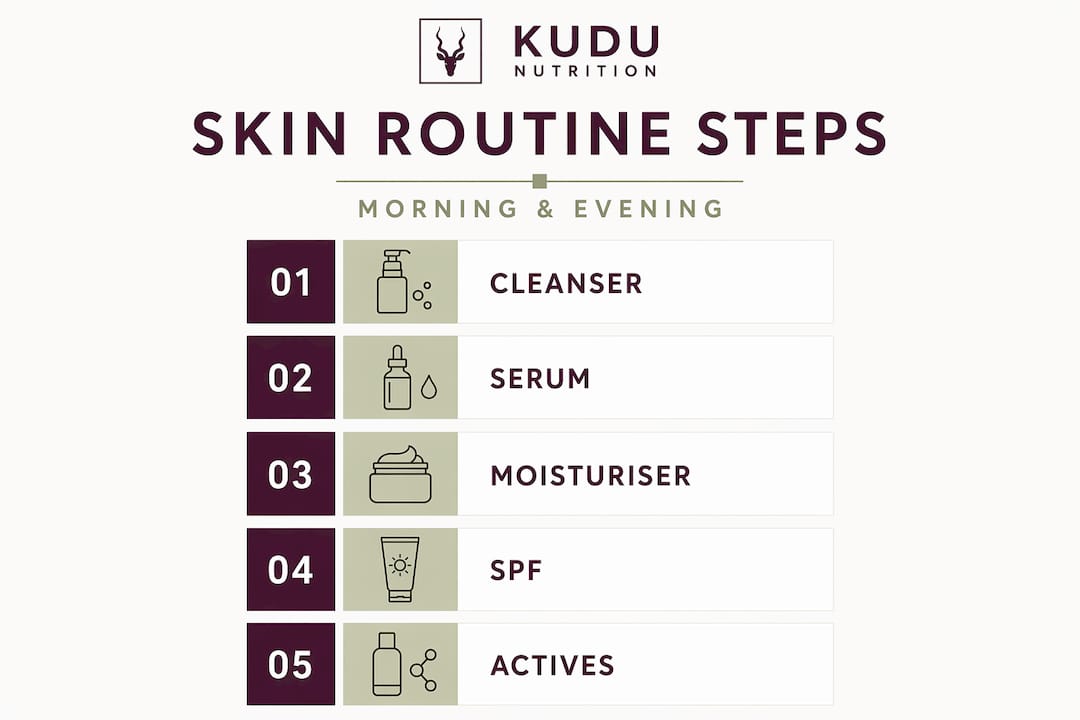
- Morning and evening routines, step by step
- Adjusting for seasons and environment
- Common mistakes and how to avoid them
- My honest take on skin care simplicity
- Supporting your skin from the inside out
- FAQ
Key takeaways
| Point | Details |
|---|---|
| Know your skin type first | Use the bare face test to identify whether your skin is dry, oily, combination, normal, or sensitive before buying anything. |
| Three products do most of the work | A gentle cleanser, a good moisturiser, and daily SPF 30+ form the foundation every effective routine is built on. |
| Consistency beats complexity | Habit-building accounts for roughly 80% of skin care success. Product choice matters far less than showing up daily. |
| Seasonal adjustments are non-negotiable | Richer formulas in winter and lighter gels in summer help your skin barrier stay intact year-round. |
| Introduce new products slowly | Add one new active ingredient at a time, with a two to four week gap, to spot sensitivities before they escalate. |
Understanding your skin type
Before you spend a single pound on products, you need to know your skin type. Buying a mattifying cleanser when your skin is actually dry, or slathering on a rich cream when you’re oily, is the fastest way to make things worse. Most skin problems people struggle with are the result of using the wrong formulations, not a lack of effort.
The most reliable method is the bare face test. Here’s how to do it properly:
- Wash your face with a gentle, unfragranced cleanser.
- Pat it dry and leave your skin completely bare. No toner, no serum, no moisturiser.
- Wait 30 minutes and observe.
- After an hour, press a clean tissue against your forehead, nose, and cheeks and note what you see.
What your results mean:
- Dry skin: Your face feels tight, may look slightly flaky, and the tissue shows nothing.
- Oily skin: Your whole face looks shiny and the tissue picks up visible oil from every zone.
- Combination skin: Shine and oil appear on your T-zone (forehead, nose, chin) but your cheeks feel normal or slightly dry.
- Normal skin: Balanced, comfortable, and minimal shine or tightness.
- Sensitive skin: Redness, stinging, or irritation even after a mild wash.
The most common mistake is confusing dehydrated skin with dry skin. Dehydration is a temporary condition caused by lack of water in the skin. Dry skin is a type where the skin produces less natural oil. Someone with oily skin can absolutely be dehydrated, and using heavy oil-control products without adding hydration will make things worse.
Pro Tip: If your skin feels tight two hours after washing, you may be using a cleanser that is too harsh for your type, regardless of what the label says.
The core three: cleanser, moisturiser, and SPF
A fundamental healthy skin routine requires only three products: a gentle cleanser, a moisturiser suited to your skin type, and a daily broad-spectrum SPF 30 or higher. That’s it. Everything else is optional.
Here’s what each one actually does and how to use it correctly:
-
Cleanser: Removes dirt, excess oil, pollution, and product residue. The key word is gentle. Foaming cleansers with sulphates strip your skin’s natural oils, disrupt the barrier, and trigger more oil production in oily types. Opt for gel cleansers for oily or combination skin, cream or oil cleansers for dry or sensitive skin.
-
Moisturiser: Seals hydration into the skin and supports the barrier. Apply yours within three minutes of cleansing while your skin is still slightly damp. This makes a measurable difference to how much moisture is retained. Lightweight gel formulas work for oily skin. Richer creams with ceramides or shea butter suit dry or sensitive types.
-
Sunscreen: This is the single most impactful step in any routine. Daily SPF 30+ protects against UV-induced ageing, hyperpigmentation, and skin cancer risk. Cloudy days are not an excuse. UV rays penetrate cloud cover. Apply sunscreen every morning as the final step before you leave the house.
A word on quantity: most people apply half the recommended amount of sunscreen, which significantly reduces its protective effect. Dermatologists recommend around a full shot glass for the body and a generous quarter-teaspoon for the face. Reapply every two hours when outdoors.
Pro Tip: Apply products in order from lightest to heaviest texture. Serum before moisturiser, moisturiser before sunscreen. Heavier formulas applied first create a barrier that stops lighter ones from absorbing properly.
Morning and evening routines, step by step
Your skin has different needs depending on the time of day. Mornings are about protection. Evenings are about repair. Building both into your step by step skin health guide is what takes results from average to genuinely noticeable.
Your morning routine
- Cleanse with a gentle, water-based cleanser. If you have dry or normal skin, a splash of cool water is sometimes enough in the morning.
- Tone or serum (optional): If you use a vitamin C serum, this is where it goes. It protects against environmental damage and supports collagen production throughout the day.
- Moisturise: Choose a formula suited to your type, applied to slightly damp skin.
- Sunscreen: Non-negotiable. Apply last and let it set before you apply make-up.
Your evening routine
The evening routine is where the real transformation happens because your skin enters repair mode overnight.
- Double cleanse if needed: Use an oil-based cleanser first to dissolve sunscreen and make-up, then follow with water-based cleanser to remove residue. This is particularly important if you wear SPF or foundation daily.
- Treatment step: This is where actives like retinol, exfoliating acids (AHAs or BHAs), or niacinamide are applied.
- Moisturiser: Use something slightly richer than your daytime formula to support overnight repair.
One concept worth knowing is skin cycling. It’s a structured rotation of actives across the week. A typical four-night cycle looks like this: night one for exfoliation, night two for retinol, then two nights of recovery using only barrier-supporting moisturiser. This prevents the over-exfoliation and irritation that dermatologists see constantly.
Pro Tip: You do not need to use every active ingredient on the market. Pick one or two that address your primary skin concern and use them consistently for at least eight weeks before evaluating results.

Adjusting for seasons and environment
Your skin in January is not the same as your skin in July. Temperature, humidity, wind, and even indoor heating all affect your skin barrier’s ability to hold onto moisture and defend itself from irritation. Environmental changes have a major impact on skin behaviour, and ignoring this is one of the most common reasons people plateau with their routines.
Here’s a practical seasonal reference:
| Season | Skin challenge | Recommended swap |
|---|---|---|
| Winter | Low humidity, central heating, wind damage | Richer creams, ceramide-based formulas, gentle cleansers |
| Spring | Allergens, fluctuating temperatures | Introduce niacinamide, reduce heavy creams gradually |
| Summer | Excess oil, UV exposure, heat rashes | Lightweight gel moisturiser, higher SPF, oil-control cleansers |
| Autumn | Barrier recovery after summer | Reintroduce richer hydration, add hyaluronic acid |
A few principles to follow regardless of season:
- Switch products gradually, not all at once. Your skin needs time to adjust.
- Pay attention to how your skin feels on any given day, not just what season it technically is.
- Key ingredients to lean on during transitions include ceramides (barrier repair), niacinamide (oil control and redness reduction), and hyaluronic acid (hydration at multiple skin depths).
- Richer creams in winter and lighter gels in warmer months reduce the risk of congestion and breakouts caused by using formulas that are too heavy for the conditions.
Common mistakes and how to avoid them
Most skin care problems are self-inflicted, not inevitable. Here are the errors that dermatologists see most frequently.
Over-cleansing and over-exfoliating. Washing your face three times a day or using a scrub every night strips the acid mantle, disrupts your microbiome, and triggers inflammation. The barrier damage this causes can take weeks to recover from. Twice a day cleansing is the maximum for most skin types. Exfoliation twice a week is plenty.
Impatience. Skin cells take roughly 28 days to turn over. Any product needs at least six to eight weeks of consistent use before you can fairly judge its impact. Most people quit after two weeks and conclude the product doesn’t work.
Layering too many new products at once. Introduce new actives one at a time, with a two to four week settling period. If you add three new products in a week and your skin breaks out, you have no idea which one caused it.
A five-product routine you follow every day will always outperform a fifteen-product routine you follow three times a week.
Simplicity is not a compromise. It’s a strategy. The more complex your routine, the harder it is to sustain, the easier it is to accidentally mix incompatible ingredients, and the longer it takes to troubleshoot when something goes wrong.
My honest take on skin care simplicity
I’ve spent years reading the research, following the trends, and genuinely testing what works. Here’s what I keep coming back to: the results that actually last come from boring routines done without fail.
I’ve seen people spend hundreds of pounds on peptide serums and targeted treatments while skipping moisturiser on rushed mornings and forgetting SPF three days out of five. Their skin doesn’t improve. Meanwhile, someone with a £30 routine, used every single day, sees real change within two months. Consistency accounts for roughly 80% of skin care success, and in my experience, that number feels accurate.
The mindset shift that actually helps is treating your skin routine the way you treat brushing your teeth. Not optional. Not exciting. Just done. When you stop chasing the next product and start defending the habit, your skin responds. The skin care routine tips that stick are always the simple ones.
The other thing I’d say is this: actives matter, but only if your barrier is intact first. If your skin is reactive, red, or constantly breaking out, the answer is almost never a stronger treatment. It’s usually less product, more moisture, and more patience.
— Sam
Supporting your skin from the inside out

Topical routines do a lot, but they work from the outside in. Collagen supplementation works from the inside out. Collagen supports skin elasticity and repair at a structural level, complementing everything you apply topically. As collagen production naturally declines with age, supplementing it directly gives your skin the raw material it needs to maintain firmness and recover more efficiently.
Kudunutrition’s liquid collagen protein sachets deliver 20g of high-quality collagen per serving, in a format designed for absorption and taste. Each sachet is Informed Sport certified, so you know exactly what you’re getting. Whether your focus is skin, joints, or recovery, it fits alongside your daily skincare essentials without any extra complexity. If you’re building a complete approach to skin health, adding collagen at the foundation level is worth considering alongside your boost skin recovery efforts.
FAQ
What is the most important step in a skin routine?
Daily broad-spectrum SPF 30+ is the most effective preventative step in any skin routine. It protects against UV damage, premature ageing, and hyperpigmentation, regardless of weather or skin type.
How long does a skin care routine take to show results?
Most skin care products need at least six to eight weeks of consistent daily use before results are visible. Skin cell turnover takes roughly 28 days, so changes happen gradually rather than overnight.
How do I know if I’m over-exfoliating?
Signs include persistent redness, stinging after cleansing, increased sensitivity to products, or a shiny and tight feeling that doesn’t improve with moisturiser. Reducing exfoliation to once or twice a week and focusing on barrier repair usually resolves this within two weeks.
Should I change my skin care routine seasonally?
Yes. Seasonal routine adjustments help your skin maintain its barrier as temperature and humidity shift. Use richer creams in winter and swap to lighter gel formulas in summer to prevent congestion.
Can collagen supplements improve my skin?
Collagen supplementation can support skin elasticity and repair, working alongside a topical routine. Consistent daily intake over several weeks is needed to see meaningful results.