

TL;DR:
- Skin support supplements provide bioactive compounds like collagen peptides and vitamin C to enhance skin hydration and brightness over weeks. Oral collagen peptides stimulate the body’s own collagen production systemically, showing more consistent results than topical applications. Sustainable improvements require consistent use, adequate vitamin C intake, and realistic expectations about gradual, subtle changes.
Skin support supplements are products designed to nourish the skin from within, delivering bioactive compounds such as collagen peptides, vitamin C, and essential fatty acids to support hydration, brightness, and structural integrity. A large review of 113 clinical trials confirms that oral collagen peptides produce gradual, measurable improvements in skin elasticity and hydration with consistent use. These are not miracle cures. They are nutritional adjuncts that work alongside sunscreen, retinoids, and a balanced diet to support your skin’s biology over weeks and months. Understanding what the evidence actually says about skin care dietary supplements will help you spend wisely, set realistic expectations, and get the most from every sachet or capsule.
How collagen supplements support skin health
Collagen is the most abundant structural protein in the skin, accounting for roughly 70% of its dry weight. As you age, natural collagen production declines, which contributes to reduced firmness and increased dryness. Oral collagen supplements, typically in the form of hydrolysed collagen peptides, are the most studied category of skin support supplements.

What hydrolysed collagen peptides actually do
Hydrolysed collagen is broken down into smaller peptides and amino acids that the body can absorb through the gut. Crucially, ingested peptides stimulate the body’s own collagen production rather than depositing collagen directly into the skin. This distinction matters because it explains why results are gradual. The peptides act as signalling molecules, prompting fibroblasts in the dermis to increase collagen synthesis throughout the body.
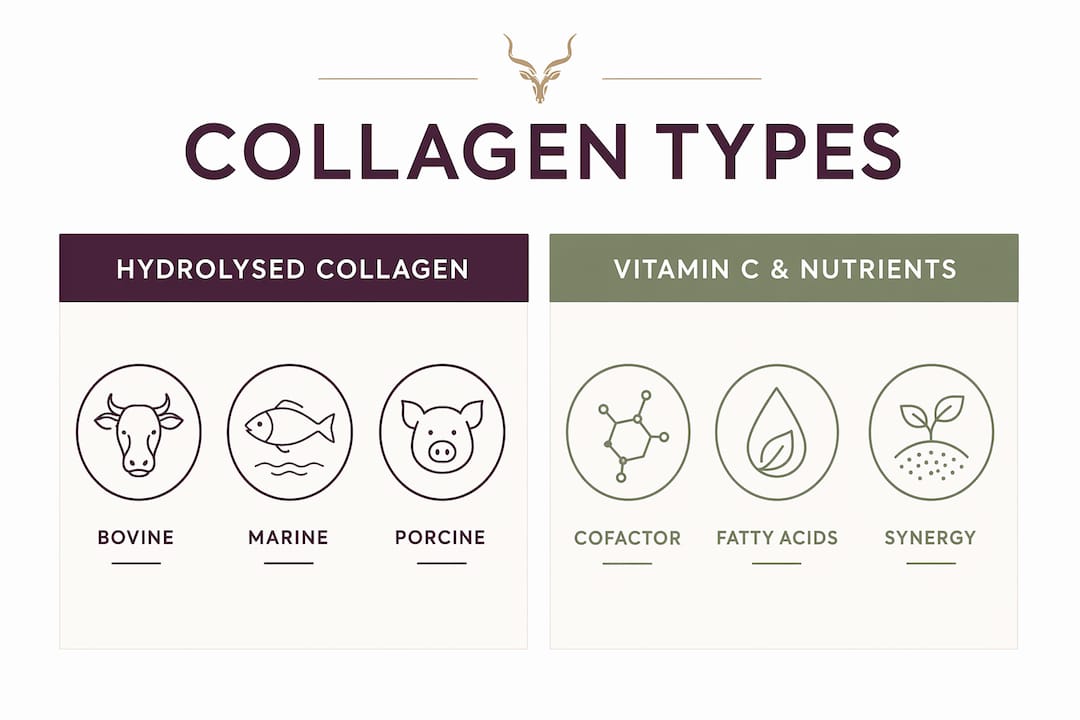
Collagen supplements come from several sources, each with slightly different profiles:
| Type | Source | Primary claimed benefit |
|---|---|---|
| Type I hydrolysed collagen | Bovine (cow hide) | Skin hydration, elasticity, wrinkle reduction |
| Marine collagen peptides | Fish skin and scales | Skin brightness, hydration, fine lines |
| Type II collagen | Chicken cartilage | Joint support; some skin hydration data |
| Vegan collagen boosters | Plant-based amino acids, vitamin C | Supports body’s own collagen synthesis |
Marine collagen peptides are often cited for superior bioavailability due to their smaller molecular weight, though the clinical differences between bovine and marine sources on skin outcomes remain modest. Most studies use doses between 2.5g and 10g per day, with measurable skin hydration and elasticity improvements appearing after four to twelve weeks of consistent use.
Individual results vary considerably depending on age, baseline skin condition, sun exposure history, and diet. Older skin, which has lower baseline collagen density, tends to show more noticeable responses to supplementation than younger skin.
Pro Tip: Consistency is the single most important factor in collagen supplementation. Taking your supplement daily for at least eight weeks gives the biological signalling process enough time to produce measurable changes in hydration and firmness.
What role do vitamin C and other nutrients play?
Vitamin C is not optional when it comes to collagen synthesis. It is a required cofactor for the enzymes that stabilise the collagen triple helix structure. Without adequate vitamin C, newly synthesised collagen is structurally weak and breaks down rapidly. This makes it one of the top skin vitamins for anyone using collagen supplements.
A landmark study from the University of Otago found that consuming approximately 250mg of vitamin C per day from kiwifruit for eight weeks increased skin thickness and accelerated renewal in participants. The mechanism is systemic. Oral vitamin C raises plasma and skin tissue concentrations more reliably than topical application, which is limited by the skin barrier’s resistance to water-soluble molecules. You can read more about this relationship in Kudunutrition’s overview of vitamin C and collagen synthesis.
Beyond vitamin C, several other nutrients contribute meaningfully to skin health:
- Biotin supports keratin infrastructure, the protein that forms the outer skin layer, and deficiency is linked to dry, flaky skin
- Essential fatty acids (omega-3 and omega-6) maintain the skin’s lipid barrier, reducing transepidermal water loss and supporting suppleness
- Zinc regulates sebum production and supports wound healing, making it relevant for acne-prone skin
- Antioxidants such as vitamin E and astaxanthin neutralise free radicals generated by UV exposure, reducing oxidative damage to collagen fibres
These nutrients work synergistically with collagen peptides. Vitamin C drives collagen assembly, fatty acids protect the barrier that retains moisture, and antioxidants slow the degradation of newly synthesised collagen. Taking collagen in isolation without addressing these co-factors is a common oversight.
Pro Tip: Before adding multiple supplements, audit your diet first. A diet rich in citrus fruits, oily fish, nuts, and leafy greens provides many of these co-factors naturally, making your collagen supplement significantly more effective.
Oral versus topical peptides: which works better?
The debate between oral and topical peptide products is one of the most common points of confusion in nutritional support for skin. Both forms have legitimate roles, but they work through different mechanisms and produce different outcomes.
A meta-analysis of 19 randomised controlled trials found that oral peptides produced statistically significant improvements in skin hydration (mean difference of 5.80) and brightness (mean difference of 2.40), with modest wrinkle reduction. Topical peptides showed benefits for localised texture and fine lines but with less consistent evidence for systemic hydration. A separate Frontiers in Medicine analysis specifically identified oral tripeptides as the highest-performing form for hydration and roughness reduction compared to placebo.
| Form | Mechanism | Strongest evidence | Practical consideration |
|---|---|---|---|
| Oral collagen peptides | Systemic signalling via gut absorption | Hydration, brightness, elasticity | Daily dose required; effects take weeks |
| Topical peptides | Surface-level receptor interaction | Localised wrinkle texture, firmness | Immediate application; limited depth penetration |
| Combined oral and topical | Systemic plus surface action | Hydration and texture together | Higher cost; most comprehensive approach |
Topical products cannot penetrate the dermis reliably because the skin barrier blocks large peptide molecules. Oral supplements bypass this limitation entirely by entering the bloodstream and reaching the dermis from within. This is why oral peptides for hydration consistently outperform topicals in clinical hydration measurements. For most people, oral supplementation is the more efficient route for whole-skin hydration and brightness, while topicals remain useful for targeted surface concerns.
What results should you realistically expect?
The most common mistake people make with skin supplements is expecting topical-speed results from an internal biological process. Collagen supplement effects appear after several weeks of consistent use, and the improvements are subtle rather than dramatic. Skin feels more hydrated, looks brighter, and may feel slightly firmer. Deep wrinkles do not disappear.
Dermatologists consistently position supplements as adjuncts to evidence-based skincare, not replacements for it. Sunscreen remains the single most effective intervention for preventing collagen degradation. Retinoids are the gold standard for stimulating skin cell turnover. Supplements support the system; they do not override it.
Regulatory guidance adds another layer of caution. Under frameworks similar to the FDA’s 21 CFR 101.93, supplement labels in most markets must use structure and function claims rather than disease treatment language. When a product promises to “support skin hydration,” that is a compliant claim. When it promises to “reverse ageing” or “eliminate wrinkles,” that crosses into territory unsupported by evidence and often by regulation.
Practical best practices for safe, effective supplement use:
- Choose products with transparent ingredient lists and third-party quality certification (such as Informed Sport)
- Start with a single supplement for at least eight weeks before adding others, so you can attribute any changes accurately
- Photograph your skin in consistent lighting every two weeks to track subtle changes objectively
- Maintain sunscreen use daily, regardless of supplementation
- Avoid products making dramatic anti-ageing promises without published clinical data to support them
- Consult a dermatologist or registered nutritionist if you have a skin condition before starting a new supplement regimen
The step-by-step approach to collagen intake matters as much as the product itself. Sporadic use produces no measurable benefit.
Key takeaways
Skin support supplements deliver real but modest benefits, primarily through improved hydration and brightness, when used consistently alongside evidence-based skincare.
| Point | Details |
|---|---|
| Collagen peptides signal, not deposit | Oral collagen stimulates your body’s own production rather than adding collagen directly to skin. |
| Hydration and brightness respond best | Clinical meta-analyses show the strongest evidence for hydration and brightness improvements, not wrinkle elimination. |
| Vitamin C is non-negotiable | Adequate vitamin C intake is required for collagen synthesis; systemic intake outperforms topical application. |
| Oral outperforms topical for hydration | Oral peptides bypass the skin barrier and reach the dermis systemically, producing more consistent hydration results. |
| Consistency over weeks is required | Measurable improvements accumulate after four to twelve weeks; sporadic use produces no reliable benefit. |
Why patience is the ingredient most people skip
I have spent years reading the clinical literature on skin supplements, and the pattern is always the same. The science is genuinely promising. The marketing is almost always ahead of it. People buy a collagen supplement expecting to see a difference in a fortnight, feel nothing, and conclude the whole category is a scam. That conclusion is wrong, but the expectation that led to it was also wrong.
What the evidence actually shows is that collagen supplements signal slow biological processes, leading to modest improvements in hydration and elasticity rather than quick wrinkle filling. That is not a failure of the supplement. That is how biology works. Fibroblast stimulation, collagen fibre assembly, and epidermal renewal all operate on timescales measured in weeks, not days.
My honest observation is that the people who benefit most from skin supplements are those who treat them like a long-term nutritional habit rather than a cosmetic treatment. They combine a quality collagen product with consistent vitamin C intake, daily sunscreen, and adequate sleep. They track changes with photographs rather than relying on memory. And they are not surprised when the improvement is subtle, because they understood from the start that subtle is what the evidence promises.
The other thing worth saying plainly: individual variation is real. Two people taking identical products for identical periods will not see identical results. Age, genetics, diet, stress, and UV exposure history all influence how your skin responds. If you are not seeing results after twelve weeks of consistent use, the supplement may not be the right fit for your skin’s specific needs, and a dermatologist is better placed than a product label to help you work out why.
— Sam
Try Kudunutrition’s collagen protein supplements
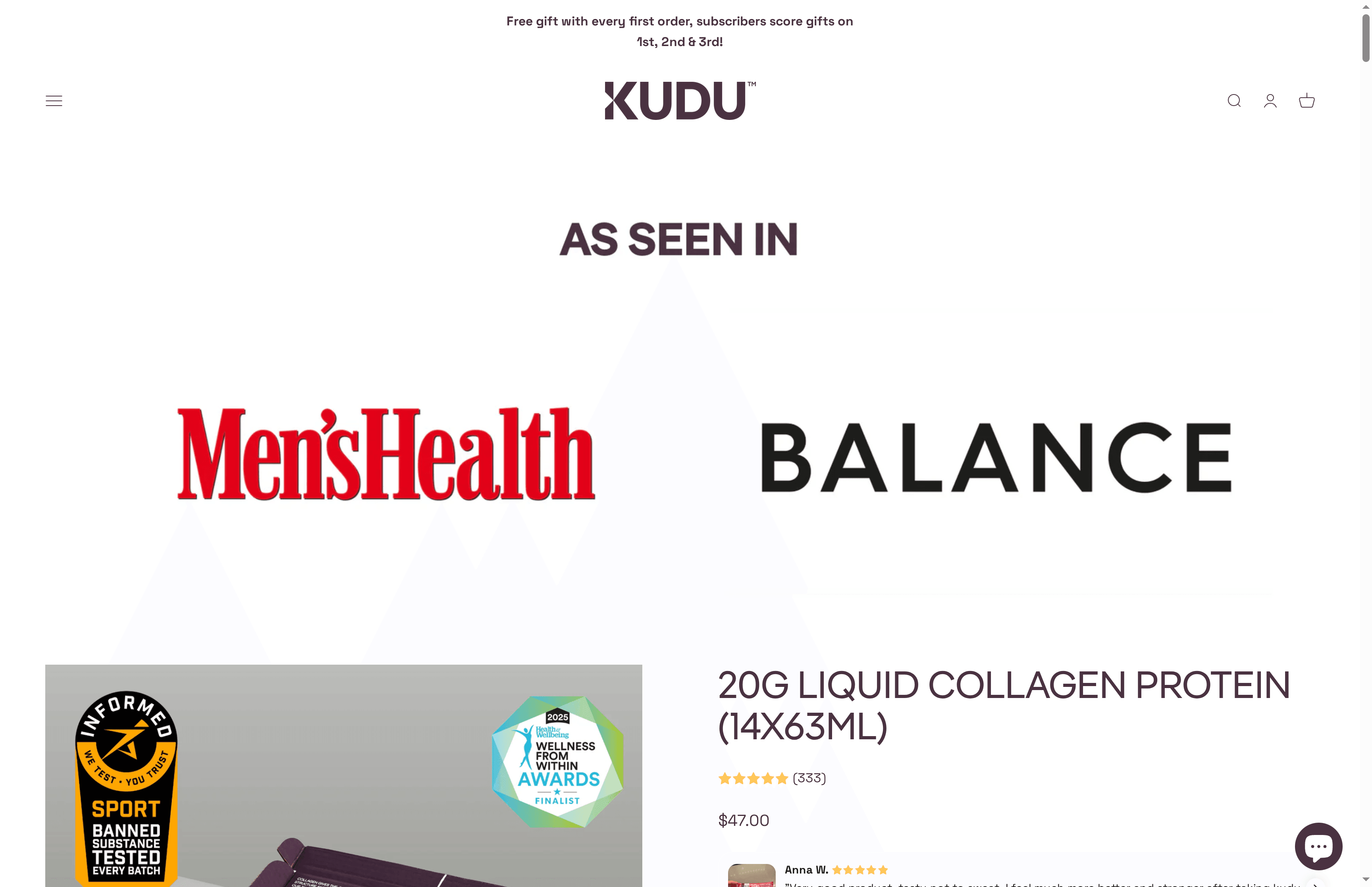
Kudunutrition’s 20g collagen protein gels are built around the same bioactive peptide science this article covers. Each sachet delivers 20g of hydrolysed collagen protein in a liquid format designed for fast absorption, with Informed Sport certification confirming ingredient quality and transparency. The high collagen content per serving aligns with the dosing ranges studied in clinical trials for skin hydration and elasticity support. If you are ready to commit to a consistent supplementation routine, Kudunutrition’s liquid collagen 14-pack is a practical starting point for the eight-to-twelve-week window where evidence suggests measurable changes begin to appear.
FAQ
What are skin support supplements?
Skin support supplements are ingestible products containing bioactive compounds such as collagen peptides, vitamin C, biotin, and essential fatty acids that support skin hydration, brightness, and structural integrity from within. They are designed to complement, not replace, topical skincare.
How long do collagen supplements take to work?
Most clinical studies report measurable improvements in skin hydration and elasticity after four to twelve weeks of consistent daily use. Results are gradual and subtle rather than dramatic, reflecting the biological timescales of collagen synthesis.
Are oral collagen supplements more effective than topical creams?
For whole-skin hydration and brightness, oral collagen peptides show stronger and more consistent clinical evidence than topical peptides, primarily because they bypass the skin barrier and act systemically. Topical peptides remain useful for localised surface texture concerns.
Does vitamin C improve collagen supplement results?
Vitamin C is a required cofactor for collagen synthesis, and systemic vitamin C intake correlates with increased skin thickness and accelerated renewal. Taking collagen supplements alongside adequate vitamin C intake produces better outcomes than collagen alone.
How do I spot misleading skin supplement marketing?
Look for structure and function language such as “supports skin hydration” rather than treatment claims like “reverses ageing.” Regulatory frameworks require compliant disclaimers on supplement labels, and products making dramatic anti-ageing promises without published clinical data warrant scepticism.