

TL;DR:
- Calcium and vitamin D are the most well-supported supplements for reducing bone loss and fracture risk. Supporting nutrients like magnesium, vitamin K2, phosphorus, and collagen play secondary roles, with their effectiveness depending on individual needs and deficiencies. Reading supplement labels carefully ensures proper dosage of elemental nutrients and prevents harmful excess intake.
The best examples of bone-friendly supplements are those containing calcium and vitamin D, which together carry the strongest clinical evidence for reducing bone loss and fracture risk. Beyond these two, nutrients including magnesium, vitamin K2, phosphorus, and collagen each play supporting roles in skeletal health, though their evidence is more context-dependent. This guide covers the primary supplements for bone health, how their forms differ, what doses work, and how to read labels so you get what you actually pay for.
1. Calcium carbonate: the high-yield standard
Calcium carbonate is the most widely available calcium supplement form and contains approximately 40% elemental calcium by weight. That means a 1,000 mg tablet delivers around 400 mg of actual calcium to your body. Most adults need 1,000 to 1,200 mg of elemental calcium daily from all sources combined, so knowing this figure matters.

Calcium carbonate requires stomach acid for proper absorption, so take it with food. It is the most cost-effective option for people with normal digestive function. Side effects such as constipation and bloating are the most common complaints, and splitting your dose across two meals reduces both.
Pro Tip: Check the Supplement Facts panel on any calcium product for the elemental calcium figure, not the total compound weight. A label reading “1,250 mg calcium carbonate” is not the same as 1,250 mg of calcium.
2. Calcium citrate: the gentler alternative
Calcium citrate is better absorbed in people with low stomach acid, those taking proton pump inhibitors, or anyone who has had gastric surgery. It contains around 21% elemental calcium, so you need a larger dose to match carbonate’s output. The trade-off is that it does not require food for absorption, making it more flexible for people with irregular meal schedules.
| Form | Elemental calcium | Requires food | Best for |
|---|---|---|---|
| Calcium carbonate | ~40% | Yes | Most adults, cost-conscious buyers |
| Calcium citrate | ~21% | No | Low stomach acid, post-surgery |
| Calcium gluconate | ~9% | No | IV use, rarely oral |
| Calcium lactate | ~13% | No | Sensitive digestion |
Calcium citrate tends to be gentler on the gut, which matters if carbonate causes persistent discomfort. For most healthy adults, carbonate remains the practical first choice purely on elemental yield.
3. Vitamin D3: the absorption activator
Vitamin D is not optional when you are supplementing calcium. Without adequate vitamin D, your gut cannot absorb calcium efficiently, and the supplement you take passes through largely unused. Calcium and vitamin D together represent the most extensively studied combination in bone health research, with demonstrated benefits particularly in older adults and those with confirmed deficiency.
Vitamin D3 (cholecalciferol) is the preferred form over D2 (ergocalciferol) because it raises blood levels more effectively and sustains them longer. Most adults need 600 to 800 IU (15 to 20 mcg) daily for bone support, though older adults and those with limited sun exposure often require more. A blood test measuring 25-hydroxyvitamin D is the only reliable way to know your actual status before choosing a dose.
Pro Tip: Do not assume more is better with vitamin D. Supplementing above 4,000 IU daily without medical guidance risks toxicity, including hypercalcaemia and kidney stones. Start at 1,000 to 2,000 IU and test your levels after three months.
4. Vitamin D safety: what the evidence actually says
Vitamin D above 4,000 IU per day is the recognised upper limit for most adults, and exceeding it without clinical oversight reverses the benefits. Symptoms of toxicity include nausea, weakness, frequent urination, and in severe cases, kidney damage. These risks are real and underreported in popular supplement culture.
Vitamin D supplementation delivers the clearest clinical benefits when it targets individuals with identified deficiency or elevated risk, not as a blanket intervention for the general population.
The sun remains a free and effective source. Around 15 to 20 minutes of midday sun exposure on bare skin several times per week can maintain adequate levels in lighter-skinned individuals during summer months. Food sources including oily fish, egg yolks, and fortified dairy contribute meaningfully but rarely meet full daily requirements alone.
5. Magnesium: the overlooked co-factor
Magnesium is involved in over 300 enzymatic reactions, including those that regulate calcium transport and activate vitamin D. Without sufficient magnesium, vitamin D cannot convert to its active hormonal form, which means your calcium absorption chain breaks down further upstream than most people realise. Dietary surveys consistently show that a significant proportion of adults fall short of the 300 to 400 mg daily target.
Magnesium glycinate and magnesium citrate are the most bioavailable oral forms. Magnesium oxide is cheaper but poorly absorbed and more likely to cause loose stools. The clinical evidence for magnesium as a standalone bone supplement is limited compared to calcium and vitamin D, but its role as a co-factor makes it worth addressing through diet or supplementation if you are deficient.
6. Vitamin K2: a supportive but secondary nutrient
Vitamin K2 (specifically the MK-7 form) activates osteocalcin, a protein that binds calcium to bone matrix. Without K2, calcium absorbed from supplements can deposit in soft tissues rather than bone, which is a concern worth taking seriously. Several bone-formula products now include K2 alongside calcium and D3 for this reason.
That said, vitamin K2 lacks the consistent clinical evidence that calcium and vitamin D carry. It functions as a cofactor rather than a primary driver of bone density. Think of it as a useful addition to a well-constructed supplement stack, not a standalone osteoporosis prevention supplement. Fermented foods such as natto and certain aged cheeses are the richest dietary sources of K2.
For a deeper look at how these nutrients work together, the Kudunutrition guide on nutrient combinations for bone health covers the synergistic evidence in detail.
7. Phosphorus: important but rarely deficient
Phosphorus makes up roughly 85% of bone mineral content alongside calcium, yet phosphorus deficiency is rare in Western diets. Meat, dairy, legumes, and processed foods all contain substantial amounts. Supplementing phosphorus without a confirmed deficiency offers no benefit and may actually impair calcium absorption by altering the calcium-to-phosphorus ratio.
People with chronic kidney disease are the main group who need to monitor phosphorus carefully, but in their case the concern is excess rather than deficiency. For most healthy adults, phosphorus requires no supplementation and no particular attention beyond a balanced diet.
8. Collagen: the structural protein your bone matrix needs
Bone is not pure mineral. Roughly 30% of bone dry weight is organic matrix, and protein intake contributes directly to bone strength alongside calcium and vitamin D. Type I collagen is the dominant structural protein in that matrix, providing the flexible scaffold that minerals crystallise around. Without adequate collagen, bone becomes brittle rather than resilient.
Hydrolysed collagen supplements supply the amino acids glycine, proline, and hydroxyproline that the body uses to synthesise new collagen. Research into collagen peptides for bone health is still developing, but early clinical data shows promise for reducing bone turnover markers in postmenopausal women. For women over 30 looking at natural bone support supplements, the Kudunutrition article on bone health supplements for women offers a practical breakdown. The connection between collagen and bone structure is also covered in depth in the Kudunutrition bone health and collagen guide.
Protein intake more broadly matters too. Research from Granavitalis highlights protein’s role during menopause, a period when bone turnover accelerates and dietary protein becomes especially relevant to skeletal maintenance.
9. How to read bone supplement labels wisely
Label literacy around elemental calcium is one of the most common gaps undermining supplement effectiveness. Most consumers read the total compound weight and assume it equals the active dose. It does not.
Here is what to check on any bone health supplement label:
- Elemental calcium figure. Look for this specifically in the Supplement Facts panel, not the product name or front-of-pack claim.
- Vitamin D form and dose. Confirm it lists D3 (cholecalciferol) and check the IU or mcg figure against your personal needs.
- Serving size versus daily dose. Some products require two or three tablets to reach the stated nutrient level. Check what one serving actually delivers.
- Added nutrients. Magnesium, K2, and collagen are increasingly common in combined formulas. Verify their forms and doses are meaningful, not token amounts.
- Third-party certification. Certifications such as Informed Sport or NSF International indicate independent testing for label accuracy and contaminants.
Pro Tip: Split your calcium dose across two meals rather than taking it all at once. Absorption drops significantly above 500 mg of elemental calcium per sitting, so two smaller doses across the day outperform one large dose.
Indiscriminate supplementation carries real risks including mineral metabolism disturbances and cardiovascular concerns. Matching your supplement choices to your actual dietary gaps and health status is not optional caution. It is the difference between benefit and harm.
Key takeaways
The most effective approach to bone health supplementation is to prioritise calcium and vitamin D, address secondary co-factors where deficiency exists, and read labels for elemental values rather than total compound weight.
| Point | Details |
|---|---|
| Calcium form matters | Carbonate gives more elemental calcium; citrate suits low-acid or post-surgery individuals. |
| Vitamin D has a ceiling | Stay below 4,000 IU daily without medical guidance to avoid toxicity and kidney risk. |
| Secondary nutrients support, not replace | Magnesium, K2, and collagen are co-factors; calcium and D3 drive the primary evidence. |
| Label reading is non-negotiable | Always check elemental calcium and serving size, not total compound weight on the label. |
| Protein underpins bone matrix | Adequate dietary protein alongside supplements supports the collagen scaffold that bone minerals need. |
Sam’s view on building a supplement routine that actually holds up
Most people approach bone supplements the way they approach multivitamins: grab the most popular product, take it daily, and assume the job is done. That approach misses the point almost entirely.
What I have found, both from reviewing the clinical literature and from conversations with people who have been supplementing for years, is that the biggest gains come from correcting specific deficiencies rather than layering on more products. If your vitamin D is already adequate, adding more D3 will not move your bone density. If your diet is rich in dairy and leafy greens, a high-dose calcium supplement may do more harm than good through kidney stone risk.
The secondary nutrients, magnesium, K2, and collagen, are genuinely useful but only when the foundation is solid. I see too many people spending money on elaborate bone formulas while their basic calcium and vitamin D status is untested and potentially inadequate. Get a blood panel first. Know your 25-hydroxyvitamin D level. Then build from there.
Bone health is also not static. Your needs at 35 are different from your needs at 55 or 70. Lifestyle factors including weight-bearing exercise, smoking, alcohol intake, and corticosteroid use all shift the equation. A supplement routine worth keeping is one you revisit with a healthcare provider every few years, not one you set and forget.
— Sam
Support your bones with Kudunutrition collagen protein
Calcium and vitamin D lay the mineral foundation, but bone matrix is built on collagen. Kudunutrition’s liquid collagen protein sachets deliver 20g of hydrolysed collagen per serving, providing the glycine and proline your body needs to maintain the structural scaffold that keeps bone resilient rather than brittle.
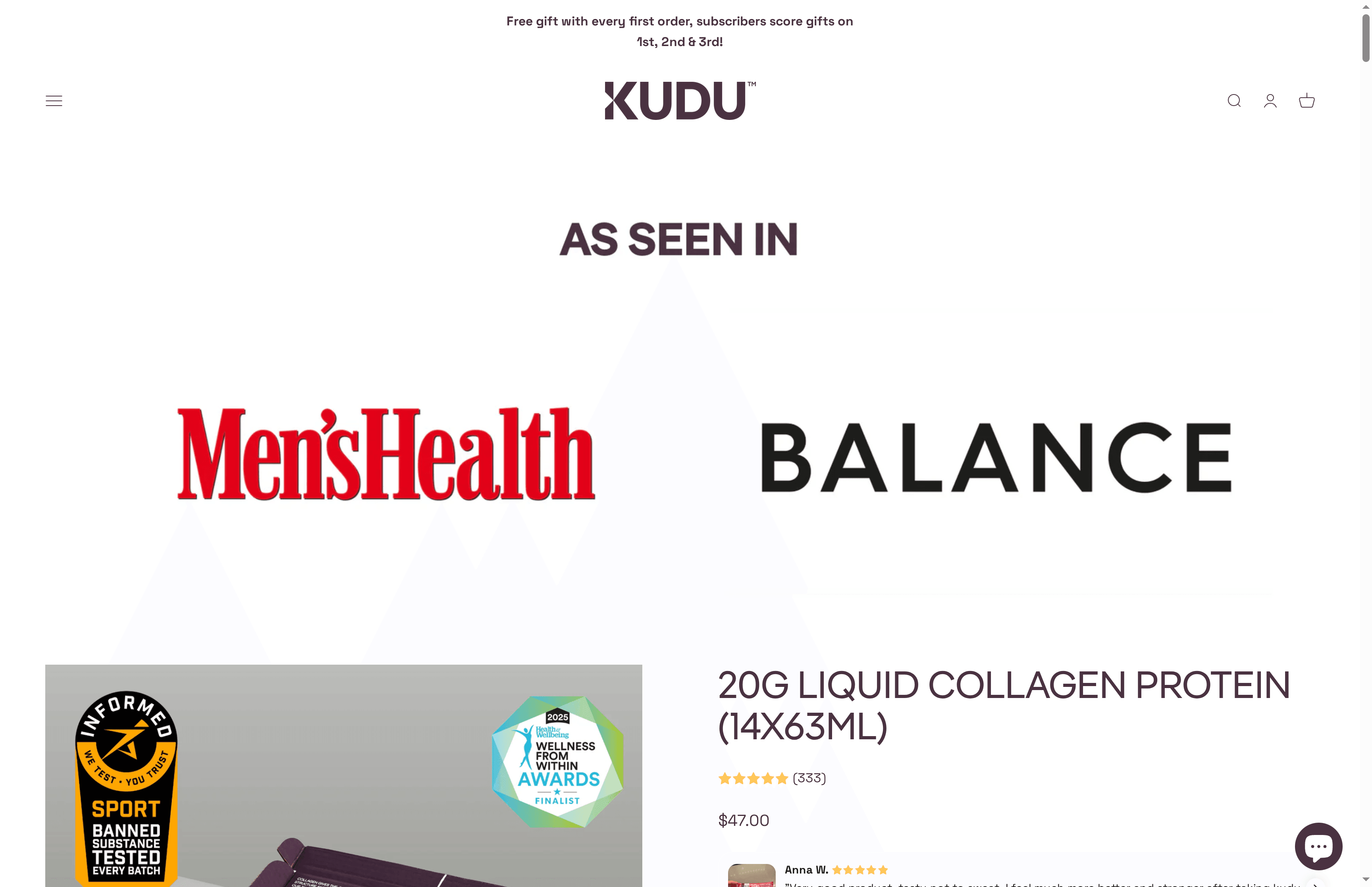
Each sachet is Informed Sport certified, meaning every batch is independently tested for label accuracy and banned substances. Available in multiple flavours and pack sizes, the range fits easily into a daily nutrition routine whether you are focused on bone support, joint health, or recovery. Explore the full collagen protein range or go straight to the 14-pack starter option to try it alongside your existing bone health stack.
FAQ
What are the most evidence-backed bone supplements?
Calcium and vitamin D are the most extensively studied supplements for bone health, with demonstrated benefits for reducing bone loss and fracture risk in deficient or high-risk individuals. Other nutrients including magnesium and vitamin K2 play supporting roles but carry less consistent clinical evidence.
What is the difference between calcium carbonate and calcium citrate?
Calcium carbonate contains around 40% elemental calcium and requires stomach acid for absorption, making it best taken with food. Calcium citrate contains roughly 21% elemental calcium but absorbs without food and suits people with low stomach acid or digestive sensitivities.
How much vitamin D do I need for bone health?
Most adults need 600 to 800 IU (15 to 20 mcg) of vitamin D daily for bone support, though older adults and those with limited sun exposure may need more. Doses above 4,000 IU daily risk toxicity without medical supervision.
Does collagen help with bone density?
Collagen makes up roughly 30% of bone dry weight as the structural matrix that minerals crystallise around, and adequate protein intake supports bone strength alongside calcium and vitamin D. Hydrolysed collagen supplements supply the specific amino acids needed for collagen synthesis, with early research showing promise for reducing bone turnover markers.
Can you take too many bone health supplements?
Yes. Excessive supplementation can cause mineral metabolism disturbances, cardiovascular risks, and kidney stone formation. Matching doses to your actual dietary intake and confirmed deficiencies, rather than taking maximum amounts, is the safer and more effective approach.