


Finding the right liquid collagen supplement can feel like searching for clarity in a crowded market. Quality, taste, and proven benefits all matter, especially when your goal is to support both radiant skin and flexible joints with confidence. With scientific research showing that hydrolysed collagen can directly improve skin elasticity and joint health, this guide helps you separate facts from myths and understand what truly makes a standout liquid collagen supplement in the United Kingdom.
Table of Contents
- Liquid Protein Basics And Common Myths
- Key Types Of Liquid Protein Supplements
- How Liquid Protein Supports Skin And Joints
- Quality, Taste, And Certification In The UK
- Risks And Choosing Between Liquid And Powder
Key Takeaways
| Point | Details |
|---|---|
| Collagen’s Role in Health | Collagen supports skin, joint, and overall tissue health, with natural production declining with age. This makes collagen supplements increasingly popular. |
| Types of Liquid Protein | Hydrolysed collagen offers superior absorption and bioavailability, making it the most effective form for targeted health benefits. |
| Quality and Certification | When choosing a supplement, look for third-party testing and ethical production standards to ensure safety and efficacy. |
| Liquid vs Powder | Liquid protein supplements provide faster absorption, while powder options are often more cost-effective and versatile for long-term use. |
Liquid protein basics and common myths
Collagen, the most abundant protein in our body, plays a crucial role in maintaining skin, joint, and overall tissue health. As we age, our natural collagen production declines, leading to visible signs of aging and potential joint discomfort. Understanding collagen’s fundamental properties reveals why liquid protein supplements have become increasingly popular.
Liquid protein, specifically hydrolysed collagen, offers several key advantages over traditional protein supplements:
- Faster absorption due to smaller molecular structure
- Enhanced bioavailability compared to solid protein sources
- More convenient and easier to consume
- Rapid delivery of amino acids to targeted tissues
- Potentially faster recovery and repair mechanisms
Many people harbour misconceptions about liquid protein and collagen supplements. Some common myths include believing that collagen only benefits skin or that supplements are ineffective. In reality, scientific research demonstrates that collagen supports multiple bodily systems, including:
- Skin elasticity and hydration
- Joint cartilage maintenance
- Bone density preservation
- Muscle tissue recovery
- Connective tissue health
Quality matters significantly when selecting a liquid protein supplement. Not all products are created equal, and factors like collagen source, molecular weight, and processing method can dramatically impact effectiveness. Marine-derived collagen, for instance, tends to have superior absorption rates compared to other sources.
Hydrolysed collagen supplements can potentially improve skin elasticity, reduce joint pain, and enhance overall tissue health when consumed consistently and as part of a balanced nutrition plan.
Pro tip: Consult with a healthcare professional to determine the most suitable liquid protein supplement for your specific health goals and individual physiological needs.
Key types of liquid protein supplements
Liquid protein supplements represent a sophisticated approach to nutritional support, with multiple distinct collagen varieties designed to target specific health needs. These supplements are primarily categorised by their source, processing method, and targeted physiological benefits.
The primary types of liquid protein supplements include:
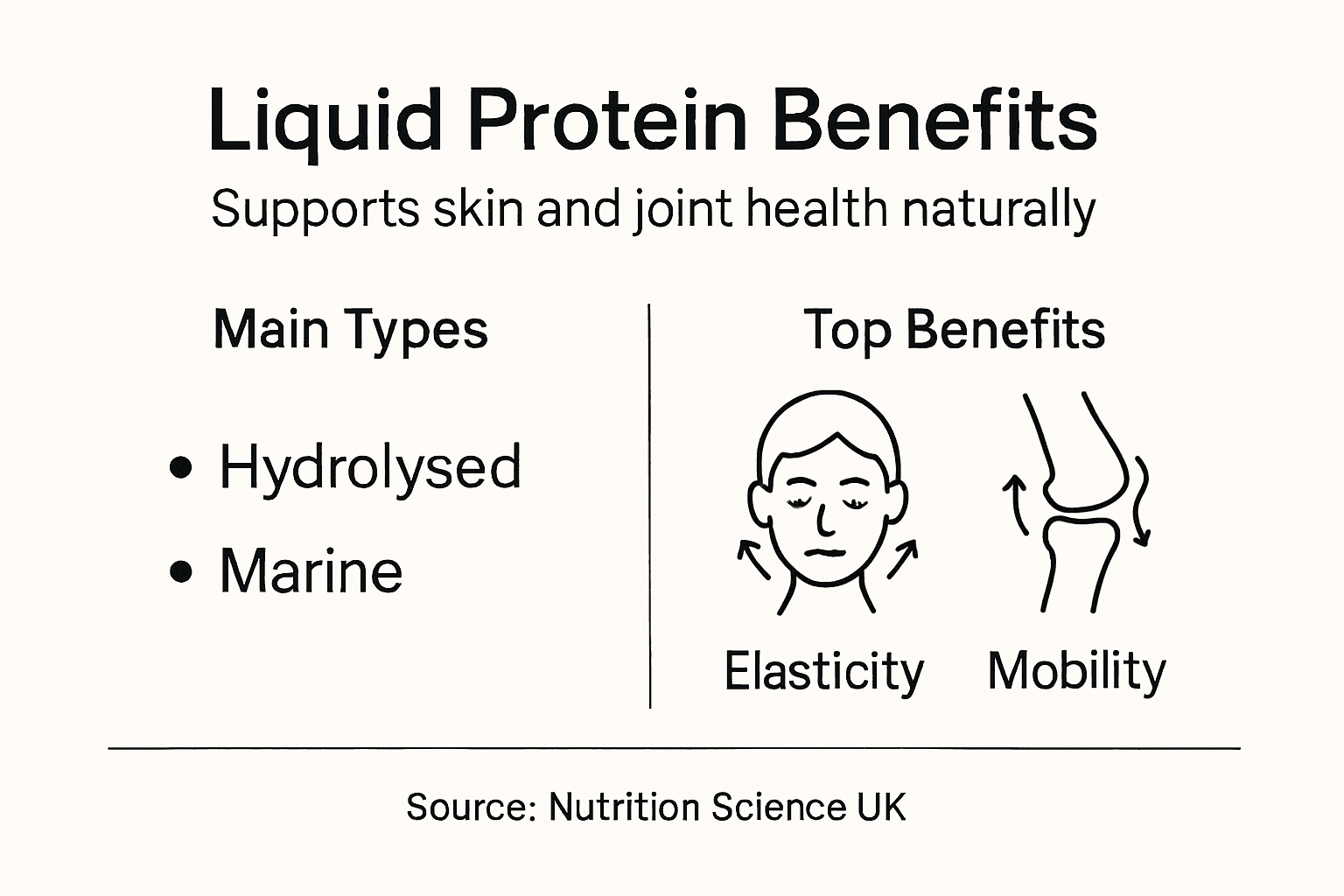
- Hydrolysed collagen: Most advanced form with peptides broken down for superior absorption
- Native collagen: Minimally processed protein in its original structural form
- Marine collagen: Derived from fish, typically rich in Type I collagen
- Bovine collagen: Sourced from cattle, providing Types I and III collagen
- Porcine collagen: Extracted from pork sources, offering unique protein profiles
Hydrolysed collagen stands out as the most scientifically advanced option. The molecular breakdown creates smaller peptides that can more efficiently penetrate biological membranes, enabling faster and more comprehensive absorption across joint and skin tissues.
Different collagen types offer unique benefits:
Here’s a comparison of the absorption characteristics and sources of common liquid protein types:
| Collagen Type | Primary Source | Absorption Rate | Main Health Focus |
|---|---|---|---|
| Type I | Marine or bovine | Fastest | Skin and bones |
| Type II | Poultry or bovine cartilage | Moderate | Joint cartilage |
| Type III | Bovine | High | Muscles and vessels |
| Type V | Egg membrane or combined sources | Variable | Hair and cell surfaces |
- Type I Collagen: Predominant in skin, bones, and connective tissues
- Type II Collagen: Critical for joint cartilage health
- Type III Collagen: Supporting muscle structure and blood vessels
- Type IV Collagen: Essential for cellular basement membranes
- Type V Collagen: Important for cell surfaces and hair formation
The molecular structure and source of liquid protein supplements significantly impact their effectiveness in supporting tissue regeneration and overall health.
Pro tip: Select liquid protein supplements that clearly specify their collagen type and source to ensure targeted nutritional support for your specific health objectives.
How liquid protein supports skin and joints
Liquid protein plays a critical role in maintaining the structural integrity and functionality of our skin and joints through its unique biochemical properties. Collagen’s essential contribution to connective tissues becomes increasingly important as our natural protein production declines with age.
The primary mechanisms of liquid protein support include:
- Amino acid delivery to critical tissue structures
- Enhanced cellular regeneration processes
- Improved structural protein synthesis
- Increased joint cushioning and flexibility
- Promotion of skin elasticity and hydration
At the cellular level, liquid protein supplements provide concentrated amino acid chains that directly support tissue repair and maintenance. These peptides can penetrate biological membranes more efficiently than traditional protein sources, enabling faster absorption and more targeted nutrition for skin and joint tissues.
Specific benefits for skin and joint health include:
- Reducing inflammation in joint tissues
- Supporting cartilage matrix reconstruction
- Enhancing skin’s moisture retention capabilities
- Protecting against age-related collagen breakdown
- Supporting natural tissue repair mechanisms
Hydrolysed collagen peptides demonstrate remarkable potential in supporting the body’s connective tissue health by providing bioavailable amino acid chains directly to target areas.
Pro tip: Combine liquid protein supplementation with balanced nutrition and regular exercise to maximise your body’s natural tissue regeneration capabilities.

Quality, taste, and certification in the UK
Navigating the world of liquid protein supplements requires careful consideration of quality, taste, and certification standards specific to the United Kingdom. Expert reviews of top collagen supplements highlight the critical factors British consumers should evaluate when selecting their ideal nutritional support.
Key quality indicators for UK liquid protein supplements include:
- Third-party testing for purity and potency
- Transparent ingredient sourcing
- Verified nutritional content
- Ethical production standards
- Comprehensive safety certifications
For health-conscious British consumers, certification plays a pivotal role in supplement selection. Reputable UK brands typically pursue multiple verification processes to demonstrate product integrity, including independent laboratory testing, nutritional analysis, and compliance with strict manufacturing guidelines.
Taste and palatability are equally crucial considerations for liquid protein supplements:
- Natural flavour profiles
- Absence of artificial sweeteners
- Smooth mixing properties
- Minimal aftertaste
- Compatibility with different beverages
British consumers increasingly demand supplements that balance scientific effectiveness with exceptional sensory experience, requiring brands to innovate beyond mere nutritional performance.
Pro tip: Always review multiple certifications and independent test results before selecting a liquid protein supplement to ensure maximum quality and effectiveness.
Risks and choosing between liquid and powder
Selecting the right protein supplement requires understanding the nuanced differences between liquid and powder formats. Comprehensive supplement comparisons reveal critical considerations for health-conscious consumers seeking optimal nutritional support.
Key comparative characteristics include:
- Absorption rates for liquid versus powder formats
- Price point variations
- Convenience and storage requirements
- Mixing and preparation complexity
- Potential bioavailability differences
Liquid protein supplements offer distinct advantages, including rapid absorption and convenient consumption. However, they typically come with a higher price tag and shorter shelf life compared to powder alternatives. Powder supplements provide greater flexibility in dosage and often represent a more cost-effective solution for long-term nutritional strategies.
These are important differences between liquid and powder protein supplements for UK consumers:
| Factor | Liquid Supplements | Powder Supplements |
|---|---|---|
| Shelf Life | Shorter, due to premixed form | Longer, stable when dry |
| Price | Usually higher | More budget-friendly |
| Convenience | Ready to drink, portable | Requires mixing, less portable |
| Dosage Control | Pre-measured servings | Customisable portions |
Potential risks associated with both supplement types encompass:
- Potential allergen exposure
- Variation in product quality
- Individual metabolic response differences
- Manufacturing inconsistencies
- Potential interactions with existing medications
Scientific evidence suggests that both liquid and powder supplements can provide nutritional benefits, with individual selection depending on personal health goals and lifestyle preferences.
Pro tip: Consult with a healthcare professional to determine which protein supplement format best matches your specific physiological requirements and nutritional objectives.
Unlock Radiant Skin and Stronger Joints with Liquid Collagen Protein
The article highlights the challenge many face as natural collagen production slows down leading to reduced skin elasticity and joint discomfort. If you are seeking a scientifically supported solution to support skin hydration, enhance joint cartilage, and boost recovery, liquid collagen protein is the answer. These supplements deliver bioavailable amino acids that penetrate tissues faster than traditional proteins promising noticeable benefits for skin, joints, and fitness.
Experience the difference with KUDU Nutrition’s 20g Collagen Protein supplements, designed specifically for performance, recovery, and beauty. Certified by Informed Sport, our liquid collagen sachets combine high collagen content, premium sourcing, and exceptional taste to elevate your wellness routine. Join health-conscious consumers and athletes who trust our products for trusted nutrition and visible results.
Explore our 20g Collagen Protein Supplements collection today.

Take control of your skin and joint health now with KUDU Nutrition’s expertly crafted liquid collagen protein. Visit this page to purchase and begin your journey towards stronger, more youthful skin and enhanced joint comfort. For a broader range of options, see KUDU Nutrition | 20g Collagen Protein for Performance & Recovery or browse our Front Page for the latest offerings.
Frequently Asked Questions
What are the main benefits of liquid protein for skin and joint health?
Liquid protein, specifically hydrolysed collagen, supports skin elasticity, hydration, and joint cartilage maintenance, ultimately enhancing overall tissue health as we age.
How does liquid protein differ from traditional protein supplements?
Liquid protein offers faster absorption due to its smaller molecular structure, enhanced bioavailability, and convenience, making it easier to consume and deliver amino acids to targeted tissues quickly.
What types of collagen are available in liquid protein supplements?
Common types include hydrolysed collagen, marine collagen, and bovine collagen, each providing different health benefits, such as supporting skin, joints, and connective tissues based on their source and processing.
Are there any risks associated with liquid protein supplements?
Potential risks may include allergen exposure, variation in product quality, and individual metabolic responses. It’s essential to consult with a healthcare professional to ensure suitability for your needs.


