


TL;DR:
- Clean label supplements are made with minimal, recognizable ingredients and lack unnecessary additives. Consumers value transparency, natural ingredients, safety, and are willing to pay more for cleaner products. However, formulation challenges can reduce efficacy, so reading labels carefully and verifying ingredient forms and doses is essential.
Clean label supplements are dietary products made with recognisable, minimal ingredients and free from unnecessary additives. The term is not a legal standard in the UK. The Food Standards Agency oversees ingredient safety and claims verification, but “clean label” itself is defined by consumer expectation rather than regulation. That distinction matters enormously when you are trying to make genuinely informed choices about what you put in your body.
Why do consumers choose clean label supplements?
Consumer demand for clean label products is not a passing trend. 44% of British adults actively avoid certain products due to concerns about harmful ingredients. That figure tells you the market has shifted: people are reading labels, questioning ingredients, and making deliberate decisions.
The motivations behind this shift are consistent across the research:
- Ingredient transparency. 56% of British consumers want greater transparency in labelling. A short, readable ingredient list signals honesty before a single capsule is swallowed.
- Natural preference. 32% have already switched to more natural or clean options. The switch is active, not aspirational.
- Health impact. 66% cite health and wellbeing as a primary purchasing influence when choosing supplements and food products.
- Safety perception. Safety is the top priority for 84% of consumers when buying new food or supplements. Simpler formulations feel safer, even when the science is more nuanced.
- Price willingness. 17% pay more for products they perceive as safer. Clean label commands a genuine premium.
Globally, 77% of shoppers consider simple ingredients essential or highly desirable. That consensus drives product development across the entire supplement industry.
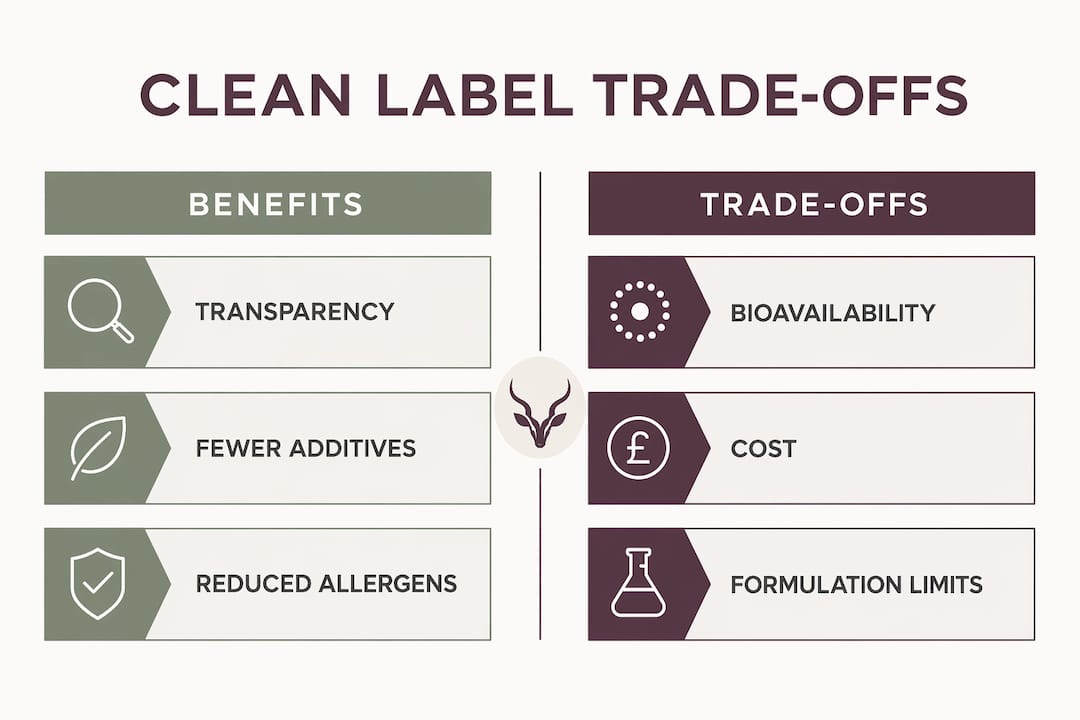
What are the trade-offs in clean label formulation?
Clean label is a marketing term, not a regulated standard. Products can carry the label despite containing complex or inert ingredients, which means the phrase alone tells you very little about actual quality.
The real challenge sits in the formulation lab. Removing synthetic additives creates genuine technical problems:
- Shelf life reduction. Synthetic preservatives extend product stability. Without them, manufacturers must use alternative preservation methods or accept shorter shelf life.
- Texture and consistency changes. Synthetic emulsifiers and stabilisers create the smooth, consistent texture people expect. Natural alternatives can behave unpredictably.
- Bioavailability loss. Some synthetic ingredients actively improve how well your body absorbs a nutrient. Removing them can reduce efficacy, sometimes significantly.
- Formulation complexity. Clean label often requires multifunctional natural ingredients that do the job of several synthetics at once. That is harder to achieve and harder to scale.
A concrete example makes this clear. Clean label magnesium supplements frequently use less bioavailable forms of magnesium to meet marketing expectations. The label looks cleaner. The product may work less well. That is the trade-off consumers rarely see.
Clean label formulations are not defined by the absence of all additives or E numbers. They are defined by intent, transparency, and well-considered ingredient use that balances regulation with consumer expectation. The best manufacturers acknowledge this openly.
Pro Tip: Ask any supplement brand whether their formulation choices prioritise bioavailability or label aesthetics. A brand confident in its science will answer directly.
How can you spot a genuinely clean supplement?
Reading a supplement label critically is a skill. Most people scan for words they recognise and stop there. That approach misses the details that actually determine product quality.
Start with the ingredient list itself. Look for:
- Recognisable ingredient names. If you cannot identify what an ingredient is or does, ask why it is there.
- Absence of unnecessary fillers. Bulking agents, flow agents, and artificial colours serve manufacturing convenience, not your health.
- Declared doses. A clean label that omits the actual dose of each active ingredient is incomplete. Dose determines whether a supplement works.
- Sourcing information. Where an ingredient comes from affects its quality. Brands that disclose ingredient sourcing are making a commitment most brands avoid.
Beyond the label, look at the manufacturer. Strong manufacturing control, third-party quality certifications such as Informed Sport, and in-house production all reduce the risk of contamination and undisclosed additives. Certifications like these require independent testing, which is a meaningfully higher bar than self-declaration.
Consumers need to look beyond labels to ingredient forms, doses, and scientific evidence to evaluate supplement effectiveness properly. A product with five ingredients is not automatically better than one with ten. What matters is whether each ingredient is present in a form and dose your body can actually use.
Pro Tip: Cross-reference the ingredient form against published research. “Magnesium” on a label could mean magnesium oxide (poorly absorbed) or magnesium glycinate (well absorbed). The form is the detail that matters.
Understanding supplement compliance and safety standards gives you a stronger foundation for evaluating any product claim.
What benefits do clean label supplements offer?
Clean label supplements deliver real advantages, provided you choose them with the right criteria in mind.

The primary benefit is reduced exposure to artificial additives and allergens. Shorter ingredient lists mean fewer opportunities for hidden sensitivities to surface. For people managing dietary restrictions or autoimmune conditions, this is a practical advantage, not just a preference.
Transparency itself is a benefit. When a brand reads supplement labels clearly and discloses every ingredient with its function and dose, you can make a genuinely informed decision. That kind of clarity builds trust in a way that marketing language never can.
The table below summarises the key advantages and their limitations:
| Benefit | What it means in practice | Limitation |
|---|---|---|
| Fewer artificial additives | Lower risk of sensitivity reactions | Does not guarantee the product works |
| Shorter ingredient lists | Easier to evaluate what you are taking | Simplicity can mask poor bioavailability |
| Greater transparency | Supports informed dietary choices | Only valuable if dosing is also disclosed |
| Third-party certification | Independent verification of purity | Certification scope varies by scheme |
| Consumer trust | Encourages consistent supplementation | Trust can be exploited by marketing claims |
One limitation deserves direct attention. Clean label status alone does not guarantee nutritional value or effectiveness. A product with recognisable ingredients at inadequate doses achieves nothing. The clean label movement has produced genuinely better products and, in some cases, products that look better than they perform.
83% of consumers consider low price essential or desirable, which creates real pressure on manufacturers. Balancing clean formulation with accessible pricing is one of the harder problems in the supplement industry, and not every brand solves it honestly.
Key takeaways
Clean label supplements are worth choosing when ingredient transparency, third-party certification, and disclosed dosing come together in a single product.
| Point | Details |
|---|---|
| Clean label has no legal definition | The term is driven by consumer expectation, not UK regulation or the Food Standards Agency. |
| Transparency requires dose disclosure | A short ingredient list without stated doses tells you very little about whether a product works. |
| Bioavailability matters more than simplicity | Removing synthetic enhancers can reduce absorption; check the ingredient form, not just the name. |
| Certifications add genuine credibility | Schemes like Informed Sport require independent testing, which is a higher standard than self-declaration. |
| Price pressure affects quality | Balancing clean formulation with affordable pricing is difficult; unusually cheap clean label products warrant scrutiny. |
My honest view on clean label supplements
I have spent years reading supplement labels, and the single biggest mistake I see health-conscious people make is treating a short ingredient list as proof of quality. It is not. It is a starting point.
The brands I trust are the ones that tell you the ingredient form, the dose, and why each ingredient is present. That level of detail is rare. When you find it, it usually means the manufacturer understands the science well enough to explain it, which is a better signal than any marketing claim about purity.
Clean label supplements done properly are genuinely worth paying attention to. They reduce your exposure to unnecessary additives, they make label reading more accessible, and they tend to come from manufacturers who care about what they put in their products. But “clean” without efficacy is just aesthetics. The question to ask every brand is not “what have you left out?” but “what have you put in, and why?”
If a brand cannot answer that second question clearly, the clean label is doing more work than the product.
— Sam
Kudunutrition’s collagen supplements: clean formulation in practice
Kudunutrition’s 20g collagen protein supplements are built around the principles this article covers: clear ingredient sourcing, disclosed dosing, and Informed Sport certification for independent quality verification.
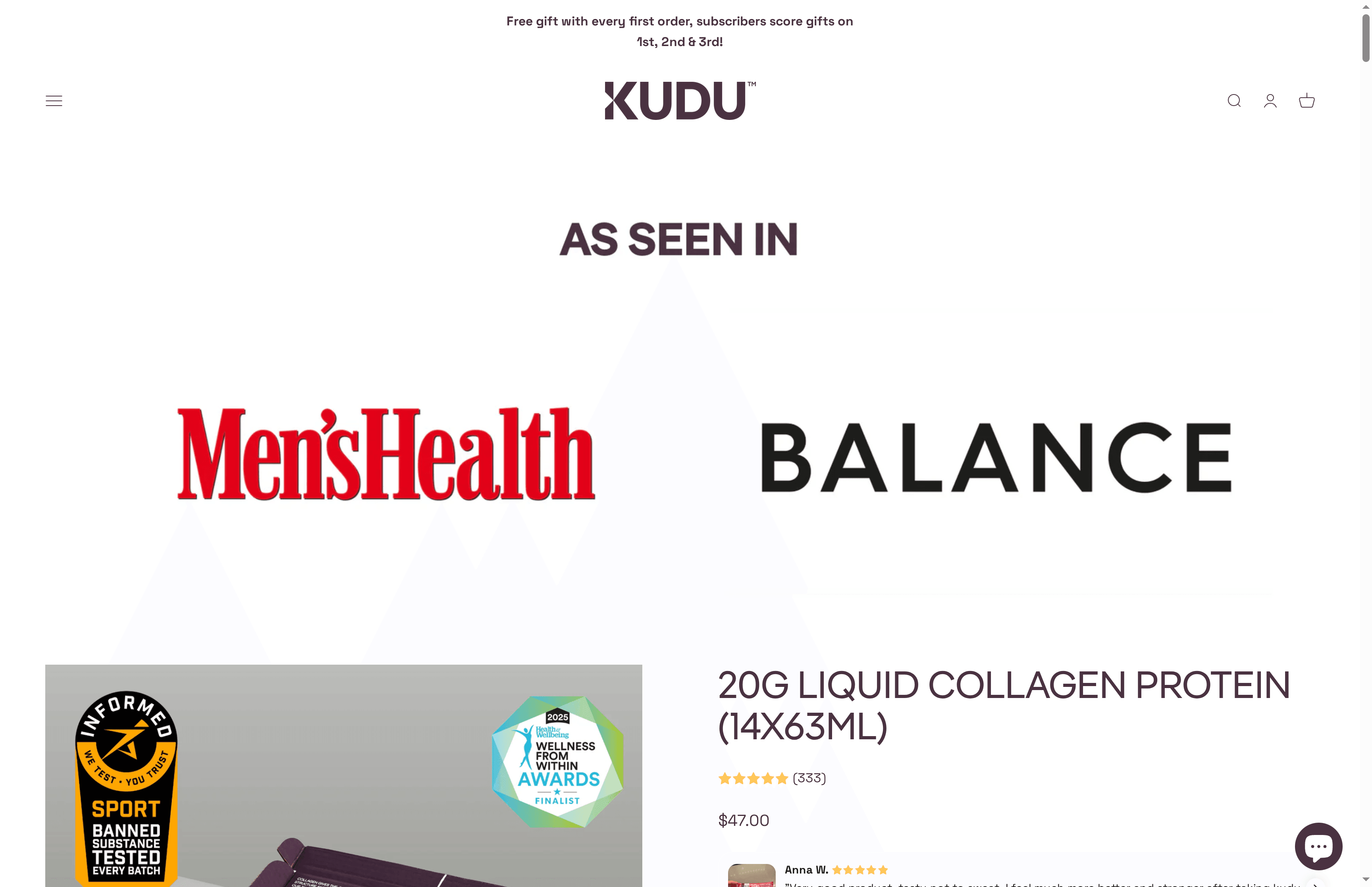
Each liquid collagen sachet delivers 20g of collagen protein in a format designed for absorption and convenience. The ingredient list is short because the formulation is focused, not because corners have been cut. Informed Sport certification means every batch is independently tested, which removes the guesswork that clean label marketing alone cannot. If you want a collagen supplement that pairs ingredient transparency with verified quality, the collagen protein starter box is a practical way to begin.
FAQ
What are clean label supplements?
Clean label supplements are products formulated with recognisable, minimal ingredients and free from unnecessary artificial additives. The term has no formal legal definition in the UK and is governed by consumer expectation rather than regulation.
Are clean label supplements more effective?
Not automatically. Clean label formulations can exclude bioavailability enhancers, making some products less effective despite simpler labels. Effectiveness depends on ingredient form, dose, and scientific backing.
How do I know if a clean label claim is genuine?
Look for third-party certifications such as Informed Sport, transparent ingredient sourcing, and disclosed doses for every active ingredient. Self-declared clean label claims without independent verification carry limited weight.
What is the difference between clean label and additive-free supplements?
Clean label refers to overall ingredient simplicity and transparency, while additive-free specifically means no fillers, flow agents, or artificial additives. A product can be genuinely additive-free without using the clean label term, and vice versa.
Why do clean label supplements sometimes cost more?
Premium natural ingredients and rigorous manufacturing controls cost more than synthetic alternatives. 17% of British consumers already pay a premium for products they perceive as safer, which reflects the genuine cost difference in clean formulation.