

Collagen may help plantar fasciitis, but only as part of a loading programme, and the honest position is that nobody has run the trial yet. The plantar fascia is a thick band of type I collagen, structurally the same tissue as the Achilles tendon it connects to. Collagen supplementation has good trial evidence in Achilles tendinopathy, chronic ankle instability and tendon adaptation when it is taken 30 to 60 minutes before loading exercise. The same logic applies to the fascia, and the same protocol is the one to follow. What collagen will not do is fix heel pain on its own, in a week, without the exercises.
This guide sets out what plantar fasciitis actually is, why collagen is a plausible part of the fix, the evidence from the nearest tissues, and a six-month protocol that combines the two things that matter: raw material and load.
Quick answer
- Direct evidence: none yet for plantar fasciitis specifically
- Nearest evidence: Achilles tendinopathy (2.5g daily with calf training, 6 months, less pain and better function), tendon size (5g with training, 14 weeks), ankle stability (5g, 6 months)
- Protocol: 10g to 15g of hydrolysed collagen 30 to 60 minutes before daily fascia and calf loading, for 3 to 6 months
- Will not work without: the loading exercises, footwear changes and reducing the aggravating volume
What plantar fasciitis is
The plantar fascia runs from the heel bone to the toes and tensions with every step. Plantar fasciitis (more accurately fasciopathy, since there is little inflammation in the chronic stage) is degeneration of that collagen from repeated overload: too much running or standing, too fast, often with a stiff calf or Achilles that shifts load onto the fascia. Classic symptoms are stabbing heel pain on the first steps in the morning and after sitting. Like tendinopathy, it is a failed-repair problem: the tissue is being broken down faster than the few fascia cells can rebuild it.
Why collagen is a plausible part of the fix
The fascia is built from type I collagen, and rebuilding it requires the fascia cells to receive both a mechanical signal (loading) and the amino acids collagen is made from (glycine, proline, hydroxyproline). Blood flow to the fascia is poor, so those amino acids need to be circulating when the tissue is loaded. That is exactly the mechanism the tendon trials tested.
The evidence from the nearest tissues
| Trial | Tissue | Protocol | Result |
|---|---|---|---|
| Praet et al. 2019 | Achilles tendinopathy | 2.5g collagen daily + calf strengthening, 6 months | Greater pain and function improvement than exercise alone |
| Jerger et al. 2022 | Achilles tendon | 5g daily + calf training, 14 weeks | Greater increase in tendon size and stiffness |
| Dressler et al. 2018 | Ankle ligaments | 5g daily, 6 months | Better stability, fewer re-injuries |
| Shaw et al. 2017 | Collagen synthesis | 15g gelatin + vitamin C 1 hour before exercise | Synthesis marker roughly doubled |
The Achilles trial is the closest analogue: same collagen type, same region, same loading approach. The plantar fascia and Achilles are functionally continuous, and a tight Achilles is one of the main drivers of fasciitis, so a protocol that helps one tends to help the other.
We keep the products and guides built around this tendon-loading protocol together on our collagen for joints and tendons page.
The loading half: exercises that work for plantar fasciitis
The exercise with the best evidence is the high-load strength protocol from Rathleff and colleagues (2015): heel raises with a rolled towel under the toes to tension the fascia, done slowly (3 seconds up, 2 seconds hold, 3 seconds down), every other day, progressing to single leg and then adding a backpack for weight. It beat stretching alone at 3 months. Add:
- Calf and Achilles stretching, held 30 seconds, several times a day.
- Rolling the arch on a frozen bottle for pain relief (relief only, not repair).
- Reducing running volume or standing time while the tissue rebuilds, then rebuilding gradually.
- Supportive footwear and, for some, a temporary heel insert.
A 6-month collagen and loading protocol
- Weeks 1 to 2: 10g to 20g of hydrolysed collagen an hour before daily calf stretches and gentle isometric heel-raise holds (30 to 45 seconds, 5 reps). Record morning first-step pain out of 10.
- Weeks 3 to 12: the towel heel-raise protocol every other day, collagen an hour before each session. Continue stretches daily. Most people see morning pain scores fall by week 8 to 12.
- Months 3 to 6: add load, return to running with a walk-run progression, keep the collagen daily. The fascia is still remodelling; stopping early is the commonest reason it comes back.
When to see someone
Heel pain that has not improved after 8 to 12 weeks of loading, pain that wakes you at night, numbness or tingling, or pain after a sudden injury needs a physiotherapist or GP. Plantar fasciitis has look-alikes (nerve entrapment, stress fracture, fat pad problems) that need different treatment.
Choosing a collagen for it
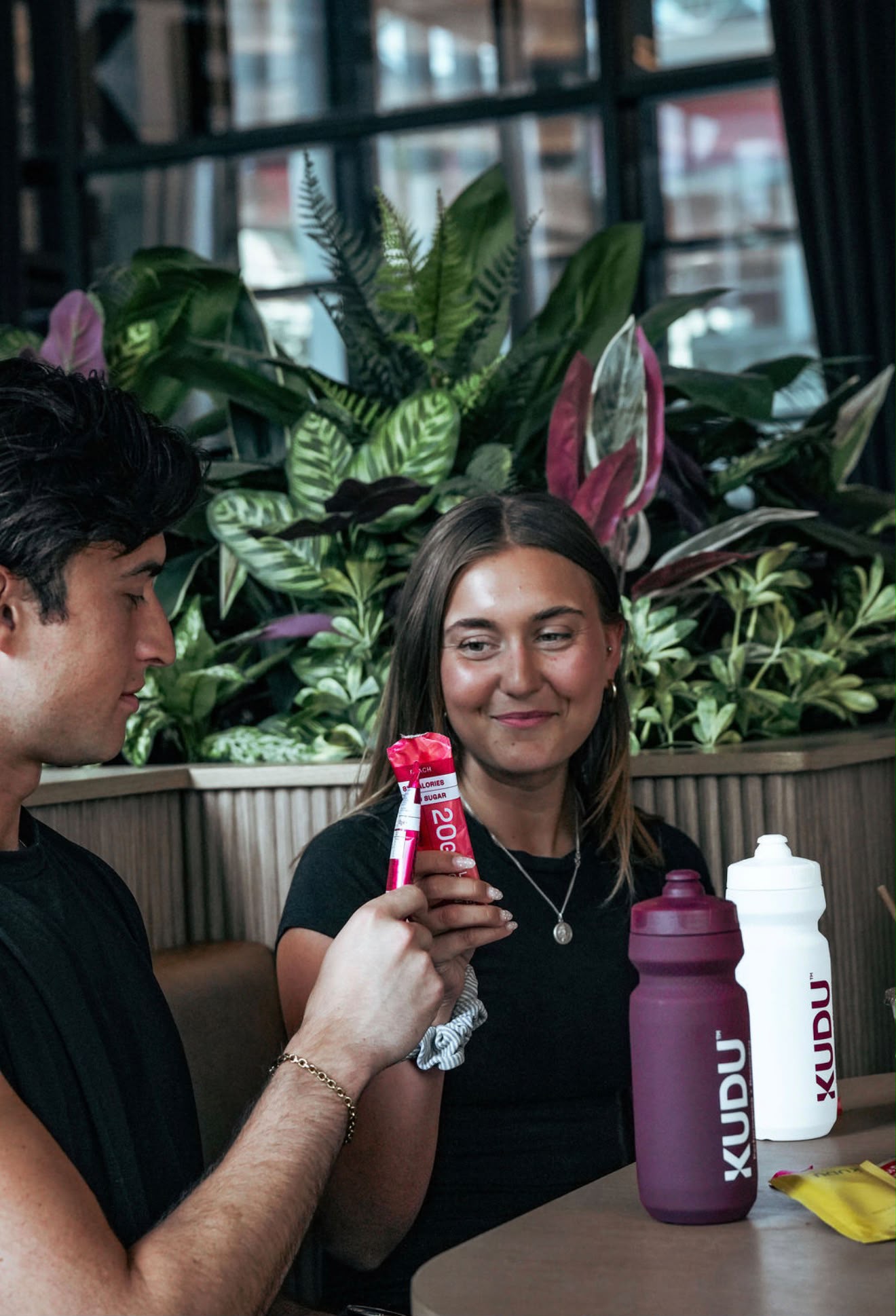
The trials used hydrolysed collagen peptides. You want 10g or more per serving, taken before exercise every day for months, so the format has to be convenient. KUDU's 20g liquid collagen is ready to drink an hour before your rehab, with 0g sugar and 85 calories, and it is Informed Sport certified if you compete. If you also lift, the Collagen + Creatine sachet includes vitamin C, the cofactor the Shaw protocol used.
Start the collagen and loading protocol →
Collagen for plantar fasciitis: FAQs
Does collagen help plantar fasciitis?
There is no direct trial yet. The plantar fascia is type I collagen like the Achilles, and Achilles tendinopathy trials show collagen taken before loading exercise improves pain and function over 6 months. The same protocol is the sensible approach.
How much collagen should I take for plantar fasciitis?
10g to 15g of hydrolysed collagen 30 to 60 minutes before your loading exercises. Trials in tendon used 2.5g to 15g; higher doses produced the biggest synthesis response.
How long does it take?
Expect 8 to 12 weeks for a noticeable change in morning pain and 3 to 6 months for the tissue to remodel. Keep the loading going throughout.
Will collagen work without exercises?
No trial shows collagen helping any tendon or fascia problem without loading. The exercise provides the signal; collagen provides the material.
Is collagen better than a heel insert or stretching?
They do different jobs. Inserts and stretching reduce load and pain; loading exercise rebuilds the tissue; collagen supports the rebuild. Use all three.
Related reading
- Collagen for tendonitis and tendon pain
- Collagen for runners
- Best time to take collagen
- Collagen for injury recovery
Sources
- Praet SFE et al. Oral supplementation of specific collagen peptides combined with calf-strengthening exercises in Achilles tendinopathy. Nutrients 2019.
- Jerger S et al. Specific collagen peptide supplementation combined with resistance training and Achilles tendon properties. Scand J Med Sci Sports 2022.
- Dressler P et al. Collagen peptides in athletes with chronic ankle instability. J Sports Sci Med 2018.
- Shaw G et al. Vitamin C enriched gelatin before intermittent activity augments collagen synthesis. Am J Clin Nutr 2017.
- Rathleff MS et al. High-load strength training improves outcome in patients with plantar fasciitis: a randomized controlled trial. Scand J Med Sci Sports 2015.
 20g per shot
Ready to try it?
20g Liquid Collagen Protein
4.7 from 495 reviews
- 20g hydrolysed bovine collagen per shot
- Ready to drink in two sips. 85 kcal, 0g sugar
- Informed Sport certified
Pick a flavour
£34.95 for 14
or £1.99 a shot on subscription
Free UK delivery over £50 · 60-day money-back guarantee · Pause or cancel any time
More on this topic: Collagen for joints & tendons →