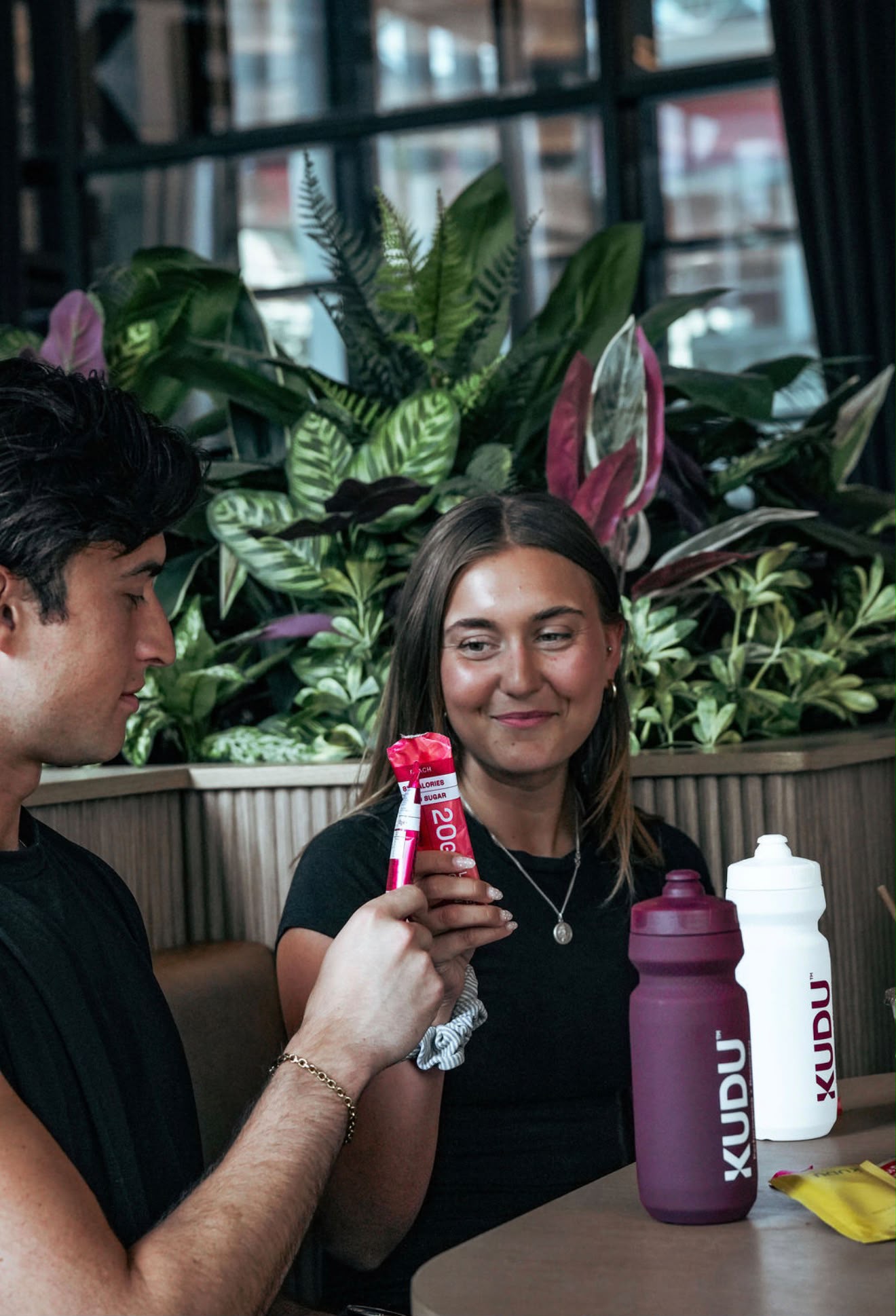

Collagen may help you sleep, and the reason is glycine. Hydrolysed collagen is about a fifth glycine by weight, so a 20g sachet delivers roughly 4.5g. In three Japanese trials, 3g of glycine taken before bed improved subjective sleep quality, reduced daytime sleepiness and shortened the time to fall asleep. In 2024, a UK trial gave physically active men with sleep complaints 15g of collagen peptides an hour before bed for a week and measured fewer night-time awakenings and better next-day cognitive performance than placebo. It is early evidence, not a sleeping pill, but it is real and the mechanism is understood.
This guide explains how glycine affects sleep, what the collagen-specific trial found, who is most likely to benefit, and how to run a two-week test on yourself. It also covers the questions that come up: does collagen keep you awake, does it break a fast overnight, and is it better before bed or before training.
Quick answer: collagen and sleep
- Mechanism: glycine lowers core body temperature and acts on NMDA receptors in the brain's sleep-regulating region
- Glycine trials: 3g before bed improved sleep quality and reduced fatigue (Inagawa 2006, Yamadera 2007, Bannai 2012)
- Collagen trial: 15g collagen peptides 1 hour before bed for 7 nights reduced awakenings and improved cognition in active men with sleep complaints (Thomas 2024)
- Dose: 15g to 20g of collagen, which supplies 3g to 4.5g of glycine
- Timing: 30 to 60 minutes before bed
- Not for: diagnosed insomnia or sleep apnoea, which need medical assessment
How glycine affects sleep
Glycine is a small amino acid that doubles as an inhibitory neurotransmitter. Taken before bed it does two things that matter for sleep. It increases blood flow to the skin, which lowers core body temperature, and a falling core temperature is one of the strongest signals for sleep onset. It also acts on NMDA receptors in the suprachiasmatic nucleus, the brain's master clock. Animal studies show glycine promotes slow-wave (deep) sleep through this route. Unlike sedatives, it does not cause grogginess; the trials found the opposite, with better daytime alertness.
The glycine trials
- Inagawa 2006: 3g of glycine before bed in people with poor sleep improved subjective sleep quality and reduced time to fall asleep.
- Yamadera 2007: 3g of glycine before bed improved sleep quality on polysomnography (measured brain activity), shortened sleep onset and reduced daytime sleepiness.
- Bannai 2012: under sleep restriction (5.5 hours a night), 3g of glycine reduced fatigue and improved reaction time the next day.
Three grams is the dose in every one of them. A 15g to 20g serving of hydrolysed collagen provides that amount of glycine naturally, which is why researchers turned to collagen itself.
The collagen trial
Thomas and colleagues (European Journal of Nutrition, 2024) ran a double-blind crossover in physically active men who reported sleep complaints. Participants took 15g of collagen peptides or a placebo one hour before bed for seven nights. The collagen week showed fewer awakenings during the night, better sleep efficiency by actigraphy, and improved next-morning cognitive performance. Sleep duration did not change; sleep quality did. It is one small trial in a specific group, so the honest label is "promising", but it lines up with the glycine work and it used a dose you can actually take.
The sleep trials at a glance
| Study | Who took part | What they took | When | Main result |
|---|---|---|---|---|
| Inagawa 2006 | Adults with poor sleep | 3g glycine | Before bed | Better sleep quality, faster to fall asleep |
| Yamadera 2007 | Adults with sleep complaints | 3g glycine | Before bed | Better sleep on brain monitoring, less daytime sleepiness |
| Bannai 2012 | Healthy adults limited to about 5.5 hours' sleep | 3g glycine | Before bed | Less fatigue and quicker reactions the next day |
| Thomas 2024 | Active men with sleep complaints | 15g collagen peptides | 1 hour before bed, 7 nights | Fewer night-time awakenings, better next-day cognition |
A 20g serving of hydrolysed collagen contains roughly 4g to 4.5g of glycine, comfortably above the 3g used in the glycine studies.
Who is most likely to benefit
- People who train hard and sleep badly. This is exactly the trial group, and heavy training raises both recovery demand and night waking.
- Light or fragmented sleepers rather than people who cannot fall asleep at all.
- Anyone eating little glycine. Modern diets are low in the connective tissue that carries it; muscle meat is glycine-poor.
How to try it: a two-week test
- Take 15g to 20g of hydrolysed collagen 30 to 60 minutes before bed for 14 nights. One KUDU 20g sachet supplies about 4.5g of glycine.
- Keep everything else constant: caffeine cut-off, screen time, bedtime.
- Score sleep quality and how rested you feel out of 10 each morning. If you use a wearable, watch awakenings and deep sleep.
- Compare the two weeks with the two before. If nothing changes, the sleep benefit is not there for you; the skin, joint and recovery benefits still are.
Before bed or before training?
If joints and tendons are your main goal, the evidence favours taking collagen before training (see best time to take collagen). If sleep is the goal, before bed. Many people who take a 20g shot before training find that is all they need; others split their intake and use a second dose at night. There is no interaction and no upper limit that a second 20g would approach.
Can collagen keep you awake at night?
Collagen itself will not. It contains no caffeine or other stimulants, and its main amino acid, glycine, is calming rather than stimulating. In the trials, people taking glycine before bed felt more alert the next day, not wired at night.
When someone does feel restless after a night-time collagen, it is usually something else in the drink or the routine:
- Added caffeine. Collagen coffees, "energy" blends and some pre-workouts contain caffeine, guarana or green tea extract. Check the label.
- Sugar. Some flavoured collagen drinks add several grams. KUDU has 0g sugar.
- A big drink right before lying down. A large shake can mean reflux or a trip to the loo at 3am. A small sachet taken 30 to 60 minutes before bed avoids both.
- A late, heavy meal. If collagen is part of a big supper, the meal is the more likely culprit.
If you still find it doesn't suit you at night, move it to the morning or before training. You keep the skin, joint and recovery benefits; only the sleep angle depends on bedtime.
Is it okay to take collagen before bed?
Yes. There is nothing about collagen that makes night-time a bad slot, and for sleep it is the slot the research used. You do not need an empty stomach, and it will not sit undigested overnight: hydrolysed collagen is broken down and absorbed within a few hours like any other protein, which is why the trials gave it 30 to 60 minutes before bed.
The benefits of drinking collagen before bed are fairly specific:
- A trial-sized dose of glycine at the time the sleep studies gave it.
- An easy habit. Bedtime is a fixed point in the day, which makes a daily dose harder to forget.
- A protein top-up. 20g of protein in 85 calories, without a meal.
- Double duty for evening trainers. If you train after work, a bedtime dose also lands in the hours after your session.
The one group to be careful is people with reflux, who are better off taking it earlier in the evening. For how a bedtime dose fits with your total for the day, see how much collagen to take per day.
Common questions
Does collagen keep you awake? No. It contains no caffeine or stimulants; glycine is calming. A flavoured sachet does have 85 calories, which does not disturb sleep for most people.
Does collagen at night cause weight gain? No. 85 calories of protein at 10pm is metabolised like 85 calories at 10am. See does collagen cause weight gain.
Is collagen a substitute for magnesium or melatonin? It works through a different route and can be combined with either. It is not a treatment for insomnia.
Try 14 nights of KUDU before bed →
KUDU is 20g of hydrolysed bovine collagen per sachet, around 4.5g of it glycine, 0g sugar, 85 calories, ready to drink. Two weeks per box.
Collagen for sleep: FAQs
Does collagen help you sleep?
Early evidence says it can improve sleep quality. 3g of glycine before bed improved sleep in three trials, and 15g of collagen peptides before bed reduced night waking in active men in a 2024 study.
How much collagen should I take before bed for sleep?
15g to 20g, which supplies the 3g or more of glycine the trials used.
Should I take collagen at night or in the morning?
Before bed for sleep; before training for joints and tendons. Either time works for skin. Some people do both.
Does collagen keep you awake?
No. It has no stimulants, and glycine is calming.
Is glycine or collagen better for sleep?
Pure glycine is cheaper per gram of glycine; collagen delivers the same glycine plus the peptides with skin, joint and tendon evidence. If you already take collagen, moving it to bedtime costs nothing.
Related reading
- Best time to take collagen
- Let's talk about sleep
- How collagen aids recovery
- Amino acids in collagen
Sources
- Inagawa K et al. Subjective effects of glycine ingestion before bedtime on sleep quality. Sleep Biol Rhythms 2006.
- Yamadera W et al. Glycine ingestion improves subjective sleep quality in human volunteers, correlating with polysomnographic changes. Sleep Biol Rhythms 2007.
- Bannai M et al. The effects of glycine on subjective daytime performance in partially sleep-restricted healthy volunteers. Front Neurol 2012.
- Kawai N et al. The sleep-promoting and hypothermic effects of glycine are mediated by NMDA receptors in the suprachiasmatic nucleus. Neuropsychopharmacology 2015.
- Thomas C et al. Collagen peptide supplementation before bedtime reduces sleep fragmentation and improves cognitive function in physically active males with sleep complaints. Eur J Nutr 2024.
 20g per shot
Ready to try it?
20g Liquid Collagen Protein
4.7 from 495 reviews
- 20g hydrolysed bovine collagen per shot
- Ready to drink in two sips. 85 kcal, 0g sugar
- Informed Sport certified
Pick a flavour
£34.95 for 14
or £1.99 a shot on subscription
Free UK delivery over £50 · 60-day money-back guarantee · Pause or cancel any time