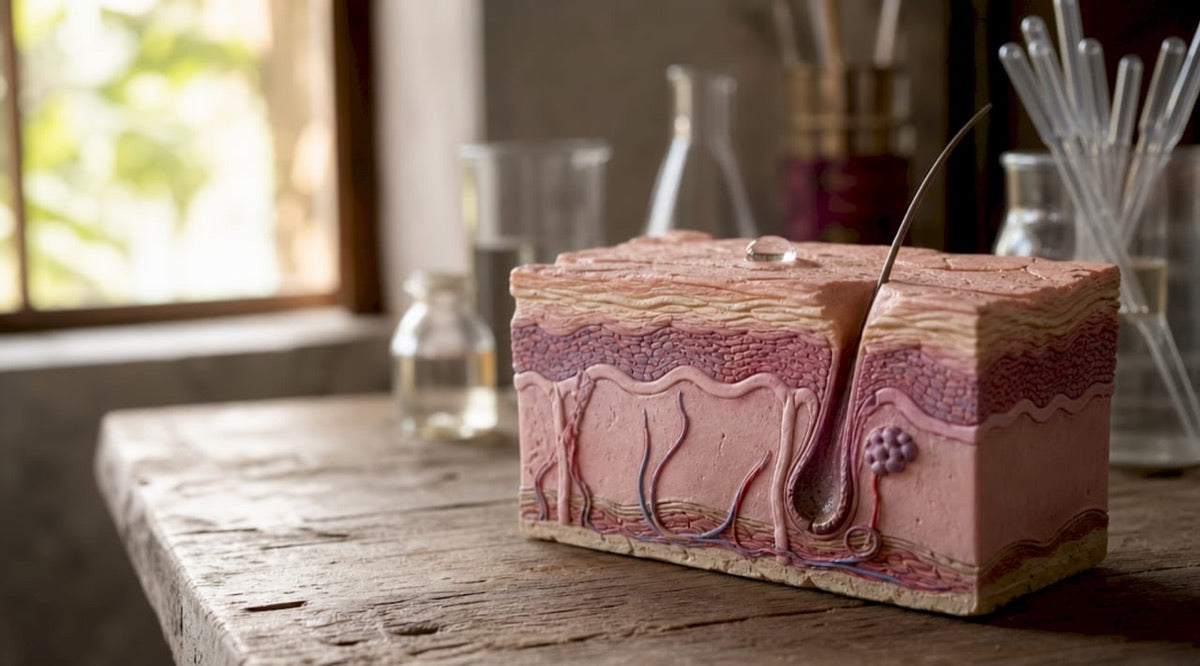

Bovine collagen is hydrolysed collagen taken from cattle hide, and it is the source used in most of the clinical trials on collagen for joints, tendons, muscle and skin. Its advantage over marine collagen is simple: it naturally contains both type I and type III collagen, which between them make up the skin, tendons, ligaments, bone matrix, muscle fascia and gut lining. It is also the most cost-effective source, which is why it is the only collagen a brand can realistically deliver at 20g per serving.
This guide sets out what bovine collagen does, with the doses the trials used, who benefits most, how it compares with marine and other sources, and what to check on a UK label.
Bovine collagen benefits at a glance
- Skin elasticity and hydration: 2.5g to 10g daily, 8 to 12 weeks
- Joint pain during activity: 5g to 10g daily, 12 to 24 weeks
- Tendon and ligament repair: 5g to 15g before loading, 3 to 6 months
- Strength and lean mass: 15g daily with resistance training, 12 weeks
- Muscle soreness and recovery: 20g daily, effect within 9 days
- Bone density: 5g daily, 12 months
- Gut lining: glycine and glutamine supply; human evidence still early
What bovine collagen is
Cattle hide is mostly type I collagen with a meaningful share of type III. Manufacturers clean it, extract the collagen, then hydrolyse it with enzymes into short peptides that dissolve in water and absorb quickly. The result is "hydrolysed bovine collagen" or "bovine collagen peptides", two names for the same thing (see hydrolysed collagen vs peptides). Good bovine collagen is 90% or more protein by weight, has no carbohydrate or fat of its own, and is neutral enough in taste to flavour.
Type I and type III: why it matters
- Type I is 90% of the body's collagen: skin, tendons, ligaments, bone, cornea. Marine collagen is type I only.
- Type III sits alongside type I in skin (especially young skin), muscle, blood vessels and the gut wall. It is abundant in bovine hide and largely absent from fish skin.
Once hydrolysed, peptides from either type are similar and the body does not route them by type, but a type I and III source gives the fuller amino acid pattern of the tissues most people are supplementing for. It is the reason sports-focused collagen products are almost always bovine.
The benefits, with the trials
Skin
Proksch 2014: 2.5g and 5g of bovine-derived collagen peptides daily improved skin elasticity at 4 and 8 weeks in women aged 35 to 55. A companion trial measured reduced eye wrinkle depth and increased skin procollagen at 8 weeks. Consistent with these, a 2019 trial in women 45 to 65 found improved hydration, elasticity and density at 12 weeks.
Joints
Clark 2008: 10g of collagen hydrolysate for 24 weeks reduced joint pain in 147 athletes. Zdzieblik 2017: 5g for 12 weeks reduced activity-related knee discomfort in active adults. Benito-Ruiz 2009: 10g for 6 months improved pain in knee osteoarthritis. All used bovine or porcine hydrolysates. See does collagen help joint pain.
Tendons and ligaments
Shaw 2017: 15g one hour before exercise doubled collagen synthesis. Praet 2019: 2.5g daily with calf training improved Achilles tendinopathy over 6 months. Jerger 2022: 5g with training increased Achilles size and stiffness in 14 weeks. Dressler 2018: 5g for 6 months improved ankle stability. Protocol in collagen for tendonitis.
Muscle and body composition
Three 12-week trials (older men, young men, premenopausal women) combined 15g of bovine collagen peptides with resistance training and found greater gains in fat-free mass and strength than training alone.
Our bovine collagen range uses hydrolysed bovine collagen peptides, the same type of collagen tested in these trials.
Recovery
Clifford 2019: 20g daily for 9 days reduced soreness and sped recovery of jump performance after muscle-damaging exercise.
Bone
König 2018: 5g daily for 12 months increased bone mineral density in postmenopausal women.
Gut
Bovine collagen is rich in glycine and contains glutamine, both used by the intestinal lining, and type III collagen is part of the gut wall itself. The human evidence for gut symptoms is early and small; treat it as a plausible bonus, not a reason to buy.
Bovine vs marine vs other sources
| Bovine | Marine (fish) | Chicken | Porcine | |
|---|---|---|---|---|
| Collagen types | I and III | I | II (cartilage) | I and III |
| Best evidence for | Joints, tendons, muscle, skin, bone | Skin | Cartilage (undenatured type II) | Skin, joints |
| Typical dose per serving | 10g to 20g | 5g to 10g | 40mg (undenatured) | 10g |
| Cost per gram | Lowest | Highest | n/a | Low |
| Dietary notes | Not vegetarian; halal/kosher versions exist | Pescatarian friendly; fish allergen | Not vegetarian | Not halal or kosher |
The "marine absorbs better" claim rests on molecular-weight marketing rather than head-to-head human trials; both are hydrolysed to similar peptide sizes. The decisive difference in practice is dose per serving and price, where bovine wins. Full comparison in marine vs bovine collagen.
Is bovine collagen safe?
Hydrolysed bovine collagen has been used in foods and supplements for decades with an excellent safety record. UK and EU products are made from cattle that meet food-chain standards, and hydrolysis removes the concerns people sometimes raise about hide products. Side effects are limited to mild fullness or, at very high intakes, a laxative effect; there is no established upper limit and a 2019 analysis found collagen can make up roughly a third of daily protein while keeping essential amino acids in balance. It is not suitable for vegetarians or vegans.
What to look for in a bovine collagen supplement
- "Hydrolysed bovine collagen" or "bovine collagen peptides" as the first ingredient.
- 10g or more per serving if joints, tendons or training are the goal; 20g covers every trial dose in one.
- 0g sugar and a short ingredient list.
- Batch testing (Informed Sport) if you compete or want proof of contents.
- A format you will take daily for three months. Ready-to-drink beats a tub you have to mix.
KUDU liquid collagen is 20,000mg of hydrolysed bovine collagen (types I and III) per sachet, 0g sugar, 85 calories, gluten and dairy free, Informed Sport certified, made in the UK, and works out at about 12.5p per 1,000mg against a UK average of around 34p.
Try 20g bovine collagen shots →
Bovine collagen: FAQs
What is bovine collagen good for?
Skin elasticity, joint pain, tendon and ligament repair, strength and lean mass with training, recovery, and bone density, each with trial doses between 2.5g and 20g a day.
Is bovine collagen better than marine?
For joints, tendons and training, yes: it provides type I and III and is the source in most of those trials, at a lower cost per gram. For skin alone, both work. See marine vs bovine collagen.
How much bovine collagen should I take daily?
2.5g to 5g for skin, 5g to 10g for joints, 15g to 20g for muscle and recovery. A 20g sachet covers everything.
Is bovine collagen safe?
Yes. It has decades of use, no established upper limit, and only mild digestive effects at very high intakes. Not suitable for vegetarians or vegans.
Does bovine collagen contain type II collagen?
No. Type II comes from cartilage (usually chicken). Bovine hide collagen is type I and III, which is what skin, tendons, ligaments and muscle need.
Related reading
- Marine vs bovine collagen
- Hydrolysed collagen vs collagen peptides
- How much collagen per day
- How collagen is absorbed
Sources
- Proksch E et al. Skin Pharmacol Physiol 2014 (two trials on skin elasticity and wrinkles).
- Clark KL et al. Curr Med Res Opin 2008. Zdzieblik D et al. Appl Physiol Nutr Metab 2017. Benito-Ruiz P et al. Int J Food Sci Nutr 2009.
- Shaw G et al. Am J Clin Nutr 2017. Praet SFE et al. Nutrients 2019. Jerger S et al. Scand J Med Sci Sports 2022. Dressler P et al. J Sports Sci Med 2018.
- Zdzieblik 2015 (Br J Nutr), Kirmse 2019 and Jendricke 2019 (Nutrients): collagen with resistance training.
- Clifford T et al. Amino Acids 2019. König D et al. Nutrients 2018. Paul C, Leser S, Oesser S. Nutrients 2019.
 20g per shot
Ready to try it?
20g Liquid Collagen Protein
4.7 from 495 reviews
- 20g hydrolysed bovine collagen per shot
- Ready to drink in two sips. 85 kcal, 0g sugar
- Informed Sport certified
Pick a flavour
£34.95 for 14
or £1.99 a shot on subscription
Free UK delivery over £50 · 60-day money-back guarantee · Pause or cancel any time
More on this topic: Bovine collagen →