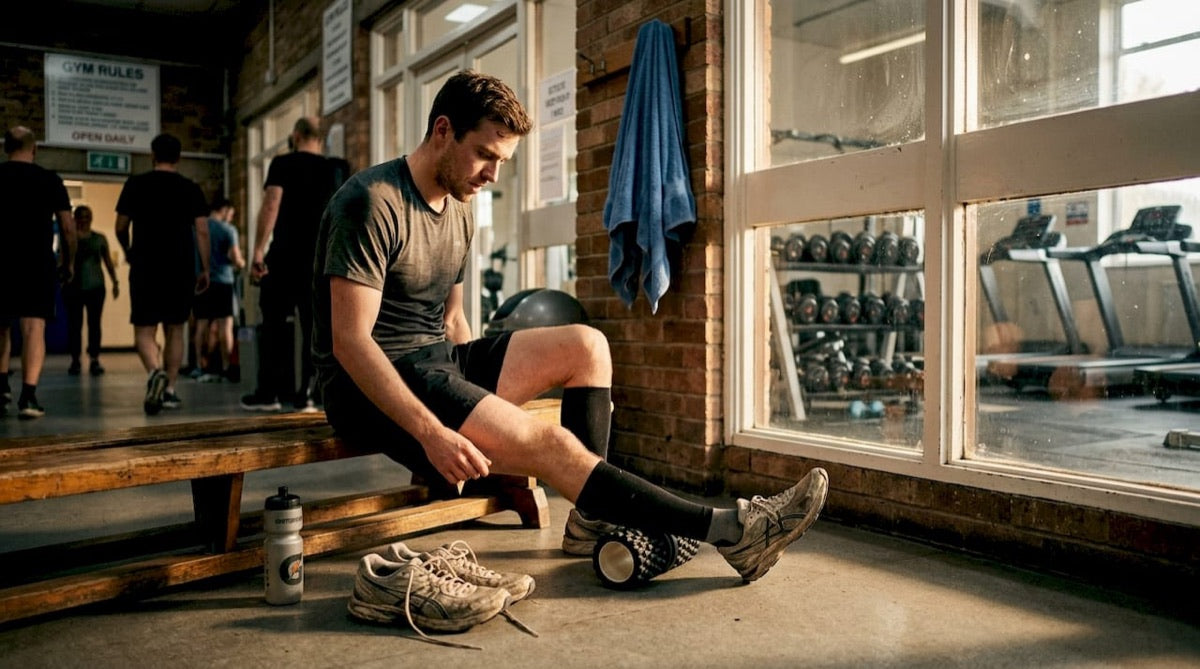

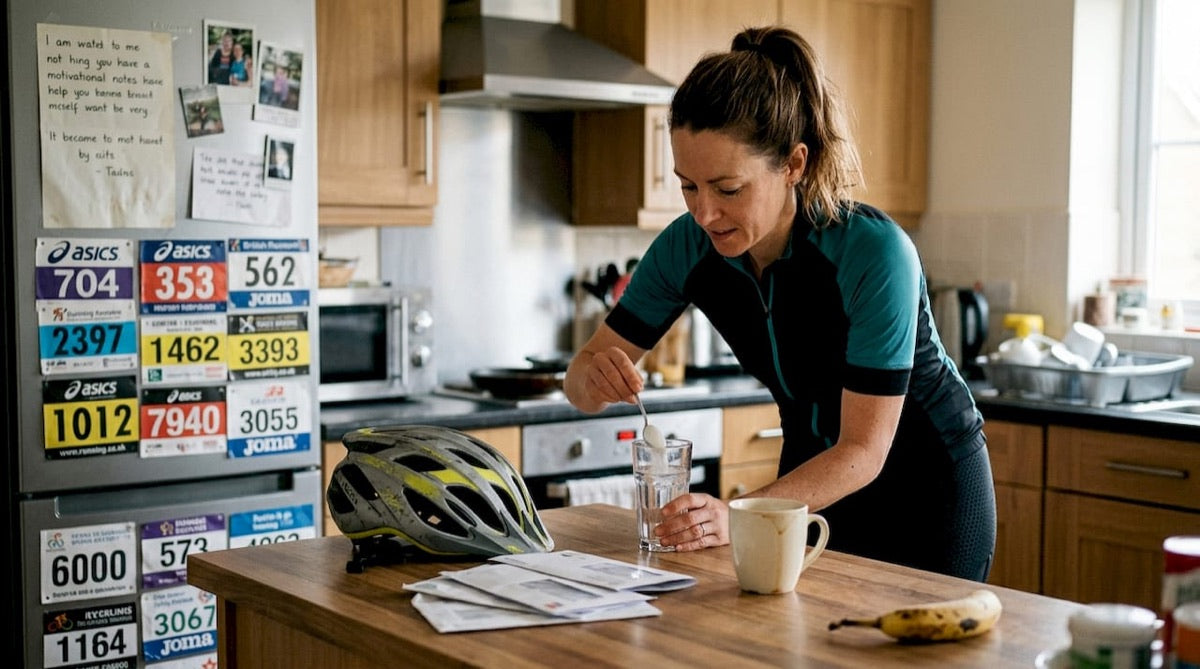
Yes, collagen helps joint pain for a specific group of people: adults with activity-related joint discomfort or early osteoarthritis who take 5g to 10g of hydrolysed collagen every day for at least 12 weeks. That covers the runner whose knees ache after long runs, the lifter with a grumbling shoulder, and the over-40 who has stiff knees on the stairs. It does not cover advanced joint damage, and it does not work in a fortnight.
The evidence here is better than most people expect and narrower than the marketing suggests. This guide walks through the knee and joint trials, explains what collagen does inside a joint, and gives the dose and timeline that produced results.
Quick answer: collagen for joint pain
- Works for: activity-related knee, hip, shoulder and ankle discomfort; mild to moderate osteoarthritis symptoms
- Dose in the trials: 5g to 10g of hydrolysed collagen daily
- Time to effect: 12 weeks, with further improvement to 24 weeks
- Best taken: 30 to 60 minutes before exercise, every day
- Does not replace: strength training, weight management or medical care for advanced joint disease
What collagen does inside a joint
Cartilage is roughly 60% collagen by dry weight, almost all type II, sitting in a gel of proteoglycans. The ligaments and joint capsule around it are type I and III. When you supplement hydrolysed collagen, the peptides are absorbed into the blood and, in laboratory studies, stimulate chondrocytes (cartilage cells) to produce more type II collagen and proteoglycans. In humans the measurable effect is on pain and function rather than on cartilage thickness, which is what the trials below tracked.
The trials: knees, athletes and osteoarthritis
| Trial | Participants | Dose and duration | Result |
|---|---|---|---|
| Zdzieblik et al. 2017 | 139 physically active adults with knee discomfort during activity | 5g collagen peptides daily, 12 weeks | Significant reduction in activity-related knee pain vs placebo; less pain at rest too |
| Clark et al. 2008 (Penn State) | 147 athletes with activity-related joint pain | 10g collagen hydrolysate daily, 24 weeks | Reduced joint pain at rest, walking, standing, carrying and lifting vs placebo; biggest effect in those with knee pain |
| Dressler et al. 2018 | Athletes with chronic ankle instability | 5g daily, 6 months | Improved stability, fewer re-injuries |
| Benito-Ruiz et al. 2009 | 250 adults with knee osteoarthritis | 10g collagen hydrolysate daily, 6 months | Improved pain scores, especially in those with the worst baseline pain |
| Bruyère et al. 2012 | 200 adults with hip or knee joint pain | 1.2g daily, 6 months | More responders than placebo, but a modest effect at this low dose |
The pattern: doses of 5g to 10g, taken for 3 to 6 months, reduced joint pain in both athletes and adults with osteoarthritis. The 1.2g trial is the useful negative: low doses produce weak effects. This is why 2g gummies and 2.5g beauty shots rarely do anything for joints.
You can compare options that meet these trial doses on our collagen for joints and tendons page.
Collagen for runners' knees
Runners are the group with the clearest evidence. The Zdzieblik trial specifically recruited active adults whose knees hurt during sport, and the Clark trial was athletes. The mechanism is the same as for tendons: cartilage and the patellar tendon are loaded every stride, and having collagen peptides in circulation during that loading is when the tissue can use them. Practical protocol for runners:
- 10g to 20g of hydrolysed collagen 30 to 60 minutes before runs, every day you run, and with breakfast on rest days.
- Keep it up for 12 weeks before judging. Track a pain score for the first mile and the day after a long run.
- Combine with strength work for the hips and quads; collagen supports tissue, it does not fix mechanics.
For the tendon side of runner's knee, see collagen for tendonitis. For running-specific dosing, see collagen for runners.
Collagen for joint pain over 40
Natural collagen production declines from your mid-twenties by roughly 1% a year, and faster for women after menopause. By 40 the cartilage and ligaments have less repair capacity than the demands placed on them, which is why stiffness and post-exercise aches appear even in people who are fit. The osteoarthritis trials were in exactly this age group and older. The same 10g daily dose for 6 months is the protocol, ideally alongside two strength sessions a week, which independently reduce knee osteoarthritis pain. Women in perimenopause should read collagen and menopause, where joint pain is one of the most common and least discussed symptoms.
What to expect, week by week
- Weeks 1 to 4: usually nothing. Peptides are arriving daily; the tissue has not changed yet.
- Weeks 4 to 8: some people notice less next-day stiffness after activity.
- Week 12: the point at which the trials measured significant pain reduction. Judge here, not before.
- Weeks 12 to 24: continued improvement in the 24-week trials. Benefits persist while you keep taking it and fade over months if you stop.
Collagen or glucosamine for joints?
Glucosamine and chondroitin have decades of mixed trials with small average effects. Hydrolysed collagen has fewer but more consistent trials in active people, and it brings something the others do not: 10g to 20g of protein that also serves tendons, ligaments, muscle and skin. There is no reason you cannot take both, but if you are choosing one and you train, collagen has the more relevant evidence.
Choosing a collagen for joints
Look for hydrolysed collagen peptides at 10g or more per serving, a format you will take daily for months, and batch testing if you compete. KUDU's 20g liquid collagen delivers twice the joint-trial dose in one ready-to-drink sachet with 0g sugar and 85 calories, Informed Sport certified. Take it an hour before you train.
Try 12 weeks of KUDU 20g collagen →
Every order carries a 60-day money-back guarantee, which covers most of the 12-week window the trials needed.
Collagen for joint pain: FAQs
Does collagen really help joint pain?
Yes, in placebo-controlled trials of active adults and people with knee osteoarthritis, 5g to 10g of hydrolysed collagen daily for 12 to 24 weeks reduced joint pain and improved function.
How much collagen should I take for joint pain?
5g to 10g a day is the evidence-based range. 20g covers it with margin and adds the doses used for muscle and recovery.
How long does collagen take to work for joints?
About 12 weeks for a measurable change, with further improvement to 6 months. It is not a fast-acting painkiller.
Which type of collagen is best for joints?
Hydrolysed collagen peptides (bovine or marine) have the human joint-pain trials. Bovine provides type I and III and is the source used in most of the sports trials. Undenatured type II collagen (UC-II) is a different, low-dose product with its own smaller evidence base.
Can I take collagen with glucosamine or ibuprofen?
Yes. There are no known interactions. Collagen is a food protein.
Related reading
- Collagen for tendonitis and tendon pain
- How much collagen per day
- How long does collagen take to work?
- Collagen and menopause
Sources
- Zdzieblik D et al. Improvement of activity-related knee joint discomfort following supplementation of specific collagen peptides. Appl Physiol Nutr Metab 2017.
- Clark KL et al. 24-week study on the use of collagen hydrolysate as a dietary supplement in athletes with activity-related joint pain. Curr Med Res Opin 2008.
- Dressler P et al. Improvement of functional ankle properties following supplementation with specific collagen peptides. J Sports Sci Med 2018.
- Benito-Ruiz P et al. A randomized controlled trial on the efficacy and safety of a food ingredient, collagen hydrolysate, for improving joint comfort. Int J Food Sci Nutr 2009.
- Bruyère O et al. Effect of collagen hydrolysate in articular pain: a 6-month randomized, double-blind, placebo controlled study. Complement Ther Med 2012.
 20g per shot
Ready to try it?
20g Liquid Collagen Protein
4.7 from 495 reviews
- 20g hydrolysed bovine collagen per shot
- Ready to drink in two sips. 85 kcal, 0g sugar
- Informed Sport certified
Pick a flavour
£34.95 for 14
or £1.99 a shot on subscription
Free UK delivery over £50 · 60-day money-back guarantee · Pause or cancel any time
More on this topic: Collagen for joints & tendons →