
Creatine is not a menopause remedy, and it will not fix hot flushes, sleep or mood. Where the evidence sits is muscle and strength, which fall faster in the years around menopause. For adults over 55 who do resistance training at least three times a week, there is an authorised claim: daily creatine consumption can enhance the effect of resistance training on muscle strength in adults over the age of 55.
That claim comes with conditions, and in your 40s and early 50s the evidence is promising but less settled. This guide sets out exactly what is proven, what is still research, and how to check whether your training matches the studies.
Quick answer
Take 3–5g of creatine monohydrate a day and pair it with resistance training at least three times a week. The over-55 strength claim needs 3g a day with progressive training at 65–75% of your one-rep max for several weeks. Creatine has no proven effect on menopause symptoms, and a two-year trial in postmenopausal women found no effect on bone density. Speak to your GP first if you have a kidney condition or take medication.
Strength-plan checker
Does your training match the research?
The over-55 claim needs 3g creatine daily plus progressive resistance training 3+ times a week.
What happens to muscle and strength around menopause?
Everyone loses muscle and strength with age, starting slowly from around our 30s. For women, the years around menopause seem to speed this up. Studies suggest the fall in oestrogen is linked with faster loss of muscle and bone, which is why strength training is now a core part of most menopause health advice.
That matters for more than the gym. Leg strength and power decide how easily you climb stairs, get up from the floor and catch yourself on a trip. Keeping them is one of the best long-term investments you can make, and the work that does it is resistance training. Creatine is a possible add-on to that work, not a substitute for it.
What the research says about creatine after 40
Here is the evidence, including the parts that did not go creatine's way.
- Strength with training in older adults. A 2017 meta-analysis by Chilibeck and colleagues pooled 22 trials in 721 older adults (average ages 57–70) and found creatine plus resistance training led to greater gains in strength and lean tissue than training alone. This kind of evidence underpins the authorised over-55 claim.
- Postmenopausal women over two years. A 2023 trial gave 237 postmenopausal women either creatine or placebo alongside supervised resistance training and walking for two years. Creatine did not change bone mineral density. It did preserve some measures of hip bone shape, and the creatine group gained more lean tissue and walked faster, but one-rep-max strength did not differ between the groups.
- Women across the lifespan. A 2021 review by Smith-Ryan and colleagues concluded that creatine is a promising, under-studied supplement for women, particularly around and after menopause, and called for more trials.
- Brain and mood. Small early studies have looked at creatine and brain energy, including in women. This is research in progress, and it is not a reason to take creatine for menopause symptoms.
So the honest summary: alongside proper resistance training, creatine has reasonable evidence for strength in older adults, mixed evidence for lean mass and bone, and no evidence as a symptom remedy.
The over-55 claim and its conditions
In the UK, only authorised wording can be used to describe what a nutrient does. For creatine there are two claims. The general one: creatine increases physical performance in successive bursts of short-term, high intensity exercise (with 3g a day). The second is specific to older adults, and every condition matters:
| Condition | What it means in practice |
|---|---|
| Adults over 55 | The claim is for people over 55 who do regular resistance training. |
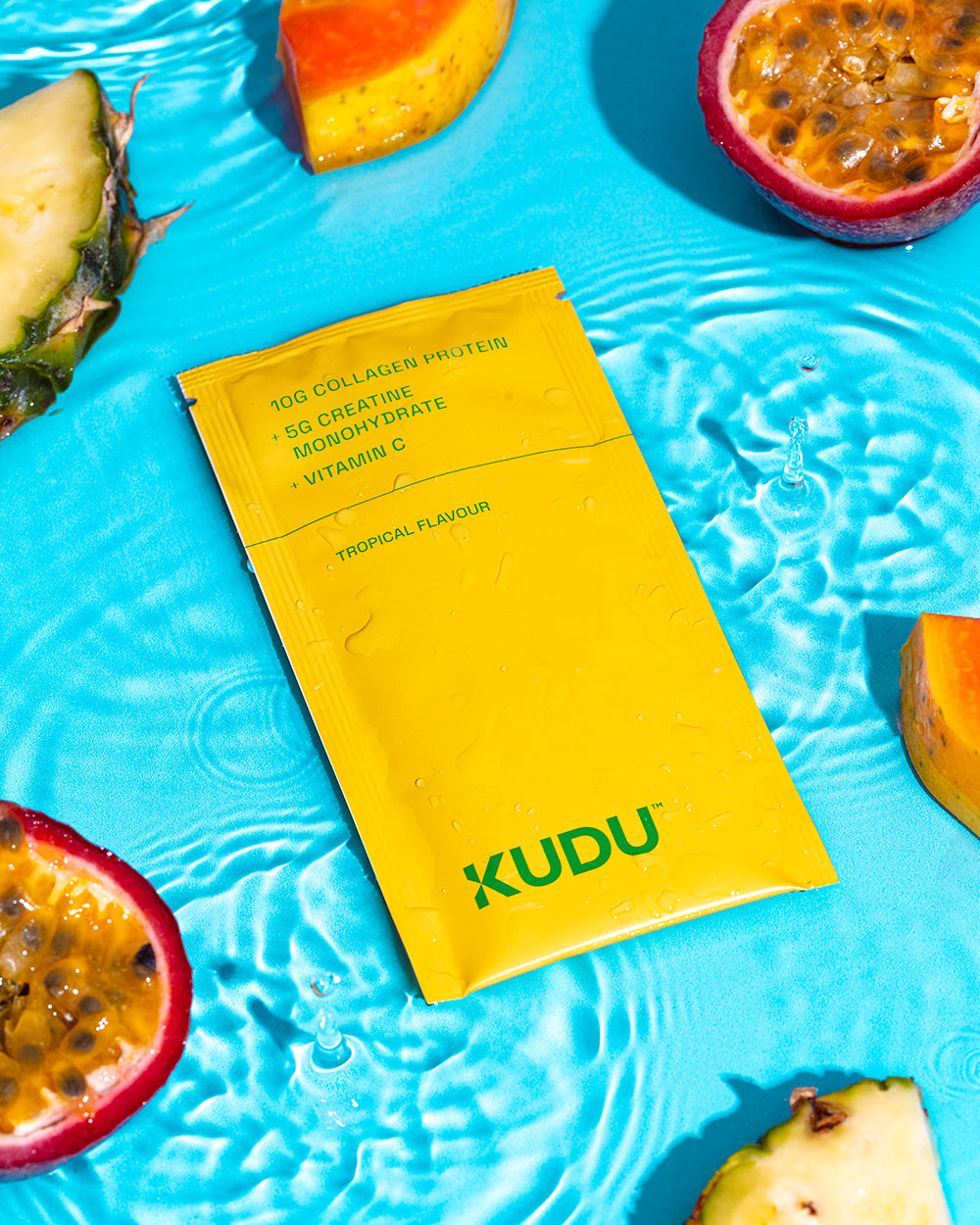
| 3g of creatine every day | Daily, not just on training days. A KUDU sachet has 5g. |
| Resistance training at least 3 times a week | Weights, machines, bands or bodyweight work that challenges your muscles. Walking and yoga are good for you but do not count here. |
| 65–75% of one-rep max or more | Sets where roughly 10–15 reps is your limit. If you could do 25, it is too light. |
| Progressive, for several weeks | The weight or reps creep up over time. Benefits are measured over weeks, not days. |
The European Food Safety Authority assessed this claim in 2016. Notably, it found no such effect when creatine was taken only on training days, which is why the wording says daily.
Creatine and menopause symptoms: what we can and cannot say
You will see creatine marketed for menopause brain fog, mood, sleep and energy. The research behind those ideas is early, small and mostly not in menopausal women, so we will not make those claims. If symptoms are affecting your life, the right first conversation is with your GP, who can talk you through HRT and other options.
What creatine can sensibly be part of is a strength routine you are already committed to. If you are not training yet, start there. Two sessions a week is a fine beginning; the research behind the over-55 claim used three.
How to take creatine after 40
- Dose: 3–5g of creatine monohydrate a day. No loading phase is needed. Our dose calculator works it out by bodyweight.
- Timing: whenever you will remember. Consistency matters far more than timing.
- Protein: expert groups suggest older adults aim for about 1.0–1.2g of protein per kg of bodyweight a day, more if you train hard (PROT-AGE, 2013). Spread it across meals.
- Water weight: some people gain a little water in the muscle in the first weeks. It is not fat, and it is smaller without loading.
Where collagen fits
Collagen is the main protein in tendons, ligaments, skin and bone, and the body's own production falls with age. Studies have looked at collagen peptides alongside training for tendons, joints and bone in older women, with some encouraging results, though collagen has no authorised health claims in the UK. It is also not a complete protein, so it should sit on top of your normal protein intake, not replace it.
That is why our Collagen + Creatine sachet pairs 5g of creatine with 10g of collagen and vitamin C, at 44 kcal: one daily habit for people who lift. No trials have tested the two together, and the sachet is not Informed Sport certified. For the collagen side in more depth, read collagen and menopause and collagen for bone density.
Safety: check with your GP if
Creatine monohydrate at 3–5g a day has a long safety record in healthy adults. Speak to your GP before starting if you have a kidney condition, diabetes or high blood pressure, or take regular medication. Creatine can raise creatinine on a blood test, a common kidney marker, so tell your doctor you take it before any blood work.
FAQ
Is creatine safe after menopause?
Trials in postmenopausal women, including the two-year study above, have used creatine daily without serious safety concerns. The usual cautions apply: kidney conditions and medication mean a GP conversation first.
Does creatine help with menopause weight gain?
No. Creatine is not a weight-loss supplement. It may add a little water weight to muscle in the first weeks.
Does creatine strengthen bones after menopause?
The evidence is mixed. A one-year trial suggested a benefit to hip bone density, but the larger two-year trial in 2023 found no difference in bone mineral density, only in some measures of bone shape.
Can I take creatine with HRT?
We are not aware of research showing an interaction, but if you take HRT or any other medication, check with your GP or pharmacist before you start.
Do I need to lift weights for creatine to work?
For the strength benefit, yes. The over-55 claim depends on resistance training at least three times a week, and the studies in older adults paired creatine with training.
Related reading
- Creatine for women: what it does and what to ignore
- Collagen and menopause
- Collagen for over-50s
- Can you take collagen and creatine together?
Sources
- Commission Implementing Regulation (EU) 2017/672 (retained in GB law): creatine and muscle strength in adults over the age of 55. legislation.gov.uk/eur/2017/672.
- EFSA NDA Panel (2016). Creatine in combination with resistance training and improvement in muscle strength. EFSA Journal, 14(2):4400.
- Chilibeck PD, Kaviani M, Candow DG, Zello GA (2017). Effect of creatine supplementation during resistance training on lean tissue mass and muscular strength in older adults: a meta-analysis. Open Access Journal of Sports Medicine, 8:213–226.
- Chilibeck PD et al. (2023). A 2-yr randomized controlled trial on creatine supplementation during exercise for postmenopausal bone health. Medicine & Science in Sports & Exercise, 55(10):1750–1760.
- Smith-Ryan AE, Cabre HE, Eckerson JM, Candow DG (2021). Creatine supplementation in women's health: a lifespan perspective. Nutrients, 13(3):877.
- Bauer J et al. (2013). Evidence-based recommendations for optimal dietary protein intake in older people: a position paper from the PROT-AGE Study Group. Journal of the American Medical Directors Association, 14(8):542–559.
 2-in-1
Ready to try it?
Collagen + Creatine Sachets
60-day money-back guarantee
- 10g collagen + 5g creatine monohydrate
- Plus vitamin C. Mix with water, done
- No tub, no scoop. 30 sachets
Pick a flavour
£59.95 for 30
or £1.59 a serving on subscription
Free UK delivery over £50 · 60-day money-back guarantee · Pause or cancel any time
More on this topic: Collagen for muscle recovery →