collagen for tendon repair

Collagen for tendon repair: an evidence-based protocol

Close-up of collagen fibers model

Collagen supplementation can genuinely support tendon repair, but only when paired with progressive mechanical loading and adequate vitamin C. The research is clear enough to act on, yet nuanced enough to get wrong. Done right, a structured protocol built around hydrolysed collagen peptides, timed to your training sessions, gives tendons the raw materials they need at the moment they are most receptive to rebuilding. Done wrong, it is an expensive protein drink.

Three things to know before you read further:

  • Dose: 15–30 g of hydrolysed collagen peptides per day is the range most consistently linked to between-group effects on tendon morphology in trials.
  • Timing: take your collagen 30–60 minutes before a loading session, not at a random point in the day.
  • Non-negotiables: vitamin C (at least 50 mg alongside each dose) and progressive resistance training are not optional extras; without them, the amino acids contribute to the general protein pool rather than tendon-specific repair.

Key takeaways

Collagen supplementation supports tendon repair when the dose, timing, and exercise pairing are all correct; without progressive mechanical loading, the benefit is largely absent.

Point Details
Effective dose range 15–30 g hydrolysed collagen peptides daily; 15 g is the most consistently studied effective amount.
Timing is critical Take collagen 30–60 minutes before a loading session to match peak serum peptide availability.
Vitamin C is non-negotiable At least 50 mg alongside each dose; required for collagen cross-linking and structural integrity.
Realistic timeline Expect 8–12 weeks minimum before measurable change; structural improvements typically emerge at 3 months.
Kudunutrition option The 20 g liquid collagen shots are Informed Sport-certified and designed for pre-exercise timing within this protocol.

Table of Contents

How does collagen support tendon structure and healing?

Tendons are built almost entirely from collagen, predominantly type I, arranged in dense parallel fibres that transmit force from muscle to bone. That matrix gives tendons their tensile strength, but it also explains why they heal so slowly: tendon tissue is poorly vascularised, meaning it receives far less blood flow than muscle, and therefore far fewer of the nutrients and growth signals that drive repair.

When a tendon is injured or overloaded, the body needs to synthesise new collagen to remodel the damaged matrix. That synthesis depends on a supply of specific amino acids, particularly glycine, proline, and hydroxyproline. Hydrolysed collagen is rich in all three. Vitamin C is the essential cofactor for the enzyme prolyl hydroxylase, which converts proline to hydroxyproline during collagen cross-linking. Without sufficient vitamin C, the structural integrity of newly synthesised collagen is compromised. You can read more about vitamin C and collagen synthesis and why the pairing matters mechanically.

The concept that ties everything together is mechanotransduction: the process by which mechanical load signals tenocytes (tendon cells) to incorporate new collagen into the specific tendon being stressed. Supplementation alone does not direct amino acids to a damaged Achilles or patellar tendon. The mechanical stimulus from targeted loading does that. Collagen peptides raise the available substrate; the exercise tells the tendon where to use it. Remove the exercise, and the benefit largely disappears.

  • Tendons are mostly collagen by dry weight, predominantly type I.
  • Glycine, proline, and hydroxyproline are the dominant amino acids in tendon collagen.
  • Vitamin C is required for hydroxylation of proline, a step that cannot be bypassed.
  • Poor vascularity means tendon repair is slow; realistic timelines are months, not weeks.
  • Mechanical loading is the signal that directs new collagen to the target tissue.

Pro Tip: If you are managing a specific tendinopathy such as Achilles or patellar, work with a physiotherapist to design the loading programme. The supplement protocol is only as good as the exercise it is paired with.


What does the research actually show?

The evidence base for collagen and tendon repair has grown substantially over the past decade, and the direction of effect is broadly positive, though the certainty varies by outcome.

A systematic review published in the Journal of Functional Morphology and Kinesiology found that collagen supplementation at 15–30 g per day, combined with vitamin C (≥50 mg) and high-intensity resistance training (≥70% 1RM), may enhance tendon remodelling, with effects on tendon cross-sectional area and stiffness. The same review flags substantial heterogeneity across trials, meaning the protocols varied enough that direct comparison is difficult. That heterogeneity is not a reason to dismiss the evidence; it is a reason to follow the protocol features that appear consistently across the positive trials.

A meta-analysis of 19 studies found statistically significant effects favouring collagen peptides for tendon morphology and some recovery metrics. The analysis also identified that a daily intake of approximately 15 g for at least 8 weeks is a commonly used effective protocol, while grading certainty as variable depending on the outcome measured. Effects on tendon morphology were among the more consistent findings; effects on muscle strength or rapid pain resolution were weaker.

A key finding from the meta-analysis: long-term collagen peptide intake combined with resistance or concurrent training shows statistically significant improvements in tendon morphology. The caveat is that certainty varies by outcome, and shorter protocols or lower doses show less consistent between-group effects.

One of the more clinically relevant trials is a randomised pilot study in Achilles tendinopathy patients. Participants who took specific hydrolysed collagen peptides alongside a bi-daily calf-strengthening programme showed clinically meaningful improvements in VISA-A scores (a validated measure of Achilles tendinopathy severity) over three months, compared with placebo. The trial was small, but the design was rigorous enough to be informative.

Where the evidence is less convincing:

  • Trials using lower doses (around 5 g per day) show within-group changes but inconsistent between-group effects.
  • Studies without a structured loading programme alongside supplementation tend to show smaller or no effects.
  • Short-duration trials (under 8 weeks) rarely capture the structural changes that take months to develop.
  • Pain outcomes are more variable than morphological ones across the literature.

The Australian Sports Commission classifies collagen as potentially useful for athletes when paired with exercise, reflecting the International Olympic Committee’s similarly cautious but supportive position. Neither body dismisses the evidence; both emphasise that supplementation without training is unlikely to produce meaningful tendon-specific effects.


What does the research actually show? — overview diagram

Which collagen forms have been studied for tendons?

Not all collagen products are equivalent, and the label matters more than most people realise.

Hydrolysed collagen peptides are the form used in the majority of trials. Hydrolysis breaks native collagen into shorter peptide chains with lower molecular weight, which improves absorption from the gut. The resulting peptides, including dipeptides such as prolyl-hydroxyproline, appear in blood within 30–60 minutes of ingestion and have been shown to influence tenocyte activity in preclinical models. This is the form to prioritise for a tendon-repair protocol.

Gelatin is partially hydrolysed collagen. It retains a higher molecular weight than fully hydrolysed peptides, and some trials have used it successfully, particularly in research by Keith Baar’s group at UC Davis. It is less convenient than a ready-to-drink shot or powder, but the amino acid profile is similar.

“Specific collagen peptides” is a term used by some manufacturers to describe proprietary peptide fractions that have been used in specific trials. The Achilles tendinopathy RCT cited above used this type. The distinction matters because not every hydrolysed collagen product has the same peptide composition, and the research-grade products used in trials are not always identical to what is sold commercially.

What to check on a label before buying:

  • Collagen dose per serving (aim for 15–20 g for a tendon-repair protocol; 10 g products can be used but may require a double serving).
  • Vitamin C content per serving, or a plan to take it separately (at least 50 mg alongside each dose).
  • Third-party testing certification, particularly Informed Sport if you are a competitive athlete subject to anti-doping rules.
  • Peptide descriptors: “hydrolysed collagen peptides” or “collagen hydrolysate” are the terms to look for.

On format: liquid collagen shots are well-suited to pre-exercise timing because they require no preparation and are easy to consume 30–60 minutes before a session. Powders work equally well if you are mixing them in advance. Sachets, whether liquid or powder, simplify dose tracking, which matters for adherence over a multi-month protocol. For more on choosing between collagen types, the differences in source and processing are worth understanding before you commit to a product.


What is the practical protocol for tendon repair?

The protocol that emerges from the systematic reviews and RCTs is specific enough to follow. Here is how to structure it.

Dose and timing

Parameter Evidence-based range Notes
Daily collagen dose 15–30 g hydrolysed peptides 15 g is the most commonly studied effective dose; higher doses used in some trials
Vitamin C per dose ≥50 mg Take alongside collagen, not separately hours later
Timing before loading 30–60 minutes Matches peak serum appearance of collagen-derived peptides
Minimum duration 8–12 weeks Structural changes typically require months; reassess at 3 months

Hand scooping collagen powder near vitamin C

Pharmacokinetic data confirms that collagen-derived amino acids peak in blood within approximately 30–60 minutes after ingestion and return toward baseline within 7–12 hours, which is why timing to a specific loading session is more effective than taking collagen at an arbitrary point in the day.

Exercise pairing

For specific retinopathies:

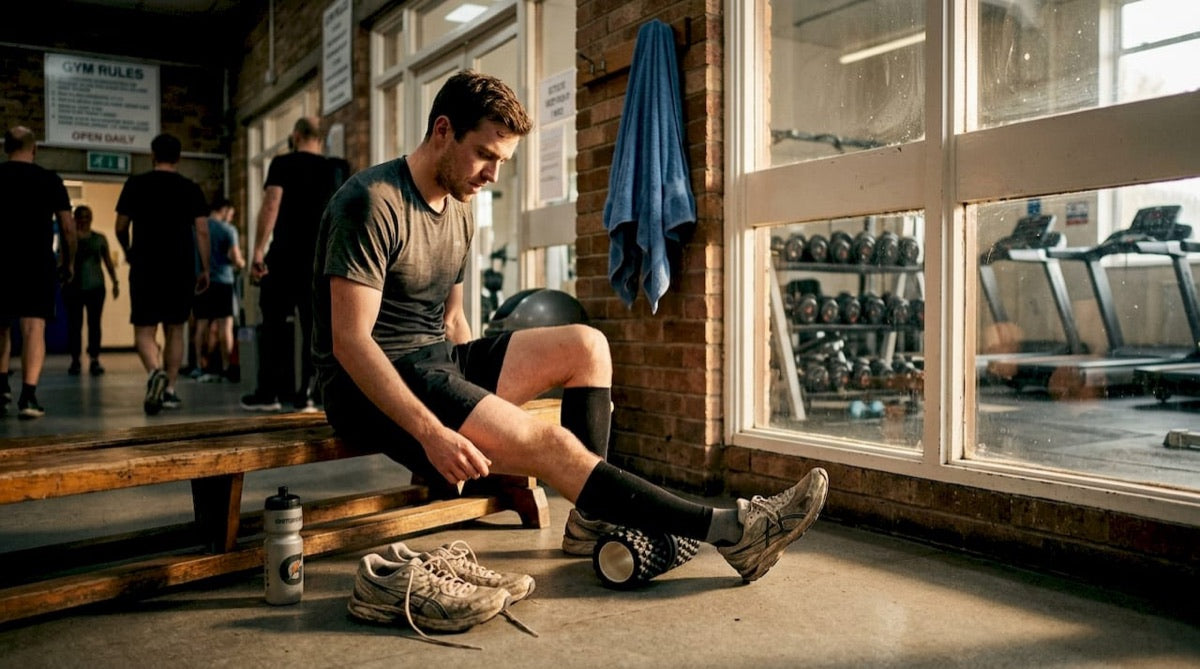
  • Achilles tendinopathy: eccentric and heavy slow-resistance calf exercises (e.g. single-leg heel drops on a step, progressing load over weeks).
  • Patellar tendinopathy: heavy slow-resistance leg press and leg extension protocols.
  • General tendon conditioning: compound movements (squats, deadlifts, Romanian deadlifts) with progressive overload.

Frequency of 3–4 sessions per week is typical in positive trials. The loading must be targeted to the affected tendon; general gym training without specific loading of the injured structure is less effective.

Sample weekly outline

  1. Days 1, 3, 5: Take 15–20 g hydrolysed collagen with ≥50 mg vitamin C, 30–60 minutes before your loading session. Complete your targeted tendon-loading exercise (eccentric or heavy slow-resistance protocol, 3–4 sets).
  2. Days 2, 4: Active recovery or low-load movement. You may still take collagen on these days for general connective-tissue support, though the preloading timing benefit applies only on training days.
  3. Day 7: Rest or light activity.
  4. At 8 weeks: Reassess symptoms using a validated tool (VISA-A for Achilles, VISA-P for patellar). Adjust loading intensity upward if tolerated.
  5. At 3 months: Formal review with a physiotherapist. Structural changes, if they are occurring, become measurable around this point.

Pro Tip: Keep a simple training log noting your collagen timing, dose, and how the tendon feels during and after each session. Patterns over 4–6 weeks tell you far more than any single session.


Is collagen supplementation safe, and who should check with a clinician?

The general safety profile of hydrolysed collagen peptides is well established. Trials using doses up to 30 g per day have not reported serious adverse events, and the most commonly noted side effects are mild gastrointestinal symptoms (bloating, nausea) that tend to resolve within a few days of starting supplementation.

Specific considerations:

  • Allergies: most commercial collagen is derived from bovine (cattle), porcine (pig), or marine (fish) sources. Check the label if you have a known allergy to any of these.
  • Medications: collagen supplements do not have well-documented drug interactions, but if you are taking anticoagulants or immunosuppressants, check with your GP before adding any new supplement.
  • Pregnancy and breastfeeding: there is insufficient trial data to make a confident recommendation. Consult your midwife or GP.
  • Chronic conditions: kidney disease, in particular, warrants medical review before increasing protein intake significantly.

For competitive athletes in the UK, anti-doping compliance is a practical concern. Look for products carrying the Informed Sport certification, which means every batch has been tested for substances prohibited under WADA rules. The Australian Sports Commission guidance specifically highlights third-party testing as a key consideration for athletes using collagen products.

UK supplement regulation note: food supplements in the UK are regulated as foods, not medicines, under the Food Supplements (England) Regulations 2003. This means manufacturers are not required to prove efficacy before selling a product. Third-party testing certifications such as Informed Sport fill that gap for athletes and health-conscious consumers who need confidence in what they are taking.


What are the real limitations of the evidence?

Honesty about the evidence matters here, because the collagen-for-tendons space has attracted both overclaiming and unwarranted scepticism.

The principal limitation is heterogeneity. Across trials, doses range from 5 g to 30 g per day, peptide compositions differ, training protocols vary enormously, populations range from healthy athletes to people with chronic tendinopathy, and study durations span 8 weeks to 6 months. That variability makes it genuinely difficult to say “the evidence proves X dose works for Y condition.” What the systematic review evidence does support is a direction of effect and a set of protocol features that appear consistently in positive trials.

Effect sizes also deserve context. The improvements in tendon morphology and stiffness reported in meta-analyses are real but modest. Collagen is not a repair agent that bypasses the need for rehabilitation; it is a substrate that may accelerate or enhance the structural adaptations that progressive loading drives. The broader recovery evidence supports a similar conclusion for muscle and connective tissue generally.

Key limitations to keep in mind:

  • Most positive trials are small (under 50 participants per group), which limits statistical power.
  • Blinding is difficult in collagen trials because the amino acid profile of placebo is hard to match.
  • Long-term data beyond 6 months is sparse.
  • Evidence for collagen specifically improving pain outcomes (as opposed to morphological or functional measures) is less consistent.
  • No trial has directly compared different commercial products head-to-head under controlled conditions.

The honest summary: the evidence is promising and mechanistically coherent, but it is not yet at the level where a clinician would call it definitive. Following the protocol features that appear in positive trials is a reasonable, low-risk strategy for anyone managing a tendon injury or tendinopathy.


An editorial perspective on the evidence

The conversation around collagen for tendons tends to split into two camps that are both wrong. One side dismisses it as expensive bone broth with no real evidence. The other treats it as a near-magical repair agent that will fix a chronic Achilles in a few weeks. Neither position survives contact with the actual trial data.

The conditions are specific. The dose needs to be adequate (15 g or more). The timing needs to be deliberate (pre-loading, not ad hoc). The exercise needs to be targeted and progressive. And the timeline needs to be realistic (months, not weeks).

The part that most people underestimate is mechanotransduction. Tendons do not passively absorb collagen from the bloodstream and rebuild themselves. They respond to mechanical signals. Supplementation raises the available substrate; loading tells the tendon where to direct it. That distinction changes how you think about the protocol entirely. It also explains why trials without a structured loading programme consistently underperform.

At Kudunutrition, the products are designed to fit this protocol rather than replace it. A 20 g liquid shot taken 30–60 minutes before a loading session is not a shortcut; it is a substrate delivery mechanism that works alongside the rehabilitation work, not instead of it. That framing matters, because readers who approach collagen as a passive fix will be disappointed. Readers who use it as one component of a structured protocol have a genuinely reasonable chance of seeing meaningful improvement over a 3-month horizon.


Kudunutrition’s collagen products and the tendon-repair protocol

Kudunutrition

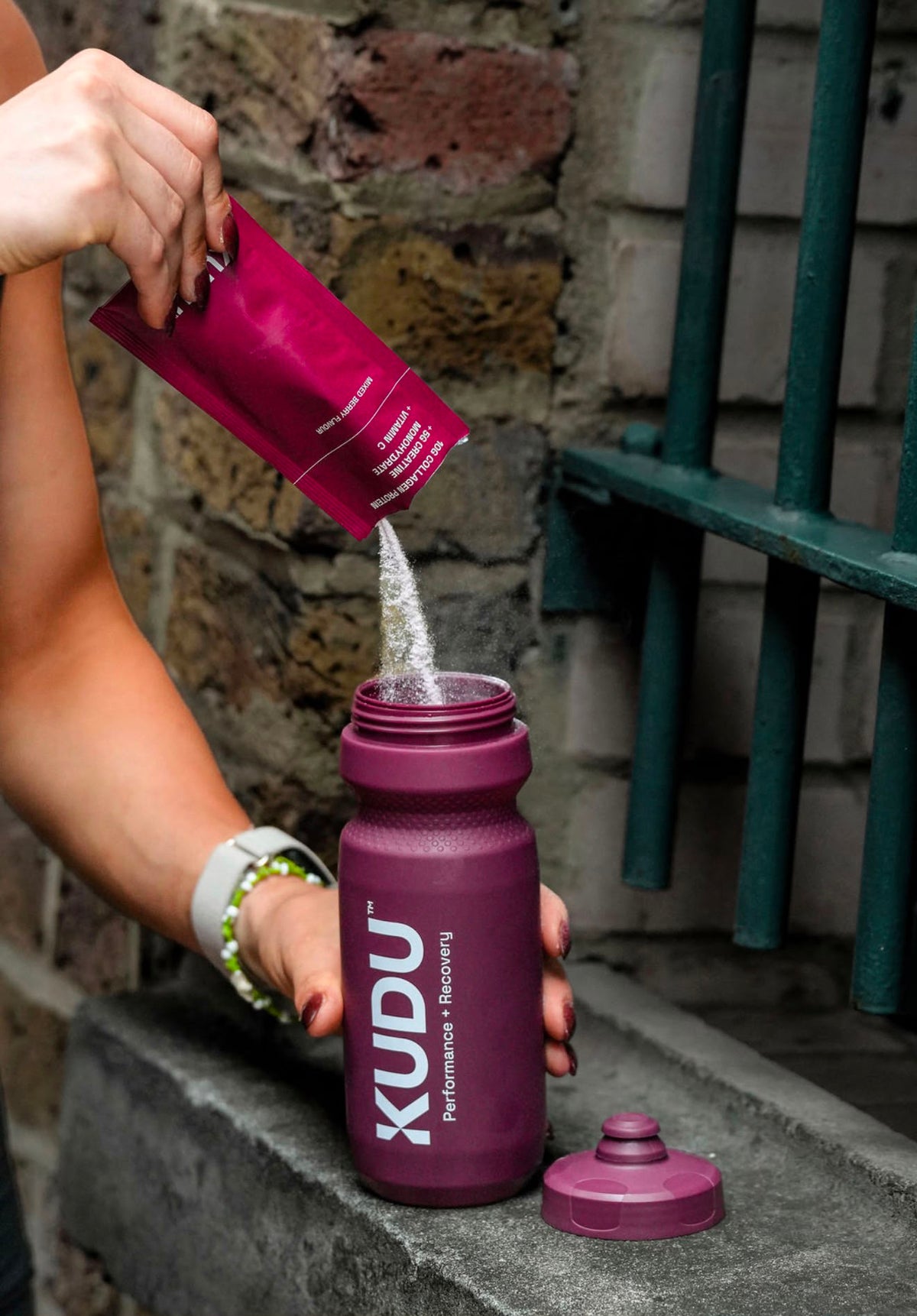
Kudunutrition’s 20 g liquid collagen protein shots deliver the dose range most consistently associated with between-group effects in tendon trials, in a format that makes pre-exercise timing straightforward. Each ready-to-drink sachet contains 20 g of hydrolysed collagen peptides. Take one 30–60 minutes before your loading session, alongside a source of vitamin C (50 mg or more), and you have the substrate side of the protocol covered.

For those who want combined recovery and performance support, the collagen and creatine daily sachets pair 10 g of collagen with 5 g of creatine monohydrate. Note that the collagen dose per serving is lower than the 15–20 g range used in the strongest tendon trials; you can double-serve or use this product alongside an additional collagen source if hitting the higher dose range is a priority.

All Kudunutrition products carry Informed Sport certification, meaning every batch is tested for WADA-prohibited substances. If you are a competitive athlete or simply want confidence in what you are taking, that certification removes the guesswork. New to the protocol? The starter trial pack is a low-commitment way to test the liquid format before committing to a full 3-month supply.


Sources

The following sources were used to build this article and are worth consulting directly if you want to go deeper into the evidence:

  • Collagen Supplementation on Tendon-Related Structural and Performance Outcomes: A Systematic Review
  • Impact of Collagen Peptide Supplementation in Combination with Long-Term Physical Training on Strength, Musculotendinous Remodeling, Functional Recovery, and Body Composition: A Systematic Review with Meta-analysis
  • The effects of collagen peptide supplementation on body composition, collagen synthesis, and recovery from joint injury and exercise: a systematic review
  • Oral supplementation of specific collagen peptides combined with calf-strengthening exercises enhances function and reduces pain in Achilles tendinopathy patients
  • Collagen support | ASC

This article is general information, not a substitute for advice from a qualified doctor. Consult a qualified healthcare professional about your own circumstances before acting on anything here.

FAQ

Does collagen help tendon healing?

Yes, with an important condition: collagen supplementation appears to support tendon healing when combined with progressive mechanical loading and vitamin C. Trials and systematic reviews show consistent effects on tendon morphology, though benefits are modest and take months to emerge.

How much collagen should you take for tendon repair?

The dose range most consistently associated with tendon-specific effects in trials is 15–30 g of hydrolysed collagen peptides per day, taken with at least 50 mg of vitamin C approximately 30–60 minutes before a loading session.

What helps tendons heal faster?

Progressive mechanical loading targeted to the affected tendon is the single most important factor; collagen supplementation at 15–20 g per day, timed pre-exercise with vitamin C, may accelerate the structural adaptations that loading drives, based on current systematic review evidence.

Is collagen good for Achilles tendon problems?

A randomised pilot trial found that specific hydrolysed collagen peptides taken alongside a calf-strengthening programme produced clinically meaningful improvements in VISA-A scores in Achilles tendinopathy patients over three months, suggesting supplementation can support rehabilitation when paired with appropriate loading.

How long before collagen works for tendons?

Most trials showing structural or functional improvements run for at least 8–12 weeks, with the clearest changes typically appearing at the 3-month mark. Collagen is not a short-term fix; consistent protocol adherence over several months is what the evidence supports.

Reading next

Hand holding liquid collagen shot bottle
Hand pouring liquid collagen shot